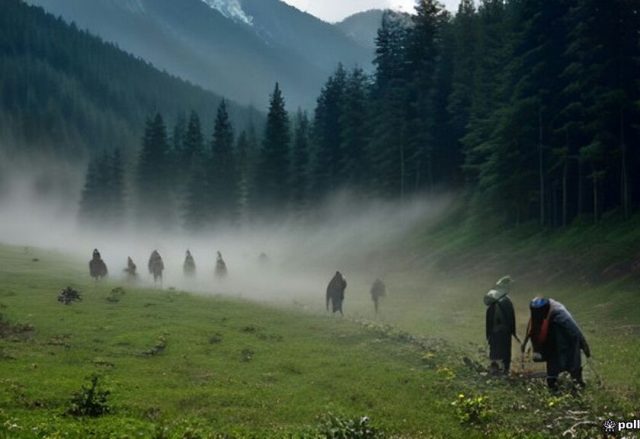
SRINAGAR — In a decisive legal intervention addressing escalating ecological degradation in the Kashmir Valley, the National Green Tribunal (NGT) has stepped in to probe rampant, unauthorized waste dumping. The intervention targets vulnerable agricultural and forested landscapes, most notably the legendary saffron fields of Pampore and the pristine forest stretches along Shajimarg Road in Tangmarg. Environmental watchdogs and local farmers have raised urgent alarms over municipal negligence, prompting judicial oversight to halt practices threatening both heritage agriculture and fragile mountain ecosystems.
- Judicial Intervention: The National Green Tribunal has constituted a dedicated high-level committee to investigate illegal waste dumping near Pampore’s world-renowned saffron fields.
- Forest Degradation: Similar environmental violations have surfaced near Shajimarg Road in Tangmarg, where forested land is allegedly being utilized as an unregulated garbage dump.
- Agricultural Threat: Toxic leachate and solid waste accumulation directly threaten the unique soil chemistry required for authentic Kashmiri saffron cultivation.
- Administrative Accountability: Local municipal bodies and district administrations face intense scrutiny over failures in waste management and enforcement of environmental laws.
Historical Context & Background
Kashmir saffron, globally celebrated for its deep red stigmas, rich aroma, and medicinal properties, holds a protected Geographical Indication (GI) tag. Cultivated primarily across the Karewa uplands of Pampore, this high-value crop demands specific climatic and edaphic conditions. For centuries, the socio-economic fabric of local farming communities has relied on these ancestral lands. However, rapid urbanization, changing land-use patterns, and deficient municipal solid waste management systems have increasingly brought urban refuse to the doorsteps of these agricultural sanctuaries.
Concurrently, the forested landscapes of Tangmarg—acting as critical gateways to upper reaches and tourist destinations—have experienced an influx of unmanaged commercial and domestic refuse. Environmentalists point out that turning forested belts into impromptu dumping grounds not only destroys aesthetic values but also contaminates local water sources and disrupts regional biodiversity.
Administrative Decisions & Ground Realities
Responding to persistent media reports and formal petitions documenting environmental violations, the NGT has ordered the formation of a joint inspection committee. This panel comprises representatives from the State Pollution Control Board, district administration, and senior forestry officials. The mandate is clear: conduct on-site physical inspections, identify institutional lapses, assess the volume of illegally dumped waste, and establish clear lines of accountability.
Ground reports from Pampore indicate that municipal solid waste, construction debris, and plastic refuse have found their way into drainage channels and vacant spaces immediately adjacent to saffron-bearing fields. In Tangmarg, along the Shajimarg Road corridor, locals have documented continuous dumping operations conducted under the cover of darkness, turning verdant woodland edges into toxic eyesores.
Local Impact & Community Perspectives
For generational saffron cultivators in Pampore, the encroachment of waste is an existential crisis. Saffron corms are highly sensitive to moisture retention and soil contamination. Unregulated dumping leaches heavy metals, microplastics, and hazardous chemicals into the Karewa soil, potentially ruining crop yields and destroying the international reputation of Kashmiri saffron.
“Our ancestors protected these fields like sacred heritage,” shares Ghulam Mohammad Lone, a veteran saffron farmer from Pampore. “Today, we watch helplessly as outsiders and irresponsible authorities treat our livelihood as a trash bin. If the soil chemistry changes, authentic Pampore saffron will vanish forever.”
In Tangmarg, residents voice similar frustrations. The conversion of forest land into garbage dumps has invited stray animal populations, created unbearable stench, and escalated health hazards for nearby habitations.
Chronological Timeline & Data Breakdown
| Date / Period | Location | Key Development |
|---|---|---|
| Early 2024 | Pampore & Tangmarg | Surge in unauthorized waste dumping reported by local citizens and media outlets. |
| Mid 2024 | Tangmarg (Shajimarg Road) | Forest department issues notices regarding garbage accumulation near ecologically sensitive zones. |
| Recent Weeks | Pampore Saffron Fields | National Green Tribunal intervenes, establishing an investigative panel to review violations. |
Strategic & Socio-Economic Ramifications
The implications of unchecked waste dumping extend far beyond immediate aesthetic displeasure. Economically, any compromise in saffron quality threatens export markets and diminishes the economic safety net of thousands of farming households. Environmentally, the contamination of groundwater aquifers in the Kashmir Valley poses a silent public health threat that could take decades to reverse.
Experts emphasize that local civic bodies must transition from reactive judicial firefighting to proactive, decentralized waste management infrastructure. Implementing strict penalties for illegal dumping, enhancing night surveillance along vulnerable corridors, and establishing scientific landfill sites are immediate prerequisites for sustainable regional development.
The Road Ahead: Future Milestones
As the NGT-mandated panel commences its field investigations, all eyes remain on the forthcoming compliance report. Stakeholders expect strict punitive measures against municipal bodies found derelict in their duties, alongside immediate remediation and clean-up orders for both the Pampore fields and Tangmarg forests. Restoring these landscapes requires not only legal enforcement but a renewed civic commitment to protecting Kashmir’s unparalleled natural and agricultural heritage.
Frequently Asked Questions (FAQ)
Why did the NGT intervene in Pampore?
The National Green Tribunal intervened following reports and petitions concerning illegal solid waste and debris dumping in close proximity to the sensitive saffron-bearing fields of Pampore, which threatens soil health and agricultural heritage.
What environmental concerns were raised in Tangmarg?
Along Shajimarg Road in Tangmarg, forest lands have allegedly been transformed into unregulated garbage dumps, leading to habitat destruction, local pollution, and severe risks to regional biodiversity.
Who is responsible for conducting the current investigation?
The NGT has formed a joint inspection committee comprising members from environmental protection agencies, forestry departments, and district administration officials to assess the ground reality and fix responsibility.
How does waste dumping affect saffron cultivation?
Saffron requires specific, uncontaminated Karewa soil conditions. Toxic runoff, plastics, and heavy metals from illegal waste sites can alter soil chemistry, severely impacting crop yield and product safety.