The New Face of Cybercrime Is More Convincing, More Personal and More Dangerous
By: Javid Amin | 13 November 2026
A phone call from someone claiming to be a police officer. A WhatsApp message promising an easy work-from-home income. An investment application showing thousands of rupees in profits. Or a familiar voice on the phone claiming that a family member is in trouble and needs money immediately.
These may appear to be ordinary digital interactions. But in India’s rapidly changing cybercrime landscape, they can be the opening moves of carefully organised financial fraud.
Cybercriminals are no longer relying exclusively on stolen passwords, fake lottery messages or requests for one-time passwords (OTPs). They are increasingly exploiting human psychology, artificial intelligence, social engineering, digital payment systems and weaknesses in identity verification.
The result is a fraud ecosystem in which criminals can impersonate government officials, manufacture convincing identities, manipulate victims into transferring money and move stolen funds through networks of bank accounts before the victim even understands what has happened.
Jammu and Kashmir is increasingly exposed to these methods. Reports from the region point to growing concerns over fake investment platforms, online task offers, impersonation calls, suspicious banking transactions and the recruitment of ordinary people to provide bank accounts for illegal financial operations.
Two recent developments illustrate the scale of the problem.
On November 5, 2026, police registered an FIR after four people allegedly impersonated Cyber Crime Department officials and cheated a Batmaloo resident in Srinagar of ₹50,000. The case was registered as FIR No. 139/2026 at Police Station Batmaloo.
A day later, reports emerged about a much larger cyber fraud investigation involving transactions worth approximately ₹209 crore. Investigators were examining nearly 200 Jammu and Kashmir-linked bank accounts allegedly connected to a wider network involving fraudulent investment and gaming platforms.
These cases represent different ends of the same problem: small-scale impersonation fraud and organised financial networks operating through digital channels.
There is also an important distinction. The ₹209-crore figure represents the reported scale of transactions under investigation, not a confirmed loss of ₹209 crore suffered by individual victims in Jammu and Kashmir. Similarly, the Batmaloo case remains under investigation, and allegations against the accused must be established through due process.
The danger, however, is clear. Cybercrime is becoming more organised, more technologically sophisticated and increasingly difficult for ordinary people to recognise.
This report examines ten major cyber fraud methods affecting India, their relevance to Kashmir, how criminals operate and, most importantly, how people can protect their money and identities.
India’s cyber fraud numbers: What the official figures reveal
The scale of the problem becomes clearer when the Reserve Bank of India’s data is examined.
An RBI discussion paper published on April 9, 2026, citing figures from the National Cyber Crime Reporting Portal (NCRP), recorded the following rise in reported digital payment fraud:
| Year | Reported fraud cases | Reported amount |
|---|---|---|
| 2021 | 2.6 lakh | ₹551 crore |
| 2022 | 6.9 lakh | ₹2,290 crore |
| 2023 | 13.1 lakh | ₹7,465 crore |
| 2024 | 24 lakh | ₹22,848 crore |
| 2025 | 28 lakh | ₹22,931 crore |
Source: Reserve Bank of India, Discussion Paper on Safeguards in Digital Payments, April 9, 2026. These are reported digital-payment fraud figures, not a count of every category of cybercrime.
The numbers reveal two important developments.
First, the number of reported incidents has increased dramatically. Second, the value of reported fraud has remained exceptionally high even as the number of cases has grown.
The RBI has also identified an important change in the way digital fraud operates. Many incidents no longer require criminals to break into a bank’s computer systems. Instead, victims are manipulated into authorising payments themselves.
This is known as an Authorised Push Payment (APP) fraud.
For example, a person receives a call from someone pretending to be a police officer. The caller threatens arrest, creates panic and instructs the victim to transfer money to an account for verification. The victim personally enters the payment details and authorises the transfer. Technically, the transaction may appear to have been authorised by the account holder, even though the decision was made under deception.
The RBI says such transactions are particularly difficult to reverse because money can move almost instantly through UPI, IMPS, NEFT and RTGS.
A separate consumer survey published by the GSMA in October 2026 offers another warning. Twelve per cent of Indian respondents said they had experienced a scam in the previous 12 months. Among those surveyed who had encountered scams, online shopping fraud accounted for 33%, prize and lottery scams 31%, job or income scams 30%, and QR-code or payment-link scams 27%.
The survey also found that 89% of Indian consumers surveyed had seen AI being used in scams, while 42% reported seeing deepfake videos of real people. These are survey findings, not official nationwide crime statistics.
For Kashmir, the warning is particularly relevant because cybercrime is no longer confined to isolated phone calls or suspicious text messages. The region’s cybercrime officers have identified psychological manipulation, impersonation, investment fraud and mule bank accounts as important parts of the emerging threat.
In an August 2026 interview, DySP Nasir Kirmani of Zonal Cyber Police Kashmir specifically warned that elderly people were vulnerable to fear-based impersonation calls, while young people were frequently exposed to fraudulent investments, fake employment offers, gaming-related fraud and social-media schemes.
One important qualification: The ten categories below are not presented as an officially ranked list of the most frequent crimes. Publicly available data does not establish a reliable category-wise ranking for Jammu and Kashmir. They represent major fraud methods identified in police advisories, reported investigations and national cybersecurity research.
The 10 major cyber scams targeting Indians in 2026
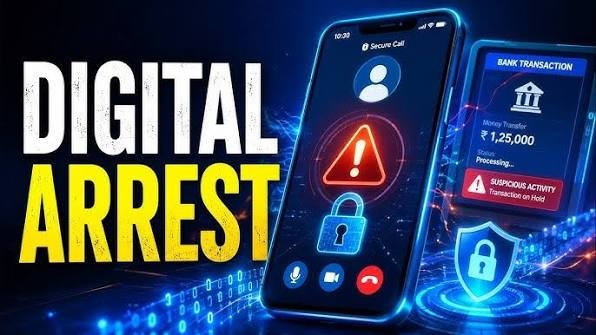
1. Digital Arrest Scam: When Fraudsters Turn Fear Into Financial Extortion
Among the most alarming cybercrime methods in India is the so-called digital arrest scam, in which criminals impersonate law enforcement officials and frighten victims into transferring money.
The scam is designed to make an ordinary person believe that they are already facing criminal proceedings and have no option but to obey the caller.
How the digital arrest scam works
Fraudsters generally introduce themselves as representatives of:
-
Police departments or local crime branches.
-
Central Bureau of Investigation (CBI).
-
Enforcement Directorate (ED).
-
Narcotics Control Bureau (NCB).
-
Telecom Regulatory Authority of India (TRAI).
-
Cyber Crime Department or other government agencies.
The caller may claim that the victim’s Aadhaar or mobile number has been connected to a criminal investigation. Another common approach involves an alleged parcel containing drugs, illegal documents or other prohibited material.
In some cases, victims are told that their bank accounts have been used to finance terrorism, money laundering or other serious offences.
The fraudsters then send fabricated notices, forged identification cards, fake arrest warrants or documents carrying official-looking logos.
The next step is psychological pressure.
Victims may be instructed to remain on video calls, avoid contacting family members, keep their phones switched on and follow instructions from the supposed investigating officer.
Eventually, they are asked to transfer money for:
-
Account verification.
-
Police clearance.
-
Security deposits.
-
Temporary safe custody.
-
Settlement of an alleged investigation.
The money is transferred to accounts controlled by the fraud network, and the callers disappear or continue demanding payments.
There is no legal concept of digital arrest in India.
The CBI has explicitly clarified this and warned citizens against complying with such demands. In May 2026, it introduced an AI-based notice verification system called ABHAY, through which people can check whether notices purportedly issued by the agency are genuine or potentially fraudulent.
The Kashmir connection
A November 5 incident in Batmaloo, Srinagar, illustrates how easily criminals can misuse the authority of law enforcement agencies.
Police registered FIR No. 139/2026 after four people allegedly impersonated Cyber Crime Department officials and cheated a local resident of ₹50,000.
The case was registered at Police Station Batmaloo, and further investigation was underway.
There is a factual correction worth making here: one version of the original summary mentioned ₹5,000, but multiple reports of the police statement identify the amount as ₹50,000.
Why this scam is so dangerous
Unlike conventional fraud, digital arrest scams do not necessarily depend on technical hacking. They exploit fear, shame, confusion and the victim’s respect for government institutions.
An elderly person receiving a call from someone claiming to be a CBI officer may find it difficult to distinguish a genuine investigation from a fabricated one, particularly when the caller uses official terminology and forged documents.
How to protect yourself
-
No police officer can place you under a digital arrest through WhatsApp or a video call.
-
Never transfer money to an individual account for police verification or safe custody.
-
Do not share Aadhaar, PAN, banking credentials or OTPs with unknown callers.
-
Disconnect the call and independently contact the concerned agency through its official website or verified telephone number.
-
Inform family members and report suspicious calls to the cybercrime helpline.
2. Fake Investment, Stock Market and Cryptocurrency Scams: The Promise of Quick Wealth
Investment fraud has become one of the most financially damaging forms of online deception because it targets people’s desire to increase their savings.
Fraudsters no longer depend only on unrealistic advertisements promising instant wealth. They create convincing digital investment environments that may include professional-looking websites, mobile applications, fake trading dashboards, WhatsApp groups and fabricated profit statements.
The victim is made to believe that a genuine financial opportunity has been discovered.
How the investment scam operates
The process often follows a carefully planned sequence:
-
A victim encounters an investment advertisement on social media, a search engine or a messaging platform.
-
A supposed investment adviser contacts the person and offers guidance.
-
The victim is added to a WhatsApp or Telegram group containing fake experts and apparently successful investors.
-
A small initial investment is made.
-
The platform displays attractive profits, and sometimes permits a small withdrawal.
-
The victim is persuaded to invest larger sums.
-
When the person attempts to withdraw the accumulated balance, the platform demands additional payments for taxes, processing charges or account activation.
-
Eventually, access is blocked or the platform disappears.
The profits displayed on the screen may be entirely fabricated. They do not necessarily represent real investments or actual market transactions.
The ₹209-crore Kashmir cyber fraud investigation
One of the most significant examples emerged in Ganderbal in February 2026.
Jammu and Kashmir Police announced that they had uncovered a large online investment fraud network involving fake trading and phishing platforms. The investigation began after a complaint by a Safapora resident who alleged identity theft and financial cheating.
According to police statements reported at the time, investigators identified 835 suspicious bank accounts and verified transactions worth ₹209 crore in 290 accounts.
Nine people were reported arrested, including an MBBS doctor from Haryana whom investigators identified as the alleged main handler of the network.
The operation reportedly involved fake coin-trading platforms promoted through social media and search engines. Money deposited by investors was routed through bank accounts in different Kashmir districts before being transferred elsewhere.
The investigation also exposed the recruitment of financially vulnerable account holders.
In a November 5 follow-up report, a senior police officer told Kashmir News Observer that poor families, including BPL ration-card holders, had allegedly been offered monthly commissions of up to ₹10,000 for providing bank accounts. Nearly 200 J&K-linked accounts were under scrutiny in connection with the wider network, while a Ganderbal link involving approximately ₹2.5 crore was also being investigated.
These figures require careful interpretation. The ₹209 crore represents transactions traced in the investigation, not a confirmed loss suffered exclusively by residents of Jammu and Kashmir. The original investigation involved investors from across India, and police indicated that the wider financial trail could be larger.
The warning signs
-
Guaranteed daily or weekly profits.
-
Investment advice from unknown WhatsApp administrators.
-
Pressure to invest immediately.
-
Trading applications downloaded through unofficial links.
-
Demands for additional payments before withdrawals.
-
Screenshots of profits without independently verifiable trading records.
How to protect yourself
Check whether an investment intermediary is registered with the appropriate financial regulator. Do not rely on screenshots, testimonials or the apparent professionalism of a website. Avoid transferring money to personal accounts or unknown UPI IDs for supposed investment opportunities.
A genuine investment carries risk. Anyone promising unusually high returns without risk should be treated with suspicion.
3. Online Task Scams: Earn Money by Liking Videos, Rating Hotels and Following Pages
Online task scams have become a particularly concerning method because they initially look like legitimate part-time employment.
The offers are often designed to attract students, unemployed young people, homemakers and anyone searching for an additional source of income.
The advertisement may promise ₹5,000 to ₹10,000 per day for spending just 30 minutes on a mobile phone.
The work appears almost effortless.
Typical tasks offered
-
Like YouTube videos.
-
Subscribe to social media channels.
-
Follow Instagram accounts.
-
Rate hotels and restaurants.
-
Review products.
-
Share promotional posts.
-
Complete simple online assignments.
Victims are contacted through WhatsApp, Telegram or social media.
Initially, the recruiter may pay a small amount for completing a few tasks. This is deliberate. The payment creates confidence and makes the opportunity appear genuine.
Once trust is established, the victim is introduced to a higher-paying category called premium tasks.
These tasks require an advance deposit.
The victim may be told that depositing ₹2,000 will unlock a ₹5,000 task or that a larger investment will produce a higher commission.
After the money is transferred, further deposits are demanded. Eventually, the account is blocked or the recruiter stops responding.
Jammu and Kashmir Police have issued a specific warning
On October 16, 2026, Jammu and Kashmir Police cautioned residents against online task scams.
The police advisory described how fraudsters use messaging platforms, social media and websites to advertise fake jobs involving simple activities such as liking posts, rating products and following accounts.
It also warned that initial payments are sometimes made to build confidence before victims are asked to pay for upgrades, processing fees or access to better-paying assignments.
Why young people are vulnerable
Unemployment and the growing demand for flexible online work create an attractive environment for these fraudsters.
A student looking for pocket money or an unemployed graduate searching for employment may not immediately recognise the difference between a genuine digital assignment and a financial trap.
Remember: An employer should pay you for legitimate work. A recruiter demanding deposits to unlock routine assignments is a major warning sign.
Never transfer money to complete a task or release a promised salary.
4. OTP Fraud and Fake KYC Updates: The Old Scam That Still Works
Despite years of public awareness campaigns, OTP and Know Your Customer (KYC) frauds remain a serious threat.
The reason is simple: banking and telecom services are closely linked to mobile numbers, and fraudsters know how to exploit that connection.
A person may receive a message claiming that their bank account will be blocked because KYC verification is incomplete.
Another caller may claim to represent a telecom company and warn that a mobile connection will be disconnected unless Aadhaar details are verified.
The victim is then asked to click a link, share an OTP or install an application.
Common tactics
-
Fake bank KYC update messages.
-
PAN and Aadhaar verification links.
-
SIM card reactivation offers.
-
Insurance policy renewal calls.
-
Fake bank account suspension warnings.
-
Requests to install APK files or unfamiliar applications.
Once the victim shares confidential information or gives an unauthorised application access to the device, criminals may obtain banking credentials, intercept authentication processes or manipulate transactions.
An OTP is not simply another verification code. It can be the final authorisation step for a financial transaction or account change.
RBI has repeatedly warned customers
The Reserve Bank of India issued warnings about KYC-related fraud in September 2021 and renewed its advisory in February 2024.
The regulator specifically cautioned against unsolicited calls, SMS messages and emails demanding personal details, login credentials, card information, PINs or OTPs. It also warned against installing unauthorised applications through links sent by unknown people.
The Srinagar district administration’s cyber safety page also identifies fake KYC calls targeting Jammu and Kashmir residents as an active cyber threat, warning people against sharing Aadhaar or PAN documents over the phone.
How to protect yourself
-
Never share an OTP, UPI PIN, ATM PIN or banking password.
-
Do not click KYC links received through unknown messages.
-
Contact your bank through its official application, website or branch.
-
Do not install applications at the request of unknown callers.
-
Keep SMS transaction alerts active.
-
Report suspicious activity immediately.
A bank may require periodic KYC updates, but that does not make an unsolicited link or telephone request genuine.
5. AI Deepfake and Voice-Cloning Scams: When Seeing and Hearing Are No Longer Enough
Artificial intelligence has created new opportunities for businesses, education and communication. Unfortunately, it has also given cybercriminals another way to impersonate people.
Voice cloning and deepfake technology can be used to create audio or video that appears to come from a real individual.
A fraudster may use a publicly available recording to imitate someone’s voice or manipulate photographs and video footage to manufacture a convincing identity.
This creates a serious challenge for people who traditionally trusted a familiar voice or a video call as proof of identity.
How AI impersonation works
Imagine receiving a phone call from someone who sounds exactly like your son, daughter or brother.
The caller says they have been involved in an accident, detained by police or stranded somewhere without access to money.
They request an immediate transfer.
In another scenario, an employee receives a video call that appears to show a senior company executive instructing them to transfer money to a particular account.
The technology may be used to imitate:
-
Family members.
-
Senior government officials.
-
Business executives.
-
Bank representatives.
-
Public figures.
-
Known acquaintances.
Not every such fraud requires a sophisticated live deepfake. Some use ordinary voice recordings, edited photographs or fake social media profiles. The important point is that impersonation is becoming easier to scale and more convincing.
What does the 2026 evidence show?
The GSMA India Consumer Scam Report 2026 found that 89% of Indian consumers surveyed had seen AI being used in scams. Forty-two per cent reported seeing deepfake videos of real people.
These figures measure exposure and reported experience in a survey. They do not mean that 89% of Indians have personally lost money to AI fraud.
The Union Government has also acknowledged the threat. A Ministry of Electronics and Information Technology statement issued on August 6, 2026, specifically identified synthetic audio, video and text as part of the deepfake challenge.
The government noted that existing legal provisions, including Section 66C and Section 66D of the Information Technology Act and Section 319 of the Bharatiya Nyaya Sanhita, can apply to identity theft and cheating by impersonation, depending on the facts of a case.
How to protect yourself
-
Never transfer money solely because of an urgent voice or video call.
-
Call the person back using a previously saved number.
-
Ask a personal question that cannot easily be answered from public information.
-
Establish a family verification phrase for emergencies.
-
Verify payment instructions through a separate communication channel.
-
Be cautious about publicly sharing voice recordings and personal videos.
The safest rule is simple: a familiar voice is not sufficient proof of identity.
6. Fake Customer-Care Scams: The Number You Find Online May Not Belong to the Company
A customer searches for a bank’s helpline, an airline’s cancellation number or an online shopping platform’s refund department.
A number appears at the top of the search results.
The customer calls, explains the problem and follows the instructions.
But the person on the other end may be a fraudster operating a fake customer-care service.
This is one of the more deceptive forms of cyber fraud because the victim often initiates the contact, believing that they are speaking to a legitimate company.
How the scam works
Criminals publish fake telephone numbers, misleading advertisements and fraudulent customer-support pages.
They may impersonate representatives of:
-
Banks.
-
E-commerce companies.
-
Airlines.
-
Railway booking services.
-
Insurance providers.
-
UPI applications.
Once the victim calls, the supposed representative may ask them to download a remote-access application, share a screen, disclose an OTP or enter banking information.
Remote-access applications can allow another person to view or control parts of a device, depending on the permissions granted.
A fraudster may then guide the victim through a transaction while secretly observing sensitive information.
Kashmir connection
The District Srinagar administration has specifically warned about screen-sharing scams in which citizens are persuaded to install remote-access software under false pretences.
The official cyber safety page also warns against fake customer-care numbers and advises people to use verified contact details.
The RBI has similarly cautioned customers that telephone numbers found through internet search engines may be fraudulent and advised them to obtain customer-care numbers directly from official banking sources.
How to protect yourself
-
Obtain customer-care numbers from the company’s official website or application.
-
Never install AnyDesk, TeamViewer or similar software at the request of an unknown caller.
-
Do not share your screen during banking transactions.
-
Never reveal OTPs, PINs or passwords to customer-support representatives.
-
Disconnect immediately if someone pressures you to transfer money to resolve a service complaint.
A genuine refund does not require you to surrender control of your phone.
7. UPI and QR Code Fraud: A Small Scan Can Authorise a Payment
India’s Unified Payments Interface (UPI) has made digital payments faster and more accessible.
However, its convenience has also created opportunities for fraudsters who exploit users’ lack of familiarity with payment requests and QR codes.
The most important thing to understand is that scanning a QR code and entering a UPI PIN generally authorises a payment. It is not a method of receiving money.
Common UPI fraud methods
The fake refund scam: A caller claims that a payment has been refunded and sends a QR code or payment request. The victim is instructed to scan it and enter a PIN to receive the refund.
The wrong-payment scam: A fraudster claims to have accidentally transferred money and asks the victim to scan a code or approve a payment request to return it.
The fake buyer scam: Someone posing as a buyer sends a QR code or collect request, claiming that approval is necessary to receive payment.
The fake reward scam: Messages promise cashback, prizes or promotional benefits in exchange for scanning a QR code and authorising a transaction.
The essential UPI safety rule
You do not need to enter your UPI PIN to receive money.
A QR code can be shared by a recipient so that another person can scan it and pay them. But if someone sends you a QR code and tells you to scan it to receive money, stop and verify the request.
The NPCI’s fraud-awareness guidance specifically warns that scanning a QR code and entering a UPI PIN is meant for making payments, not receiving them.
How to protect yourself
-
Check the recipient’s name before approving a payment.
-
Never enter your UPI PIN to receive money.
-
Reject unexpected collect requests.
-
Avoid scanning QR codes sent by unknown individuals.
-
Do not trust cashback or refund offers without independent verification.
-
Contact your bank if a suspicious transaction occurs.
The problem is not UPI itself. It is the misuse of payment requests and the victim’s misunderstanding of what a transaction authorisation actually does.
8. Mule Bank Account Scams: How Ordinary People Become Part of International Fraud Networks
One of the most worrying developments in organised cybercrime is the growing use of ordinary bank accounts to move money obtained through online fraud.
These accounts are commonly called mule accounts, and the people providing them are known as money mules.
A person may be approached with an offer of ₹5,000, ₹8,000 or ₹10,000 per month simply for allowing someone else to use their bank account.
The offer may sound harmless. The recruiter may describe it as a banking partnership, commission-based work, payment processing or a business opportunity.
But the actual purpose is often very different.
How mule account recruitment works
-
Fraudsters identify people willing to provide bank accounts for a commission.
-
They collect bank account details, ATM cards, internet banking credentials or other access.
-
Money obtained from victims is deposited into these accounts.
-
The funds are transferred through several other accounts.
-
The money is eventually withdrawn, converted or transferred outside the country.
This process is commonly known as layering. It makes the financial trail more difficult to follow.
In some networks, different individuals are assigned separate roles, including recruiting account holders, collecting banking details, arranging transfers and withdrawing money.
The ₹209-crore Kashmir investigation exposes the problem
The Ganderbal investigation provides a particularly important example.
Police reported identifying 835 suspicious bank accounts, with transactions worth ₹209 crore verified in 290 accounts during the initial investigation.
The November 2026 follow-up report also highlighted how financially vulnerable families were allegedly offered monthly commissions to provide their accounts for routing funds connected with fraudulent investment and gaming platforms.
The investigation raises a serious question: how many people who believe they are earning an innocent commission may actually be helping an organised financial crime network?
Can someone be arrested for renting out a bank account?
Yes, depending on the circumstances and evidence.
Even if someone claims they did not know where the money originated, allowing another person to receive and transfer suspicious funds through their account can trigger a police investigation, account restrictions and potential criminal liability.
The Reserve Bank has repeatedly warned against money-mule recruitment. Its public awareness campaign specifically cautions people against allowing others to use their accounts for moving funds in exchange for commissions.
How to protect yourself
-
Never rent out your bank account.
-
Never hand over your ATM card or PIN.
-
Do not share internet banking credentials.
-
Never accept unexplained deposits on behalf of strangers.
-
Do not transfer money received from unknown people simply because someone promises a commission.
-
Report suspicious recruitment offers to your bank and the cybercrime authorities.
An easy commission can turn into a complicated criminal investigation.
9. Fake Job, Government Recruitment and Scholarship Scams: Exploiting the Search for Employment
For thousands of young people, an employment opportunity represents financial independence and a chance to support their families.
Cybercriminals exploit that hope.
Fake recruitment advertisements are circulated through WhatsApp groups, Telegram channels, Facebook pages and websites designed to resemble genuine employment portals.
The advertisements may promise:
-
Government jobs without competitive examinations.
-
Immediate selection in public-sector departments.
-
Overseas employment in Gulf countries.
-
High-paying work-from-home opportunities.
-
Scholarships and financial assistance.
-
Private-sector jobs with unusually attractive salaries.
The objective is to persuade applicants to pay money or disclose sensitive personal information.
How the recruitment scam works
A fraudster publishes a job advertisement using the name of a reputed company, government department or recruitment agency.
The applicant is contacted and told that their profile has been shortlisted.
The next step involves a payment demand, often described as:
-
Registration charges.
-
Application processing fees.
-
Document verification fees.
-
Medical examination expenses.
-
Visa processing charges.
-
Security deposits.
In some cases, victims receive fabricated appointment letters carrying government logos, forged signatures and official-looking reference numbers.
Once the payment is made, the recruiter disappears.
What makes these scams particularly dangerous?
Unlike conventional financial fraud, recruitment scams can also expose victims to identity theft.
Applicants may submit Aadhaar cards, PAN details, photographs, educational certificates, bank information and signatures.
That information can potentially be reused for other forms of impersonation or financial fraud.
The National Career Service (NCS) has specifically warned job seekers about employers demanding registration fees and offers promising high salaries for simple work.
Its official guidance also cautions that purported NCS emails from personal Gmail or Yahoo addresses are unauthentic. Genuine NCS communications use official government or NIC email domains.
The District Srinagar administration also lists fake job and lottery offers requiring advance registration or processing payments among the cyber threats residents should watch for.
What students and job seekers should do
-
Verify recruitment advertisements through the employer’s official website.
-
Check government recruitment notifications against the concerned department’s official portal.
-
Never pay an unknown person to guarantee selection.
-
Verify scholarship applications through the official scholarship portal or educational institution.
-
Avoid sharing identity documents through unverified WhatsApp contacts.
-
Be suspicious of jobs promising unusually high salaries without interviews or qualification checks.
A genuine opportunity should withstand basic verification. If someone demands money to guarantee a job, the offer deserves serious scrutiny.
10. Social Media, Romance and Matrimonial Scams: When Emotional Trust Becomes a Financial Trap
Not all cybercriminals begin by asking for money.
Some spend weeks or even months building a relationship with the victim before making a financial demand.
These scams can involve Facebook, Instagram, WhatsApp, dating applications and matrimonial websites.
The fraudster creates a convincing identity, often using attractive photographs and fabricated personal details.
They may pose as:
-
An NRI working abroad.
-
A military officer stationed overseas.
-
A successful businessperson.
-
A medical professional.
-
A government employee.
-
Someone searching for a marriage partner.
The initial conversations are friendly. The fraudster shows interest, develops emotional trust and gradually becomes an important part of the victim’s daily life.
Once the relationship is established, the financial requests begin.
Common reasons used to demand money
-
A medical emergency.
-
A family member’s illness.
-
A business crisis.
-
An urgent travel requirement.
-
Customs charges on an expensive gift.
-
Money allegedly stuck at an airport.
-
An investment opportunity offering guaranteed returns.
In some cases, victims are threatened with the publication of private photographs or videos unless they pay money.
This can turn a romance scam into cyber extortion and blackmail.
Kashmir Police have issued specific warnings
On October 11, 2026, Jammu and Kashmir Police warned users about fraudulent profiles on matrimonial applications.
The advisory described how criminals use fake photographs and identities to develop emotional relationships before seeking money for medical expenses, business losses, travel requirements or other fabricated emergencies.
The following day, another police warning highlighted fake online friends who reconnect with users, build trust and eventually demand payments or offer suspicious financial opportunities.
The threat is also recognised nationally.
An October 2025 advisory from the Indian Cyber Crime Coordination Centre (I4C) warned that criminals were misusing matrimonial and dating platforms to develop emotional relationships and subsequently lure victims into fraudulent investment and cryptocurrency schemes.
The advisory described the use of stolen or altered photographs, fabricated professional backgrounds and manipulated video-call environments to establish credibility.
How to protect yourself
-
Verify the identity of people you meet online.
-
Use reverse-image searches when photographs appear suspicious.
-
Do not send money to someone whose identity you have not independently established.
-
Avoid sharing intimate photographs or sensitive personal information.
-
Be cautious when a new online acquaintance introduces an investment opportunity.
-
Report blackmail and extortion rather than paying repeated demands.
Emotional manipulation is still manipulation. A relationship developed online should never become a reason to surrender financial security.
Why Kashmir Is Becoming an Important Target for Cybercriminals
Kashmir’s growing dependence on smartphones, online banking, digital payments, social media and internet-based services has created new opportunities for cybercriminals.
The region is not facing a completely different form of cybercrime from the rest of India. Rather, national fraud methods are being adapted to local circumstances, economic vulnerabilities and social behaviour.
Several factors deserve attention.
1. Growing dependence on digital payments
UPI, mobile banking and online transactions have become part of everyday life.
Small businesses, traders, students, employees and households increasingly use digital platforms to receive and transfer money.
This convenience also means that one manipulated transaction can result in an immediate financial loss.
2. Unemployment and the attraction of easy income
Online task scams and fake recruitment offers exploit the desire for additional income.
For unemployed graduates and young people searching for work, promises of easy earnings can be particularly tempting.
The initial small payment makes the offer look credible, encouraging victims to take greater financial risks.
3. Trust-based social relationships
Fraudsters exploit familiar social behaviour.
A person may be more willing to trust someone claiming to be a relative, acquaintance, government official or potential marriage partner than an unknown advertiser.
In a digital environment, criminals can manufacture these identities with relatively little effort.
4. Limited understanding of digital security
Many people understand that OTPs should not be shared but remain unaware of remote-access applications, malicious links, fake payment requests, SIM-swap fraud and mule accounts.
Cybersecurity awareness must therefore move beyond the traditional advice of never sharing an OTP.
5. Organised financial networks
The Ganderbal investigation shows why cybercrime cannot be treated merely as a collection of isolated incidents.
The alleged network involved investment platforms, account mobilisation, multiple bank accounts and the movement of funds through different financial channels.
This points to an organised financial infrastructure supporting online fraud.
What Kashmir’s police officers are warning about
In his August 2026 interview with Rising Kashmir, DySP Nasir Kirmani emphasised that cybercriminals increasingly rely on psychological manipulation rather than sophisticated hacking alone.
He identified elderly people and young people as particularly vulnerable to different types of fraud.
His warning is significant because it challenges the popular assumption that cybercrime is primarily a technical problem.
In many cases, the criminal does not need to break into a bank account. The criminal only needs to convince its owner to transfer money.
Supreme Court Steps In: Banks and Technology Companies Face Greater Scrutiny
The growing scale of digital financial fraud has also brought the issue before the Supreme Court of India.
In its October 29, 2026 order in the suo motu proceedings concerning victims of digital arrest scams, the Supreme Court emphasised the need for stronger safeguards by financial institutions.
The Court said proposed RBI regulatory measures should incorporate provisions requiring financial institutions to compensate victims, where an investigation establishes that the fraud occurred because the institution failed to exercise due diligence.
The Court also discussed safeguards such as temporarily suspending suspicious transactions inconsistent with a customer’s normal banking behaviour and informing the nearest police station.
It directed State and Union Territory law enforcement agencies to provide details of FIRs and investigations involving digital arrest scams.
WhatsApp and other intermediaries were also asked to submit proposals explaining how they intended to prevent such frauds.
The matter was listed for further consideration on November 23, 2026.
What does this mean for ordinary bank customers?
The order is important because it recognises that cyber fraud prevention cannot rest entirely on individual customers.
Banks, payment platforms, telecom operators and messaging companies also have responsibilities in identifying suspicious activity and preventing fraudulent transactions.
However, the Court’s observations should not be misunderstood as an automatic guarantee that every cyber fraud victim will receive compensation.
The proposed regulatory framework links compensation to an established failure of due diligence by the financial institution.
The RBI has also been developing safeguards against money-mule accounts, including its Mulehunter.AI system for helping banks identify suspicious accounts.
This could become an important part of India’s future response to organised financial fraud.
Most Common Cyber Fraud Warnings in Kashmir: What Residents Should Watch For
Although a reliable official frequency-based ranking is not publicly available, police advisories and the District Srinagar administration’s cyber safety information identify several recurring threats.
| Cyber fraud category | Typical warning sign |
|---|---|
| OTP and UPI fraud | Requests for OTPs or PINs |
| Fake KYC updates | Threats of bank account suspension |
| Digital arrest | Fake police or CBI video calls |
| Investment fraud | Guaranteed returns and fake trading apps |
| Online task scams | Advance deposits for simple assignments |
| Fake recruitment | Registration and processing fees |
| Customer-care fraud | Unverified telephone numbers |
| Social media impersonation | Fake friends or government officials |
| Matrimonial fraud | Emotional manipulation followed by money demands |
| AI impersonation | Suspicious voice calls, images or videos |
The District Srinagar administration has also listed screen-sharing fraud, fake tourism booking websites and WhatsApp impersonation of senior government officials among the threats requiring public attention.
The important distinction is that these are identified threat categories, not a statistical ranking of reported cases.
If You Are Defrauded: What to Do Immediately
One of the biggest mistakes cyber fraud victims make is waiting.
Some people first approach relatives, visit a bank branch the following day or spend hours negotiating with the fraudster in the hope of recovering their money.
That delay can make the situation worse.
Cybercriminals often transfer stolen funds through multiple bank accounts, making the financial trail increasingly difficult to follow.
This is why authorities repeatedly emphasise immediate reporting.
Step 1: Call 1930 immediately
National Cyber Financial Fraud Helpline
1930
24 hours a day, seven days a week
Call the national cybercrime helpline as soon as you discover a fraudulent financial transaction.
The helpline is designed to help victims report financial cyber fraud quickly so that the concerned authorities and financial institutions can attempt to stop the movement of funds.
Step 2: Register a complaint online
Visit the official National Cyber Crime Reporting Portal:
Provide accurate information, including:
-
Your name and contact details.
-
Bank or payment application involved.
-
Transaction ID or UTR number.
-
Amount transferred.
-
Date and time of the transaction.
-
Suspected telephone numbers, UPI IDs or bank accounts.
-
Screenshots and other available evidence.
Keep the complaint acknowledgement number for future reference.
Step 3: Inform your bank immediately
Contact the bank through its official customer-care number or branch.
Request the bank to:
-
Flag the fraudulent transaction.
-
Attempt to place a hold on the funds.
-
Initiate the appropriate transaction dispute or recall process.
-
Block compromised cards, UPI access or internet banking where necessary.
-
Secure the account against further unauthorised transactions.
Do not assume that reporting to the police automatically blocks every transaction.
Step 4: Preserve all evidence
Do not delete messages, WhatsApp conversations, emails or call records.
Preserve:
-
Screenshots of fraudulent messages.
-
Telephone numbers and account details.
-
Payment receipts.
-
QR codes and suspicious links.
-
Emails and attachments.
-
Screenshots of investment platforms.
-
Remote-access application details, if applicable.
These records can help investigators establish the money trail and identify the individuals involved.
Step 5: Secure your phone and online accounts
If you have installed a remote-access application or shared sensitive credentials:
-
Disconnect the compromised device from the internet if remote access is suspected.
-
Contact your bank using another trusted device.
-
Change banking and email passwords from a clean device.
-
Revoke suspicious account sessions and application permissions.
-
Contact your telecom operator if SIM replacement or SIM-swap fraud is suspected.
-
Enable two-step verification on important accounts.
Step 6: Report the matter to the police
Approach your nearest police station or cybercrime unit with the complaint acknowledgement and available evidence.
If you are facing blackmail or threats involving private photographs, do not pay the extortionists. Preserve the evidence and report the incident.
Why the Golden Hour Matters in Cyber Fraud Cases
The term Golden Hour is increasingly being used by cybersecurity officers to explain the importance of reporting financial fraud without delay.
In an August 2026 interview, DySP Nasir Kirmani stressed that immediate reporting through 1930 can help authorities intervene before fraudsters move money through additional accounts.
Consider how a typical financial fraud network operates:
How stolen money moves
1. Victim transfers money
UPI, bank transfer or another payment method
An account recruited or controlled by the fraud network
Layering makes the financial trail harder to trace
Recovery becomes more difficult
The earlier a complaint reaches the relevant bank and authorities, the greater the opportunity to flag transactions and potentially prevent further movement of the money.
The Ministry of Home Affairs informed Parliament in March 2026 that the Citizen Financial Cyber Fraud Reporting and Management System had helped save more than ₹8,690 crore across over 24.65 lakh complaints as of January 31, 2026.
This is an important indication of the value of rapid reporting. However, it does not mean every complaint results in a successful recovery.
A survey in the GSMA’s 2026 India Consumer Scam Report found that 67% of surveyed victims who lost money recovered nothing, while 33% of reported cases remained unresolved.
The message is clear: reporting quickly is essential, but prevention remains the strongest protection.
15 Cybersecurity Rules Every Indian Smartphone User Should Follow
The changing nature of cybercrime requires people to adopt better digital habits.
These precautions are useful for students, senior citizens, employees, business owners and anyone who regularly uses online banking.
-
Never share OTPs, UPI PINs, ATM PINs or banking passwords.
-
Never transfer money because someone threatens arrest or account freezing.
-
Never scan a QR code sent by a stranger to supposedly receive money.
-
Avoid downloading APK files from unknown websites.
-
Never install remote-access applications at the request of unknown callers.
-
Use strong, unique passwords for important accounts.
-
Enable two-factor authentication wherever available.
-
Keep your smartphone operating system and applications updated.
-
Verify customer-care numbers through official websites.
-
Never rent out your bank account for commission.
-
Verify investment platforms and financial intermediaries before depositing money.
-
Do not trust job offers that demand advance payments.
-
Independently verify urgent money requests from relatives or colleagues.
-
Be careful about accepting unknown social media and matrimonial profiles.
-
Check bank statements and transaction notifications regularly.
For families, one additional precaution can make a significant difference: establish a private verification phrase that relatives can use when making emergency requests for money.
This can help prevent fraud involving cloned voices, fake profiles and impersonation calls.
The Bigger Question: Is India Prepared for the Next Generation of Cybercrime?
The challenge confronting India is no longer limited to improving password security or educating people about OTP fraud.
Cybercrime has developed into an interconnected ecosystem involving social engineering, identity theft, financial manipulation, fake digital platforms, mule accounts and increasingly sophisticated artificial intelligence tools.
The response must evolve accordingly.
Banks must become more proactive
Banks need stronger systems for detecting unusual transactions, suspicious beneficiaries and rapidly changing money-mule networks.
The RBI’s work on Mulehunter.AI and its proposed digital payment intelligence infrastructure reflects the growing importance of technology-led fraud detection.
Technology companies must take greater responsibility
Messaging applications and social media platforms have become important channels for fraud recruitment and impersonation.
The Supreme Court’s October 2026 proceedings have brought this responsibility into sharper focus by asking platforms to explain their proposed safeguards.
WhatsApp informed the Court that it had taken action against 9,400 accounts and was developing technology to identify suspicious accounts, according to reports of the proceedings.
Cybersecurity education must reach ordinary households
Public awareness campaigns cannot focus exclusively on urban professionals or technically educated users.
Senior citizens, students, small traders, homemakers and people in rural areas need practical training in identifying suspicious calls, messages, payment requests and digital identities.
In Kashmir, awareness in local languages and community-level outreach could make a substantial difference.
Investigations must follow the money
The Ganderbal case demonstrates why arresting an individual fraudster is not always enough.
Investigators must identify the people recruiting bank accounts, the operators controlling fraudulent platforms, the financial channels receiving the money and the wider networks facilitating transfers.
Without disrupting the financial infrastructure, similar networks can reappear under different names.
Conclusion: Your Smartphone Is a Financial Gateway. Treat It Like One.
India’s digital transformation has made banking, shopping, employment and communication more accessible than ever before.
But the same convenience has created opportunities for criminals who understand how people behave under pressure.
A fake police officer can exploit fear. A fraudulent investment adviser can exploit ambition. A fake recruiter can exploit unemployment. A cloned voice can exploit family relationships. A QR code can exploit a misunderstanding about digital payments.
The common thread is not always a technical weakness in the smartphone or banking system. It is often the ability of a criminal to manipulate a person’s decision-making.
Kashmir’s recent cyber fraud investigations show that this is not a distant national problem. It is already affecting local households, financial accounts and vulnerable communities.
The answer cannot be to stop using digital payments or abandon online services.
It must be to use them intelligently, verify identities, question suspicious requests and report fraud without delay.
Remember three things: No genuine digital arrest, no OTP sharing and no easy-money scheme without verification.
Your bank account may be protected by passwords and authentication systems, but your strongest defence is still the ability to recognise deception before authorising a transaction.