From Missiles to Diplomacy: Gulf States Push for Calm as Netanyahu Presses Trump on Iran
By: Javid Amin | 10 November 2026
Washington is signalling a shift from major airstrikes to economic pressure, while Tehran is demanding sanctions relief and control over the Strait of Hormuz. Attacks on commercial vessels, Houthi missiles and Israel’s political deadlock show why the apparent diplomatic opening remains fragile.
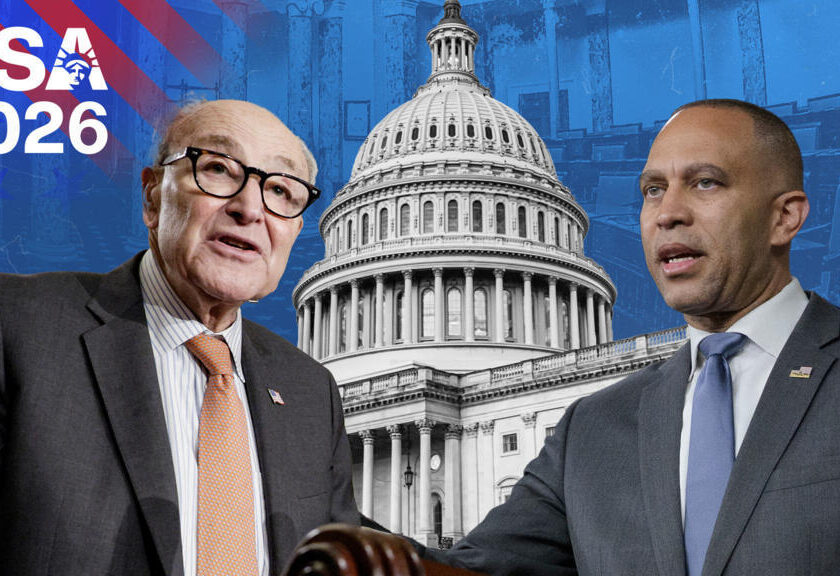
The language coming out of Washington has changed. After months of threats, military operations and warnings of renewed bombardment, US President Donald Trump now says the war against Iran is militarily “effectively over”. Gulf governments are urging restraint, Qatar is working to keep diplomatic channels open, and European powers are pressing for a negotiated settlement.
But the situation on the ground tells a more complicated story.
Commercial vessels continue to face attacks in and around the Strait of Hormuz. The United States is maintaining its naval blockade of Iranian ports. Limited American strikes have continued, while Iran refuses to accept Washington’s terms without major concessions. Saudi Arabia is confronting a renewed Houthi missile campaign, and a vessel operated by Abu Dhabi National Oil Company’s shipping arm has sustained damage in UAE territorial waters.
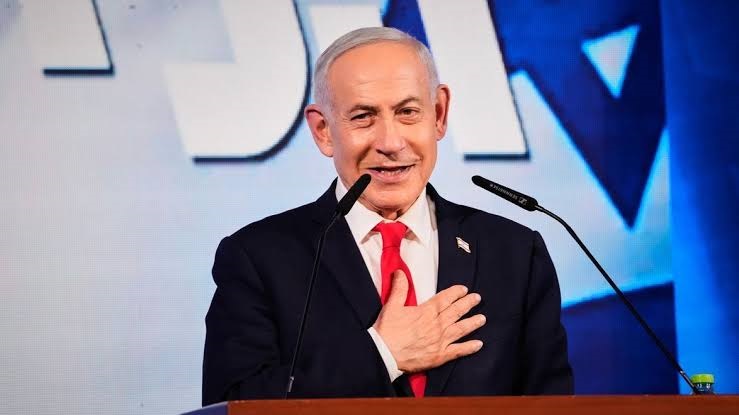
At the same time, Israeli Prime Minister Benjamin Netanyahu is reportedly pressing Trump to resume military action against Tehran.
The region is therefore not moving neatly from war to peace. It is entering a different phase of confrontation, one in which economic pressure, maritime control, diplomatic bargaining and regional security arrangements may matter as much as airstrikes.
Trump says the war is effectively over, but the blockade remains
The latest diplomatic signals came on November 9, when Trump met Qatar’s Prime Minister Sheikh Mohammed bin Abdulrahman Al Thani at the White House.
Following the meeting, Trump told reporters that Iran was militarily defeated and that Washington was maintaining the existing position rather than preparing for another major bombing campaign. He also indicated that further military action was unlikely if negotiations continued to make progress.
The statement was significant, but it was not an announcement of peace.
Trump did not announce a formal settlement, a lifting of sanctions or an end to the US naval blockade. Thousands of American troops remain deployed in the region, and the administration has not indicated that it is preparing to withdraw its military presence.
The distinction is important. Washington appears to be considering a strategy in which Iran remains under severe military and economic pressure without the United States immediately returning to a large-scale bombing campaign.
There is also a domestic political dimension. The Republican Party suffered major losses in the recent US midterm elections, losing both chambers of Congress to the Democrats. The eight-month conflict, rising fuel costs and public dissatisfaction with the war have become political liabilities for the Trump administration, according to reporting by the Associated Press.
Trump has repeatedly threatened escalation before giving diplomacy more time. His latest comments suggest that Washington may now prefer to extract concessions through economic pressure rather than risk another costly military campaign.
That approach was reinforced on November 10 by Secretary of State Marco Rubio. Speaking after meetings with G7 foreign ministers in Paris, Rubio said the economic campaign against Iran was working so effectively that the United States did not currently need major combat operations.
His argument was straightforward: if sanctions and restrictions can achieve Washington’s objectives, another military offensive may be unnecessary.
However, the American position remains coercive. The blockade continues, and Washington has not ruled out further military action if Iran crosses what it considers unacceptable limits.
Task Force Iron Gate: Economic pressure becomes another front
One development that deserves closer attention is the creation of Task Force Iron Gate by US Central Command on November 7.
The name may sound like a new combat formation, but its stated role is different. According to the official CENTCOM announcement, the task force is an internal team of approximately 20 civilian and military personnel based in Tampa, Florida.
Its responsibility is to coordinate efforts to prevent Iran from using land routes and the Caspian Sea to move advanced weapons, dual-use technologies, sanctioned materials and other restricted goods.
In other words, Washington is trying to close potential routes through which Tehran could continue rebuilding military capacity or generating revenue despite restrictions at sea.
This is separate from the naval blockade of Iranian ports. The two measures form part of a wider pressure campaign designed to restrict Iran’s ability to trade, finance military activity and obtain sensitive equipment.
The United States also carried out limited strikes against Iranian air-defence capabilities on Qeshm Island in the Strait of Hormuz on November 6. Iranian officials confirmed that the island had been targeted, while a local official said residential and commercial areas and vital infrastructure had not been damaged. Washington characterised similar recent operations as defensive.
These developments expose the contradiction in the language of an ended war. Major combat operations may be on hold, but military pressure and limited strikes have not disappeared.
The official CENTCOM announcement on Task Force Iron Gate and Al Jazeera’s reporting on the Qeshm strikes provide important context.
Iran is negotiating, but it is not accepting Washington’s terms
Tehran’s response has been equally revealing.
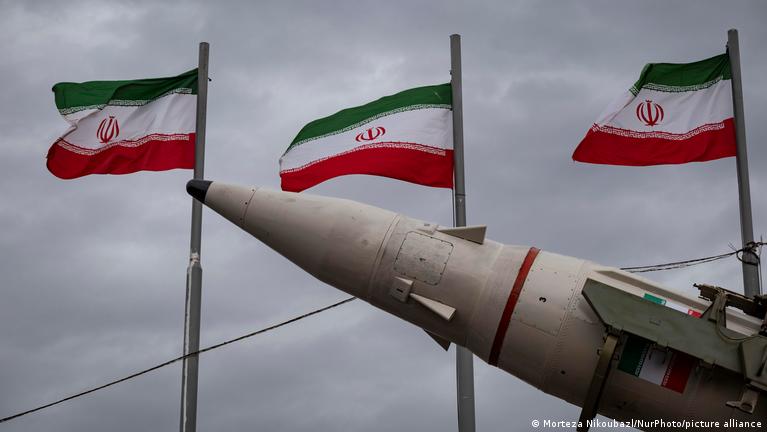
Iranian Foreign Minister Abbas Araghchi has maintained that diplomacy is the only sustainable way to end the conflict. On November 11, he said Iran’s proposal to reopen the Strait of Hormuz within two days of an agreement with Washington remained on the table.
But Iran is attaching substantial conditions.
These include an end to the war on all fronts, the lifting of oil sanctions, the release of frozen Iranian assets abroad and the termination of the American naval blockade of Iranian ports.
Washington, meanwhile, insists that Iran’s nuclear programme must be addressed at the beginning of negotiations. The two sides are therefore approaching the same diplomatic process from very different positions.
For Tehran, the blockade and sanctions are central obstacles that must be removed before a broader settlement can be reached. For Washington, economic pressure is the leverage that could force Iran to accept restrictions on its nuclear ambitions and regional activities.
Iranian public messaging has also been mixed. Araghchi has defended negotiations, while security chief Mohsen Rezaei has dismissed reports of progress as fabricated and urged Washington to accept Tehran’s demands. President Masoud Pezeshkian, meanwhile, has indicated openness to further negotiations but rejected the idea of being forced into an agreement.
This does not necessarily mean Iran is abandoning diplomacy. It suggests that Tehran wants to negotiate without appearing to surrender under pressure.
The Strait of Hormuz remains the real pressure point
Much of the confrontation now revolves around a narrow waterway with enormous consequences for the global economy.
The Strait of Hormuz connects the Persian Gulf with the Gulf of Oman and the Arabian Sea. It is one of the world’s most important routes for oil and liquefied natural gas shipments.
The US Energy Information Administration estimated that oil flows through the strait averaged 20.9 million barrels per day in the first half of 2025. That was equivalent to around 20 per cent of global petroleum liquids consumption and approximately one-quarter of internationally traded maritime oil.
The same EIA analysis estimated that more than 20 per cent of global liquefied natural gas trade also passed through Hormuz during that period, primarily from Qatar.
The Asian connection is especially important. Around 89 per cent of the crude oil and condensate moving through the strait in the first half of 2025 was destined for Asian markets. China, India, Japan and South Korea were among the leading destinations.
This explains why Iran’s ability to disrupt shipping gives it leverage far beyond its own borders.
The latest shipping figures are troubling. Reuters reported on November 11 that 37 vessels had been attacked in the Strait of Hormuz and surrounding waterways during October, the highest monthly total since the war began. Ten attacks had already been recorded in November, according to data cited in the report.
Oil prices also reflected the uncertainty. Brent crude rose to approximately $92.53 per barrel during Wednesday trading, while US West Texas Intermediate reached around $86.71.
Even a diplomatic agreement may not immediately restore normal shipping. Analysts have warned that mine clearance, insurance costs and the willingness of shipowners to send vessels through the region will influence how quickly commercial traffic recovers.
The Strait of Hormuz has become more than a shipping route. It is now one of the central bargaining points in the conflict.
Gulf states want de-escalation, not an Iranian victory
The diplomatic activity of the past two days shows that Gulf governments are becoming increasingly important in efforts to prevent another escalation.
Qatar has emerged as a central intermediary. Its prime minister met Trump in Washington on November 9, then travelled to Paris on November 10 for discussions with Saudi Arabia and the foreign ministers of France, Germany, Italy and the United Kingdom.
The meeting was not simply a general appeal for peace.
According to France’s foreign ministry, the participants called for an end to further military escalation and a diplomatic resolution. They supported Qatar’s mediation efforts and stressed that Iran must not acquire nuclear weapons or continue destabilising activities in the region. They also called for freedom of navigation through the Strait of Hormuz to be restored in accordance with international law.
This is a crucial distinction.
Saudi Arabia, the UAE, Qatar and other Gulf governments have little interest in a renewed military campaign that could expose their cities, energy facilities, ports and shipping networks to further attacks. But that does not mean they accept Iran’s claims over the Strait of Hormuz or support Tehran’s regional policies.
Their priority is regional security and economic stability.
They want Iran contained, shipping restored and the risk of another major war reduced.
The diplomatic position is therefore a balancing act: oppose Iranian attacks, maintain pressure where necessary, but avoid a military escalation that could spread across the Gulf.
GCC military coordination: A defensive response to a widening threat
While Gulf leaders are advocating diplomacy, they are also strengthening their collective security arrangements.
On November 10, the six members of the Gulf Cooperation Council approved an advanced headquarters for their Unified Military Command in Kuwait and agreed to allocate appropriate forces to it.
The decision followed a meeting of the GCC Joint Defence Council in Bahrain, attended by the defence ministers of member states.
The announcement is significant, but it needs to be understood accurately. The GCC did not create an entirely new military alliance overnight. Its Unified Military Command was established in 2013 to coordinate joint operations and strengthen the defence capabilities of member states.
What has now been approved is an advanced command headquarters in Kuwait, along with the deployment of forces considered appropriate.
The GCC has not publicly disclosed the size of those forces, the command’s precise operational responsibilities or a detailed deployment timetable. It would therefore be premature to describe the decision as the creation of a fully integrated Gulf army.
Nevertheless, the timing is important. Gulf countries have faced repeated missile and drone attacks since the US and Israel began their war against Iran on February 28.
The decision suggests that regional governments are preparing for a prolonged period of insecurity, even while they work to prevent a wider conflict.
UAE shipping incident raises another warning
The UAE has also faced a fresh maritime security incident.
ADNOC Logistics and Services confirmed that one of its vessels sustained damage following an attack in UAE territorial waters in the Arabian Gulf on the afternoon of November 10.
The company said response efforts were under way but did not identify the vessel, explain the nature of the attack or disclose the extent of the damage. It also did not identify who was responsible.
That last point is important. The incident occurred amid a wider pattern of maritime attacks, but the available official statement does not establish who carried it out. It would be inaccurate to attribute the attack to Iran without further evidence.
The incident nevertheless highlights the vulnerability of commercial shipping and energy logistics in the region. ADNOC’s vessels operate within a network that connects Gulf energy production to international markets. Damage to even one ship can raise concerns among operators, insurers and buyers.
The UAE’s aviation sector is also experiencing selective disruption. Gulf Business reported that Etihad’s passenger and cargo flights between Abu Dhabi and Riyadh and Dammam remained cancelled through November 19. Several flydubai departures to Dammam were also listed as cancelled on November 10, despite the planned resumption of services.
These are not evidence of a complete shutdown of Gulf aviation. They do, however, show how regional security concerns are affecting travel and logistics beyond the immediate battlefield.
Saudi Arabia faces a second security challenge from the Houthis
Saudi Arabia’s security situation is becoming more complicated because the Iranian conflict is not the only source of regional instability.
The Houthi movement in Yemen has intensified its attacks on Saudi targets, opening another front that threatens airports, energy facilities and strategic infrastructure.
On November 10, the Saudi-led coalition said it had intercepted a ballistic missile and a cruise missile fired towards Riyadh, another ballistic missile aimed at the kingdom’s southern region and a drone over the oil-rich east.
Saudi civil defence had issued warnings for Riyadh, Abha and Khamis Mushait before later announcing that the immediate threats had passed.
The Houthis claimed to have struck King Khalid International Airport and an oil facility in Abqaiq. Saudi Arabia had not immediately commented on those claims.
The exchanges have intensified since September, when the Houthis advanced towards the Bab el-Mandeb Strait, the strategic shipping passage at the southern entrance to the Red Sea.
This creates a second maritime concern for the Gulf.
Saudi Arabia has been using its East-West Pipeline to move roughly four million barrels of crude per day to the Red Sea port of Yanbu. The route is particularly important when shipping through Hormuz is disrupted. Reuters estimates that this volume is equivalent to around four per cent of global oil supply.
The Houthis have claimed attacks on the pipeline, while Saudi state media reported a limited fire in the Medina region but said operations were not affected.
The distinction between the two fronts matters. The Houthis are an Iran-aligned movement, but their conflict with Saudi Arabia has its own history and local objectives. Their actions should not automatically be treated as direct Iranian military operations.
Still, the overlap is strategically significant. If both Hormuz and the Red Sea approaches face serious disruption, the pressure on global shipping and energy markets could become considerably greater.
Netanyahu’s pressure on Trump comes amid Israel’s own political crisis
While Gulf governments are pushing for restraint, Netanyahu appears to favour a tougher approach towards Tehran.
A report by the Financial Times, carried by several media outlets including The Times of Israel, said Netanyahu had been calling Trump daily to urge him to resume military action against Iran.
The report quoted a person briefed on the discussions. However, another source familiar with the situation in Israel reportedly said Netanyahu wanted military action to resume but was not currently leading a coordinated effort to persuade Trump. The daily-call claim has not been publicly confirmed by either government.
That qualification matters. It is a significant report, but it should not be presented as an established fact.
Netanyahu’s public position is clearer. Speaking after the swearing-in of Israel’s new parliament on November 10, he called for a unity government and argued that Israel should work to topple the Iranian government.
His appeal comes at a politically sensitive moment.
Israel’s October 27 election produced no clear parliamentary majority. The final results gave Netanyahu’s bloc 53 seats, while the four main Jewish-led opposition parties associated with Gadi Eisenkot held 48. The Arab-led Joint List and Ra’am together secured 19 seats. A government normally needs the support of 61 members in the 120-seat Knesset to command a stable majority.
President Isaac Herzog gave Eisenkot the mandate to form a government on November 8. He has 28 days, with a possible extension of up to 14 days.
The 67 parliamentary recommendations Eisenkot received during the presidential consultations gave him the first opportunity to form a government. They did not guarantee that all 67 lawmakers would join or support the same coalition.
The difficulty is political as well as numerical. Some of Eisenkot’s Jewish opposition partners oppose relying on Arab-led parties, while the ultra-Orthodox parties have their own demands, particularly over military-service exemptions.
The new Knesset was sworn in on November 10, but Netanyahu remains caretaker prime minister. Eisenkot’s bloc has already started pursuing legislative changes, including proposals for an official inquiry into the October 7, 2023, attacks, term limits for prime ministers and changes to judicial powers.
Netanyahu, meanwhile, has attacked the possibility of a government supported by Arab-led parties. Eisenkot called his remarks divisive and cancelled a planned meeting with Likud negotiators.
This domestic struggle is relevant to the Iran debate. Netanyahu is using the threat from Tehran to argue for a national unity arrangement under his leadership. The reported private pressure on Trump, if accurate, would fit that tougher public position. But it does not prove that the Israeli political crisis is the reason for his Iran policy.
There is also a larger distinction: Netanyahu is the outgoing prime minister and caretaker leader. His position should not be confused with a settled policy mandate from a newly formed government, because that government does not yet exist.
Why the crisis matters to India and South Asia
For India, the conflict is not a distant diplomatic dispute. It is an energy-security issue with direct economic consequences.
India’s crude oil import dependence reached a provisional 88.7 per cent in the 2025-26 financial year, according to figures reported from a government reply in Parliament. The country is therefore highly exposed to international price movements, even when it diversifies the countries from which it buys oil.
The EIA’s data shows why Hormuz matters so much to Asian economies. Most of the oil moving through the waterway goes to Asian markets, with India among the leading destinations alongside China, Japan and South Korea.
A sustained rise in crude prices can increase India’s import bill, put pressure on the rupee and feed into inflation. Higher energy and freight costs can also affect transport, manufacturing, agriculture and household budgets.
For Jammu and Kashmir, the impact would be indirect but real. Higher fuel and transport costs can raise the price of goods entering the region, increase logistics expenses for businesses and put pressure on tourism-related travel costs. If regional aviation disruptions continue, travel connections through Gulf hubs may also become less predictable.
There is another human dimension. Millions of South Asians work across Gulf economies. A prolonged regional crisis can affect employment confidence, travel arrangements, business activity and the financial security of families that depend on income from the region.
The immediate concern for India is not that missiles will reach the subcontinent. It is that a prolonged struggle over Gulf shipping could make energy more expensive and international trade less predictable.
What happens next?
Three broad possibilities now stand out.
First, a negotiated arrangement. Qatar’s mediation could help Washington and Tehran reach an understanding that links nuclear restrictions, sanctions relief, the naval blockade and the reopening of Hormuz. But the two sides remain far apart over the sequence and conditions of any agreement.
Second, a prolonged economic confrontation. Washington may continue the blockade and sanctions while avoiding major airstrikes. Iran could respond by maintaining pressure on shipping and refusing to make concessions until its own conditions are addressed. This would reduce the immediate risk of a large military campaign but keep the region unstable.
Third, renewed escalation. If negotiations collapse, limited strikes could expand into a wider military campaign. Shipping attacks, Houthi operations and threats to Gulf energy infrastructure could then become more dangerous. The risk would not be confined to Iran, Israel or the United States.
The central question is whether Washington and Tehran can agree on a formula that allows both sides to claim they have protected their core interests. Iran wants relief from the blockade and sanctions. The United States wants nuclear guarantees and freedom of navigation. Gulf governments want security without another war. Israel’s leadership, particularly Netanyahu, wants Iran kept under intense pressure.
These demands are not yet aligned.
The most important story, therefore, is not simply that the guns may be falling silent. It is that the conflict is moving from direct military confrontation towards a contest over economic survival, maritime access and diplomatic leverage.
For the Gulf states, preventing another war is now a matter of national security. For Washington, economic pressure may offer a less costly alternative to renewed bombardment. For Tehran, control over the Strait of Hormuz remains a source of leverage. And for Israel, the question of how far to push Iran is unfolding alongside a major struggle over who will govern the country.
The region may be approaching a diplomatic opening, but the evidence does not yet support calling it peace. The missiles have not disappeared, the ships are not moving freely, and the central political disagreements remain unresolved.