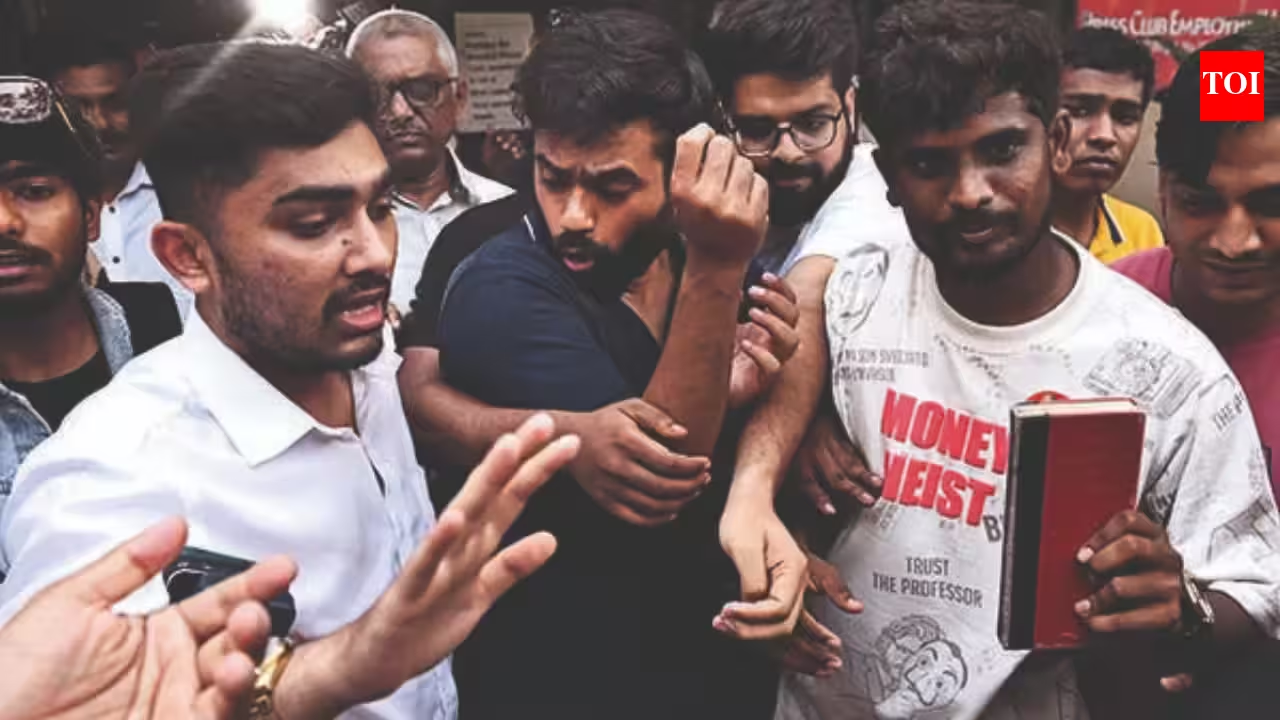
CJP founder Abhijeet Dipke and party leaders Saurav Das and Ashutosh Ranka were reportedly detained aboard their Delhi-bound flight ahead of the planned Jantar Mantar protest. The action came amid sweeping security restrictions over the party’s demand for Chief Election Commissioner Gyanesh Kumar’s resignation.
Javid Amin | New Delhi | October 10, 2026
The planned Cockroach Janta Party (CJP) protest at Jantar Mantar took a dramatic turn on Saturday morning after party founder Abhijeet Dipke and senior leaders Saurav Das and Ashutosh Ranka were detained by Delhi Police upon arriving at Indira Gandhi International Airport, according to multiple media reports.
The three leaders were reportedly intercepted aboard their flight before they could leave the aircraft and proceed towards the proposed demonstration. News channel NDTV reported that Dipke broadcast parts of the encounter on Instagram, showing police personnel entering the plane and an exchange between the officers and CJP members. The leaders questioned why they were being detained before disembarking. (NDTV)
The reported detentions came as authorities tightened security across the national capital ahead of a demonstration demanding the resignation of Chief Election Commissioner Gyanesh Kumar over allegations concerning the Special Intensive Revision (SIR) of electoral rolls.
The development added three prominent CJP organisers to the list of people reportedly taken into custody as police sought to prevent an unauthorised gathering. YouTuber and political commentator Dhruv Rathee was also reported to have been detained earlier from his Gurugram residence.
The incident has shifted attention from the protest’s original demands to a wider dispute over preventive policing, access to the capital and the conditions under which citizens can participate in demonstrations.
CJP leaders reportedly detained aboard Delhi-bound flight
According to reports published on October 10, Delhi Police personnel entered the aircraft carrying Dipke, Das and Ranka after it arrived at the airport.
Dipke had travelled from Mumbai to Delhi to lead the planned demonstration. Video footage circulated by the CJP founder reportedly showed police officers approaching the group while the leaders questioned the action and insisted on their right to proceed.
The Times of India reported that slogans were raised during the encounter and that Dipke challenged the officers to arrest him. (Times of India)
The distinction between detention and formal arrest remains important. Although media reports described the leaders as detained or taken into custody, the precise statutory grounds, duration of custody and any subsequent legal proceedings should be established through official records.
The episode was particularly notable because the action reportedly took place before the organisers could reach the proposed protest site. It therefore raised questions about the use of preventive measures against people authorities believed intended to participate in a demonstration for which permission had been denied.
Those questions require examination of the specific police orders and legal provisions involved, rather than relying solely on either the organisers’ criticism or the authorities’ stated security concerns.
A wider operation against protest organisers
The airport detentions were reported alongside other preventive actions taken ahead of the CJP demonstration.
Rathee was reportedly detained from his residence in Gurugram’s Sector 56, while CJP legal cell head Ratna Singh was also reported to have been detained from her home. These developments suggested that the police operation extended beyond the immediate protest area to organisers and prospective participants elsewhere.
NDTV reported that more than 400 people suspected of being protesters had been detained in different parts of the capital overnight. That figure should be treated as a reported estimate rather than a final, independently verified count of people detained specifically in connection with the CJP movement. (NDTV)
CJP had previously warned that its leaders could face detention ahead of October 10. In statements reported earlier in the week, Das and Ranka said they had received information that the government planned to take action against them and other organisers.
Those earlier statements were allegations about anticipated police action. The reported detentions on Saturday made the issue more immediate, but do not independently establish every claim about the government’s intentions or the legality of each individual action.
For the organisers, the priority became securing the release of detained leaders and maintaining the protest campaign. For the authorities, the immediate challenge was enforcing restrictions around an event they considered a potential public-order risk.
Why the CJP called the Jantar Mantar protest
The CJP had called for a major mobilisation on October 10 to demand the resignation of Chief Election Commissioner Gyanesh Kumar.
The campaign centres on concerns about the Special Intensive Revision of electoral rolls and allegations that the process could lead to the wrongful removal of eligible voters. The party has called for accountability and greater scrutiny of the Election Commission’s handling of the exercise.
Electoral-roll revisions are an important part of maintaining accurate voter lists, but they can also generate disputes over verification, documentation, exclusions and the ability of citizens to challenge errors.
The central question is whether the process safeguards both the integrity of electoral rolls and the voting rights of eligible citizens. Allegations of wrongful deletions need to be assessed through official data, transparent procedures and individual appeals; they should not be treated as proven solely because political groups have raised them.
The BJP and the Election Commission have rejected allegations of electoral manipulation. The dispute remains politically contested, with the CJP and other critics seeking explanations and accountability.
The planned demonstration was intended to bring those concerns into public view and place pressure on the Election Commission’s leadership.
Police denied permission, citing security concerns
Delhi Police had denied permission for the proposed CJP demonstration, citing procedural issues, public-order concerns and the possible impact on traffic and security arrangements.
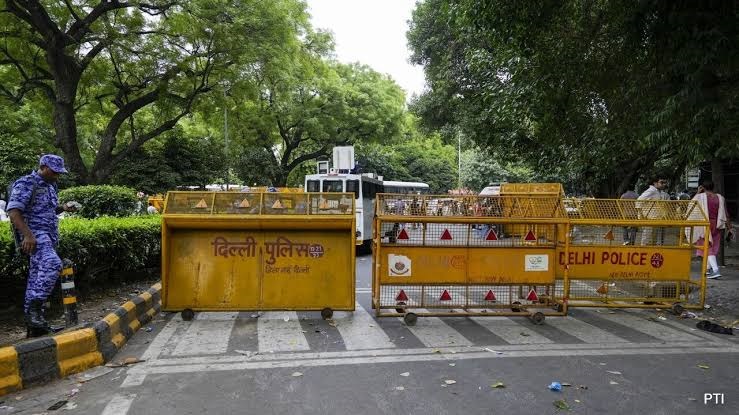
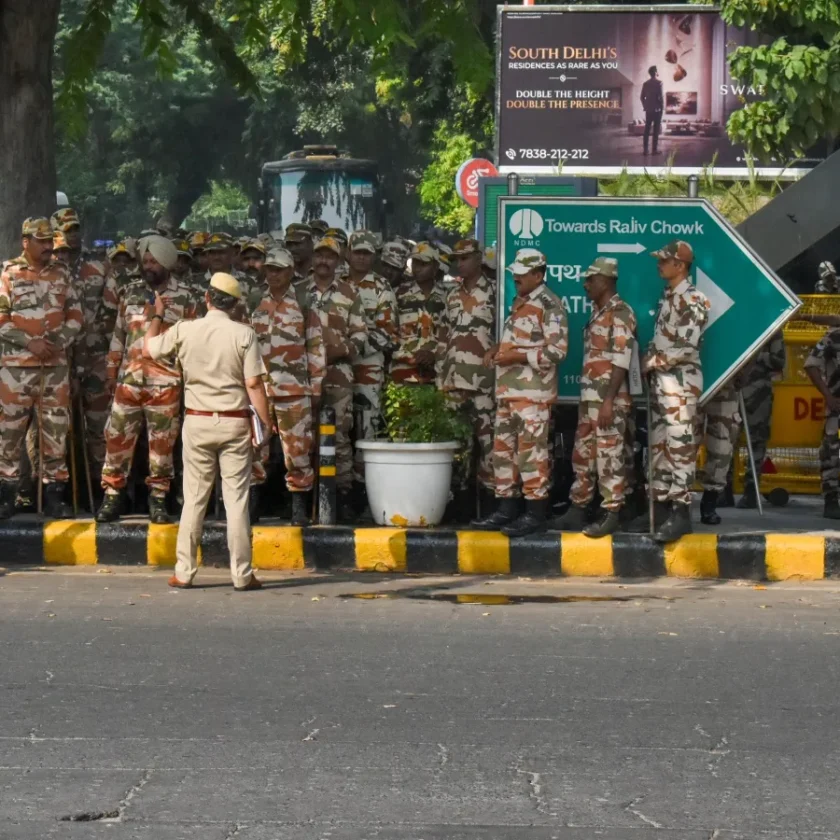
The authorities prepared an extensive deployment across central Delhi and surrounding areas, including barricades, checkpoints and measures intended to prevent large crowds from gathering at unauthorised locations.
The Union Home Ministry also flagged potential law-and-order risks and directed coordination with states and Union Territories, according to reporting by The Indian Express. The ministry’s position was that authorities needed to prevent possible disruption and damage to public infrastructure. (The Indian Express)
Authorities have a responsibility to prevent violence and protect public safety. However, the use of preventive detention raises separate questions about the grounds for taking individuals into custody, the necessity of the action and compliance with legal safeguards.
A denial of permission for a demonstration does not, on its own, establish the legality of every subsequent detention. Each action must be assessed in light of the applicable law and the individual circumstances.
Delhi faces extensive restrictions
The detentions took place against the backdrop of an unusually extensive security operation in the capital.
Media reports described thousands of police and paramilitary personnel being deployed, barricades and vehicle checks being installed, dozens of Metro stations being closed or having access restricted, and train services being cancelled or rescheduled. A temporary mobile internet suspension was also imposed within a defined area of central Delhi.
Reports differed on some figures, including the number of Metro stations affected and the scale of the security deployment. Those differences may reflect changing arrangements and the areas counted by individual outlets.
The internet restriction was scheduled to operate from 10 pm on October 9 to 10 pm on October 10 within a four-kilometre radius of the Janpath–Kartavya Path crossing. It should not be described as a citywide internet shutdown.
Although these measures were introduced in connection with the planned demonstration, their effects extended to ordinary residents, workers and commuters. Transport disruptions can complicate travel, while mobile internet restrictions can affect digital payments, navigation, work and access to public information.
The central policy question is whether such measures are proportionate to the risks authorities are seeking to manage and whether less restrictive alternatives are available.
Supreme Court raises concerns over transport curbs
The Supreme Court also intervened in the dispute over security arrangements on October 9, expressing concern about a complete shutdown of Metro and railway services.
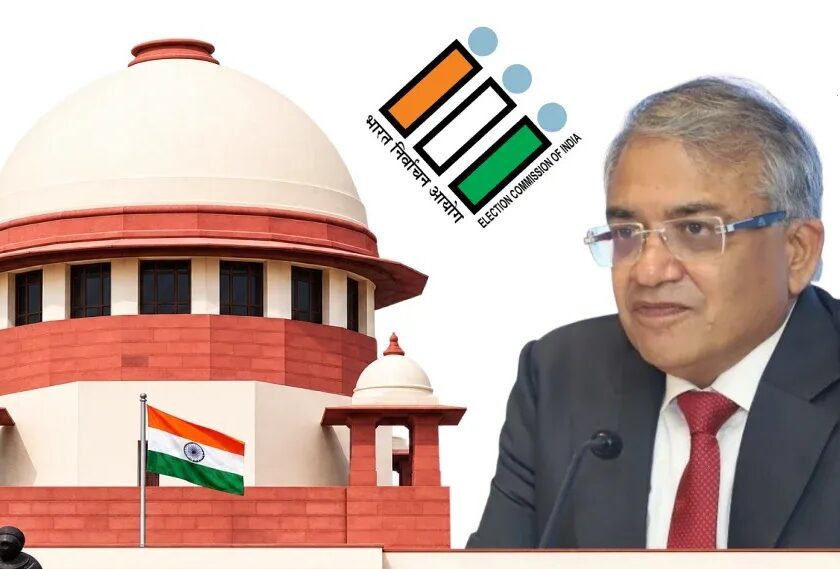
A bench led by Chief Justice of India Surya Kant said public transport should continue in a regulated manner so that ordinary commuters would not face unnecessary inconvenience. The court called for a proportionate approach and appropriate public advisories.
The bench’s observations concerned transport restrictions. They were not a final ruling on the legality of the detentions of Dipke, Das, Ranka or other CJP supporters, nor did they determine the merits of the allegations against the Election Commission.
Nevertheless, the intervention highlighted an important distinction: authorities can impose security measures, but those measures should take account of the needs of people who are not participating in a protest.
The court’s observations also intensified scrutiny of whether restrictions surrounding the CJP demonstration were appropriately tailored to the risks identified by the authorities. (The Indian Express)
CJP’s challenge: Can the movement continue without its leaders?
The reported detention of key organisers creates an immediate organisational challenge for the CJP, which had called for a large demonstration in Delhi and protests elsewhere.
The movement’s campaign had been built around a public demand for electoral accountability. Its leaders had also said before October 10 that the prospect of detention would not stop them from pursuing their objectives.
With Dipke, Das and Ranka reportedly in custody, the immediate questions concern their legal status, access to legal assistance and whether they will be released or face further proceedings.
It is also unclear from the reports cited here how the detention of the organisers affected the protest’s eventual turnout and the movement’s ability to coordinate activities across different locations.
The episode demonstrates why verified information about custody matters. An official account of the legal grounds, any restrictions imposed and the status of each person would help distinguish lawful preventive action from allegations of arbitrary detention.
The larger debate over preventive policing and peaceful assembly
The CJP episode has become part of a broader debate about the balance between maintaining public order and protecting peaceful political participation.
Police must respond to credible security risks and ensure that demonstrations do not result in violence or serious disruption. At the same time, preventive measures must comply with the law, and detention cannot be assessed simply by reference to the political controversy surrounding a protest.
The relevant questions are specific: What legal provision was invoked? What grounds were recorded for each detention? Were required safeguards followed? How long were the individuals held, and what remedies were available to them?
The organisers’ allegations of a crackdown deserve to be reported with attribution, just as the authorities’ stated security rationale deserves to be presented accurately. Neither should substitute for examination of the underlying evidence.
The same principle applies to the original electoral dispute. Claims about voter deletions must be examined through reliable records and established procedures, while the right to raise concerns about electoral administration remains a separate issue from whether those concerns are ultimately substantiated.
What happens next?
The immediate focus is on the custody status of Dipke, Das, Ranka and other reported detainees, along with any official statement clarifying the grounds for the police action.
The next stage will also depend on whether the authorities permit any alternative form of demonstration, whether legal challenges are filed, and how the CJP responds to the restrictions imposed on its planned gathering.
The underlying dispute over electoral-roll revisions remains unresolved. The CJP’s demand for the Election Commission chief’s resignation is a political demand, not a finding of wrongdoing. Any assessment of the revision process requires evidence concerning how the rolls were prepared, which entries were changed and what remedies are available to affected voters.
For now, the reported airport detentions have become one of the defining developments in the build-up to the CJP protest, placing the use of preventive policing under intense public scrutiny.
Conclusion: A protest dispute that extends beyond Jantar Mantar
The reported detention of Abhijeet Dipke, Saurav Das and Ashutosh Ranka aboard their Delhi-bound flight marks a significant development in the CJP’s planned protest against Chief Election Commissioner Gyanesh Kumar.
The action came amid extensive security restrictions and reports of other organisers and prospective protesters being detained. The police had denied permission for the demonstration, citing procedural and public-order concerns, while CJP supporters have challenged the restrictions.
The precise legal basis and circumstances of each detention remain essential to assessing the actions taken. The reported detentions alone do not settle the question of legality, just as the organisers’ allegations do not establish that every police measure was unlawful.
What is clear is that the dispute now extends beyond the original demand for electoral accountability. It also concerns how preventive powers are used, how security measures affect the public and how peaceful demonstrations can be managed within the law.
Those questions will require clear official explanations, transparent procedures and careful scrutiny of the facts as they emerge.