Trump Threatens Fresh Iran Strikes as Hormuz Diplomacy Hangs in Balance
By: Javid Amin | 30 September 2026
“Make a Deal or Blow Them Up”: Trump Raises the Stakes as US-Iran War Enters a New Diplomatic Phase
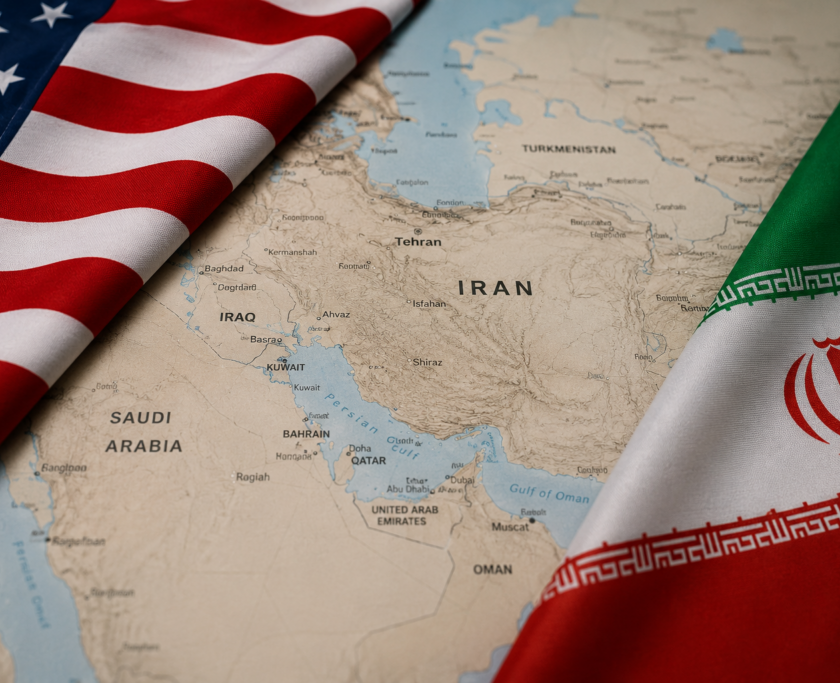
Washington: The seven-month US-Iran conflict has reached another precarious moment, with President Donald Trump warning that Washington may soon have to choose between a negotiated settlement with Tehran and renewed military action.
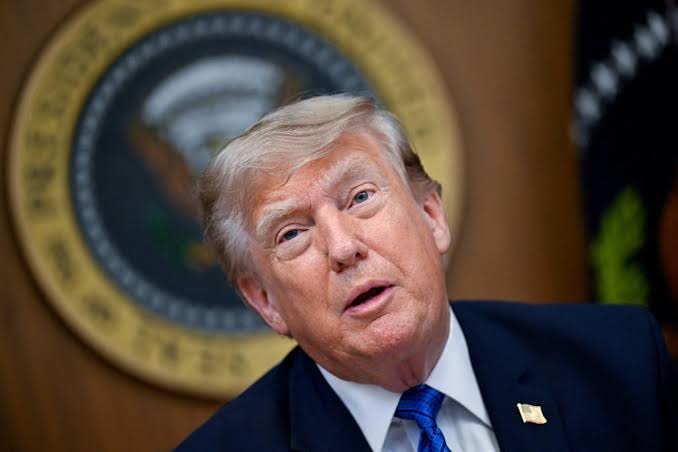
Speaking to reporters at the White House, Trump said the United States would either “make a deal” with Iran or “blow them up”, adding that the confrontation would end “very soon, one way or the other.” His remarks came as diplomatic channels remain open, but with Washington and Tehran still sharply divided over the conditions for a ceasefire and the reopening of the strategically vital Strait of Hormuz.
The statement does not amount to a formal announcement of a new US attack. It does, however, underline how little room appears to remain between diplomacy and renewed military escalation.
Behind the rhetoric lies a much more complicated negotiation involving Iran’s nuclear programme, sanctions, maritime security, oil exports, the US naval blockade and the future of one of the world’s most important energy corridors.
And for countries far beyond the Gulf, including India, the stakes are economic as much as military.
Trump Signals a New Decision Point
Trump’s latest comments came after weeks of mixed signals from Washington.
The US president has repeatedly combined threats of military force with calls for an agreement with Tehran. The latest remarks were particularly stark because they framed the next phase of the conflict as a choice between a deal and further destruction.
Asked how he could negotiate with Iranian leaders whom he has previously described in highly critical terms, Trump responded that the alternative could be to “blow them up”. He then said Washington had to make a decision and that the conflict would end soon, regardless of which path was chosen.
There was another significant element to Trump’s comments.
He said the United States currently had “total control” of the Strait of Hormuz, while acknowledging that the situation could change if Iran were to lay a mine in the waterway.
That reference matters because Hormuz has become one of the central bargaining points in the conflict.
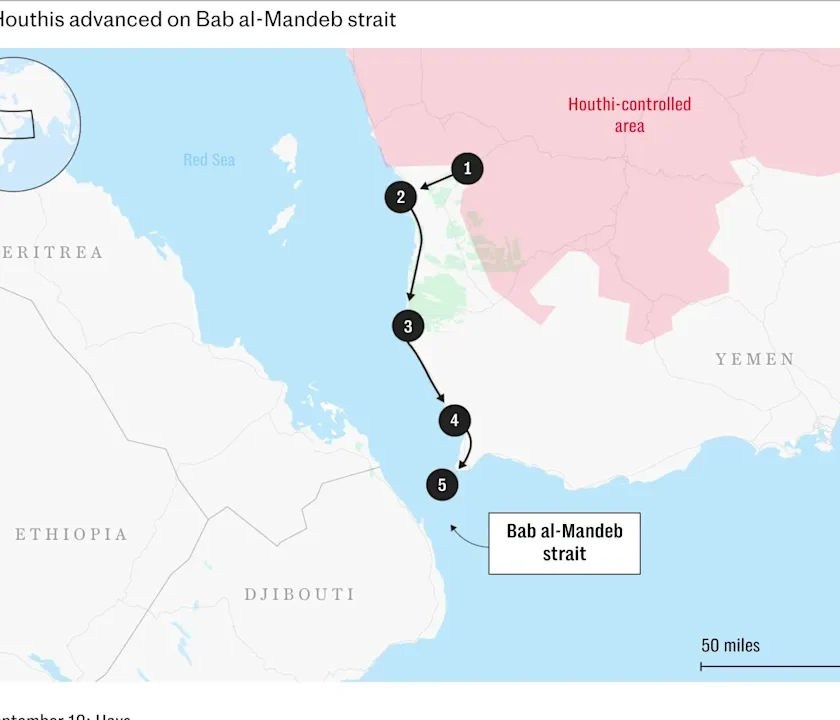
The waterway is not simply another maritime passage. It is the narrow gateway connecting the Persian Gulf with the Gulf of Oman and Arabian Sea, through which enormous volumes of oil and gas have historically moved.
Iran Has Received a US Response, but the Core Dispute Remains
Diplomacy has not completely collapsed despite the military confrontation.
Iranian Foreign Minister Abbas Araghchi has received a US response to Tehran’s latest proposal through Qatari mediation, according to Reuters. The proposal was designed as a seven-day trust-building arrangement aimed at restoring maritime traffic through Hormuz and reviving negotiations.
The details of Washington’s latest response have not been fully disclosed.
That is important. Reports that Iran has “received a counterproposal” should not automatically be interpreted as evidence that the two sides have reached a preliminary agreement.
The central problem is sequencing.
Iran has proposed steps involving the reopening of Hormuz and the easing of restrictions in exchange for US concessions. Washington, meanwhile, has sought broader assurances and has objected to aspects of Tehran’s proposed framework.
According to Reuters, the current mediation effort is focused heavily on determining which side acts first and which commitments are made simultaneously.
That technical question has become a political obstacle.
For Tehran, making major concessions before receiving guarantees from Washington carries the risk of surrendering leverage. For Washington, lifting pressure before Iran implements verifiable commitments could weaken its bargaining position.
The result is a familiar diplomatic deadlock: both sides appear interested in reducing the immediate confrontation, but neither wants to be seen as giving ground first.
What Iran Actually Proposed on Hormuz
Iran’s seven-day proposal, presented through diplomatic channels in September, sought to reopen the Strait of Hormuz and resume broader nuclear discussions.
The proposal was linked to several demands, including the lifting of the US naval blockade, relief from oil sanctions and other economic restrictions, and a ceasefire framework involving the wider regional conflict.
Trump rejected Tehran’s proposal earlier, describing aspects of it as unacceptable. But the subsequent exchange of messages through Qatar indicates that diplomacy has not disappeared.
This distinction is crucial.
A rejected proposal is not the same thing as a collapsed diplomatic channel.
Qatar has continued trying to bridge the gap, while Pakistan has also been involved in diplomatic contacts. Separate discussions involving Iranian and American representatives took place around the United Nations General Assembly in New York, although the negotiations have struggled to overcome fundamental differences.
The diplomatic activity therefore exists alongside the threat of renewed military action rather than replacing it.
Hegseth Says Iran’s Military Has Been Devastated
The military picture presented by Washington is equally uncompromising.
US Defence Secretary Pete Hegseth used his September 30 “State of the Force” address at Marine Corps Base Quantico to describe the damage inflicted on Iranian military capabilities in sweeping terms.
His remarks echoed claims he made earlier in the war that Iran’s conventional military infrastructure had been severely degraded.
US officials have previously said American and Israeli operations destroyed or disabled large parts of Iran’s naval forces, air-defence infrastructure and missile capabilities. Hegseth has described the Iranian navy as combat ineffective and said Iran’s military-industrial base has been badly damaged.
There is substantial evidence that Iranian military assets have suffered serious losses.
Jane’s, for example, documented the destruction of Iranian naval vessels during the opening phase of the conflict, while satellite imagery reviewed by BBC Verify in March showed damage to Iranian naval facilities and multiple vessels.
But there is an important distinction between severe degradation and the literal destruction of an entire military capability.
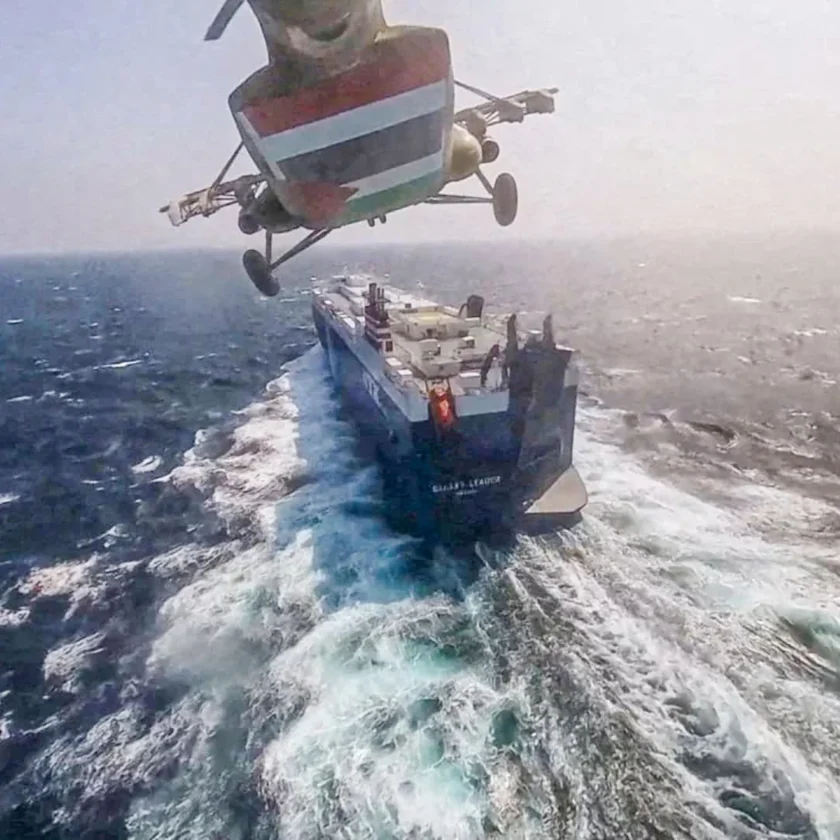
Iran has continued to possess missiles, drones, military infrastructure and the ability to threaten shipping and regional targets. Reports in recent months have also documented continuing disruption around Hormuz and attacks affecting commercial vessels.
In other words, Washington’s assessment of the battlefield is that Iran’s conventional military has been dramatically weakened. That does not mean Tehran has lost every means of retaliation.
The Earlier US Claims About Iran’s Navy
The scale of the destruction claimed by Washington has evolved during the war.
In March, Hegseth said that more than 20 Iranian naval vessels had been destroyed during the initial phase of Operation Epic Fury. He also said an American submarine had sunk an Iranian warship in the Indian Ocean.
Later, the US Department of War claimed that more than 150 Iranian naval vessels had been sunk since the operation began.
Such figures should be read in context.
The US military is itself the source of many of the headline casualty and destruction assessments, while independent assessments are more limited because access to the battlefield is restricted and both Washington and Tehran have strong incentives to shape the narrative.
That does not make the American claims false. It means the precise scale of the damage remains difficult to independently establish.
What is much easier to establish is that Iran’s naval and air-defence infrastructure has taken significant punishment.
Why Hormuz Has Become the Centre of the Conflict
Few geographical locations illustrate the global consequences of the war better than the Strait of Hormuz.
The US Energy Information Administration estimates that roughly 20.9 million barrels per day of oil moved through Hormuz in the first half of 2025. That represented about one-fifth of global petroleum liquids consumption and roughly one-quarter of global maritime oil trade.
The strait is also important for liquefied natural gas.
The EIA estimated that around one-fifth of global LNG trade passed through Hormuz in 2024, much of it originating from Qatar.
That explains why the conflict has become a global economic issue.
A prolonged disruption does not merely affect Iran and its immediate neighbours. It can influence tanker insurance, freight rates, refinery costs, fuel prices, inflation and industrial production thousands of kilometres away.
The alternatives are also limited.
Saudi Arabia, the UAE and Iran possess pipelines that can bypass part of Hormuz, but the EIA estimates that available alternative pipeline capacity can move only a fraction of the volumes normally handled by the strait.
Oil Markets Are Already Pricing in Prolonged Disruption
The energy market has reacted accordingly.
Reuters reported on September 30 that analysts had raised their 2026 oil-price forecasts because of prolonged disruption in Gulf exports. The median forecast in its latest poll put Brent crude at an average of $89.05 a barrel for 2026, with analysts citing continued uncertainty around Hormuz.
The market has already experienced prices above $100 during periods of heightened disruption.
After Trump rejected Iran’s earlier peace proposal, Brent crude settled at $105.28 a barrel on September 27, according to Reuters.
That does not mean every new threat automatically produces a sustained oil-price shock.
Markets have also adapted.
Gulf producers have increased exports through alternative arrangements, including ship-to-ship transfers and pipelines where available. Reuters reported that Saudi crude shipments through Hormuz were expected to rise substantially in September despite the security risks.
But adaptation has its limits.
More complicated shipping routes mean higher insurance, freight and logistical costs. Those costs can eventually filter through to refiners, transport companies and consumers.
India Has a Direct Economic Interest
For India, the Hormuz crisis is not a distant geopolitical story.
Indian refiners are deeply integrated into global crude markets and rely on supplies from the Middle East alongside Russian and other sources.
Recent reporting indicates that India’s energy imports from West Asia increased sharply in September as supply conditions through Hormuz improved. That recovery itself demonstrates how closely Indian energy flows are connected to developments in the Gulf.
Indian refiners have also been adjusting their supply mix.
Reuters reported that India’s Russian crude imports fell in August while Iraqi and Saudi supplies moved in the opposite direction, as refiners assessed changing prices, sanctions risks and availability.
A renewed closure or severe restriction at Hormuz could therefore create a complicated problem for India.
The impact would not necessarily appear immediately as a shortage of crude. India can diversify suppliers and use strategic reserves and alternative logistics.
The bigger concern would be the combined effect of higher crude prices, freight costs, insurance premiums and a weaker supply cushion.
For an economy sensitive to imported energy prices, that can become an inflation issue as well as an external-sector issue.
Washington’s Military Pressure Is Continuing Even as Diplomacy Moves
The latest diplomatic effort is also taking place against a backdrop of continued American military activity.
On September 30, Hegseth announced the creation of a new Autonomous Warfare Command focused on drones, artificial intelligence and robotic warfare. He also announced plans to reduce the number of US generals and admirals by 20 percent and outlined other structural changes to the armed forces.
The timing is significant.
The United States is attempting to redesign parts of its military while still fighting a major regional war.
Hegseth’s message at Quantico was therefore not simply about Iran. It was also an attempt to define how Washington wants to fight future conflicts, with greater emphasis on autonomous systems, drones and technological warfare.
That broader military transformation could shape the next stage of the Iran conflict if fighting resumes.
Tehran Still Has Leverage
Despite the damage inflicted on Iranian conventional forces, Tehran retains forms of leverage that cannot be measured simply by counting destroyed aircraft or ships.
The most obvious is geography.
Iran sits alongside the Strait of Hormuz. Even when it cannot completely close the waterway, its ability to threaten commercial shipping creates uncertainty.
Recent attacks on tankers have demonstrated the vulnerability of maritime traffic. Reuters reported in September that two supertankers carrying Saudi crude were struck by unidentified projectiles while passing through the strait.
Iran also retains the ability to impose costs through missiles, drones and regional networks.
That helps explain why Washington’s military superiority has not automatically translated into a diplomatic settlement.
Military dominance can destroy infrastructure. It cannot, by itself, guarantee political compliance.
The Nuclear Question Remains at the Heart of the Dispute
The conflict began in large part around the long-running dispute over Iran’s nuclear programme.
Washington’s stated objective has been to prevent Iran from acquiring a nuclear weapon, while Tehran has maintained that its nuclear programme has legitimate purposes and has repeatedly demanded sanctions relief and recognition of its rights under international agreements.
The military campaign has damaged nuclear-related infrastructure, according to US and Israeli assessments, but the political problem has not disappeared.
Even if facilities are destroyed, the knowledge, personnel and technical capacity required to rebuild a nuclear programme cannot necessarily be eliminated through air strikes alone.
That is one reason nuclear verification is likely to remain central to any durable agreement.
A ceasefire that merely stops shooting without establishing monitoring arrangements could leave the underlying dispute unresolved.
The Real Test Is Whether Threats Can Produce a Sustainable Agreement
Trump’s latest warning presents Tehran with a stark public choice.
But the diplomatic reality is more complicated.
Any agreement would have to address several issues at once:
- the future of Iran’s nuclear programme;
- sanctions and oil-export restrictions;
- the US naval blockade;
- the reopening and security of the Strait of Hormuz;
- regional military activity;
- mechanisms for verifying compliance;
- and guarantees against another sudden collapse of the agreement.
The experience of the past months has made trust particularly difficult.
Each side accuses the other of violating or undermining previous understandings. Each wants guarantees before making irreversible concessions.
That is why the seven-day proposal has focused so heavily on sequencing.
If Washington lifts restrictions first, Tehran wants assurances that those concessions will not be reversed. If Iran reopens Hormuz first, Washington wants confidence that maritime access will not again become a bargaining weapon.
The dispute is therefore not simply about whether there will be a deal.
It is about what happens on the morning after the deal is signed.
A Dangerous Choice Between Escalation and Diplomacy
Trump’s October 1 remarks have again brought the possibility of renewed US strikes into the centre of the international conversation.
Yet the same moment has also produced evidence that diplomacy remains alive.
Iran has received an American response. Qatar continues to mediate. Pakistan has been involved in diplomatic efforts. Washington and Tehran remain in contact despite public hostility.
The contradiction is striking.
The United States is threatening additional military action while simultaneously engaging through intermediaries over a possible framework for ending the conflict.
For Iran, accepting a deal under military pressure could carry major domestic and strategic consequences.
For Washington, another round of attacks could further damage Iranian capabilities but also increase the risk of retaliation, disruption to energy markets and wider regional escalation.
And for the rest of the world, the most immediate question may be less about who wins the confrontation than whether the world’s energy system can absorb another major shock.
What Happens Next?
The next few days could therefore be unusually important.
If Tehran and Washington can agree on sequencing, a limited arrangement around Hormuz could become the first step toward a broader ceasefire.
If negotiations stall, Trump’s latest language suggests that military escalation remains an option.
The Strait of Hormuz will likely remain the pressure point.
Its reopening would provide immediate economic relief and create political space for wider negotiations. Continued disruption would increase pressure on shipping, energy markets and governments far beyond the Middle East.
For now, neither side appears ready to abandon its core demands.
Trump is demanding an agreement that addresses Washington’s security concerns. Iran is seeking an end to the blockade and sanctions while protecting its strategic interests.
The battlefield has changed the balance of military power.
The negotiating table will determine whether that balance can produce a settlement.
And that is the central uncertainty hanging over Washington, Tehran and the Gulf on October 1: whether the next move will be another round of missiles and air strikes, or the first serious step toward turning a devastating war into a negotiated exit.