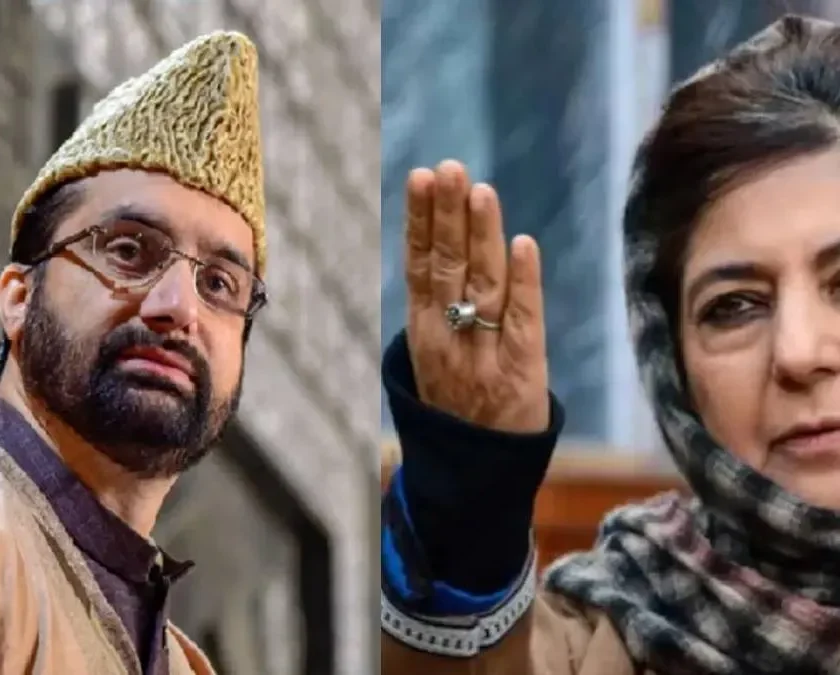
PDP, BJP and other opposition voices are demanding debate and disclosure of the reservation review report. But beneath the political confrontation is a more basic question for thousands of young people: how many opportunities are actually open to an unreserved candidate?
By: News Desk | 27 September 2026
Srinagar: Jammu and Kashmir’s reservation policy has once again moved to the centre of political debate, with opposition parties pressing the Omar Abdullah-led government for a discussion in the Assembly and for the public release of the report prepared by the Cabinet Sub-Committee constituted to review and rationalise the existing reservation framework.
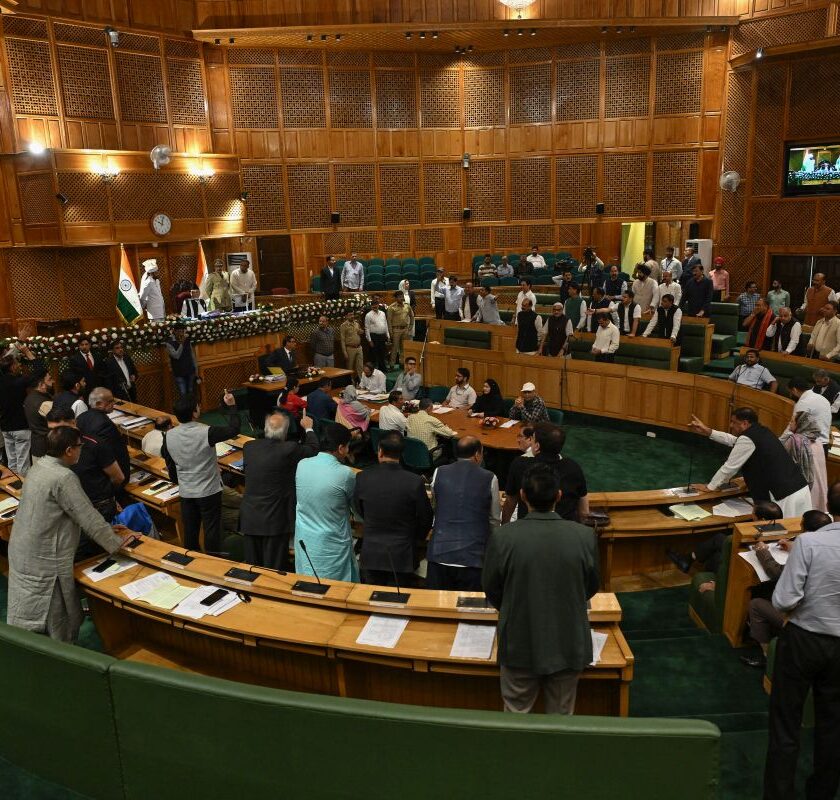
PDP MLA Waheed-ur-Rehman Parra moved an adjournment motion on the reservation issue at the beginning of the Assembly’s autumn session, seeking an urgent discussion and arguing that the concerns of students and aspirants competing in the Open Merit category should not be ignored.
The issue has also moved beyond the Assembly.
On September 19, PDP leader Iltija Mufti led a protest in Srinagar demanding that the Cabinet Sub-Committee’s report be made public. She argued that open-merit aspirants had been waiting for clarity and alleged that the government had not fulfilled assurances made to students.
The government’s own latest written response, however, provides an important piece of information.
The reservation review has not been abandoned.
According to a September 24 government response cited by Kashmir Life, the Cabinet Sub-Committee completed its process and submitted its recommendations. After the Council of Ministers’ consideration, the report was forwarded to the Competent Authority. The government said the recommendations have wider implications and that observations and information sought by the Government of India have also been dealt with. A final decision, however, remains pending and no timeline has been announced.
That leaves thousands of aspirants facing the same question:
What exactly is their share under the present system, and what could change after the pending review?
First, remove one major confusion: Open Merit does not mean “general caste”
In everyday conversation, people often use the term general category.
In the recruitment system, however, Open Merit (OM) is the more accurate term.
An Open Merit position is open to candidates who satisfy the eligibility conditions, irrespective of whether they belong to a reserved category.
This means a candidate belonging to SC, ST, OBC, RBA or another reserved category can also be selected against an Open Merit position if the candidate qualifies on merit.
That candidate’s selection against OM does not simply mean that the reserved category has “taken” one of its reserved seats.
This distinction is extremely important because it changes how the numbers should be understood.
An unreserved candidate cannot simply look at an advertised OM percentage and assume that the same percentage of the final selected candidates must necessarily come from the unreserved population.
So how much is Open Merit under the present rules?
The March 15, 2024 amendment to the Jammu and Kashmir Reservation Rules, 2005, notified through S.O. 176, substantially changed the reservation framework. The amended direct-recruitment table provides:
| Category | Reservation |
|---|---|
| Scheduled Castes | 8% |
| Scheduled Tribes | 20% |
| Other Backward Classes | 8% |
| RBA | 10% |
| ALC/IB | 4% |
| EWS | 10% |
| Total vertical reservation | 60% |
The balance is 40% Open Merit for direct recruitment under that structure.
The official rules are the important starting point because they are the legal framework against which recruitment notifications have to be read.
So, if someone asks in very simple terms:
“If I am an ordinary unreserved candidate applying for a direct government job, what is my principal pool?”
The answer is:
The Open Merit pool, which is 40% under the direct-recruitment structure reflected in the 2024 rules.
But there is a major qualification.
Those 40% seats are not exclusively reserved for unreserved candidates.
They are open to everyone competing on merit.
The 1,815 police recruitment example makes the issue clearer
Rather than relying only on political speeches, look at an actual recruitment exercise.
In December 2025, the Jammu and Kashmir Services Selection Board advertised 1,815 Constable (Executive Police) posts.
Of these:
- 728 were Open Merit
- 145 were SC
- 181 were ST-I
- 181 were ST-II
- 181 were RBA
- 147 were OBC
- 72 were ALC/IB
- 180 were EWS
The 728 Open Merit posts represented about 40% of the total recruitment.
That is a concrete example of how the current structure has operated in an actual recruitment notification.
For an unreserved aspirant, however, saying “I have 728 seats” would still be incorrect.
The candidate has access to the OM competition.
But so does an eligible reserved-category candidate who qualifies on merit.
This is why OM vacancies and the final number of unreserved-category beneficiaries are not necessarily the same thing.
Then why are people talking about 30% Open Merit?
This is one of the biggest sources of confusion in the current debate.
Political statements and some reports have described the effective Open Merit share as 30%, with the remaining 70% being described as reserved.
Iltija Mufti, for example, used this 70%-reserved/30%-open formulation during the September 19 protest. That was a political argument about the practical operation of the reservation framework, not a new reservation rule notified on that day.
At the same time, the actual 1,815-police-post recruitment advertised 728 posts, or about 40%, as Open Merit.
That apparent contradiction is precisely why the government needs to explain the system clearly.
There are several layers involved:
- The Reservation Rules.
- The vacancy roster.
- Direct recruitment.
- Professional-course admissions.
- Horizontal reservations.
- Candidates from reserved categories qualifying on Open Merit.
- EWS provisions.
- The specific recruitment notification.
These cannot simply be added together as if they were one mathematical table.
The government itself says there is no single OM percentage for everything
This is perhaps the most important clarification from the government’s latest response.
According to the September 24 reply, the government said there is no single Open Merit percentage applicable across all government recruitment and professional education.
Different provisions apply to:
- direct government recruitment,
- undergraduate professional courses, and
- postgraduate professional courses.
The government therefore did not provide one universal OM figure that can be applied to every job and every college seat.
This matters because social-media calculations often combine job reservations and college-admission reservations into one number.
That can produce a misleading picture.
What changed in 2024?
The controversy intensified after the reservation framework was amended in March 2024.
The most consequential change was the increase in Scheduled Tribe reservation to 20%.
The amended framework divided this into two broad 10% components, with the second component following the addition of communities including the Pahari Ethnic Group and other groups to the ST framework.
The revised table also included:
- 8% SC
- 20% ST
- 8% OBC
- 10% RBA
- 4% ALC/IB
- 10% EWS
Together, these vertical reservations account for 60% under the direct-recruitment table.
That left 40% as the balance for Open Merit.
The change triggered a continuing debate over how the overall reservation framework should operate, particularly after the inclusion of additional communities in the ST category.
Why are open-merit students worried?
For a young person preparing for a government examination, the argument is much less theoretical.
A student may spend years preparing for:
- JKPSC examinations,
- JKSSB recruitment,
- police recruitment,
- teaching posts,
- medical recruitment,
- engineering recruitment,
- professional entrance examinations.
The student is competing for a finite number of vacancies.
The concern among Open Merit aspirants is therefore not necessarily opposition to reservation as a constitutional or social-policy principle.
The more specific concern is:
How many positions are realistically available to me under the rules applicable to the particular recruitment?
That is a legitimate question that can be answered with vacancy-wise data rather than political slogans.
But there is another side to the reservation argument
Reservations are designed to provide representation and opportunities to communities identified under the applicable constitutional and statutory framework.
Supporters of the existing system argue that historical and socio-economic disadvantage cannot be addressed through a purely marks-based competition.
That is why the policy cannot be reduced to:
“Merit versus reservation.”
The actual policy question is more complicated:
How should merit-based competition and affirmative representation be structured so that the system remains legally sustainable, socially representative and transparent to all applicants?
That is ultimately the question the review committee was asked to examine.
The Cabinet Sub-Committee has already submitted its report
This is where the present controversy becomes more serious.
The government has now confirmed that the Cabinet Sub-Committee completed its work and submitted its recommendations.
The committee was constituted through Government Order No. 2061-JK(GAD) of 2024 dated December 10, 2024.
According to the government’s latest response, its recommendations were considered by the Council of Ministers and then sent to the Competent Authority.
The government says the recommendations have wider implications and that observations and information sought by the Centre were also considered. The matter remains pending for a final decision.
In other words:
The report exists.
The recommendations have been submitted.
But the public does not yet have the government’s final decision.
And this is the point around which the present political pressure is building.
Why does the opposition want the report released?
PDP and other opposition voices argue that students and job aspirants have a direct interest in knowing what the committee recommended.
Iltija Mufti has demanded that the report be placed in the public domain and has criticised the delay.
Waheed Parra has also called for the government to make the reservation report public and rationalise the policy.
The argument is straightforward:
If the committee was created because students and aspirants raised concerns, they should be able to see what the committee recommended.
The government’s position, meanwhile, is that the recommendations are still under examination and that the final decision has not yet been taken.
These are two different questions:
Should the report be disclosed?
and
What should the final policy be?
The first concerns transparency.
The second concerns policy design.
They should not be confused.
What does the common unreserved student actually get?
Let’s make this as simple as possible.
Suppose there are 100 direct-recruitment posts under a structure where the applicable vertical reservations total 60%.
Broadly:
40 posts form the Open Merit pool.
60 posts are distributed through the applicable reserved categories.
But the 40 OM posts are open to all eligible candidates.
Therefore:
An unreserved candidate:
- competes primarily in the OM pool;
- does not receive an automatic share of the reserved categories;
- must qualify against the OM merit threshold;
- can be affected by the number of OM vacancies advertised;
- competes with eligible candidates from reserved categories as well.
A reserved-category candidate:
- competes for the candidate’s applicable reserved-category vacancies;
- can also qualify through Open Merit on merit;
- if selected through OM, that selection is not simply treated as consuming the reserved-category quota.
That last point is critical.
So saying:
“General candidates get 40%.”
is an oversimplification.
A more accurate statement is:
“Under the direct-recruitment structure, 40% is the Open Merit pool, but it is open to candidates of all eligible categories.”
That is the distinction students need to understand.
What about EWS?
EWS is another reason the public debate becomes confusing.
The 2024 direct-recruitment table includes 10% EWS reservation.
EWS is meant for economically weaker sections who meet the prescribed conditions.
Therefore, someone casually described as “general category” may not necessarily be outside every reserved or preferential category.
A candidate’s actual eligibility depends on the applicable certificate and rules.
So the phrase “general category population” should not automatically be treated as synonymous with “people competing only for OM.”
These are different concepts.
What about horizontal reservation?
There are also horizontal reservations and special provisions applying across the vertical categories.
These can include provisions for persons with disabilities and other specified groups, depending on the recruitment or admission framework.
This is another reason why simply adding every percentage seen in a recruitment notice can produce the wrong answer.
Vertical and horizontal reservations operate differently.
A candidate looking at a recruitment notification therefore needs to read the category-wise vacancy table and roster, not just one headline percentage.
The Jammu versus Kashmir dimension needs careful handling
The reservation debate has increasingly acquired a regional dimension in political discourse.
Some Kashmir-based political voices and groups have argued that the present framework disproportionately affects Open Merit aspirants in Kashmir.
But such claims need to be separated from the actual recruitment data.
The fact that a candidate belongs to Kashmir does not itself determine whether the candidate is OM or reserved.
Likewise, the fact that a category has a certain percentage reservation does not by itself establish that one region has received an unfair share.
To establish a regional imbalance, policymakers would need to publish data showing:
- population by relevant category,
- reservation certificates issued by region,
- vacancies advertised by division,
- applications received,
- candidates shortlisted,
- final selections,
- category-wise cut-offs,
- and the operation of the roster.
Without those numbers, the regional argument remains largely political rather than an independently demonstrated statistical conclusion.
There is a data point that deserves more attention
The reservation debate would become far more meaningful if the government published the number of reservation certificates issued over recent years and broke them down by category and region.
Such information would show how the policy is actually being used.
It could answer questions such as:
- How many people hold each reservation certificate?
- How many candidates actually use the benefit in recruitment?
- How many reserved-category candidates are selected on OM?
- What percentage of OM selections ultimately go to candidates without a reservation category?
- How does this differ between Jammu and Kashmir divisions?
- What happens in professional admissions compared with government jobs?
These are much more useful questions than simply arguing over whether the system is “fair” or “unfair”.
The government has an opportunity to end the confusion with numbers
The controversy will probably continue as long as the public has to reconstruct the reservation system from individual recruitment notifications and political statements.
The government could make the situation substantially clearer by publishing a single explanatory document containing:
Current legal framework
Which reservation percentages are currently in force?
Recruitment framework
How exactly is the roster applied to direct recruitment?
Education framework
What percentages apply to undergraduate and postgraduate professional courses?
Open Merit
How many OM positions were actually advertised in the major recruitments of 2024, 2025 and 2026?
OM selections
How many candidates from reserved categories were ultimately selected through OM?
Regional data
How do applications and selections compare between Jammu and Kashmir divisions?
Review report
What exactly did the Cabinet Sub-Committee recommend?
Timeline
When will the Competent Authority take the final decision?
That would turn a politically charged issue into a transparent public-policy discussion.
What happens if the pending recommendations change the system?
This is the next major question.
The government has not yet announced a final decision on the Cabinet Sub-Committee’s recommendations.
Therefore, reported proposals or figures circulating in political discussions should not be presented as the new reservation law.
Until a competent authority takes a final decision and the applicable rules or orders are formally changed, recruitment continues under the existing framework applicable to each notification.
That distinction is especially important for students.
A student preparing for a JKSSB or JKPSC examination should rely on the reservation provisions specified in the official recruitment notification, rather than social-media claims about what the Cabinet may eventually approve.
Why the issue has become politically sensitive
Reservation touches several competing concerns at once.
For historically disadvantaged communities, it concerns representation and access.
For Open Merit aspirants, it concerns the number of opportunities available in an intensely competitive job market.
For the government, it involves balancing social representation, constitutional requirements, administrative rules and political demands.
For students, it is much simpler.
They want to know:
“If there are 1,000 jobs, how many can I actually compete for?”
That question deserves a precise answer.
The real issue is no longer whether there is a reservation review
That part is already clear.
There is a review.
The Cabinet Sub-Committee has completed its work.
Its recommendations have been submitted.
The government says the matter is before the Competent Authority.
The unresolved questions are now:
What did the committee recommend?
Why has the report not been placed in the public domain?
What reservations will apply to future recruitment?
How will Open Merit be calculated in jobs and professional education?
And when will the final decision be taken?
The government has not yet provided a public timeline for the final decision.
For the ordinary job aspirant, the mathematics matters more than the politics
A young person preparing for a government job does not necessarily need another political speech.
The aspirant needs the rules to be understandable.
If a recruitment notification contains 1,000 vacancies, the applicant should be able to see exactly:
- how many are OM,
- how many are reserved,
- which horizontal reservations apply,
- how the roster works,
- how OM selection is determined,
- and how reserved-category candidates qualifying on merit are treated.
The 1,815-police recruitment is a useful example because the notification explicitly showed 728 OM posts, or about 40% of the total.
But one recruitment notification should not have to serve as a substitute for a comprehensive public explanation of the entire reservation system.
The next step should be transparency, not more confusion
The current political confrontation is likely to continue inside and outside the Assembly.
PDP has demanded disclosure.
Other opposition parties have raised the issue.
Student and aspirant groups have also sought time-bound action.
The government says the committee report has already gone through the prescribed process but remains under consideration because of the wider implications of the recommendations.
The most constructive next step would therefore be straightforward:
Publish the report or, at minimum, publish a detailed official summary of its recommendations, explain the legal position, and provide the data behind the proposed changes.
That would allow students, reserved-category communities, Open Merit aspirants and the wider public to examine the same facts.
Because the central question in J&K’s reservation debate is not simply whether reservation should exist.
It is:
How should reservation work, how much opportunity is actually available to each category, and can every young person see the mathematics clearly enough to understand where they stand?
Until that information is placed clearly in the public domain, the political argument over 30%, 40% or other figures will continue.
And for thousands of students and job aspirants waiting to plan their futures, uncertainty itself has become part of the problem.