Middle East at a Crossroads: Iran, Saudi Arabia and the United States Enter a New Era of Strategic Uncertainty
By: Javid Amin | 22 September 2026
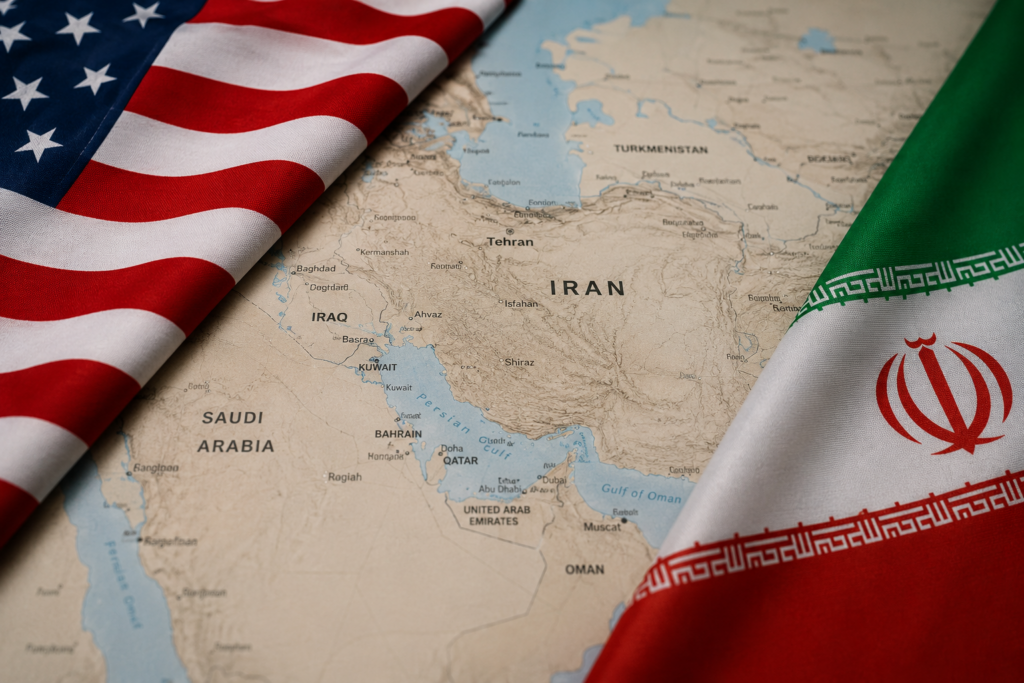
The old Middle East was shaped by oil, ideology and military alliances. The emerging one is being defined by deterrence, economic survival, strategic autonomy and control of critical trade routes. At the centre of that transformation are Iran, Saudi Arabia and the United States.
The Middle East Has Entered a Different Strategic Era
For decades, the Middle East was explained through familiar rivalries: Iran versus Saudi Arabia, Iran versus the United States, Israel versus its Arab neighbours, and Washington versus almost everyone challenging the American-led regional order.
That framework is becoming harder to sustain.
The region is now entering a more complicated phase in which military power still matters enormously, but it is no longer the only currency of influence. Oil infrastructure, maritime chokepoints, missile defence, investment, technology, logistics networks and economic resilience have become part of the same strategic equation.
At the centre of this transformation are three countries with very different interests.
Iran wants strategic survival and deterrence.
Saudi Arabia wants security and the economic space to complete its transformation under Vision 2030.
The United States wants to retain its influence and military reach while limiting the costs of another prolonged Middle Eastern conflict.
The result is not a simple three-way confrontation. It is a constantly shifting triangle in which cooperation, deterrence, rivalry and negotiation can exist simultaneously.
The significance of the current moment is particularly clear in September 2026. The United States and Iran have already gone through a major military confrontation this year, Saudi Arabia has faced attacks linked to the wider conflict, energy infrastructure and shipping have come under pressure, and Riyadh is simultaneously trying to protect its security interests while preserving the economic transformation on which its long-term strategy depends.
The Middle East is therefore not merely experiencing another crisis.
It is testing a new regional order.
Iran: Under Pressure, But Still Capable of Shaping the Region
Iran’s regional strategy has never depended exclusively on conventional military superiority.
For decades, Tehran developed what analysts often describe as strategic depth: a network of relationships, armed partners and political influence extending across Iraq, Syria, Lebanon, Yemen and the Palestinian territories.
The logic was straightforward.
If Iran could not always match its adversaries technologically or economically, it could create multiple pressure points around the region.
That strategy gave Tehran influence beyond its borders and complicated military planning for both Israel and the United States.
But the model has come under considerable strain.
Years of sanctions have damaged Iran’s economy. Regional wars have placed pressure on its partners. Direct confrontation with Israel and the United States has exposed vulnerabilities, while attacks on infrastructure and maritime routes have demonstrated that escalation can impose costs on Iran itself.
Yet describing Iran simply as a weakened power misses the larger picture.
Iran retains significant geographic advantages, a large population, substantial energy resources, a sizeable missile and drone capability, and the ability to influence events through partners and aligned groups.
The strategic question is therefore not whether Iran has influence.
It is how much of that influence Tehran can preserve while absorbing sustained economic, military and diplomatic pressure.
The uploaded background analysis correctly identifies four central Iranian priorities: regime stability, avoiding economic collapse, maintaining strategic deterrence and preventing regional isolation.
Those priorities help explain what can sometimes appear to be contradictory Iranian behaviour.
Tehran can simultaneously threaten retaliation, support regional armed groups, seek diplomatic channels and attempt to improve relations with neighbouring Gulf states.
These are not necessarily mutually exclusive strategies.
They can all serve the same objective: preserving Iranian room for manoeuvre.
The Iran-US Conflict Has Changed the Regional Equation
The biggest development of 2026 has been the direct military confrontation between Iran and the United States.
According to the U.S. State Department’s current Saudi Arabia travel advisory, hostilities between Washington and Tehran began on February 28, 2026, and Iran subsequently launched missile and drone attacks affecting Saudi Arabia and other parts of the region.
That fact has fundamentally altered the security environment surrounding the Gulf.
For years, Gulf states prepared for the possibility of an Iran-US confrontation.
In 2026, they have had to deal with the consequences of one.
Saudi Arabia has publicly condemned Iranian attacks while simultaneously calling for de-escalation, respect for international navigation and a return to negotiations.
That dual position is important.
Riyadh does not want Iran to emerge with greater freedom to threaten its territory and infrastructure.
But it also has little interest in an unlimited war that damages oil facilities, disrupts shipping, scares investors and undermines the economic transformation Saudi Arabia has spent years constructing.
The Saudi position is therefore increasingly shaped by a practical calculation:
security requires deterrence, but prosperity requires stability.
Saudi Arabia’s Strategic Revolution Is About More Than Oil
Saudi Arabia is changing faster than many outside observers realise.
Vision 2030 was initially viewed primarily as an economic diversification programme designed to reduce the Kingdom’s dependence on oil.
It has become something larger.
It is an attempt to reshape Saudi Arabia’s economic structure, investment profile, tourism sector, infrastructure, technology base and global positioning.
Official Vision 2030 material describes the current phase as the final delivery phase of the programme, with an emphasis on expanding opportunities across sectors and sustaining the transformation beyond 2030.
The 2025 Vision 2030 annual report says Saudi Arabia’s economy has surpassed the $1 trillion mark and that non-oil activities account for more than half of total output.
That transformation creates a strategic vulnerability that is easy to overlook.
A country trying to attract tourists, foreign capital, technology companies and international businesses cannot afford persistent regional instability.
A missile strike on an oil facility is not merely a military incident.
It is also an investment story.
A threat to a port is not merely a security problem.
It is a logistics problem.
A disruption in the Strait of Hormuz is not simply a naval confrontation.
It is an economic shock.
This is why Saudi Arabia’s foreign policy increasingly combines military preparedness with diplomacy.
Why Riyadh Wants Both Washington and Regional Diplomacy
Saudi Arabia’s relationship with the United States remains one of the most important security partnerships in the Middle East.
American weapons, intelligence, military technology and defence cooperation remain significant to Saudi security.
But Riyadh’s strategic thinking has evolved.
The Kingdom no longer wants its security architecture to depend entirely on one external power.
That does not mean Saudi Arabia has abandoned Washington.
Instead, Riyadh increasingly seeks multiple relationships at the same time.
It maintains close ties with the United States while expanding relations with China, developing partnerships with Türkiye and maintaining diplomatic channels with Iran.
This is best understood as strategic diversification.
The logic is similar to economic diversification.
Just as Saudi Arabia wants to reduce excessive dependence on one source of national income, it also wants to reduce excessive dependence on one external security provider.
The difference is that the consequences of strategic dependence are much more immediate.
Recent attacks have reinforced those concerns.
Saudi Arabia’s East-West oil pipeline was shut down as a precaution after attacks in the Riyadh and Medina regions on September 10, according to the Saudi Energy Ministry.
The pipeline is strategically important because it allows Saudi oil to reach the Red Sea while reducing reliance on the Strait of Hormuz.
When even alternative export infrastructure becomes vulnerable, the limits of physical diversification become obvious.
Hormuz: Iran’s Most Powerful Economic Pressure Point
Few places demonstrate the intersection of Iranian strategy, Saudi economic interests and American military power better than the Strait of Hormuz.
The narrow waterway between Iran and Oman is one of the world’s most important energy chokepoints.
A substantial share of global oil and gas exports moves through the Gulf.
For Saudi Arabia, the UAE, Kuwait, Qatar and Iraq, the security of the waterway is therefore not an abstract geopolitical question.
It is directly connected to national revenue.
For the United States, freedom of navigation is a core strategic concern.
For Iran, the Strait provides geographic leverage.
That combination makes Hormuz one of the most dangerous potential escalation points in the region.
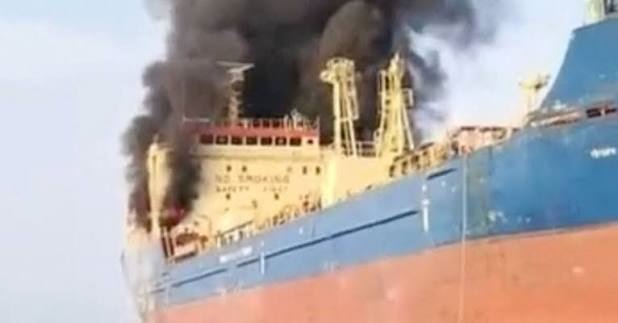
In September, Saudi Arabia condemned an Iranian attack on the Saudi tanker SIDR while it was transiting the Strait, according to the Saudi Foreign Ministry. Riyadh called for de-escalation, protection of international navigation and the security of global energy supplies.
The incident illustrates the dilemma facing all three major players.
Iran can use maritime pressure to increase the cost of conflict.
Saudi Arabia needs maritime routes to remain open.
The United States has powerful incentives to protect freedom of navigation.
Every additional incident therefore creates the possibility of escalation beyond the original battlefield.
Saudi Arabia Is Discovering the Limits of an Oil-Only Security Strategy
The recent attacks have also demonstrated something uncomfortable for Riyadh.
Saudi Arabia has invested heavily in alternative export routes, strategic storage and infrastructure designed to reduce its exposure to Hormuz.
Yet geography cannot simply be redesigned.
When both Gulf and Red Sea routes face security threats, the Kingdom’s options narrow.
Reuters reported this week that Saudi Arabia had restarted its East-West oil pipeline following the September attacks, although restoring its full capacity could take weeks because pumping stations were damaged.
The episode illustrates why infrastructure resilience has become part of national security.
Saudi Arabia is no longer thinking only about protecting oil fields.
It must protect pipelines, refineries, ports, airports, electricity systems, desalination facilities, data networks and shipping routes.
That is a much larger security challenge.
And it explains why Saudi Arabia’s strategic relationship with Washington remains important even as Riyadh seeks greater autonomy.
The United States: Powerful, But No Longer Interested in Unlimited Commitments
Washington remains the most militarily capable external power in the Middle East.
The United States possesses extensive regional military infrastructure, advanced air and missile-defence capabilities, intelligence networks and deep relationships with Gulf partners.
But American policy has been changing.
The old model — large-scale deployments, prolonged wars and direct intervention — has become politically and strategically expensive.
The emerging model is more selective.
Washington still wants to protect shipping lanes, deter major threats, support allies and retain the ability to project power.
But it also wants regional partners to carry more of the security burden.
That creates a fundamental tension.
Saudi Arabia wants credible American protection.
The United States wants capable regional partners that can shoulder more responsibility.
Those objectives overlap, but they are not identical.
The current crisis has exposed that difference.
Reports in September said Saudi Crown Prince Mohammed bin Salman sought greater American military support against the Iran-aligned Houthis in Yemen, while Washington declined to conduct direct strikes against the group and instead provided intelligence and targeting support.
For Riyadh, the distinction matters.
A security partnership is most valuable when an ally believes the partner will act during a crisis.
For Washington, however, every additional military intervention carries costs and creates the risk of escalation.
This is the central American dilemma in the Gulf.
The Saudi-American Relationship Is Changing, Not Disappearing
It would be too simplistic to interpret these developments as evidence that Saudi Arabia and the United States are breaking apart.
The relationship remains substantial.
The two countries share major security, economic and diplomatic interests.
Saudi Arabia remains an important energy producer and regional power.
The United States remains an indispensable source of advanced military technology, intelligence and strategic capabilities.
But the relationship is becoming less straightforward.
Riyadh increasingly wants the ability to act independently.
Washington increasingly wants partners to do more themselves.
That creates a relationship based less on unquestioned dependence and more on negotiated interests.
The distinction is crucial.
The United States can remain Saudi Arabia’s principal security partner without being Saudi Arabia’s only strategic partner.
Iran and Saudi Arabia: Rivalry Gives Way to Risk Management
The Saudi-Iran relationship is perhaps the most misunderstood part of the current Middle East.
The two countries remain strategic competitors.
They have different political systems, different regional alliances and competing visions of regional influence.
Their rivalry has shaped conflicts from Yemen to Iraq, Syria and Lebanon.
But competition does not necessarily require permanent confrontation.
That lesson helped drive the Saudi-Iran diplomatic rapprochement that began with Chinese mediation in 2023.
The logic was pragmatic.
Saudi Arabia wanted greater security and regional stability.
Iran wanted to reduce isolation and improve relations with neighbouring states.
Neither side needed to become friends.
They simply needed to reduce the possibility that rivalry would continuously turn into open conflict.
The events of 2026 have put that understanding under severe pressure.
Yet the basic logic behind de-escalation remains relevant.
For Riyadh, Iran remains a major security concern.
For Tehran, Saudi Arabia remains an influential regional power that cannot simply be ignored.
Both therefore have incentives to maintain communication even during periods of intense hostility.
That is the difference between reconciliation and risk management.
The former suggests trust.
The latter simply recognises that uncontrolled escalation is costly.
Yemen: Where the Iran-Saudi-US Triangle Becomes Visible
If the Strait of Hormuz represents the maritime dimension of the regional contest, Yemen represents its proxy and regional-security dimension.
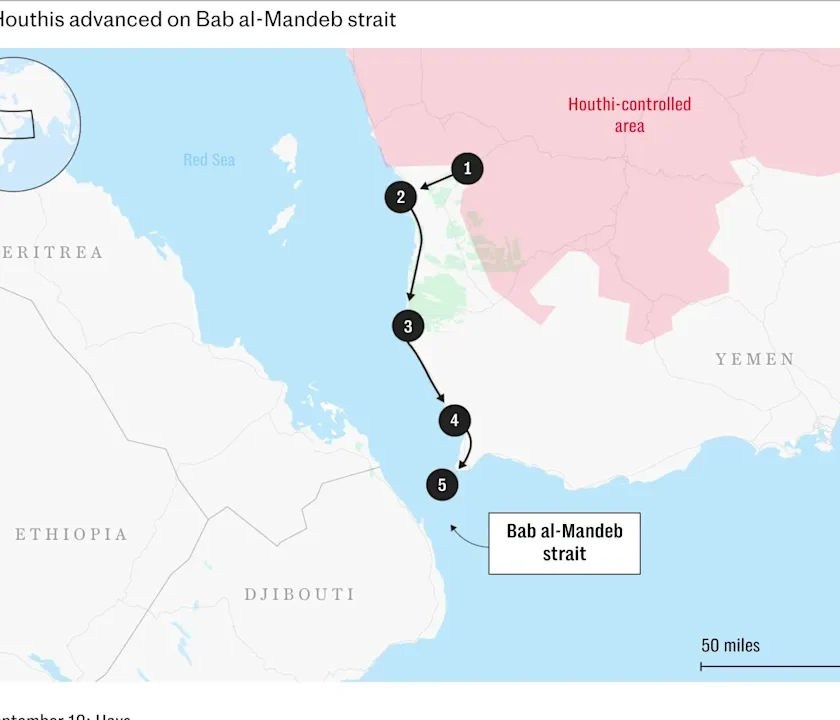
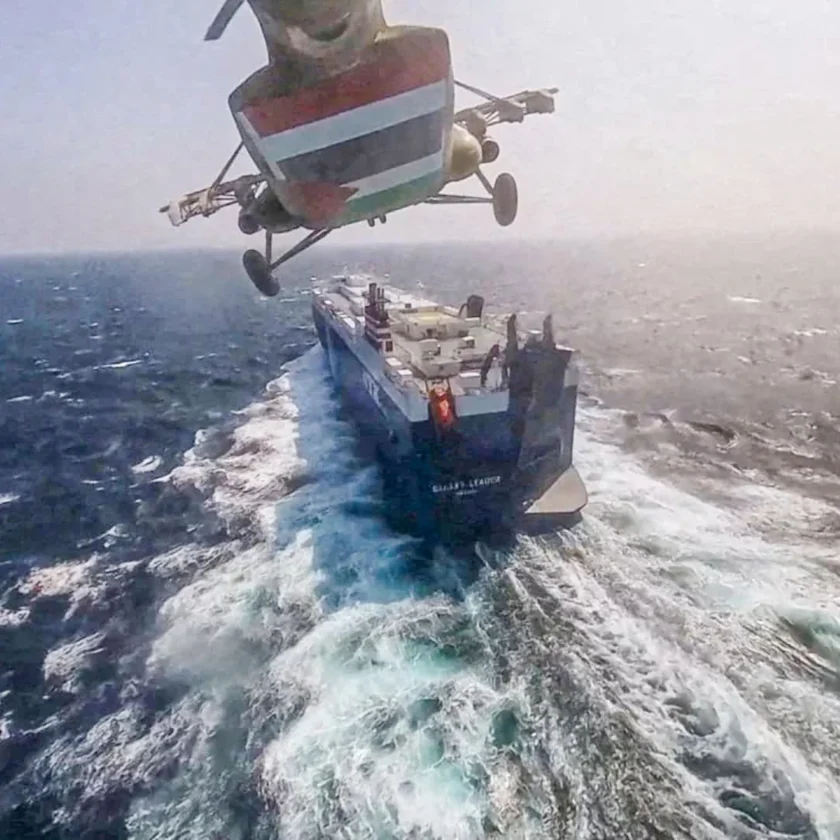
The Houthi movement’s control of territory and its ability to threaten Red Sea shipping have transformed Yemen from a civil war into an international security problem.
The strategic geography is critical.
The Bab el-Mandeb Strait connects the Red Sea with the Gulf of Aden and sits along one of the world’s major maritime trade routes.
When shipping is threatened there, the consequences extend far beyond Yemen.
Insurance costs rise.
Ships change routes.
Transit times increase.
Energy markets react.
Consumers eventually feel the consequences.
In September 2026, the United Nations Security Council condemned continuing Houthi attacks against Saudi Arabia, including strikes damaging civilian and energy infrastructure, while also expressing concern about threats to commercial shipping in the Red Sea and Bab el-Mandeb.
For Saudi Arabia, the Houthi threat is a direct national-security issue.
For Iran, the Houthis provide a powerful regional pressure point, although Tehran’s exact degree of operational control over the group remains a subject of debate.
For Washington, the group represents another challenge to maritime security and American interests without necessarily justifying another large-scale American ground commitment.
Yemen therefore encapsulates the central dilemma of the new Middle East:
How do you contain a regional threat without creating an even larger war?
The Energy War Is Becoming an Infrastructure War
For decades, analysts described Middle Eastern energy security primarily in terms of oil production.
That definition is now too narrow.
Modern energy security means protecting an interconnected system:
- oil fields;
- refineries;
- pipelines;
- export terminals;
- tankers;
- ports;
- electricity infrastructure;
- desalination plants;
- communication networks;
- shipping chokepoints.
A missile aimed at one facility can therefore have consequences far beyond the immediate target.
Saudi Arabia’s East-West pipeline is a good example.
The Kingdom built alternative routes precisely because it understood the risks associated with Hormuz.
Yet attacks against that alternative route demonstrated that strategic redundancy is only useful when the infrastructure itself can be protected.
This is why missile defence and critical-infrastructure security are becoming as important to Gulf states as traditional military forces.
The US Has a Security Problem; Saudi Arabia Has an Economic Problem; Iran Has a Survival Problem
This may be the simplest way to understand the strategic triangle.
Washington’s problem is how to maintain regional influence without becoming permanently trapped in regional wars.
Riyadh’s problem is how to protect an ambitious economic transformation while living in one of the world’s most volatile neighbourhoods.
Tehran’s problem is how to preserve its political system and strategic influence under military, economic and diplomatic pressure.
These objectives overlap in some areas.
They collide in others.
That is why the region repeatedly moves between confrontation and diplomacy.
When tensions rise too far, economic and security costs force the parties toward negotiation.
When negotiations fail or deterrence breaks down, military pressure returns.
The cycle can continue without producing a definitive settlement.
China’s Role Matters — But It Does Not Replace America
China’s growing Middle Eastern presence is an important part of the wider transformation, particularly because Beijing has deep economic relationships with Gulf states and is a major energy customer.
China also played a diplomatic role in the Saudi-Iran rapprochement.
But it would be premature to conclude that Beijing has replaced Washington as the region’s dominant security actor.
China’s strength in the Middle East is primarily economic and diplomatic.
The United States continues to possess a much larger military footprint and security architecture.
For Saudi Arabia, this creates an opportunity.
Riyadh can deepen relations with China without abandoning America.
It can maintain American defence cooperation while developing Chinese investment.
It can engage Iran diplomatically while strengthening its own military capabilities.
This multi-directional diplomacy is increasingly characteristic of Gulf foreign policy.
Why Saudi Arabia Cannot Afford a Permanent Regional War
The economic dimension may ultimately be the strongest constraint on escalation.
Vision 2030 requires enormous investment.
Saudi Arabia is building new tourism destinations, logistics hubs, industrial projects, technology infrastructure and entertainment sectors.
The Kingdom’s official Vision 2030 programme identifies economic diversification, investment, technology, tourism and private-sector growth as central elements of its transformation.
All of these require confidence.
International companies do not make long-term investments simply because a government announces ambitious projects.
They look at political stability, security, infrastructure, insurance costs, logistics and access to global markets.
That makes regional stability a direct economic asset for Riyadh.
Saudi Arabia therefore faces a difficult balancing act.
It must be strong enough to deter attacks.
But it must also avoid becoming trapped in an endless cycle of retaliation.
Iran’s Economic Constraint Is Equally Important
The other side of the equation is Iran.
Military capabilities cannot be separated from economic capacity.
A state facing sanctions, disrupted trade and damaged infrastructure must constantly balance the costs of confrontation against the benefits of strategic leverage.
Iran’s challenge is therefore not simply military.
It is economic and political.
The longer a conflict continues, the greater the pressure on the Iranian economy.
But the reverse is also true.
The greater the pressure placed on Iran, the stronger the incentive for Tehran to use the asymmetric tools available to it.
This creates a dangerous feedback loop.
Pressure can produce deterrence.
Pressure can also produce escalation.
The central question for policymakers is how to exert enough pressure to achieve strategic objectives without pushing the opponent toward increasingly unpredictable retaliation.
The Middle East Is Moving Toward Strategic Autonomy
One of the most important developments of the current period is the emergence of what might be called regional strategic autonomy.
Gulf states increasingly want the ability to speak to everyone.
They do not necessarily want to choose permanently between Washington and Beijing.
They do not want to treat Iran only as an enemy if diplomacy can reduce security risks.
They do not want to abandon American military cooperation.
And they do not want foreign powers to dictate every aspect of their regional policy.
Saudi Arabia is at the centre of this approach.
Its diplomacy increasingly reflects a willingness to maintain multiple relationships simultaneously.
That is not neutrality.
It is strategic flexibility.
What the Current Crisis Reveals About the New Middle East
The Middle East of 2026 is revealing several important realities.
First, military superiority does not guarantee complete security.
Even heavily protected infrastructure can be targeted by drones, missiles and asymmetric attacks.
Second, economic power is becoming a form of national security.
Saudi Arabia’s ability to continue investment and diversification depends partly on its ability to withstand regional shocks.
Third, geography still matters.
Hormuz and Bab el-Mandeb cannot simply be wished away. Their strategic importance remains enormous.
Fourth, diplomacy has not disappeared because military power has increased.
In fact, the opposite may be true.
The more dangerous the military environment becomes, the more valuable communication channels become.
Finally, alliances are becoming more flexible.
Saudi Arabia’s relationship with Washington remains central, but Riyadh is increasingly comfortable developing ties with other major powers and maintaining diplomatic channels with countries with which it has serious disagreements.
What Comes Next for Iran, Saudi Arabia and the United States?
The future cannot be reduced to a simple prediction of war or peace.
The available evidence points instead to a Middle East in which confrontation and diplomacy can coexist.
Iran will continue seeking deterrence and strategic room for manoeuvre.
Saudi Arabia will continue strengthening its military capabilities while trying to protect the economic transformation under Vision 2030.
The United States will continue to retain major military capabilities in the region while facing pressure to limit direct involvement.
The key variables will be familiar but increasingly interconnected:
Hormuz.
Yemen.
Energy infrastructure.
Missile and drone warfare.
Iran’s economic resilience.
Saudi Arabia’s economic transformation.
American willingness to provide security guarantees.
And the ability of regional governments to keep diplomatic channels open.
The events of 2026 have shown how quickly a confrontation involving Iran and the United States can spread into Saudi airspace, energy markets and maritime routes.
They have also demonstrated that Saudi Arabia cannot simply separate economic transformation from geopolitics.
Its Vision 2030 ambitions require a security environment capable of sustaining investment.
That, in turn, means diplomacy will remain an important part of Riyadh’s strategy even when military deterrence becomes unavoidable.
Conclusion: The Next Middle East Will Be Built Around Security, Economics and Strategic Flexibility
The defining contest in the Middle East is no longer simply about who has the largest military or the most oil.
It is about who can remain resilient when military pressure, economic disruption and diplomatic competition arrive simultaneously.
Iran is attempting to preserve strategic influence while confronting extraordinary pressure.
Saudi Arabia is trying to turn its enormous economic resources into a diversified national economy while building greater security autonomy.
The United States is attempting to remain the region’s most important external military power without repeating the open-ended interventions of the past.
None of these objectives exists in isolation.
Iran’s actions affect Saudi security.
Saudi infrastructure affects global energy markets.
American military decisions affect Iranian calculations.
Iranian attacks affect Saudi investment confidence.
Yemen affects Red Sea shipping.
Hormuz affects the world economy.
And every escalation in one theatre can quickly create pressure somewhere else.
That is what makes the current Middle East different.
The region is no longer organised around a single dominant rivalry.
It is becoming a complex strategic ecosystem in which military power, economic resilience, infrastructure, diplomacy, technology and geography all interact.
The battlefield still matters.
But so do the oil terminal, the pipeline, the shipping lane, the investment fund, the air-defence system and the diplomatic hotline.
For Iran, Saudi Arabia and the United States, the central challenge is therefore not simply defeating an opponent.
It is shaping a regional environment in which their own strategic interests can survive.
And that is why the Middle East stands at a crossroads.