The EMI That Outlives the Wedding: Inside Kashmir’s Silent Debt Trap for Poor Fathers
By: Javid Amin | 22 September 2026
A father mortgages his one piece of land. The wedding lasts three days. The loan follows him for the rest of his life — and sometimes gets handed down to his children. A look at how Kashmir’s wedding economy turned a father’s blessing into a decades-long liability, and the government scheme quietly trying to break the cycle.
Kashmir Valley — There is a particular kind of arithmetic that plays out in thousands of Kashmiri homes every wedding season, usually in private, rarely out loud. A father with a modest salary, a small shop, or an unpredictable daily wage looks at what his daughter’s wedding is expected to cost, looks at what he actually has, and starts doing the math on how to close the gap. Increasingly, that gap gets closed with someone else’s money — a bank loan, a private lender, a mortgaged piece of land — and it doesn’t close when the wedding ends.
A recent piece in The Kashmir Monitor put the pattern in blunt terms: people take large loans for weddings they cannot realistically repay, some mortgage property to raise the money, and many continue paying the EMI until they die — occasionally leaving their own children to finish clearing a debt incurred for a sibling’s wedding a decade or two earlier. That’s not a metaphor for financial pressure. It’s a literal, multi-generational repayment schedule, attached to a single day of celebration.
From Mahr to Dowry: How the Money Started Flowing the Wrong Way
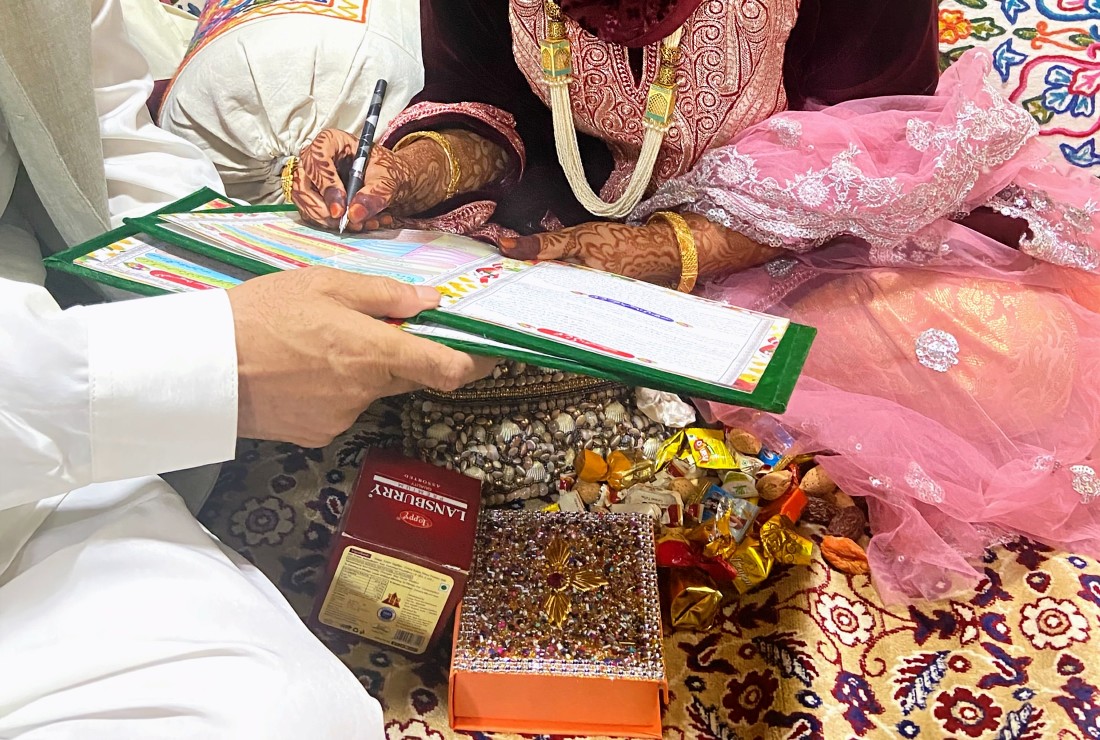
To understand why this happens specifically in Kashmir — a place that, within living memory, took real pride in not having a dowry culture — it helps to understand what changed. Islamic marriage tradition centres on mahr: a mandatory payment from groom to bride, hers to keep outright, described in the Quran itself as a bridal gift to be given “graciously” (Surah An-Nisa, 4:4). For decades, Kashmiri Muslim marriages were held up, including by outside observers, as a model that spared brides’ families the dowry burden common elsewhere in South Asia.
That model has visibly eroded. Multiple recent accounts from Kashmiri commentators describe the direction of money at Kashmiri weddings effectively reversing: gold, cash, furniture, household goods, and in some reported cases even land are now routinely expected from the bride’s side, often justified as “security for the couple” even though it’s the bride’s family absorbing the cost. One widely discussed 2025 essay in the Kashmir Observer described demands running into the tens of lakhs in some cases, with grooms responding by taking loans from friends, using their mothers’ jewellery, mortgaging family homes, or draining a father’s retirement savings to meet expectations from the other direction — meaning the debt trap increasingly squeezes families on both sides of the aisle, not just the bride’s.
Religious scholars are notably not on the side of this trend. A hadith narrated by Ibn Majah records the companion Umar ibn al-Khattab warning explicitly against excessive dowries, arguing that if lavish bridal payments were a genuine mark of honour or piety, the Prophet Muhammad would have set that example himself — and he didn’t. The gap between what the faith actually asks for and what social custom now demands is, by multiple accounts, one of the more openly acknowledged contradictions in Kashmiri wedding culture today.
The Debt Doesn’t Leave When the Guests Do
What makes wedding debt different from most other household borrowing is timing: it’s taken on to fund a single, unrepeatable event, but repaid over years against ongoing, often irregular income. Kashmiri commentary on the issue consistently points to the same failure mode — money that should have gone toward a child’s education, a medical emergency fund, or basic home repairs instead gets redirected, for years, into servicing a wedding loan. The Kashmir Monitor’s account goes further, describing cases where the original borrower dies still repaying the loan, and their children inherit the remaining balance along with whatever else they inherit.
This is also, demographically, not a marginal problem. J&K topped the country’s list of Union Territories and states for the number of unmarried people up to age 29 in 2022 government data — a statistic that sits alongside, and is likely reinforced by, the cost pressure making marriage harder to afford for ordinary families in the first place. Rising cost and rising delay are, in other words, feeding the same cycle from two directions.
The Government Scheme Built for Exactly This Problem
What’s less widely known — including, it seems, to many of the families it’s designed for — is that Jammu and Kashmir already runs a targeted welfare programme aimed squarely at this gap. The State Marriage Assistance Scheme (SMAS), launched by the Social Welfare Department on 2 December 2015 following court observations by then-Chief Minister Mufti Mohammad Sayeed, provides direct one-time cash support to daughters from the state’s poorest ration-card categories: currently ₹75,000 for families holding Antyodaya Anna Yojana (AAY) cards, and ₹50,000 for Priority Household (PHH) cardholders, paid straight into the bride’s bank account via direct benefit transfer, with no middlemen involved.
The scheme has genuinely helped thousands of families avoid the loan-and-mortgage route entirely — but it isn’t without real friction. A 2025 report by The Wire documented a rule change requiring beneficiaries to meet a minimum education threshold, which advocates and a former Dean of Social Sciences at the University of Kashmir argued would leave many of the poorest and least-educated girls — arguably the ones the scheme was originally built to protect — newly ineligible. It’s a useful reminder that a well-designed welfare scheme still depends entirely on implementation: awareness, documentation support, and eligibility rules that don’t accidentally exclude the people most in need of help.
Simplicity Isn’t the Same as Poverty
None of this is an argument against celebration itself. A wedding remains, in Kashmiri tradition, one of the few occasions where an entire extended community comes together — food is shared, elders bless the couple, distant relatives reconnect. What’s being contested isn’t the celebration; it’s the assumption that a “proper” wedding requires spending a family into years of repayment.
That assumption is, at least in principle, negotiable — because it’s social, not religious or legal. A modest wazwan, a shorter guest list, and gold treated as sentiment rather than a status report are all choices a family remains free to make. The obstacle isn’t a rule; it’s the fear of being talked about for making that choice — precisely the dynamic that pushes even families who privately want a simpler wedding to default to the expensive one instead.
What Actually Moves the Needle
Kashmiri commentators writing on this issue — across mainstream outlets and religious platforms alike — tend to converge on a similar, practical set of fixes:
- Wider awareness of the Marriage Assistance Scheme, particularly among families who may not know it exists or assume the paperwork is too complicated to attempt.
- Fixing the eligibility gaps exposed by the 2025 rule change, so the scheme doesn’t inadvertently exclude the most vulnerable applicants it was built for.
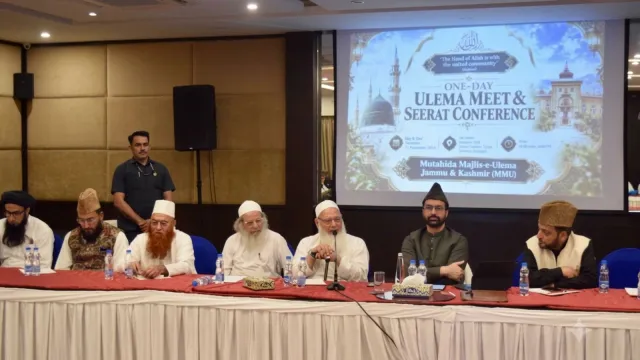
- Community leadership from imams and elders, publicly normalising modest weddings rather than quietly tolerating extravagance as the default.
- A shared, transparent understanding of mahr versus dowry, so families aren’t pressured into treating a culturally-demanded, one-directional payment as a religious obligation it was never meant to be.
- Young couples themselves setting the tone, by openly prioritising a debt-free start to married life over a wedding designed to impress people who won’t be paying for it.
The Bottom Line
A father’s love for his daughter was never supposed to be measured in EMIs. Yet across the Kashmir Valley, that’s effectively what’s happening in household after household — a single day’s celebration turning into a repayment schedule that can outlast the marriage it was meant to celebrate, and in the worst cases, outlast the father himself. The tools to interrupt that cycle already exist, from a functioning government scheme to a religious tradition that explicitly favours the modest wedding over the extravagant one. What’s missing isn’t the solution. It’s the collective willingness to actually use it.
This feature draws on reporting and analysis from The Kashmir Monitor, The Wire, Kashmir Observer, Kashmir Reader, Kashmir Life, and official details of the Jammu & Kashmir State Marriage Assistance Scheme.