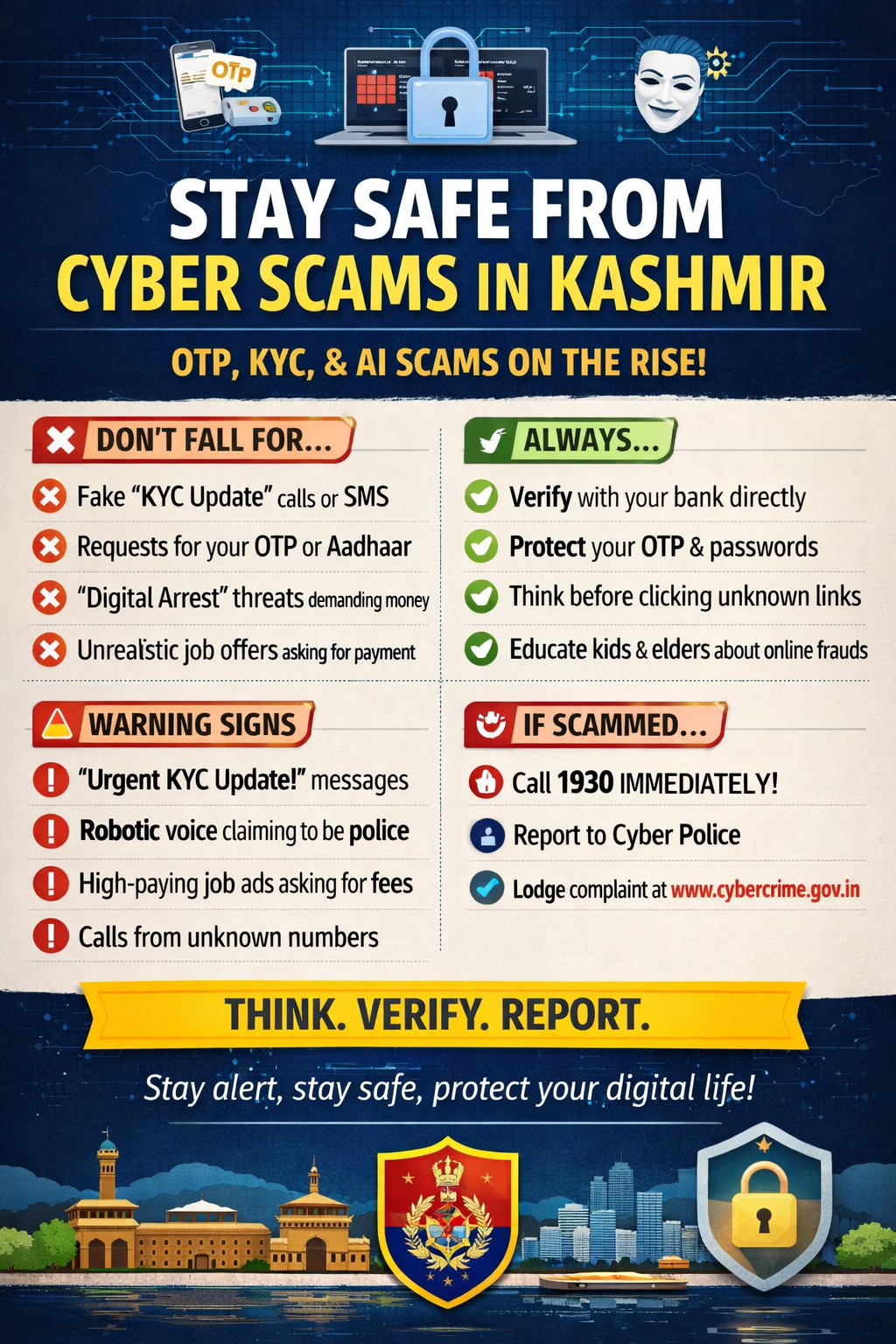
OTP, KYC & AI Scams Rise in Kashmir 2026 | Cybercrime Alert Srinagar
By: Javid Amin | 12 April 2026
Cybercrime in Kashmir Enters a Dangerous New Phase
Cybercrime in Kashmir is no longer a distant digital threat—it is now a daily reality affecting ordinary citizens across age groups. Authorities in Srinagar are witnessing a sharp spike in fraud cases involving OTP theft, fake KYC updates, and increasingly sophisticated AI-driven scams.
According to officials from the Crime Branch, more than ₹22 lakh has been recovered in just the last three months, but the number only scratches the surface. The real concern? A widening awareness gap that fraudsters are exploiting with alarming efficiency.
The New Face of Cyber Fraud in Kashmir
The nature of cybercrime in the region has evolved. What once involved simple phishing attempts has now transformed into multi-layered, psychologically manipulative scams powered by technology and data leaks.
OTP Frauds: The Gateway to Your Bank Account
One-Time Password (OTP) scams remain the most common—and effective—tool for cybercriminals.
- Victims receive calls posing as bank officials or service providers
- They are tricked into sharing OTPs under urgent pretexts
- Within minutes, bank accounts are drained
These scams rely on panic and urgency, leaving victims little time to think.
KYC Scams: Identity Theft Disguised as Compliance
Fraudsters impersonate banks or telecom providers, claiming KYC (Know Your Customer) updates are pending.
- Victims are asked to share Aadhaar, PAN, or banking details
- Fake links or apps are used to capture sensitive data
- Accounts are later misused for financial fraud
With India’s increasing digital compliance requirements, such scams appear legitimate and convincing.
AI Scams: The Most Alarming Trend Yet
The latest wave involves AI-powered deception, including:
- Deepfake voice calls mimicking police officials or relatives
- Fake “digital arrest” notices threatening legal action
- Video or audio manipulation to create urgency and fear
These scams are particularly dangerous because they exploit trust and authority using realistic technology.
Who Are the Most Vulnerable?
Cybercriminals are targeting specific groups in Kashmir with tailored strategies:
Children & Teenagers
- Gaming app frauds
- In-app purchase scams
- Fake reward offers
Job Seekers
- Fake recruitment ads
- Requests for “registration” or “processing” fees
- Phishing through job portals
Elderly Citizens
- Bank-related fraud calls
- KYC update scams
- Fear-based tactics involving legal threats
These groups are targeted due to limited digital literacy or emotional vulnerability.
Financial Impact: Small Losses, Big Consequences
While authorities have recovered over ₹22 lakh, individual losses typically range between:
- ₹10,000 to ₹50,000 per victim
For many families, especially in semi-urban and rural areas, this represents significant financial distress.
Law Enforcement Response
The Cyber Crime Investigation Centre for Excellence (CICE) in Srinagar is actively working to:
- Track digital transactions
- Freeze fraudulent accounts
- Recover stolen funds
Emergency Helpline
Victims are urged to report fraud immediately via:
1930 (National Cyber Crime Helpline)
Early reporting significantly increases the chances of fund recovery and traceability.
Red Flags You Should Never Ignore
Recognizing warning signs can prevent financial loss:
- 📵 Unsolicited calls asking for OTP or personal details
- ⚖️ Threatening messages about “digital arrest”
- 💼 Job offers requiring upfront payment
- 🤖 AI-generated voices sounding unusually urgent or scripted
- 🔗 Suspicious links for KYC or banking updates
How to Protect Yourself & Your Family
Golden Rules of Cyber Safety
- Never share OTPs with anyone—not even bank officials
- Verify KYC requests directly through official bank channels
- Avoid clicking unknown links or downloading unverified apps
- Use only trusted websites for job applications
Community Awareness Matters
- Educate elderly family members
- Teach children safe online behavior
- Encourage open conversations about scams
Act Fast If Targeted
- Call 1930 immediately
- Report on the national cybercrime portal
- Inform your bank to freeze suspicious transactions
Quick Snapshot
| Factor | Details |
|---|---|
| Region | Srinagar & wider Kashmir |
| Major Scams | OTP fraud, KYC scam, AI deepfake scam |
| Recovery | ₹22 lakh (last 3 months) |
| Key Risk | Low public awareness |
| Helpline | 1930 |
| Lead Agency | Cyber Crime Investigation Centre for Excellence |
Outlook: A Growing Threat in the AI Era
Experts warn that cybercrime in Kashmir is likely to intensify in the coming months:
- AI tools will make scams more realistic
- Increased smartphone penetration will expand the target base
- Data leaks will enable more personalized fraud attempts
Without aggressive awareness campaigns at the grassroots level, the region risks facing a cybercrime epidemic.
Final Word: Awareness Is the Strongest Firewall
The surge in OTP, KYC, and AI scams highlights a simple truth—technology alone cannot stop cybercrime.
The real defense lies in:
- Awareness
- Vigilance
- Quick action
In today’s digital Kashmir, every phone call, message, or link must be treated with caution.
Because when it comes to cyber fraud, prevention isn’t just better than cure—it’s often the only cure.