US Intelligence Warning Raises Fears of Wider Iran, Israel and Gulf Escalation
By: Javid Amin | 16 November 2026
Washington is facing a new national security concern after US intelligence reportedly detected Iranian contingency planning for a possible unconventional attack against senior officials in President Donald Trump’s administration, involving either a radioactive ‘dirty bomb’ or a chemical weapon in the American capital.
The revelations, first reported by CNN on November 16, citing seven US officials familiar with the intelligence, have triggered heightened security discussions within the Trump administration. The reported planning allegedly identifies potential locations and targets in Washington, DC, raising concerns that the confrontation between Washington and Tehran could extend beyond the Middle East and create a direct security challenge inside the United States.
However, the intelligence assessment comes with an important qualification: US authorities have not identified an imminent attack or confirmed that Tehran has decided to execute such a plan.
White House spokesperson Lauren Bis said the administration was monitoring potential threats but maintained that there were currently no credible threats to the American homeland.
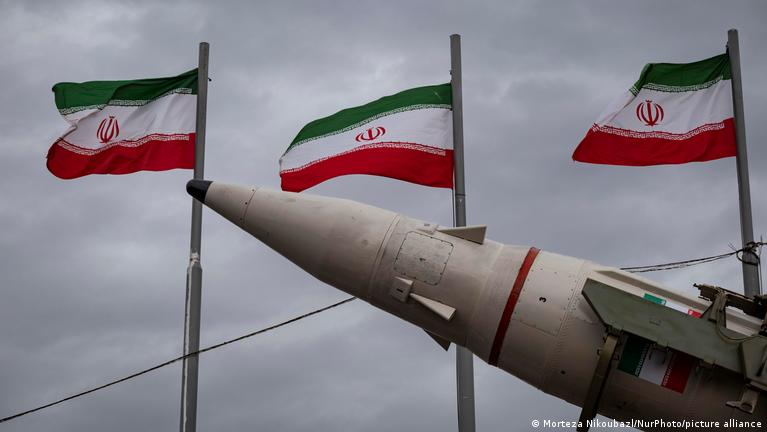
New US intelligence has reportedly detected Iranian contingency planning for a possible dirty bomb or chemical attack targeting senior Trump administration officials in Washington. While the White House says there is no credible immediate threat, Iran has rejected the allegations as tensions across the Middle East continue.
Iran, meanwhile, has rejected the allegations, describing claims concerning chemical weapons as false and fabricated.
The development has nevertheless intensified an already sensitive security environment involving the United States, Iran, Israel and the Gulf states. With military confrontation, economic pressure and disputes over regional security continuing, the reported intelligence has introduced another dimension to an increasingly complicated geopolitical crisis.
The central question is no longer simply whether Washington and Tehran can contain their confrontation geographically. It is whether the escalating hostility could create additional threats to American officials, military personnel and diplomatic interests beyond the immediate conflict zone.
What US Intelligence Has Reportedly Discovered
According to CNN’s investigation, which cited seven American officials familiar with the intelligence, US agencies have obtained information suggesting that Iranian planners have been exploring unconventional attack scenarios involving senior Trump administration officials in Washington.
The reported scenarios involve two different types of weapons:
-
A radioactive dirty bomb, which combines conventional explosives with radioactive material.
-
A chemical weapon capable of causing serious harm through exposure to toxic substances.
Two sources familiar with the intelligence told CNN that the reported planning included specific locations and potential targets in the American capital.
The information has reportedly prompted several meetings among US officials to discuss possible responses and contingency measures.
However, American officials remain divided over whether Iran possesses both the operational capability and the intention to carry out such an operation.
The distinction between planning and execution is crucial. Intelligence agencies frequently monitor potential adversary scenarios, including options that may never advance beyond preliminary consideration.
In this case, sources familiar with the assessment described the reported Iranian activity as an attempt to preserve possible options rather than evidence that an attack was imminent.
The US intelligence community has also not publicly disclosed the full underlying evidence, the identities of the officials allegedly targeted or the precise locations mentioned in the assessment. The Office of the Director of National Intelligence declined to comment when approached by CNN.
This leaves important questions unanswered, even as the reported planning has prompted Washington to examine its security arrangements.
White House Response: No Credible Threat to the American Homeland
The Trump administration has attempted to distinguish between the seriousness of the intelligence reporting and the immediate security situation inside the United States.
White House spokesperson Lauren Bis said:
“We are monitoring any and all potential threats, but at this time there are no credible threats to the homeland.”
The statement is significant because it indicates that the administration is monitoring the reported intelligence without publicly describing it as an imminent operational threat.
It also reflects a familiar challenge for national security agencies: preparing for a possible attack without creating unnecessary public alarm or treating every intelligence lead as a confirmed plot.
According to CNN, the intelligence has nevertheless prompted contingency planning and discussions among officials over the past week. One source described the preparations as prudent, while others questioned whether Iran had personnel capable of executing the reported scenarios.
There is another important dimension to the warning.
CNN reported that intelligence agencies had also intercepted communications in which Iranian actors allegedly discussed bomb-making materials being positioned inside the United States. Officials reportedly disagreed over the credibility of that information.
The report does not establish that radioactive or chemical materials have actually been located inside the country, nor does it confirm that an operational device exists.
That distinction must remain central to any assessment of the threat.
Iran Rejects the Allegations: Tehran Calls Claims Fabricated
Iran has strongly rejected the allegations, adding another layer of diplomatic confrontation to an already strained relationship with Washington.
The Iranian Mission to the United Nations in New York described the claims concerning chemical weapons as false and fabricated.
In its response, the mission stated that Iran considers the use of chemical weapons under any circumstances to be wholly illegitimate and categorically rejected the accusations.
The response is significant because Tehran is attempting to prevent the intelligence report from becoming another justification for increased American military or economic pressure.
However, Iran’s statement did not publicly address every element of the intelligence reporting, particularly the allegations concerning possible dirty-bomb scenarios and the identification of locations in Washington.
The distinction between rejecting chemical weapons allegations and addressing the separate radiological threat is important.
There is also an international legal dimension. The Chemical Weapons Convention prohibits its member states from developing, producing, stockpiling or using chemical weapons. Its prohibition also covers military preparations to use such weapons.
For Washington, the question is whether the reported intelligence reflects an actual change in Iranian operational thinking or is primarily an indication of contingency planning during an increasingly dangerous confrontation.
For Tehran, the immediate diplomatic challenge is to reject the allegations without allowing the dispute to create further justification for escalation.
What Is a Dirty Bomb and Why Does It Concern US Security Agencies?
The term ‘dirty bomb’ can create confusion because it is sometimes mistakenly associated with a nuclear weapon.
However, the two are fundamentally different.
According to the US Nuclear Regulatory Commission (NRC), a dirty bomb, technically known as a radiological dispersal device, combines conventional explosives with radioactive material. When detonated, the explosion can spread radioactive contamination into the surrounding environment.
Unlike an atomic bomb, it does not produce a nuclear explosion or a nuclear chain reaction.
Its principal danger comes from a combination of the conventional blast, possible radioactive exposure and contamination of affected locations.
Why is it considered dangerous?
A dirty bomb can create consequences beyond the immediate physical damage caused by an explosion.
Its potential effects include:
-
Injuries and deaths resulting from the conventional explosion.
-
Radioactive contamination of buildings, public spaces and surrounding property.
-
Temporary restrictions on access to affected locations.
-
Expensive decontamination and environmental assessment.
-
Public anxiety and disruption to normal economic and administrative activity.
The US Centers for Disease Control and Prevention explains that the immediate danger in most dirty-bomb scenarios would come primarily from the explosion rather than radiation exposure. However, radioactive contamination could create longer-term health and environmental concerns.
This is why security agencies take radiological threats seriously even when the anticipated physical destruction is considerably smaller than that of a nuclear weapon.
The psychological and economic consequences could also be substantial.
An attack affecting a government building, transport facility or public area in Washington could force evacuations, restrict access to surrounding locations and require extensive radiation monitoring.
For the US government, the challenge would involve not only preventing an attack but also maintaining public confidence and ensuring that emergency services can respond effectively.
Importantly, the technical explanation of a dirty bomb should not be confused with evidence that Iran possesses an operational device or has acquired the materials needed for the alleged plan. Neither has been publicly established by the reporting reviewed.
Why US-Iran Relations Have Reached Such a Dangerous Point
The intelligence warning has emerged during one of the most difficult periods in the relationship between Washington and Tehran.
The confrontation is rooted in decades of political hostility, competing regional interests, nuclear disputes and economic sanctions.
The 1979 Iranian Revolution transformed the relationship between the two countries, ending the previous close strategic partnership and establishing a political system fundamentally opposed to American influence in the region.
Subsequent decades brought diplomatic crises, sanctions, disputes over Iran’s nuclear programme and repeated confrontations involving regional armed groups.
The 2015 nuclear agreement, formally known as the Joint Comprehensive Plan of Action, offered a temporary diplomatic framework for restricting Iran’s nuclear activities in exchange for sanctions relief.
However, the United States withdrew from the agreement in 2018 during Trump’s first presidency, and the nuclear dispute subsequently intensified.
The present confrontation has added a more direct military dimension.
Military pressure and economic blockade
According to reporting on the latest US-Iran negotiations, Washington and Tehran remain divided over the conditions needed to end hostilities.
The disagreements involve the US naval blockade, sanctions, the reopening of the Strait of Hormuz and the future of negotiations over Iran’s nuclear programme.
Reuters reported on November 10 that Iranian security official Mohsen Rezaei said negotiations were not underway at that point and that Tehran was seeking a response to conditions it had outlined for resuming talks.
Earlier reporting by Reuters indicated that Trump had agreed to hold off on fresh military strikes for the time being following diplomatic engagement involving Qatar and several Gulf countries.
However, the American naval blockade remained in place, and significant differences between the two sides continued.
This is the environment in which the reported dirty-bomb intelligence has emerged.
The possibility of unconventional attacks adds another dimension to the conflict because it raises concerns about the security of government personnel and military installations even outside the immediate theatre of operations.
It also complicates diplomatic efforts. Negotiations become more difficult when each side is simultaneously assessing military risks and preparing for possible escalation.
Israel’s Security Calculations: Why Jerusalem Is Watching Closely
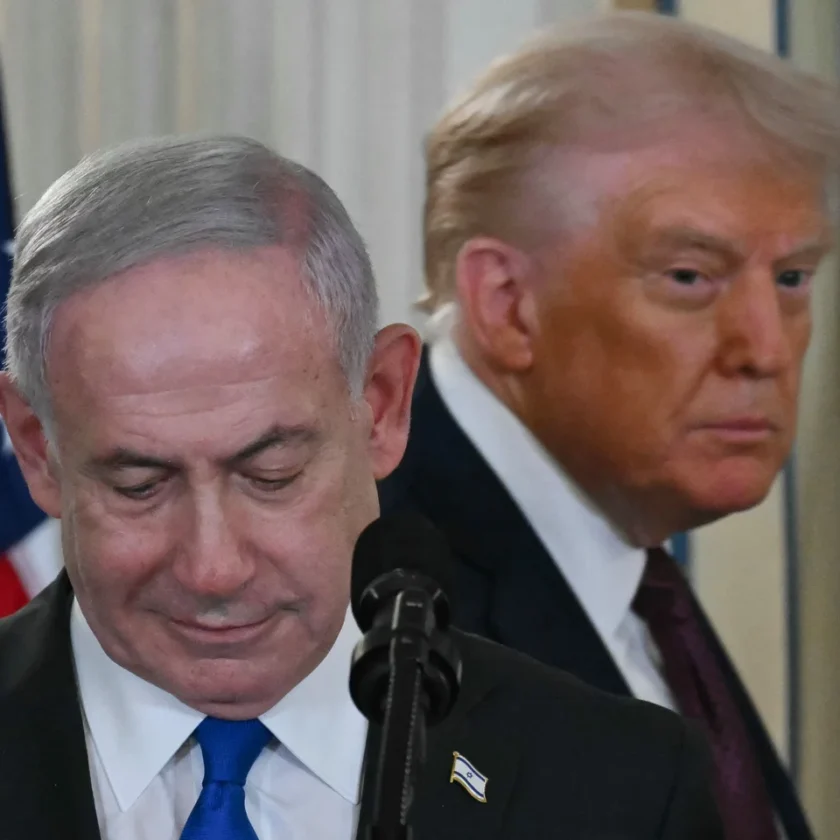
Prime Minister Benjamin Netanyahu has repeatedly identified Iran’s nuclear programme, missile capabilities and regional military relationships as major threats to Israeli national security.
Israel has also accused Tehran of supporting armed groups across the Middle East, including Hezbollah in Lebanon and other Iran-aligned organisations.
For Jerusalem, the concern is not limited to a possible direct attack. It also involves the possibility that a wider confrontation could increase the operational reach of groups aligned with Iran.
Washington-Jerusalem security cooperation
The United States and Israel maintain extensive military, intelligence and diplomatic cooperation.
Any credible intelligence suggesting that Iran is considering unconventional attacks against senior American officials would therefore attract attention in Israel.
However, the latest report does not establish that Israel possesses independent confirmation of the alleged Washington plot.
Nor does it demonstrate that the reported planning is part of an Iranian decision to attack American and Israeli targets simultaneously.
The broader concern is strategic: if the confrontation continues to intensify, both Washington and Jerusalem may face additional security challenges involving military facilities, diplomatic personnel and critical infrastructure.
For Israel, another important consideration is the potential reaction of Iran-aligned groups across the region if Tehran comes under further military pressure.
The possibility of multiple fronts remains one of the major concerns in any wider US-Iran confrontation.
Saudi Arabia and Gulf States: The Risk of Regional Escalation
For Saudi Arabia, the United Arab Emirates, Qatar, Bahrain, Kuwait and other Gulf states, the latest intelligence warning has implications that extend beyond Washington.
These countries are geographically close to Iran and remain exposed to the economic and security consequences of a prolonged regional conflict.
Their priorities include protecting energy infrastructure, maintaining maritime trade, securing airports and preventing further military escalation.
The Strait of Hormuz remains a critical concern
The Strait of Hormuz is one of the world’s most important maritime energy corridors.
A substantial proportion of internationally traded petroleum passes through this narrow waterway, connecting the Persian Gulf with international shipping routes.
Any prolonged disruption could affect:
-
Crude oil and petroleum-product shipments.
-
International energy prices.
-
Marine insurance premiums.
-
Shipping schedules and freight costs.
-
Energy security in Asian economies.
For countries such as India, China, Japan and South Korea, the security of Gulf shipping routes is particularly important because of their dependence on imported energy.
Saudi Arabia also has an interest in preventing further instability because its economic transformation programme depends on reliable exports, international investment and regional connectivity.
The reported dirty-bomb intelligence does not itself establish a new threat to Gulf shipping. However, it has emerged within a wider confrontation in which maritime security and regional military activity are already major concerns.
Gulf diplomacy and the risk of being drawn into war
Saudi Arabia and other Gulf governments have strong incentives to prevent the conflict from expanding.
Their economies depend on international trade, investment, tourism and energy exports. A prolonged confrontation could affect all four.
Reuters reported that Qatar, Saudi Arabia, the UAE, Bahrain and Kuwait were among the regional countries that urged restraint as Washington considered its next steps against Tehran.
This reflects an important strategic reality: Gulf countries may share American concerns about Iranian military activities while simultaneously opposing a prolonged war that could threaten their own security and economic interests.
Their diplomatic challenge is to preserve relations with Washington without allowing their territory or infrastructure to become another front in the conflict.
Could the Alleged Plot Affect American Troops in the Middle East?
The reported intelligence concern is not limited to Washington.
CNN’s reporting also indicated that American agencies were monitoring information suggesting Iran could consider chemical weapons against US military personnel stationed in the Middle East.
Two American officials reportedly described a separate contingency-planning effort focused on ensuring that diplomatic and intelligence personnel in the region had appropriate protective equipment and training.
This adds an important dimension to the developing security picture.
The United States maintains military personnel and facilities across several Middle Eastern countries, supporting regional security operations and maintaining strategic partnerships.
Any credible threat involving chemical weapons would require military commanders and intelligence agencies to review personnel protection, emergency preparedness and medical response arrangements.
However, the reported intelligence does not establish that chemical weapons have been used against American troops or that an attack against a particular military installation is imminent.
It also does not establish that every American military facility in the region faces the same level of risk.
The distinction between a general intelligence warning and a specific, confirmed operational threat remains essential.
The Political Dimension: Trump Faces a Difficult Security and Diplomatic Choice
The latest intelligence warning also arrives at a politically sensitive moment for President Trump.
His administration must balance military pressure against Iran with the risks of a prolonged confrontation, rising security costs and growing international concern.
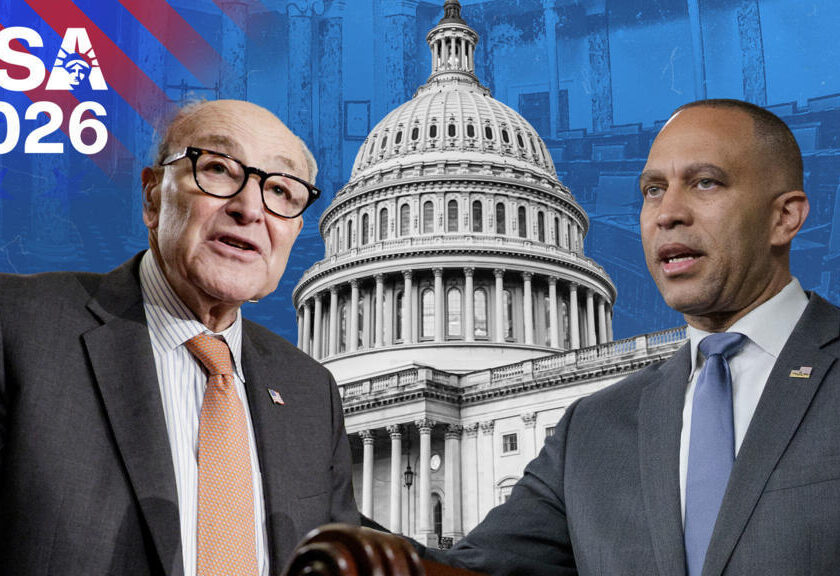
The issue is particularly complicated because Trump’s political position has been affected by the recent congressional election results, which have shifted control of both chambers to Democrats.
A Democratic-controlled Congress can increase oversight of military operations, defence spending and the administration’s foreign policy decisions.
That does not mean lawmakers can directly control every presidential military decision. The executive branch retains substantial authority over national security and diplomacy.
Nevertheless, congressional scrutiny could become more intense if the conflict expands or if new threats emerge against American personnel.
Three challenges for the White House
First: Protecting American personnel.
The administration must ensure that senior officials, military personnel and diplomatic staff are adequately protected against conventional and unconventional threats.
Second: Maintaining military deterrence.
Washington may want to demonstrate that threats against American officials will carry consequences without automatically initiating another round of military operations.
Third: Keeping diplomatic channels open.
Despite the confrontation, an eventual agreement involving nuclear restrictions, maritime security and sanctions remains important to both sides.
The challenge is to prevent intelligence warnings and military preparations from becoming a cycle of escalation that makes diplomacy increasingly difficult.
What Does the Intelligence Actually Establish — and What Remains Unproven?
The distinction between confirmed information and intelligence allegations is particularly important in this case.
The CNN report is based on interviews with seven US officials familiar with the intelligence. It is significant reporting, but the underlying intelligence material has not been publicly released for independent examination.
The current publicly reported position can be summarised as follows:
| Issue | What is established |
|---|---|
| Iranian contingency planning | Reported by CNN, citing seven US officials |
| Specific Washington locations | Reported as identified in intelligence |
| Imminent attack | Not established |
| Operational dirty bomb | No public confirmation |
| Radioactive materials inside the US | Intelligence claims reported, but not independently established |
| US security preparations | Contingency planning reported |
| White House position | No credible threat to the homeland at present |
| Iran’s position | Rejects the chemical weapons allegations |
There are several unresolved questions.
First, what specific evidence led intelligence agencies to conclude that Iranian planners were examining these scenarios?
Second, are the reported discussions connected to a central government decision in Tehran, or do they reflect contingency thinking among individual elements of Iran’s security establishment?
Third, does Iran have the personnel and operational capability to execute such a scenario?
Fourth, have American agencies independently verified the alleged presence of materials inside the country?
Until more information becomes available, these questions should remain open.
The intelligence report deserves attention, but it should not be presented as proof that Iran has built a dirty bomb, planted radioactive materials or ordered an imminent attack on Washington.
Global Implications: Why India and the International Community Are Watching
The reported intelligence warning has implications for countries beyond the immediate US-Iran confrontation.
For India, the situation is particularly important because of its economic and strategic relationship with the Gulf region.
India depends heavily on energy imports from the Middle East and has a substantial expatriate population across Gulf countries.
Any escalation involving Iran, the United States and Israel could affect Indian interests through several channels.
1. Oil prices and India’s energy security
A wider conflict could increase uncertainty in international energy markets.
If the Strait of Hormuz remains disrupted or additional attacks affect energy infrastructure, oil prices could become more volatile.
Higher crude prices can increase India’s import expenditure, put pressure on inflation and affect transportation and industrial costs.
2. Safety of Indian nationals
Millions of Indians live and work across the Gulf region.
An expansion of the confrontation could create additional challenges for Indian diplomatic missions responsible for assisting citizens during emergencies.
Airport disruptions, security restrictions and changes to travel arrangements could also affect Indian workers and families.
3. International trade and shipping
The Gulf is an important commercial corridor connecting Asian economies with energy suppliers and international markets.
An extended maritime crisis could increase freight costs, delay shipments and complicate commercial planning.
4. India’s diplomatic balancing act
India maintains relations with the United States, Iran, Israel and the Gulf countries.
Its diplomatic priorities include protecting national interests, maintaining energy security and supporting regional stability.
A direct confrontation between Washington and Tehran would make this balancing act more complicated.
New Delhi would have an interest in preventing the crisis from expanding while maintaining communication with all relevant partners.
What Happens Next?
The coming weeks will be important in determining whether the intelligence warning remains a security contingency or becomes part of a wider escalation.
Several developments deserve attention:
-
US intelligence assessments: Whether additional information emerges confirming or weakening the reported allegations.
-
Iran’s response: Whether Tehran issues a more detailed diplomatic explanation or addresses the specific dirty-bomb allegations.
-
White House security measures: Whether additional protective arrangements are announced for senior officials and American personnel.
-
Military developments: Whether Washington resumes strikes or maintains its current approach of military pressure combined with diplomatic engagement.
-
Strait of Hormuz: Whether maritime restrictions are eased as part of negotiations.
-
Regional diplomacy: Whether Qatar, Saudi Arabia and other Gulf governments can help prevent further confrontation.
A major question is whether the intelligence warning will influence ongoing diplomatic efforts or make negotiations more difficult.
The United States may regard the reported planning as evidence of the risks associated with the current confrontation. Iran, on the other hand, may view the allegations as another attempt to increase international pressure.
Both interpretations will influence the political atmosphere surrounding any future negotiations.
Conclusion: A New Security Dimension in the US-Iran Confrontation
The reported Iranian dirty-bomb and chemical-weapon scenarios have introduced a troubling new dimension to the confrontation between Washington and Tehran.
For the United States, the concern is not simply about military threats in the Middle East. It is also about protecting senior officials, military personnel and critical institutions against possible unconventional attacks.
For Iran, the allegations create another diplomatic challenge at a time when its relationship with Washington remains deeply strained by military pressure, sanctions, maritime restrictions and nuclear disagreements.
For Israel and the Gulf countries, the developments reinforce concerns that the confrontation could spread into additional areas of regional security.
Yet one distinction must remain clear: the intelligence report describes alleged contingency planning, not a confirmed decision by Iran to launch an attack. The White House has explicitly stated that there are currently no credible threats to the American homeland, while Tehran has rejected the chemical weapons accusations.
That does not make the intelligence irrelevant. It makes careful assessment more important.
The real danger lies in the possibility that military pressure, retaliatory planning and mutual distrust could create circumstances in which a confrontation becomes increasingly difficult to contain.
The immediate challenge for Washington and Tehran is therefore not only to prepare for potential security threats but also to prevent the current conflict from developing into a wider and more dangerous international crisis.