Kashmir Welcomes Winter Birds as Wetlands Face a Conservation Crisis
By: Javid Amin | 20 November 2026 | Srinagar – Kashmir | Environmental Concern
Migratory ducks, geese and other waterbirds are arriving at Kashmir’s wetlands as winter sets in. But behind the seasonal spectacle lie questions about encroachment, sewage pollution, shrinking habitats, low water levels and whether conservation efforts are keeping pace with the birds’ return.
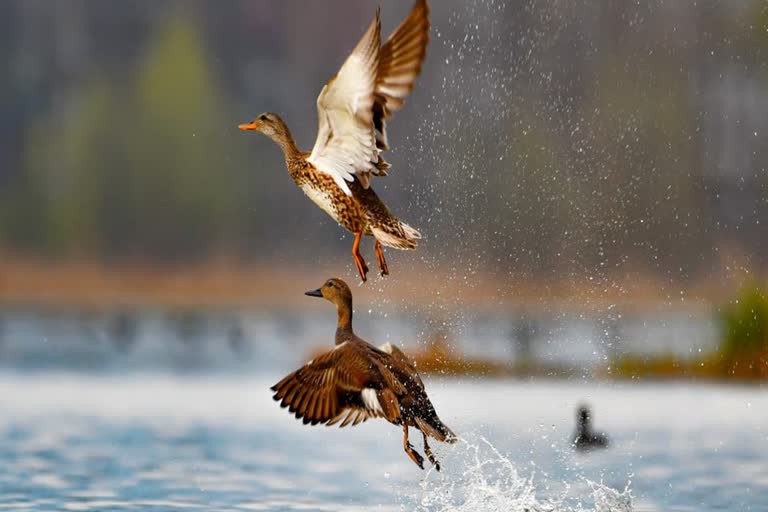
As temperatures fall across Siberia, Central Asia and other northern regions, Kashmir’s wetlands are once again filling with the sounds of arriving waterbirds. Mallards, pintails, teals, geese, pochards and other winter visitors have begun appearing at Hokersar, Wular Lake, Shallabugh, Hygam and Mirgund, marking the start of another migration season.
For Kashmir, the arrival of these birds is a familiar winter spectacle. For the birds themselves, however, the journey is a matter of survival. They travel thousands of kilometres in search of food, open water, resting grounds and conditions that allow them to survive the months when their breeding habitats become inhospitable.
Wildlife officials say their numbers are expected to increase over the coming weeks, with a seasonal bird census planned to assess the population, species diversity and distribution across wetlands.
But this year’s arrival comes against a troubling environmental backdrop.
Kashmir’s wetlands are facing a combination of encroachment, sewage discharge, siltation, altered water flows, shrinking water spread and uneven conservation efforts. Recent audits and official disclosures have raised serious questions about how effectively these habitats are being protected.
The birds are returning. Whether their winter homes are becoming safer is a much more complicated question.
Thousands of kilometres travelled for a winter refuge
The migration to Kashmir is part of a much larger movement of birds across the Central Asian Flyway, one of the major migratory routes connecting breeding grounds in northern Eurasia with wintering habitats across South and Southeast Asia.
Birds arriving in Kashmir originate from a broad geographical region that includes Siberia, Central Asian countries, parts of China, northern Europe and other colder territories.
As winter advances in these regions, frozen lakes, snow-covered wetlands and reduced food availability make survival increasingly difficult for many waterbirds. Kashmir’s wetlands offer a relatively milder environment, where birds can find food, shelter and water during the winter months.
Their journey is remarkable not merely for its distance but for the precision with which migration is carried out. Birds rely on a combination of environmental cues, seasonal patterns, biological rhythms and navigational abilities to reach suitable habitats.
Some species travel in large flocks, while others arrive in smaller groups or move between wetlands as conditions change. They may not remain at a single lake throughout the winter. Feeding, roosting and resting can take place at different water bodies, making the wider wetland network important to their survival.
This means that the loss or degradation of one wetland may have consequences extending beyond that particular site.
The birds need a network of functioning habitats, not simply one lake that looks healthy from a distance.
Which birds are arriving in Kashmir?
Among the commonly reported winter visitors are:
- Mallard
- Northern Pintail
- Eurasian Teal
- Eurasian Coot
- Greylag Goose
- Pochards
- Gadwall
- Eurasian Wigeon
- Northern Shoveler
- Tufted Duck
- Ruddy Shelduck
The species differ in their feeding habits, habitat preferences and behaviour. Some feed by dabbling in shallow water, others dive for aquatic food, while several depend on a mixture of vegetation, seeds, invertebrates and other food sources.
This diversity is one reason Kashmir’s wetlands are so important. A wetland with a mixture of shallow feeding areas, open water, vegetation, mudflats and undisturbed resting locations can support a wider variety of birds than a water body whose ecological character has been altered.
The appearance of these species is also a reminder that wetlands are living ecosystems, not just scenic destinations.
Five wetlands once again become winter gathering grounds
The key arrival sites reported by wildlife officials include:
Hokersar | One of Kashmir’s major wintering habitats for migratory waterbirds.
Wular Lake | A vast lake and wetland complex supporting birds, fisheries and local livelihoods.
Shallabugh | A marshland habitat important for winter waterfowl and wetland biodiversity.
Hygam | A wetland conservation reserve forming part of Kashmir’s bird habitat network.
Mirgund | A seasonal habitat supporting migratory birds in northern Kashmir.
These wetlands are among the most important locations for observing the annual migration. They provide feeding and resting grounds, while birds may also move to nearby water bodies depending on food availability, water levels, disturbance and weather.
The Wildlife Department has said it undertakes management measures in several wetland reserves, including maintaining water levels, improving channels and creating pools to facilitate feeding and movement.
However, the effectiveness of these interventions depends on more than whether a particular activity is carried out. The quality, location, timing and ecological outcome of the work matter.
A channel that improves water movement in one area may not solve problems caused by sewage in another. A pool created for feeding may be of limited value if surrounding habitats are disturbed or contaminated.
Wetland management has to be based on the functioning of the entire ecosystem.
The bird census: What is being counted, and what does it reveal?
The Wildlife Department is expected to conduct a fresh census during the current winter migration season to estimate bird populations and determine which species are visiting the Valley and where they are concentrated.
This should not be confused with the Asian Waterbird Census conducted in February 2026.
That earlier exercise covered 27 wetlands and 58 designated counting points, involving wildlife officials, bird experts, students, researchers and volunteers. The exercise was designed to document migratory and resident waterbirds and help assess population trends and wetland conditions.
The upcoming seasonal count will provide a more current picture of the birds arriving during the 2026-27 winter.
Counting is an important conservation tool, but its value depends on the quality of the methodology. Bird populations fluctuate with weather, water levels, food availability, migration timing and the conditions prevailing at their breeding grounds.
A single count cannot establish whether a species is thriving or declining.
To understand population trends, scientists need consistent counting locations, repeat surveys, reliable species identification, comparable dates and long-term datasets. Changes in the number of birds at one wetland may also reflect movement to another nearby site rather than an overall decline.
The census should therefore ideally be accompanied by habitat assessments, including water levels, vegetation, food availability, pollution and disturbance.
The real value of the exercise lies in what the data tells authorities about conservation priorities.
The paradox: Birds are arriving as wetlands face growing pressure
The return of migratory birds creates an impression of ecological abundance. But a large number of birds landing at a wetland does not necessarily mean the habitat is healthy.
This distinction is particularly important in Kashmir, where environmental audits and official records have repeatedly raised concerns about wetland degradation.
A Comptroller and Auditor General (CAG) performance audit of lake conservation in Jammu and Kashmir documented serious shortcomings involving wetland management, demarcation, pollution control, encroachment and implementation of conservation programmes.
At Hokersar, the audit recorded 2,528.10 kanals of encroachment, involving structures, plantations, vegetative gardens and paddy cultivation. It also highlighted deficiencies in survey and demarcation, as well as pollution entering the lake through drains and waste dumping.
These findings raise an uncomfortable question: how can a wetland be expected to provide a safe winter habitat for hundreds of thousands of birds if portions of its land are encroached upon, waste enters its water and its ecological character is changing?
The return of birds is encouraging. It should not, however, become a reason to assume that conservation problems have been resolved.
A wetland can continue attracting birds while losing habitat quality, water depth, food resources or ecological resilience.
Hokersar: A Ramsar site with an unresolved conservation burden
<AsyncImageGroup query=”Hokersar wetland Kashmir bird sanctuary migratory birds aerial landscape” layout=”bento” aspectRatio=”5:4″/>
Hokersar is among the most important wintering grounds for migratory waterbirds in the Valley. Its significance extends beyond the number of birds arriving each season. The wetland is part of the ecological landscape of the Jhelum basin and provides habitat for waterfowl, aquatic life and other wetland-dependent species.
It is also a Ramsar site, recognised for its international ecological importance.
But the CAG audit identified problems that cannot be brushed aside. Encroachment, inadequate demarcation, pollution, changes in water flow and deficiencies in conservation planning have all raised concerns over the wetland’s management.
The audit documented garbage along the flood spill channel and waste entering the lake through water channels. It also found that the department lacked a comprehensive public-awareness plan and had not adequately documented annual targets and achievements for its awareness activities.
The report recorded that ₹26 lakh was allocated for public awareness during 2017-22, of which ₹12 lakh was spent, leaving 56 per cent unutilised. It found that the spending mainly involved hoardings and refreshments, with no environmental education or awareness programmes conducted as envisaged.
The shortcomings are important because conservation is not only about physical infrastructure. Protecting a wetland also requires public understanding, community participation, enforcement and long-term ecological monitoring.
The CAG audit covered the period from April 2017 to March 2022. It should not be treated as a complete account of all work undertaken after that period. Nevertheless, it provides a documented baseline against which subsequent conservation claims should be measured.
Encroachment figures raise further questions about enforcement
The issue of encroachment remains one of the most serious challenges facing Kashmir’s wetlands.
A recent report based on official information furnished by the Department of Wildlife Protection through an RTI disclosure put the combined encroached area across six wetlands at 390.19 hectares.
The reported breakdown included:
- Hokersar: 191.41 hectares
- Hygam: 95.85 hectares
- Mirgund: 89.74 hectares
- Freshkhoori: 5.14 hectares
- Chatlam: 4.24 hectares
- Shallabugh: 3.81 hectares
The same disclosure reportedly stated that 1,001 eviction notices had been served across the six wetlands.
These are significant figures, but they require careful interpretation. The CAG’s earlier Hokersar encroachment figure of 2,528.10 kanals does not directly match the more recent RTI figure of 191.41 hectares. A rough conversion of the CAG figure puts it at around 128 hectares, suggesting a substantial difference between the two datasets.
The figures may reflect different assessment dates, boundaries, classifications or methods of recording encroachment. They should not be assumed to represent an identical survey.
This is precisely why an updated, georeferenced and transparent assessment is needed.
Authorities should publish the exact wetland boundaries, encroached parcels, dates of assessment, legal status of the land and action taken on individual cases. Without such information, the public cannot determine whether the number of encroachments is decreasing, whether eviction notices have led to actual restoration, or whether the same violations continue under different descriptions.
Serving notices is not the same as reclaiming a wetland.
The NGT’s latest intervention puts wetland mapping under scrutiny
The National Green Tribunal has recently directed the Jammu and Kashmir Pollution Control Committee to submit a fresh report on the actual existing area of wetlands after finding gaps in the earlier assessment.
The Tribunal has asked authorities to compare the area recorded in revenue documents with the physical area existing on the ground and identify encroachments and degradation. The next hearing is scheduled for February 26, 2027.
Although the proceedings cover a broader wetland assessment and are not specifically a migratory-bird census, their implications are directly relevant to conservation.
If authorities cannot establish how much wetland remains, it becomes difficult to assess the quality or carrying capacity of bird habitats. Wetland boundaries, water spread, vegetation, shallow feeding zones and the condition of surrounding land all influence habitat availability.
The Tribunal’s direction reinforces a point that conservationists have been making for years: protection requires reliable data, not merely administrative entries.
A bird census can estimate populations. A wetland assessment must explain whether those birds have enough healthy habitat to survive.
Low water levels could complicate the winter habitat picture
The arrival of birds is also taking place as water levels in the Jhelum system have fallen sharply amid an extended dry spell.
Recent reported gauge readings showed the Jhelum and several tributaries well below their cited reference marks. Wular Lake was also recorded 4.10 metres below its reference level in the November 20 report.
Low water is not automatically harmful to every species. Some birds benefit from exposed mudflats and shallow margins that make food easier to access. Others require deeper water, aquatic vegetation, open-water roosting areas or particular combinations of habitat.
The problem is when water levels fall too far, remain low for extended periods or change in ways that reduce the availability of suitable feeding and resting habitats.
Wetland ecology is closely tied to the timing, depth and movement of water. A lake that becomes too shallow may experience greater concentration of pollutants, changes in aquatic vegetation and increased disturbance. Areas used for feeding by some species may disappear or become unsuitable for others.
The current dry spell does not, by itself, establish that migratory bird populations will suffer. But it adds another reason to monitor wetland conditions carefully during the winter season.
The census should ideally record bird numbers alongside habitat conditions rather than treating the two as separate exercises.
Sewage and waste can turn a winter refuge into a stressed habitat
The threat of pollution is equally serious.
Untreated wastewater entering wetlands can increase organic pollution, alter oxygen levels and affect aquatic organisms. Plastic and other solid waste can degrade habitats, while nutrient-rich runoff may encourage excessive growth of vegetation or algae in some conditions.
These changes can affect the food chain on which waterbirds depend.
Many migratory ducks feed on aquatic plants, seeds, invertebrates and other organisms found in wetland habitats. Pollution can alter the availability of these resources or reduce habitat suitability.
The CAG audit’s observations at Hokersar underline that waste entering wetlands is not a hypothetical concern. The audit documented garbage dumping and wastewater entering the wetland system.
The wider Jhelum basin also faces sewage-treatment and pollution challenges, making coordinated management of rivers, drains and wetlands essential.
A bird may arrive at a wetland because it has water and food. That does not mean the water is clean or the habitat is free from environmental stress.
Poaching remains a threat, especially outside protected areas
The Wildlife Department has stepped up surveillance and monitoring to protect migratory birds, deploying staff and wildlife watchers in sensitive locations.
Officials have acknowledged that poaching remains a concern, particularly in areas outside adequately protected wetland reserves.
Migratory birds can be vulnerable because they congregate in predictable locations. Their feeding and roosting sites may be known to hunters, and the birds can become easier to target when large flocks gather.
Protection therefore needs to extend beyond the formal boundaries of conservation reserves.
The surrounding marshes, agricultural fields, water channels and other areas used by birds during feeding and movement can also be important. If enforcement is concentrated only within a notified reserve, birds moving outside its boundaries may remain exposed.
Wildlife protection teams need to maintain surveillance during peak migration periods, act on reports of illegal hunting, coordinate with local communities and ensure that enforcement is not limited to occasional patrols.
The department has also urged birdwatchers and photographers to avoid sharing precise GPS locations of vulnerable bird congregations online. Such information can unintentionally help poachers locate birds.
Responsible birdwatching means observing without disturbing, avoiding excessive noise, keeping a safe distance and not revealing sensitive nesting or congregation locations.
The flyway makes Kashmir’s wetlands an international conservation responsibility
Kashmir’s importance is not limited to local biodiversity.
The Valley lies within a wider migratory network used by birds moving between breeding grounds in northern Eurasia and wintering or staging areas across South Asia. The Central Asian Flyway connects ecosystems across countries, making conservation a shared responsibility.
The loss of a wetland at one end of a migration route can affect birds that rely on multiple stopover sites along the way.
That is why international conservation frameworks, waterbird censuses and coordinated monitoring matter. They help identify population trends, important habitats and species requiring protection.
Wetlands International’s Asian Waterbird Census is part of the broader International Waterbird Census, a citizen-science monitoring programme designed to collect comparable data across countries and years.
The census data can help authorities understand changes in bird populations and identify wetlands of international or national importance. But reliable monitoring depends on consistent methods, repeat observations and the publication of results.
Kashmir’s wetlands are part of a much larger ecological story. Their degradation can have consequences beyond the Valley, just as the survival of birds depends on habitat protection across their migratory range.
The bird count must become a measure of habitat success
The Wildlife Department’s upcoming census will be important. It can establish the number of birds arriving, identify species diversity and help map their distribution across wetlands.
But the final report should ideally answer more than how many birds were counted.
It should establish:
- Which species are increasing or declining across comparable years?
- Are birds shifting from one wetland to another?
- Which wetlands provide the most reliable feeding and roosting habitat?
- How much open water, marsh vegetation and shallow feeding habitat is available?
- Are water levels within suitable seasonal ranges?
- What are the major pollution sources at each site?
- How much encroached land has actually been reclaimed?
- Are anti-poaching patrols producing measurable results?
- Are conservation measures improving habitat conditions?
The 2026 Asian Waterbird Census covered 27 wetlands and 58 counting points, demonstrating that field-based monitoring can be carried out across a wide area with the participation of experts, officials and trained volunteers.
The next step should be to connect these population estimates with wetland condition assessments and make the findings publicly accessible.
A rise in bird numbers is encouraging, but it should not be used as the sole proof that restoration is succeeding. A decline also needs careful investigation before it is attributed to local habitat degradation, because migration timing, weather, survey coverage and conditions at distant breeding grounds can influence counts.
Scientific monitoring must be consistent enough to separate real ecological trends from short-term fluctuations.
Kashmir’s winter spectacle needs more than a welcome
There is something extraordinary about watching migratory birds arrive in Kashmir after travelling thousands of kilometres. Their return gives the Valley’s wetlands a new life during the coldest months and offers residents a glimpse of a natural cycle that connects Kashmir with distant landscapes.
But that spectacle also carries a responsibility.
These birds are not simply seasonal visitors adding colour to the scenery. They depend on wetlands that are increasingly exposed to human pressure, pollution, habitat fragmentation and uncertain water conditions.
The CAG has documented encroachment and management deficiencies. The NGT has sought a fresh assessment because the actual wetland area remains insufficiently established in the earlier report. The Wildlife Department is preparing another bird census, while field staff are tasked with protecting birds from poaching.
The return of migratory birds is a sign that Kashmir remains an important destination along the flyway. It is not, on its own, proof that the wetlands are healthy.
The most meaningful measure of conservation will be whether these birds can return year after year to habitats that retain enough clean water, food, space and safety.
The winter guests have arrived. The question now is whether Kashmir can protect the homes they came back to.