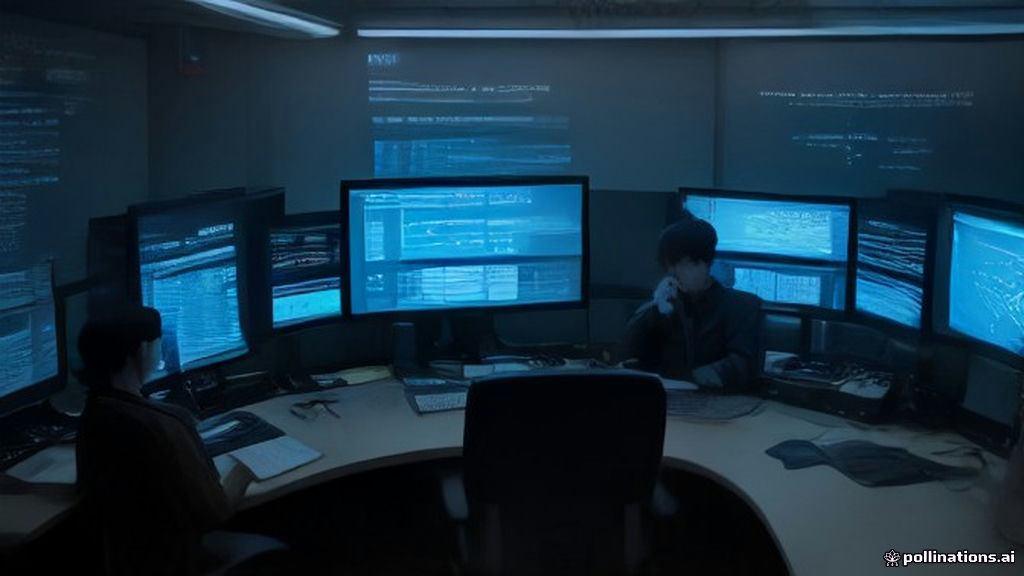
Tech Outages Are Piling Up: Is AI Fueling Global System Failures?
Modern society operates on an invisible digital bedrock, yet that foundation is increasingly showing fractures. From crippled cloud networks and grounded airline schedules to offline banking portals, major technology outages are no longer isolated anomalies. Instead, they represent a recurring, high-stakes pattern that threatens the daily rhythm of global commerce. As organizations race to integrate artificial intelligence into every tier of their operations, a critical question emerges: Are these complex systems becoming too fragile to manage, and have we entered a permanent era of recurrent digital instability?
- Major technology outages are accelerating in frequency and scale across banking, aviation, and cloud computing sectors.
- The rapid, sometimes unchecked deployment of artificial intelligence systems introduces unprecedented vulnerabilities and cascading failure loops.
- Legacy software architectures struggle to cope with the immense data loads demanded by modern generative and autonomous AI tools.
- Industry leaders and regulatory bodies are facing intense pressure to mandate rigorous stress-testing and operational redundancies.
- Securing the future of digital infrastructure requires balancing rapid AI innovation with resilient, human-monitored safety protocols.
Historical Context & Background
To understand the current wave of digital disruptions, one must look back at how modern IT infrastructure evolved. For decades, enterprise software relied on monolithic architectures—stable, predictable, and managed by human administrators who understood every line of code. However, the migration to hyper-scale cloud environments changed the equation. Distributed systems allowed companies to scale rapidly, but they also introduced interdependent networks where a single server failure in Virginia could take down streaming services in Tokyo.
Over the past five years, the corporate mandate shifted from stability to velocity. Organizations prioritized speed-to-market, continuous deployment pipelines, and automated software patches. While this agile approach accelerated digital transformation, it also eroded safety margins. When minor coding errors slipped past automated testing tools, they propagated instantly across global networks, turning small bugs into systemic catastrophes.
Administrative Decisions & Ground Realities
The introduction of artificial intelligence into core business logic has exponentially magnified these vulnerabilities. Corporations are eager to capture market share in the AI boom, frequently deploying autonomous agents, large language models, and machine learning pipelines directly into production environments without adequate oversight.
Unlike traditional software, which follows deterministic rules, AI systems operate probabilistically. They learn from vast, messy datasets and make autonomous decisions that even their creators cannot fully trace or predict. When an AI-driven optimization tool misinterprets a data anomaly, it can trigger automated protective shutdowns or cascading API failures. On the ground, this translates to sudden, inexplicable blackouts where customer service lines melt down, payment terminals reject valid cards, and enterprise workers find themselves locked out of vital productivity suites.
Local Impact & Community Perspectives
The consequences of these systemic failures extend far beyond Silicon Valley boardrooms, directly affecting everyday citizens. When cloud platforms or payment gateways fail, local small businesses lose hours of revenue because point-of-sale systems freeze. Commuters stranded by automated airline scheduling crashes face immediate financial and personal disruption.
Consumer advocacy groups and municipal leaders are voicing growing frustration. Communities have become hyper-reliant on digital infrastructure for emergency services, public transit, and municipal administration. Each successive outage exposes the dangerous fragility of a society that has digitized essential public functions without establishing robust, analog fail-safes.
Strategic & Socio-Economic Ramifications
Economically, the cost of recurring tech outages is staggering. According to recent industry estimates, enterprise downtime costs billions annually in lost productivity, emergency engineering fixes, and reputational damage. Furthermore, insurance markets are tightening underwriting standards for cyber resilience, making coverage increasingly expensive for firms that rely heavily on unverified AI models.
Geopolitically, the centralization of cloud computing and AI services among a handful of dominant tech titans creates single points of failure for entire national economies. A disruption at a primary cloud provider can paralyze government agencies, healthcare networks, and financial institutions simultaneously, highlighting an urgent need for decentralized, resilient architectural planning.
Chronological Timeline & Data Breakdown
| Year / Period | Primary Catalyst | Impact Scope |
|---|---|---|
| Pre-2020 | Monolithic software & early cloud migrations | Localized outages; manageable recovery windows. |
| 2020–2022 | Remote work surge & rapid digital scaling | Frequent cloud bottlenecks; increased cyber vulnerabilities. |
| 2023–Present | Rapid generative AI integration & automated pipelines | Cascading system-wide failures, unpredictable logic loops, and widespread commercial disruption. |
The Road Ahead: Future Milestones
Mitigating this growing crisis requires a fundamental shift in industry philosophy. Software engineers, ethicists, and corporate executives must recalibrate their priorities, placing systemic resilience on equal footing with innovation speed. Regulatory frameworks are also beginning to evolve, with lawmakers drafting proposals that mandate rigorous stress-testing for AI systems deployed in critical infrastructure sectors.
Ultimately, preventing tech outages from becoming the permanent status quo demands a renewed commitment to human oversight. Automated systems can enhance productivity, but they cannot replace the critical judgment required to maintain a secure, stable, and trustworthy digital world.
Frequently Asked Questions (FAQ)
Why are tech outages happening more frequently now than a decade ago?
Modern digital infrastructure relies on highly complex, interconnected cloud networks and automated software deployment pipelines. As systems become more integrated, a single coding error or unexpected data spike can propagate rapidly across global networks, causing widespread outages.
How does artificial intelligence contribute to digital system failures?
AI systems operate probabilistically rather than deterministically. When integrated into critical operations without sufficient oversight, AI tools can misinterpret data anomalies, trigger automated error loops, or make autonomous decisions that strain underlying hardware and software limits.
What can organizations do to protect themselves against these recurring outages?
Companies can improve their resilience by implementing strict automated testing, maintaining human-in-the-loop oversight for critical AI deployments, establishing robust analog fail-safes, and diversifying their cloud service providers to eliminate single points of failure.