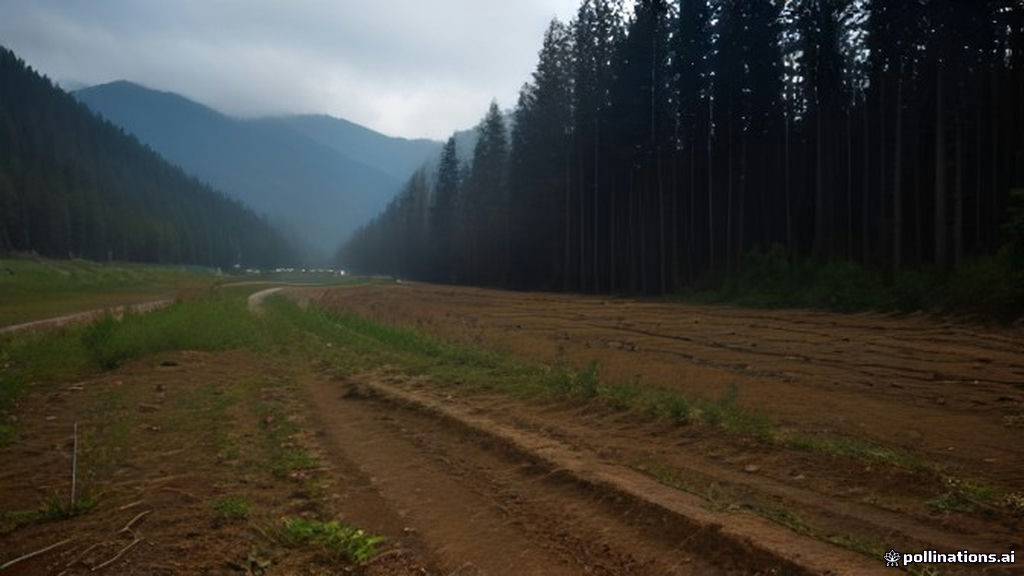
Tangmarg Forest Clean-Up: Shajimarg Road Garbage Dump Cleared in Major Eco-Drive
Swift administrative intervention has brought much-needed relief to the fragile ecosystem of Tangmarg, as the Forest Department successfully cleared a notorious illegal garbage-dumping site along the strategic Shajimarg Road. The decisive action follows mounting environmental concerns raised by local residents and regional media reports highlighting how a pristine woodland corridor had been converted into an unofficial municipal dumping ground. Transforming outrage into constructive action, authorities have not only hauled away tons of accumulated waste but have also initiated a comprehensive plantation drive to heal the scarred landscape.
- The Jammu and Kashmir Forest Department cleared a rampant illegal garbage dump along Shajimarg Road in Tangmarg.
- The clean-up follows intense local media coverage spotlighting severe ecological degradation in the forested corridor.
- A massive plantation drive featuring native saplings has been launched immediately to rehabilitate the soil and deter future dumping.
- The operation underscores a broader, systemic crisis regarding municipal waste management and rural-urban spillover in Jammu and Kashmir.
- Environmental experts emphasize the urgent need for strict enforcement, perimeter fencing, and community-led vigilance.
Historical Context & Background
For months, the verdant forested stretch flanking Shajimarg Road in Tangmarg served as an invisible casualty of improper municipal waste handling. Surrounded by breathtaking natural vistas that draw thousands of tourists and nature enthusiasts annually, the pockets just off the main tarmac degenerated into toxic repositories for plastic waste, household refuse, and commercial debris. Environmentalists and local stakeholders repeatedly sounded alarms, warning that leachate from the unscientific dumpsites risked contaminating local water streams and devastating native flora and fauna. The paradox of scenic mountain towns struggling with unregulated refuse disposal has long plagued administrative bodies across the region, where rural fringes often bear the brunt of urban waste migration.
Administrative Decisions & Ground Realities
Responding directly to ground intelligence and public outcry, divisional forest officials mobilized specialized squads equipped with heavy machinery to clear the Shajimarg Road site. Over several days of rigorous excavation and clearing operations, trucks hauled away mounds of accumulated garbage that had choked the undergrowth. To prevent the recurrence of illegal dumping, the department pivoted instantly from remediation to restoration. A specialized plantation drive was inaugurated, with forest workers planting indigenous tree species designed to stabilize the soil, restore biodiversity, and reestablish the ecological buffer zone that protects the roadway.
Local Impact & Community Perspectives
Local residents and community leaders have welcomed the forest department’s intervention, though many stress that sustained vigilance is vital. For years, neighborhood communities watched helplessly as commercial vehicles and local residents alike bypassed designated municipal collection points to discard waste under the cover of dense foliage. Shopkeepers and hoteliers operating near Tangmarg have voiced support for stricter penal measures against violators. Residents note that while the clearing of the Shajimarg Road site is a tremendous victory, true resolution requires comprehensive waste management infrastructure expansion across all peripheral and tourist-heavy zones.
Strategic & Socio-Economic Ramifications
The incident at Shajimarg Road brings to light the wider socio-economic challenges confronting Jammu and Kashmir’s waste management framework. As tourism surges and local consumption patterns shift toward single-use plastics, rural municipal infrastructure struggles to keep pace. When scenic corridors are compromised by garbage, the region’s primary economic engine—eco-tourism—faces direct reputational and environmental threats. Restoring the Shajimarg forest serves as a vital model for proactive ecological defense, proving that swift administrative responsiveness can intercept environmental degradation before it becomes irreversible.
Chronological Timeline & Data Breakdown
- Early Phase: Unregulated dumping turns the forest buffer along Shajimarg Road into an unofficial waste site.
- Media Spotlight: Regional reports detail the environmental hazards and rising community alarm.
- Intervention Order: Forest Department mobilizes cleanup crews and machinery.
- Cleanup & Haulage: Tons of accumulated municipal and commercial waste removed from the woodland.
- Eco-Restoration: Launch of native plantation drive to rehabilitate the damaged forest floor.
The Road Ahead: Future Milestones
With the Shajimarg Road forest successfully cleared and replanted, the focus shifts toward long-term deterrence and systemic reform. Forest and municipal authorities are reportedly planning to install warning signage, barrier fencing at vulnerable roadside bends, and community monitoring networks. Ensuring that this newly restored green belt remains pristine will depend heavily on sustained inter-departmental coordination and strict penalties for illicit waste disposal.
Frequently Asked Questions (FAQ)
What prompted the recent cleanup operation along Shajimarg Road in Tangmarg?
The cleanup was initiated following extensive local reporting and community complaints regarding an illegal garbage dump that had severely degraded the forest ecosystem near Shajimarg Road.
Who executed the cleanup and restoration project?
The operation was spearheaded by the Jammu and Kashmir Forest Department, utilizing heavy machinery for waste removal followed immediately by an indigenous tree plantation drive.
How are authorities preventing future dumping at the Shajimarg Road site?
In addition to removing accumulated waste, the department has launched a massive plantation drive and is considering perimeter barriers, warning notices, and localized surveillance to deter repeat offenders.