SRINAGAR — The Kashmir Valley stands at an environmental and urban crossroads. In a series of rapidly unfolding ground developments across Srinagar, the fragile ecological balance of the region has been thrust into sharp relief. Public outrage over the felling of decade-old heritage sweet chestnut trees on the University of Kashmir campus coincided with the mournful news of the passing of renowned geographer Professor T.A. Kanth at age 70. Simultaneously, administrative voices are warning against unchecked expansion, while political waters churn with the unexpected return of former minister Tasaduq Mufti.
The confluence of these events highlights a growing tension between aggressive developmental ambitions and the preservation of the valley’s vulnerable ecosystem. As civil society, scholars, and administrators grapple with these developments, questions regarding land use, heritage preservation, and political accountability have resurfaced with renewed intensity.
Executive Summary & Key Takeaways:
- Heritage Greenery Axed: Protests erupted at the Hazratbal campus of the University of Kashmir following the felling of mature sweet chestnut trees for institutional expansion projects.
- Loss of an Academic Giant: Eminent geographer and spatial planning expert Prof. T.A. Kanth passed away at 70 after a prolonged battle with cancer, leaving a vast legacy of research on Kashmir’s fragile ecosystems.
- Urban Density Warning: Senior administrator Waseem Raja publicly asserted that Kashmir cannot withstand the high-density urban planning models of metropolitan centers like Delhi or Mumbai.
- Political Re-emergence: Former PDP minister and acclaimed cinematographer Tasaduq Mufti broke years of public silence, declaring “I Have Come Back” during a public gathering in Srinagar.
Historical Background & Evolution
For decades, Kashmir’s geographical isolated beauty was matched by rigorous ecological stewardship led by native scholars and traditional land-use practices. Professor T.A. Kanth, a former Head of the Department of Geography & Regional Development at the University of Kashmir, spent over four decades mapping the eco-sensitive zones of the Himalayan basin. His seminal work on flood susceptibility, wetland degradation, and agricultural land conversion laid the groundwork for modern environmental assessment in Jammu & Kashmir.
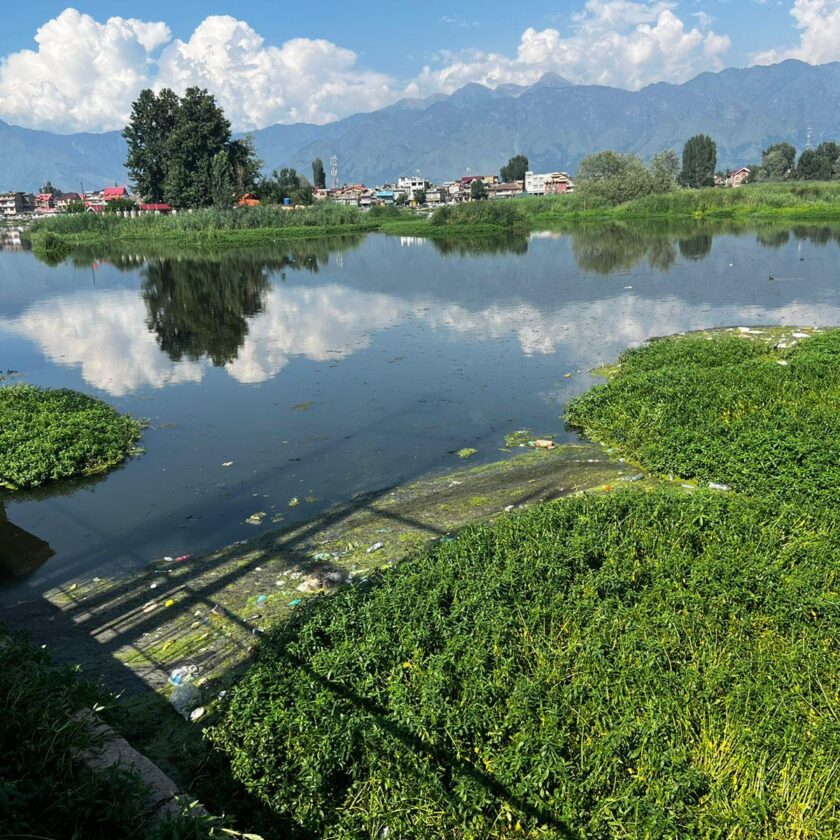
Concurrently, the campus of Kashmir University, situated along the banks of the iconic Nigeen Lake and adjacent to the historical Naseem Bagh—a Mughal garden planted by Emperor Shah Jahan—has long functioned as an ecological sanctuary within Srinagar. The introduction of non-native yet fully adapted shade trees, such as the sweet chestnut (Castanea sativa), enriched the campus canopy throughout the twentieth century, turning the campus into an open-air natural observatory.
However, accelerating urban growth over the past two decades has placed unprecedented demands on the valley’s spatial footprint. As Srinagar expanded rapidly across floodplains and former agricultural tracts, internal administrative pressures within major public institutions led to repeated compromises between structural expansion and canopy retention.
Administrative Orders & Ground Realities
The immediate catalyst for widespread civic frustration occurred early this week inside the main Hazratbal campus of the University of Kashmir. Campus authorities sanctioned the clearing of several mature sweet chestnut trees to clear ground for new academic infrastructure. Students, research scholars, and local environmentalists gathered near the site of the felled trees, carrying placards and voicing anger over what they termed systematic ecological insensitivity within an academic institution.
Student representatives pointed out that the campus administration failed to conduct a transparent environmental impact assessment or consult internal botany and environmental science faculties prior to issuing the clearance order. The felling took place despite standing directives from regional forestry guidelines encouraging transplanting or design modifications to preserve existing foliage.
Addressing the broader systemic issues of urban sprawl, Waseem Raja, a prominent administrative official, issued a candid public statement emphasizing that Kashmir’s carrying capacity is strictly limited. Addressing urban planners and civic administrators, Raja noted that replicating high-density concrete infrastructure models from Delhi or Mumbai would guarantee environmental collapse for the valley’s sensitive terrain.
“Kashmir cannot become another Delhi or Mumbai. Our topography, water channels, and micro-climate demand localized, sustainable planning rather than unbridled concrete expansion that destroys our natural heritage,” Raja stated during an administrative session.
Community Voices & Stakeholder Impact
The loss of Prof. T.A. Kanth was felt deeply across the academic and civil spheres of Jammu & Kashmir. Former colleagues, students, and urban policy researchers recalled his uncompromising focus on data-driven land conservation. Having battled cancer for months, Prof. Kanth passed away leaving behind extensive literature warning against the precise unguided spatial expansion currently being observed in Srinagar and Budgam districts.
“Prof. Kanth taught us that mapping land-use changes is not merely an academic exercise; it is a survival mandate for a valley surrounded by high mountains,” said a senior faculty member at the Department of Geography. “To see heritage trees chopped down on the very campus where he taught, just days around his passing, feels like a double blow to our collective ecological conscience.”
Adding to the shifting ground dynamics, former PDP Cabinet Minister for Tourism and acclaimed cinematographer Tasaduq Mufti made a rare public appearance in Srinagar. Mufti, who had maintained a strict low profile since the political restructuring of August 2019, addressed supporters and civil society members with a brief, pointed statement: “I Have Come Back.” His return has sparked political speculation across the Kashmir Valley regarding potential realignments within regional opposition politics, particularly around issues of local identity, heritage preservation, and civic governance.
Socio-Economic & Strategic Analysis
The simultaneous unfolding of these developments reveals a structural tension in Kashmir’s regional governance framework. Unplanned urban development, combined with the loss of heritage green cover, threatens both ecological stability and the regional tourism economy, which relies heavily on natural landscapes.
Environmental data indicates that Srinagar has lost over 30 percent of its natural open spaces and suburban wetlands to unguided residential and institutional construction over the last thirty years. This shift has altered local micro-climates, increased ambient summer temperatures, and reduced the natural flood-absorption capacity of the Jhelum river basin.
Key Timeline & Data Breakdown
| Date / Event | Location / Venue | Key Stakeholders | Impact & Outcome |
|---|---|---|---|
| Passing of Prof. TA Kanth | Srinagar | Academic Community, Geography Dept | Loss of leading voice in Himalayan spatial planning and land-use mapping. |
| Heritage Tree Felling | Hazratbal Campus, KU | KU Administration, Student Activists | Student protests, demands for formal campus green audit and accountability. |
| Urban Planning Warning | Srinagar Administrative Forum | Waseem Raja, Municipal Authorities | Policy call to halt metropolitan concrete models in favor of sustainable zoning. |
| Public Re-emergence | Srinagar | Tasaduq Mufti, Political Cadres | Signals renewed political engagement and civil dialogue on local governance. |
The Road Ahead: Critical Milestones
In response to growing protests, student delegations at the University of Kashmir are submitting a formal memorandum to the Vice Chancellor’s office demanding an immediate moratorium on tree felling across all university campuses, along with the creation of an independent Environmental Ethics Committee.
On the policy front, urban planning experts are urging the Jammu & Kashmir administration to formalize regional carrying-capacity studies before approving major commercial and infrastructural zoning expansions. Citizens and environmental advocates will be closely watching whether administrative warnings translated into statutory building regulations over the coming months.
Frequently Asked Questions (FAQ)
Why are students protesting at the University of Kashmir?
Students and research scholars are protesting the felling of mature, heritage sweet chestnut trees on the Hazratbal campus, which were cut down to make way for new institutional construction without transparent environmental reviews.
Who was Professor T.A. Kanth and what was his contribution?
Professor T.A. Kanth was a prominent Kashmiri geographer and former Head of the Department of Geography & Regional Development at the University of Kashmir. He was widely respected for his extensive research on Himalayan geomorphology, flood hazards, and sustainable land-use planning.
What did administrative official Waseem Raja state regarding Kashmir’s development?
Waseem Raja publicly stated that Kashmir cannot support high-density metropolitan growth models like those in Delhi or Mumbai, urging policy-makers to adopt sustainable, eco-friendly urban planning tailored to the region’s fragile mountain geography.