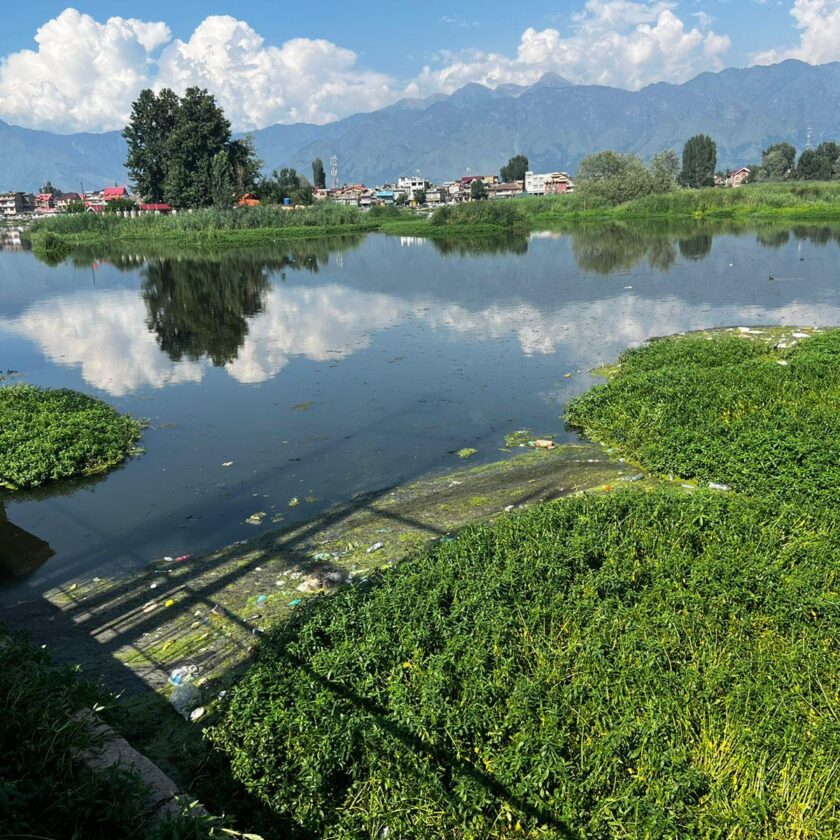
A high-level inspection by the Jammu and Kashmir Legislative Assembly’s Environment Committee across urban and semi-urban clusters of Jammu has unearthed deep systematic deficits in the city’s civic and sanitation architecture. During rigorous field assessments spanning major municipal zones, legislators uncovered raw sewage draining openly into natural water channels, defunct or under-capacity treatment facilities, and mounting heaps of unsegregated solid waste accumulating along fragile riverbanks. The findings have ignited intense scrutiny over decades of municipal inertia, exposing how urban planning bodies have consistently failed to safeguard baseline environmental public health parameters.
The legislative scrutiny brings into sharp focus a glaring contradiction in regional and national policy: while political leaders consistently advocate for global climate equity and sustainable frameworks on multilateral stages, local civic apparatuses across Jammu routinely oversee environmental degradation in their own backyards. From the clogged stormwater drains of Bhagwati Nagar to the deteriorating catchment basin of the Tawi River, the ground reality exposes an administrative landscape where statutory environmental safeguards exist largely on paper.
Executive Summary & Key Takeaways:
- Legislative Indictment: The J&K Assembly Environment Panel carried out on-site audits, flagging catastrophic gaps in urban wastewater treatment, solid waste processing, and drainage networks across Jammu district.
- Tawi River in Peril: Tens of millions of liters of untreated municipal sewage continue to bypass treatment plants daily, pouring toxic effluence directly into the Tawi riverbed.
- Solid Waste Breakdown: The municipal landfill at Kot Bhalwal operates far beyond sustainable ecological capacity, creating extensive leachate contamination risks for surrounding aquifers.
- Policy Paradox: Ground observations highlight the stark disparity between elevated national rhetoric on ecological stewardship and the persistent domestic reality of urban environmental neglect.
- Statutory Deadlines Issued: Urban Local Bodies and the Jammu Municipal Corporation (JMC) face strict legislative ultimatums to submit comprehensive compliance and remediation roadmaps.
Historical Background & Evolution
Jammu’s current municipal predicament is rooted in decades of unplanned, horizontal urban sprawl. Following rapid demographic expansion in the late 1990s and early 2000s, peripheral agrarian belts and natural drainage corridors were rapidly converted into commercial and residential colonies without the concurrent expansion of trunk sewer lines, underground drainage, or localized treatment infrastructure. Master plans, including the Jammu Master Plan 2032, earmarked ambitious environmental preservation zones around the Tawi basin—revered historically as the ‘Surya Putri’—yet enforcement remained fragmented across competing administrative bodies.
Successive centrally funded urban reform schemes, from the erstwhile Jawaharlal Nehru National Urban Renewal Mission (JNNURM) to the Atal Mission for Rejuvenation and Urban Transformation (AMRUT) and Jammu Smart City initiatives, channeled substantial capital toward municipal modernization. However, execution on the ground remained sluggish. Sewage treatment facilities designed over a decade ago repeatedly missed operational deadlines or were commissioned without the inter-linking network of secondary feeder drains required to divert residential blackwater away from the city’s seasonal streams, locally known as nullahs.
Administrative Orders & Ground Realities
During the committee’s inspection, legislative members visited critical municipal installations, including the sewage treatment facilities at Bhagwati Nagar, transport terminals, and waste handling stations. The ground reality exposed an alarming deficit between theoretical capacity and actual operational output. Multiple nullahs slicing through the core of Jammu—including the major discharge arteries running through Gujjar Nagar, Warehouse, and near the fourth Tawi bridge—continue to carry unfiltered household waste, microplastics, and light industrial discharge directly into the river.
The panel confronted administrative heads from the Jammu Municipal Corporation (JMC), the Jammu Development Authority (JDA), the Urban Environmental Engineering Department (UEED), and the J&K Pollution Control Committee (JKPCC). Statutory mandates requiring strict source segregation of municipal solid waste remain widely unimplemented across key municipal wards. At the Kot Bhalwal dump site, situated on Jammu’s northern outskirts, unsegregated trash piles have triggered widespread soil degradation and air quality warnings, while leachate management systems operate under chronic strain.
Community Voices & Stakeholder Impact
For residents living along the margins of Jammu’s unchannelled drains, administrative shortcomings are an unbearable daily burden. In Bhagwati Nagar and adjacent lower-elevation settlements, every heavy downpour turns unpaved roads into toxic floodways as storm drains, choked with single-use plastics and construction debris, back up into residential compounds.
“Every monsoon and seasonal downpour, sewage mixes with surface runoff and enters our homes,” says Surinder Kumar, a shopkeeper residing near the Bhagwati Nagar nullah. “Officials announce high-budget projects and smart city drives, but the basic task of laying closed drains and stopping raw waste from pooling in our streets has remained unaddressed for fifteen years.”
Environmental advocates and public health experts echo these grievances. Civil society collectives monitoring the Tawi river basin point out that thousands of downstream farming households rely on the river for minor irrigation and livestock upkeep. The direct dumping of pathogenic wastewater elevates the incidence of waterborne diseases, degrades arable soil microbiology, and poses long-term public health liabilities that disproportionately burden economically vulnerable families.
Socio-Economic & Strategic Analysis
The systemic failure of urban environmental infrastructure carries substantial economic liabilities. Jammu serves as the primary winter capital and the critical transit gateway for millions of pilgrims visiting Shri Mata Vaishno Devi and the Amarnath shrines. A decaying civic environment, characterized by foul-smelling open drains, uncollected roadside garbage, and a polluted river corridor, undermines the region’s service economy and tourism appeal.
Beyond local economics, the situation highlights a profound structural contradiction in governance. While national environmental diplomacy frequently highlights international climate justice and demands that industrialized states honor environmental commitments, internal civic systems frequently exhibit neglect toward their own populations. Local regulatory bodies like the JKPCC often lack the political insulation, independent enforcement teeth, or human resources needed to penalize recalcitrant municipal agencies, leaving ordinary citizens trapped in localized zones of environmental injustice.
Key Timeline & Data Breakdown
The following audit summarizes the structural capacity gaps and operational bottlenecks identified across Jammu’s core municipal and environmental infrastructure:
| Infrastructure Node / Location | Current Operational Status | Key Deficit / Statutory Violation | Legislative Directive |
|---|---|---|---|
| Bhagwati Nagar STP Hub | Operating below installed diversion capacity | Feeder lines missing; untreated sewage flows directly into Tawi | Accelerate secondary trunk connectivity within 90 days |
| Kot Bhalwal Waste Facility | Severe waste overburdening; open accumulation | Absence of total source segregation; leachate control deficits | Deploy biomining and complete waste-to-energy pathways |
| Major Urban Nullahs (7+ Outlets) | Unregulated discharge conduits | Solid waste entrapment; zero biological screening | Install physical trash booms and localized bio-remediation |
| Tawi Riverfront Urban Belt | Ongoing civil works amidst heavy effluent discharge | Cosmetic beautification prioritized over water quality preservation | Mandate zero-liquid-discharge (ZLD) protocols for all upstream outfalls |
The Road Ahead: Critical Milestones
Following this exhaustive field assessment, the Assembly Environment Committee has instructed the Jammu Municipal Corporation and related engineering wings to produce an itemized compliance report detailing budgetary disbursements, STP operational capacities, and drain interception timelines. The committee is set to table its comprehensive findings during the upcoming assembly session, where legislators are expected to push for fixed accountability on departmental heads responsible for project slippages.
Citizens and environmental monitors will be closely watching whether the administration can move beyond cosmetic urban makeovers and tackle structural sanitation deficits. Without rigorous, independent water sampling audits of the Tawi, aggressive enforcement of solid waste segregation bylaws at the household level, and the complete modernization of Kot Bhalwal, the city faces escalating ecological disruption. For the urban apparatus of Jammu, the era of unmonitored delays has closed; measurable, ground-level environmental compliance is now an immediate public necessity.
Frequently Asked Questions (FAQ)
What prompted the J&K Assembly Environment Panel’s sudden inspection of Jammu?
The inspection was triggered by widespread public complaints, documented ecological degradation along the Tawi River basin, recurring urban drainage failures, and persistent delays in the full operationalization of major civic sanitation and waste management projects across the district.
Why are existing Sewage Treatment Plants (STPs) in Jammu failing to clean the Tawi?
While treatment plants have been constructed at sites such as Bhagwati Nagar, large volumes of household sewage never reach them due to the absence of linked secondary and tertiary underground drainage networks, causing raw effluents to bypass facilities and flow straight into natural waterways.
What environmental issues are occurring at the Kot Bhalwal landfill site?
The Kot Bhalwal site faces critical waste overburdening caused by poor source segregation across urban municipal wards. This creates persistent risks of toxic leachate contaminating local groundwater supplies, triggers spontaneous waste fires, and poses severe respiratory hazards for neighboring communities.
How does this civic crisis relate to the broader discussion on climate justice?
The situation highlights the sharp policy contrast between high-level diplomatic calls for global climate equity and the domestic reality, where local urban populations suffer from unaddressed pollution, poor environmental enforcement, and inadequate basic civic infrastructure.