Smart City or Smart Chaos? Residents Question Functionality of Urban “Modernization” Projects
By: Javid Amin | 20 May 2026
Smart City or Smart Showpiece? Citizens Raise Questions Over Urban Planning and Ground Reality
Glittering traffic signals, redesigned roads, decorative cycle tracks, digital systems, and modern street infrastructure were supposed to transform cities into efficient urban spaces under the Smart City vision.
But for many residents, the reality feels very different.
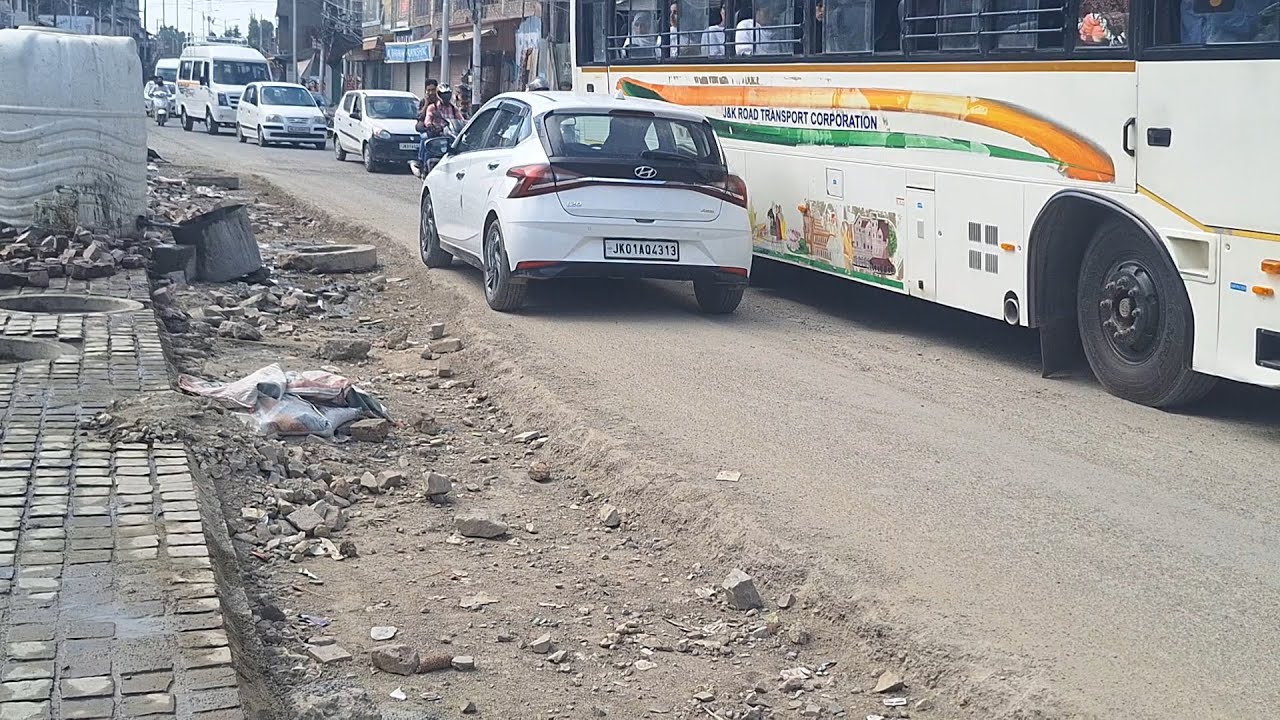
Across several upgraded urban corridors, people increasingly complain that “smart infrastructure” appears more cosmetic than functional — filled with non-working traffic lights, unnecessary barricades, narrowed roads, confusing diversions, and cycle tracks that remain largely unused.
Instead of smoother mobility, commuters say daily travel has become slower, more frustrating, and often unsafe.
Traffic Lights Everywhere — But Many Don’t Work
One of the biggest complaints revolves around the widespread installation of traffic lights and smart signaling systems.
At many junctions, advanced digital signals have been installed even where traffic flow appears minimal. Yet despite the expensive infrastructure, residents claim several signals remain permanently non-functional or operate inconsistently.
Drivers often encounter:
- Blinking amber lights
- Dead signals
- Uncoordinated timing systems
- Signals placed at low-traffic crossings
The result is confusion rather than traffic regulation.
Many citizens describe the installations as “technology for display,” arguing that maintenance and practical planning have failed to keep pace with infrastructure expansion.
At night, non-functional signals can become especially dangerous, increasing the risk of accidents at busy intersections.
Barricades, Ropes and Forced Detours Add to Public Frustration
Residents are equally critical of the growing number of barricaded crossings and restricted movement points.
In several areas, roads are blocked using temporary ropes, metal barriers, cables, or improvised dividers that force commuters to take long detours for even short distances.
Motorists complain that:
- Travel time has increased
- Fuel consumption has risen
- Emergency access is affected
- Navigation has become unnecessarily complicated
Pedestrians also face difficulties crossing roads safely due to blocked access points and fragmented pathways.
Critics argue that instead of improving traffic flow, excessive barricading has created an atmosphere of controlled movement that prioritizes rigid design over practical convenience.
Cycle Tracks Exist — But Cyclists Are Missing
Another frequently debated feature of many Smart City projects is the construction of dedicated cycle lanes.
Road widths have been reduced in several locations to accommodate painted or separated cycle tracks. However, residents argue that actual cyclist usage remains extremely low in many areas.
Urban planners supporting the projects say cycling infrastructure is necessary for sustainable mobility and future environmental goals. But critics counter that implementation often ignores existing commuting realities.
Common public concerns include:
- Lack of cycling culture
- Extreme weather conditions
- Limited last-mile connectivity
- Poor maintenance of tracks
- Encroachment issues
Many commuters believe valuable road space has been sacrificed without corresponding public demand.
As a result, already congested roads appear even narrower, worsening traffic pressure for daily commuters.
“Smart” Infrastructure Without Smart Functionality?
The growing criticism reflects a broader debate surrounding modern urban development projects across India.
Residents increasingly question whether city planning is being driven by:
- Actual public need
or - Visual symbolism of modernization
Large-scale infrastructure upgrades often focus heavily on appearance:
- Decorative streets
- High-tech signals
- Uniform urban design
- Beautification projects
- Showcase corridors
But citizens argue that the core urban problems frequently remain unresolved:
- Traffic congestion
- Drainage failures
- Parking shortages
- Public transport gaps
- Pedestrian safety
- Maintenance issues
For many people, the frustration lies not with modernization itself, but with infrastructure that appears disconnected from ground realities.
Global Smart City Projects That Struggled Despite Massive Investment
Urban experts point out that several internationally celebrated Smart City projects also faced major setbacks after ambitious launches.
Songdo — South Korea’s Futuristic Experiment
Songdo was envisioned as a hyper-connected smart city built on reclaimed land with advanced waste systems, digital homes, and automated infrastructure.
Despite massive investment, critics say the city struggled to create organic social life and vibrant public culture. High living costs and overly top-down planning limited broader community integration.
Masdar City — The Carbon-Neutral Dream
Masdar City aimed to become the world’s first zero-carbon urban center powered entirely by clean energy.
However, delays, financial constraints, and impractical futuristic concepts slowed progress significantly. Large sections remained underdeveloped for years.
PlanIT Valley — The Smart City That Never Fully Arrived
PlanIT Valley was designed as a sustainable technology-driven city in Portugal.
But funding shortages, investor pullback, and planning fragmentation stalled development, turning the ambitious vision into a cautionary example.
Common Problems Behind Smart City Failures
Urban policy researchers identify several recurring issues in struggling smart city models:
Top-Down Planning
Projects are often designed by consultants and planners without sufficient local consultation.
Optics Over Utility
Technology and beautification sometimes receive more attention than practical functionality.
Maintenance Gaps
Installing infrastructure is easier than maintaining it consistently over years.
Lack of Local Adaptation
Urban designs copied from other countries may not fit local climate, culture, traffic patterns, or public behavior.
Social Disconnect
Projects sometimes benefit elite commercial zones while ordinary residents face inconvenience and rising costs.
Why the Debate Matters for Indian Cities
India’s Smart Cities Mission was launched with the vision of improving urban living through technology, sustainability, and better infrastructure.
Many projects have successfully upgraded roads, lighting, surveillance systems, public spaces, and digital services.
However, urban experts warn that infrastructure alone cannot create a truly “smart” city.
A city becomes smart when:
- Mobility improves
- Public services function efficiently
- Citizens save time
- Infrastructure remains maintainable
- Planning reflects local realities
Without these elements, modernization risks becoming symbolic rather than transformative.
Citizens Want Functionality, Not Just Visual Transformation
The criticism emerging from residents is fundamentally about usability.
People are not rejecting development. Instead, they are asking whether development is genuinely improving daily life.
Many commuters say they would prefer:
- Functional traffic systems over decorative infrastructure
- Wider accessible roads over empty cycle lanes
- Reliable maintenance over expensive installations
- Practical planning over rigid experimentation
Urban development experts increasingly stress that successful cities grow organically around human behavior — not merely around visual models of modernity.
The Real Test of a Smart City
The true success of any smart city project is not measured by:
- The number of traffic lights installed,
- The length of painted cycle tracks,
- Or the amount of technology visible on roads.
It is measured by whether ordinary people feel their city has become:
- Easier to navigate
- Safer to travel
- Faster to commute through
- More accessible
- More livable
Until infrastructure serves people instead of showcasing itself, the debate over “smart cities” is likely to continue growing louder.