Javed Rana Calls Sidhra Demolition ‘Illegal,’ Orders Probe Into Eviction of Gujjar-Bakarwal Families
By: Javid Amin | 19 May 2026
Forest Minister Accuses Officials of Targeting Gujjar-Bakarwal Families; Political Storm Deepens Over Anti-Encroachment Drive in Jammu
A major political controversy has erupted in Jammu and Kashmir after Forest Minister Javed Ahmed Rana strongly condemned the recent demolition drive in Sidhra, Jammu, calling it “illegal, unjust, anti-people, and inhuman.”
The minister announced an institutional inquiry into the operation and warned that officials involved would not be spared if found guilty of violating due process or targeting vulnerable tribal communities.
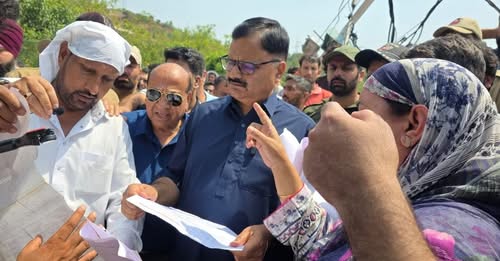
The demolition drive, carried out on May 19, 2026, in the Raika Bandi forest belt near Sidhra on the outskirts of Jammu city, led to the destruction of dozens of structures belonging primarily to nomadic Gujjar-Bakarwal families.
The incident has now evolved into a major flashpoint between the elected government led by Omar Abdullah and the administration headed by Lieutenant Governor Manoj Sinha, with allegations of unilateral action, misuse of authority, and targeted harassment of tribal communities.
What Happened in Sidhra?
25–40 Structures Demolished During Four-Hour Operation
- Forest Department officials
- Revenue Department teams
- Jammu & Kashmir Police
- Forest Protection Force personnel
Authorities claimed that nearly 60 kanals of forest land were retrieved during the drive.
However, local residents and political leaders disputed the legality and intent of the operation, arguing that the affected families had been living in the area for decades.
Reports from the ground indicate that between 25 and 40 residential structures and shelters were demolished during the four-hour operation.
Most of the affected residents reportedly belong to the Gujjar-Bakarwal tribal community, one of Jammu and Kashmir’s historically marginalized nomadic populations.
Javed Rana Calls Demolition “Cruel” and “Targeted”
Minister Orders Inquiry and Warns Officials of Action
The Forest Minister alleged that the operation amounted to a “targeted eviction campaign” aimed at intimidating nomadic tribal families.
In a strongly worded statement, Rana said:
- The drive was carried out without humanity or proper legal safeguards
- Families were allegedly not given adequate prior notice
- The administration ignored the social and historical realities of the residents
- Officials may have exceeded their authority during the operation
He also announced:
- An institutional inquiry into the role of the Forest Department
- Possible disciplinary action against involved officials
- Plans for rehabilitation and compensation through the Tribal Affairs Department
Rana further urged the Lieutenant Governor’s administration to register FIRs against police personnel accused of using excessive force and preventing residents from offering prayers during the demolition process.
The minister also claimed that revenue records indicate portions of the disputed land belong to local residents rather than the Forest Department.
“Families Have Lived Here for Generations”
Residents Allege No Prior Notice Was Served
Residents claim:
- They have lived in the area for decades
- Their names appear in voter lists dating back to 1952
- Many possess ration cards and electricity connections
- Entire generations were raised in the settlement
Several families alleged that the demolition drive destroyed not only homes but also livestock shelters and household belongings.
Community members described the operation as traumatic and discriminatory, arguing that poor tribal residents were selectively targeted under the guise of an anti-encroachment campaign.
Some residents also alleged that the operation was indirectly linked to broader anti-drug and anti-encroachment narratives being used to justify aggressive administrative action.
Political Fallout Intensifies
NC, Congress and Apni Party Condemn Bulldozer Action
The demolition has triggered widespread political condemnation across party lines.
Mian Altaf Ahmad and other leaders from the Jammu & Kashmir National Conference criticized the operation, calling it unjust and anti-poor.
Altaf Bukhari, head of the Jammu and Kashmir Apni Party, described the drive as “ruthless” and urged Omar Abdullah to intervene immediately.
Leaders from the Indian National Congress also visited the demolition site and termed the action “anti-people,” accusing the administration of using bulldozer tactics against vulnerable communities.
The controversy has deepened existing tensions between the elected government and the Lieutenant Governor’s administration, especially regarding administrative authority, land rights, and decision-making powers.
Gujjar-Bakarwal Community at the Centre of the Debate
Longstanding Concerns Over Tribal Rights
- Land rights
- Seasonal migration
- Housing insecurity
- Access to education and healthcare
- Administrative recognition
Political and tribal rights groups argue that anti-encroachment drives disproportionately affect nomadic and economically weaker communities because of unclear land documentation and historical settlement patterns.
The latest demolition has revived wider debates about:
- Tribal protections
- Forest rights
- Rehabilitation policy
- Due process in eviction operations
- Humanitarian obligations of the state
Observers note that the emotional impact of the demolition is especially strong because many affected families view the settlements not as temporary encroachments, but as long-established homes tied to community identity and survival.
The Larger Governance Question
Elected Government vs LG Administration
The Sidhra controversy also highlights the continuing power struggle between Jammu and Kashmir’s elected leadership and the Lieutenant Governor-led administrative structure.
Since the reorganization of Jammu and Kashmir into a Union Territory, several political parties have repeatedly accused the LG administration of taking unilateral decisions without adequate consultation with elected representatives.
The demolition row has intensified those concerns, with NC leaders framing the operation as an example of bureaucratic overreach and centralized governance.
Political analysts say the issue could become a defining debate around:
- Administrative accountability
- Democratic authority
- Minority and tribal rights
- Governance transparency
- Human rights protections
Key Questions Emerging From the Sidhra Row
Issues Likely to Dominate Political Debate
| Issue | Questions Raised |
|---|---|
| Legality of Demolition | Was proper due process followed? |
| Land Ownership | Were revenue records verified? |
| Humanitarian Concerns | Were families given rehabilitation options? |
| Administrative Accountability | Did officials exceed authority? |
| Political Governance | Was the elected government consulted? |
| Tribal Rights | Were Gujjar-Bakarwal communities unfairly targeted? |
Conclusion
The Sidhra demolition drive has rapidly transformed from an anti-encroachment operation into one of Jammu and Kashmir’s most sensitive political controversies in recent months.
With Forest Minister Javed Ahmed Rana openly challenging the legality of the action and ordering a probe, the issue now sits at the intersection of governance, tribal rights, administrative power, and humanitarian accountability.
For the affected Gujjar-Bakarwal families, the debate is deeply personal — involving homes, identity, and survival. For political parties, it has become a larger struggle over authority, justice, and the treatment of marginalized communities in Jammu and Kashmir.
As investigations proceed and political pressure mounts, the Sidhra row is likely to remain a major test for both the elected government and the Union Territory administration.