Mirwaiz Umar Farooq Urges Masjids, Khanqahs and Imambaras to Lead Social Reform in Kashmir
By: Javid Amin | 17 May 2026
Kashmir’s Chief Cleric Urges Religious Institutions to Lead Moral Revival, Unity and Community Responsibility
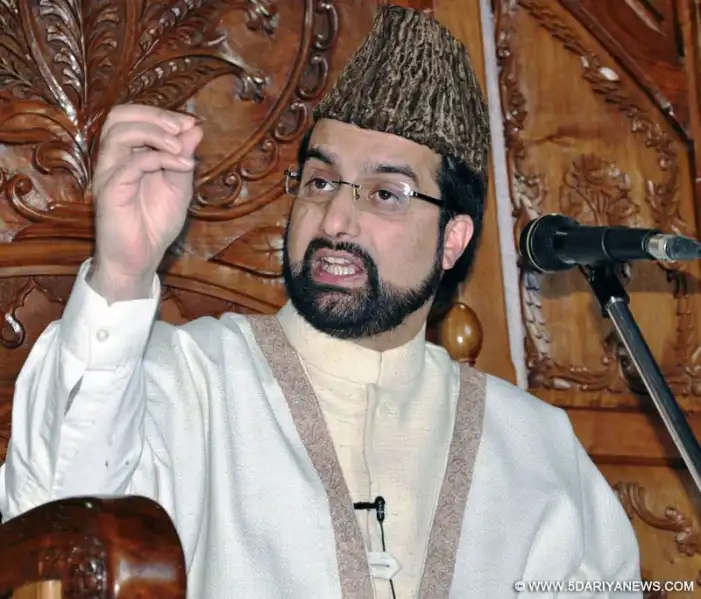
Mirwaiz Umar Farooq has called for Kashmir’s masjids, khanqahs, and imambaras to move beyond the limited role of ritual worship and re-emerge as institutions of social reform, ethical guidance, and community unity.
In a significant message carrying both spiritual and socio-political undertones, the chief cleric emphasized that religious spaces must actively address the growing moral and social challenges confronting Kashmiri society — including drug abuse, corruption, weakening family structures, and rising public disillusionment.
By invoking masjids, khanqahs, and imambaras together, Mirwaiz also sent a wider message of intra-community harmony, stressing the importance of unity across Sunni, Sufi, and Shia traditions in Jammu and Kashmir.
His remarks come at a sensitive moment for the region, where concerns over social decay, youth alienation, and erosion of trust in institutions have increasingly become part of public discourse.
“Places of Worship Must Guide Society”: Mirwaiz’s Core Message
Faith Linked to Civic and Moral Responsibility
Mirwaiz Umar Farooq argued that religious institutions cannot remain confined to ceremonial or devotional functions alone.
According to him, mosques, khanqahs, and imambaras should become centres that:
- Promote ethical living
- Encourage collective responsibility
- Strengthen social justice
- Foster compassion and accountability
- Address moral decline within society
He stressed that religion must not be detached from everyday civic life and community welfare.
The Mirwaiz’s appeal reflects an effort to reconnect spirituality with social responsibility, particularly at a time when many Kashmiris express concern over weakening moral structures and rising social anxieties.
Observers say the statement attempts to revive the traditional Kashmiri understanding of religious institutions as active community spaces rather than purely ritual centres.
A Call for Moral Revival in Kashmir
Concerns Over Drugs, Corruption and Social Breakdown
A major focus of Mirwaiz Umar Farooq’s message was the need for moral renewal within society.
He highlighted the importance of values such as:
- Honesty
- Compassion
- Accountability
- Social responsibility
- Respect for family and community ties
The remarks come amid growing public concern in Kashmir over:
- Substance abuse among youth
- Drug trafficking
- Corruption
- Domestic instability
- Mental health pressures
- Social fragmentation
Religious leaders and civil society groups have increasingly warned that the region is facing not only political and economic pressures, but also a deeper social crisis affecting families and communities.
Mirwaiz’s intervention seeks to position religious institutions as part of the solution to these challenges.
Unity Across Sunni, Sufi and Shia Traditions
Symbolic Mention of Masjids, Khanqahs and Imambaras
Political and religious observers noted the symbolic significance of Mirwaiz mentioning masjids, khanqahs, and imambaras together.
In Kashmir’s religious landscape:
- Masjids are associated primarily with congregational worship,
- Khanqahs reflect the Valley’s deep Sufi traditions,
- Imambaras represent important centres of Shia religious and community life.
By bringing all three into one framework, the Mirwaiz appeared to emphasize intra-community cohesion and collective responsibility across sectarian lines.
At a time when many societies globally face increasing polarization and fragmentation, the appeal for unity carries particular significance in Kashmir, where religious identity has historically played a central role in social organization and public life.
Analysts believe the statement also seeks to reinforce Kashmir’s syncretic traditions rooted in coexistence, spirituality, and shared cultural heritage.
Reviving the Historical Role of Religious Institutions
More Than Prayer Spaces
Historically, Kashmir’s religious institutions functioned as multi-dimensional community centres.
Khanqahs and mosques often served as:
- Educational spaces
- Centres of charity
- Platforms for dispute resolution
- Community welfare hubs
- Intellectual and spiritual forums
Imambaras similarly played major roles in religious education, collective support systems, and social organization.
Over time, however, many such institutions became increasingly confined to ritual functions.
Mirwaiz Umar Farooq’s remarks appear aimed at reviving that older tradition — where religious spaces actively shaped ethical, educational, and social life.
His message effectively repositions these institutions as what some observers describe as “moral parliaments” capable of addressing public concerns beyond theology alone.
The Social and Political Context Behind the Statement
Kashmir’s Crisis of Trust and Direction
The Mirwaiz’s comments come amid broader debates in Jammu and Kashmir over identity, governance, social cohesion, and youth frustration.
Key Challenges Facing Society
- Rising drug abuse
- Economic uncertainty
- Political disillusionment
- Mental health stress
- Weakening community bonds
- Declining public trust in institutions
In this context, religious spaces continue to hold immense moral influence and social legitimacy across large sections of society.
Analysts say the Mirwaiz’s appeal reflects recognition that formal political structures alone may not be sufficient to address deeper social anxieties.
Instead, he appears to advocate a community-led moral and cultural response rooted in faith, dialogue, and social responsibility.
Religious Institutions as Agents of Reform
Can Faith-Based Spaces Help Address Social Decline?
Supporters of the idea argue that religious institutions possess unique advantages:
- Grassroots community access
- Moral authority
- Cultural legitimacy
- Ability to influence youth
- Established charitable networks
If mobilized effectively, they could contribute significantly to:
- Anti-drug campaigns
- Family counselling
- Youth engagement
- Conflict mediation
- Community welfare initiatives
However, experts also caution that such efforts would need inclusive, non-partisan approaches to remain credible and effective.
The success of such a vision, they argue, would depend on whether religious institutions can balance spiritual guidance with constructive civic engagement.
Editorial Perspective: Faith Meets Civic Responsibility
A Broader Vision for Kashmir’s Social Future
Mirwaiz Umar Farooq’s appeal represents more than a religious sermon — it reflects an attempt to redefine the public role of faith institutions in Kashmir.
At its core, the message argues that places of worship should not merely respond to spiritual needs but also help society confront ethical decline, social fragmentation, and collective uncertainty.
By linking worship with social reform, unity, and accountability, the Mirwaiz is advocating a model where religious institutions function as stabilizing community anchors in difficult times.
Whether this vision translates into organized grassroots initiatives remains to be seen. But the statement has already reopened an important conversation in Kashmir: can faith-based institutions become catalysts for social healing and moral renewal in a society searching for stability and direction?
Conclusion
Mirwaiz Umar Farooq’s call for masjids, khanqahs, and imambaras to evolve into centres of social reform and unity comes at a crucial moment for Kashmir.
Amid rising concerns over addiction, moral anxiety, and political disillusionment, his message seeks to revive the historic role of religious institutions as active community spaces shaping ethical and social life.
By emphasizing unity across sects and linking spirituality with civic responsibility, the Mirwaiz has framed religious institutions not merely as sacred spaces — but as potential engines of social renewal in contemporary Kashmir.