Mehbooba Mufti Urges PM Modi to Start Dialogue With Pakistan and Kashmiris Ahead of Eid
By: Javid Amin | 17 May 2026
Mehbooba Mufti Calls on PM Modi to Open Dialogue With Pakistan and Kashmiris
Former Jammu and Kashmir Chief Minister Mehbooba Mufti has appealed to Prime Minister Narendra Modi to initiate simultaneous dialogue with Pakistan and the people of Jammu & Kashmir, describing the moment as a “golden opportunity” to rebuild trust and move toward lasting peace in the region.
The appeal from the president of the People’s Democratic Party (PDP) comes amid renewed political discussion around engagement with Pakistan following recent remarks by senior RSS leader Dattatreya Hosabale supporting the continuation of communication channels with Islamabad.
Framing her appeal as both political and humanitarian, Mehbooba Mufti argued that sustainable peace in Kashmir cannot emerge solely through security measures or infrastructure projects, but through direct engagement with stakeholders across the region.
“Talk to Pakistan, But Also Talk to Kashmiris”
At the centre of Mehbooba Mufti’s message was the idea of “dual dialogue” — simultaneous engagement with Pakistan and with the people of Jammu & Kashmir.
According to her, any peace process that excludes Kashmiris themselves would remain incomplete and fragile.
She emphasized that dialogue must be rooted in dignity, reconciliation, and political inclusion rather than simply administrative control.
The PDP chief argued that the current moment presents an opportunity for Prime Minister Modi to shape a historic political legacy by reviving meaningful outreach.
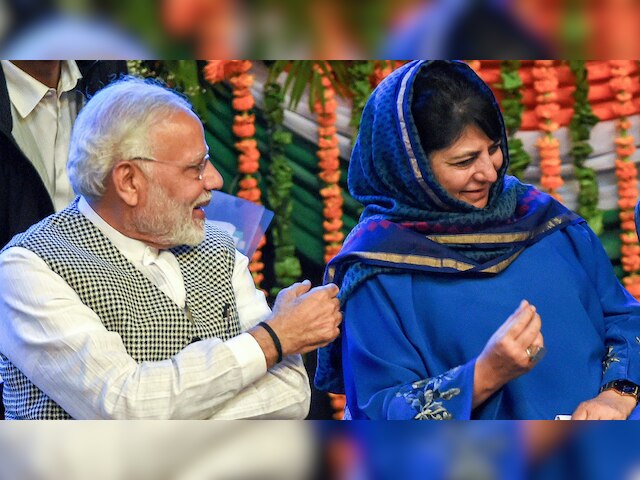
Mufti also referenced Modi’s earlier diplomatic gestures, including his surprise Lahore visit in 2015 and earlier outreach efforts involving Hurriyat-linked engagement, to suggest that the Prime Minister has previously demonstrated willingness to explore political solutions.
Mehbooba Seeks Confidence-Building Measures Before Eid
In a significant humanitarian appeal ahead of Eid, Mehbooba Mufti called for the release of prisoners against whom charges have not been conclusively proven.
She described the move as an important confidence-building measure (CBM) capable of easing public anger and restoring trust between citizens and the administration.
Her demand appears aimed at tapping into public sentiment in Kashmir, where humanitarian gestures around religious occasions often carry strong emotional and political symbolism.
Political analysts believe the Eid timing is strategic, allowing the PDP to connect broader political demands with issues affecting ordinary families.
Demand to Restore Cross-LoC Trade and Connectivity
Mehbooba Mufti also strongly advocated reopening cross-Line of Control (LoC) trade and travel routes that were once viewed as key confidence-building measures between India and Pakistan.
She specifically called for the revival of:
- Uri–Muzaffarabad trade route
- Poonch–Rawalakote route
- Wider people-to-people connectivity initiatives
In addition, she proposed opening new connectivity corridors linking Jammu & Kashmir to Central Asia through regional trade networks.
The PDP has historically viewed cross-LoC trade not merely as an economic initiative but as a symbolic bridge reconnecting divided families and communities.
The cross-LoC bus service launched in 2005 and trade routes opened in 2008 were widely regarded as among the most visible successes of the India-Pakistan peace process during the mid-2000s.
Call for Demilitarization in Civilian Areas
Another major component of Mehbooba Mufti’s appeal involved reducing the visible military footprint in civilian zones.
She urged the Centre to send the Army “back to barracks” in populated civilian areas, arguing that normalization cannot coexist with a heavy security presence in everyday life.
The demand aligns with the PDP’s long-standing political position advocating gradual demilitarization alongside political engagement and reconciliation.
However, such proposals remain highly sensitive due to continued security concerns, infiltration risks, and militant activity in parts of Jammu & Kashmir.
Mehbooba Mufti Demands Repeal of AFSPA, PSA and UAPA
The PDP leader further called for the repeal or rollback of laws she described as “harsh” and “repressive,” including:
- Armed Forces Special Powers Act (AFSPA)
- Public Safety Act (PSA)
- Unlawful Activities Prevention Act (UAPA)
According to Mehbooba Mufti, if the government believes the security situation in Jammu & Kashmir has improved since 2019, then there should also be a shift from “repression to reconciliation.”
The demand is likely to trigger sharp political debate, especially from parties that view these laws as essential tools for counterterrorism and maintaining security stability.
Push for Return of NHPC Power Projects
Mehbooba Mufti also demanded that at least two power projects currently managed by the National Hydroelectric Power Corporation (NHPC) be returned to Jammu & Kashmir.
The issue of control over hydroelectric resources has long been politically sensitive in the region, with regional parties frequently arguing that Jammu & Kashmir does not receive adequate benefits from its own natural resources.
The PDP has repeatedly framed the issue as one of economic rights and regional empowerment.
Why Her Statement Matters Politically
The timing of Mehbooba Mufti’s intervention is politically significant for several reasons.
1. Rare Convergence With RSS Messaging
Her remarks came shortly after RSS leader Dattatreya Hosabale suggested that communication channels with Pakistan should remain open.
This creates an unusual moment where voices from ideologically opposite ends appear to acknowledge the importance of dialogue, even if their broader political visions differ substantially.
2. Renewed Debate on Kashmir Policy
Since the abrogation of Article 370 in 2019, the Centre has primarily focused on:
- Security stabilization
- Development projects
- Infrastructure expansion
- Administrative integration
Mehbooba Mufti’s appeal shifts attention back toward political reconciliation and negotiated engagement.
3. Emotional and Humanitarian Messaging
By linking her demands to Eid and humanitarian gestures, Mehbooba Mufti is framing the Kashmir issue in emotional and human terms rather than purely geopolitical ones.
This approach seeks to resonate with families affected by detentions, conflict, and political uncertainty.
Challenges Facing Any Future Dialogue Process
Despite renewed calls for engagement, major obstacles remain.
Security Concerns
Critics argue that reopening cross-LoC trade and reducing troop presence could create vulnerabilities related to infiltration and militancy.
Political Polarization
Opponents may portray Mehbooba Mufti’s proposals as unrealistic, overly conciliatory toward Pakistan, or politically motivated.
Centre’s Current Approach
The BJP-led government has consistently emphasized security and development over formal political negotiations since 2019.
There is currently no official indication that New Delhi is preparing to reopen structured dialogue with Pakistan or initiate broad-based political talks inside Jammu & Kashmir.
Can Dialogue Return to the Centre of Kashmir Politics?
Mehbooba Mufti’s latest appeal reflects a broader political attempt to revive discussion around reconciliation, autonomy, and engagement after years dominated by hardline security narratives.
Supporters argue that dialogue remains the only sustainable path toward reducing alienation and achieving long-term peace.
Critics counter that terrorism, cross-border infiltration, and geopolitical tensions continue to undermine trust.
Yet the PDP chief’s intervention has once again brought an old question back into national debate:
Can Kashmir achieve lasting stability without political dialogue?
For now, the answer from New Delhi remains unclear. But the renewed calls for engagement indicate that the debate over Kashmir’s political future is far from over.
Key Takeaways
- Mehbooba Mufti urged PM Narendra Modi to begin dialogue with both Pakistan and the people of Jammu & Kashmir.
- She described the moment as a “golden opportunity” for reconciliation and trust-building.
- The PDP chief demanded confidence-building measures before Eid, including prisoner releases.
- She called for reopening cross-LoC trade routes and improving regional connectivity.
- Mehbooba Mufti also advocated demilitarization in civilian areas and repeal of AFSPA, PSA, and UAPA.
- The remarks come amid renewed political discussion following RSS leader Dattatreya Hosabale’s comments supporting dialogue channels with Pakistan.