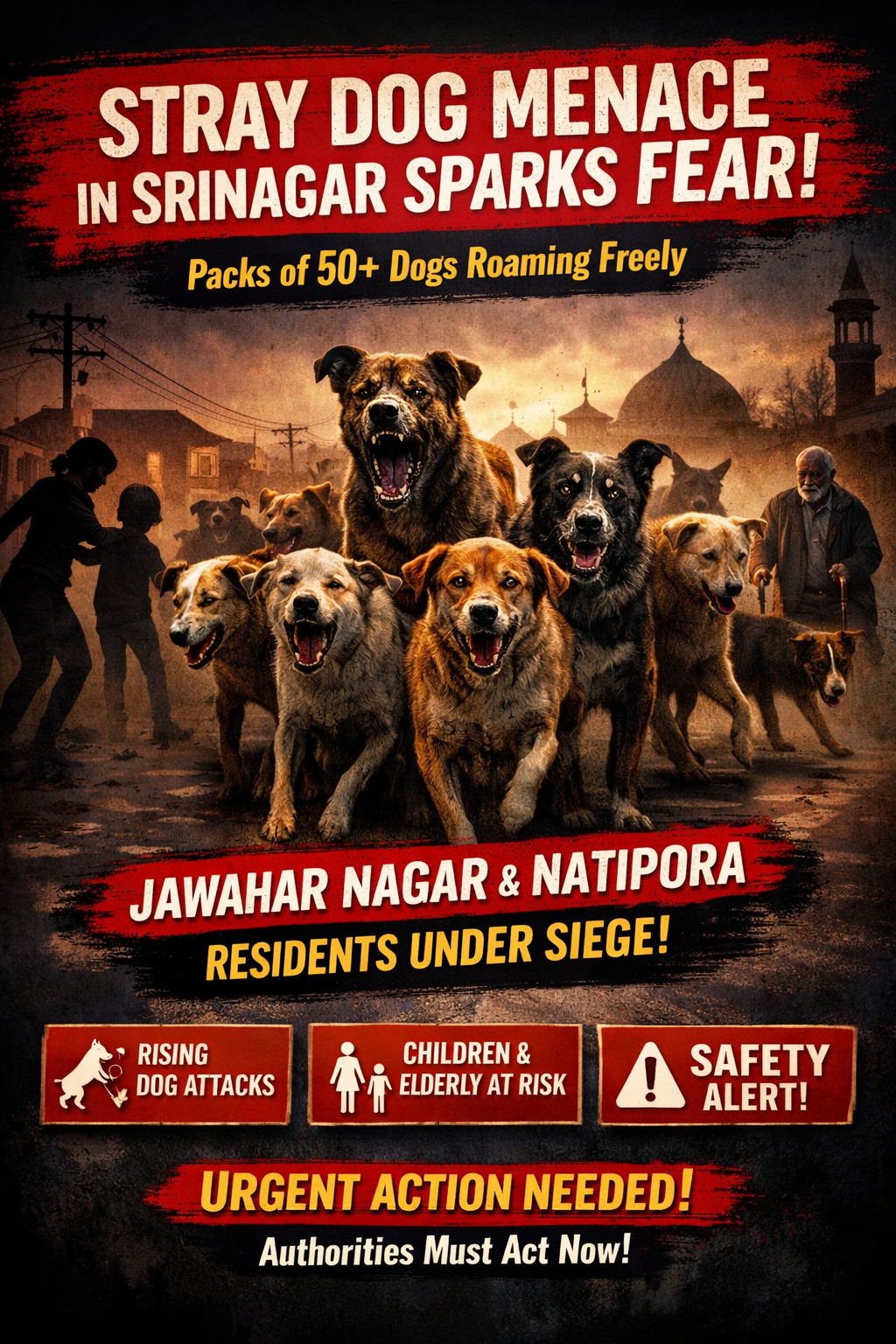
Stray Dog Menace in Srinagar: Jawahar Nagar, Natipora Residents Fear Rising Dog Attacks
By: Javid Amin | 14 May 2026
Panic on Srinagar Streets as Stray Dog Population Surges Across Residential Areas
The growing stray dog menace in Srinagar has triggered fear, anxiety, and anger among residents, with several localities reporting aggressive packs of dogs roaming freely in residential lanes, markets, and public spaces. Areas such as Srinagar’s Jawahar Nagar, Natipora, Rajbagh, Bemina, Hyderpora, and Batamaloo have emerged as major hotspots where residents say stepping outside, especially during early mornings and late evenings, has become increasingly unsafe.
According to local residents and ground reports from affected neighborhoods, packs of 40 to 50 stray dogs are frequently seen moving together, often occupying roads, playgrounds, bus stands, and colony entrances. The situation has become particularly alarming for children, elderly citizens, women, and morning walkers who now fear dog attacks during routine daily movement.
The rising number of dog bite incidents and growing concerns over rabies exposure have intensified demands for urgent intervention from the Srinagar Municipal Corporation (SMC), animal welfare groups, and the health department.
Srinagar Residents Say Streets No Longer Feel Safe
For many families living in Jawahar Nagar and Natipora, the stray dog crisis is no longer a minor civic issue — it has become a daily safety concern.
Residents claim large groups of dogs have effectively taken over several inner roads and colony lanes, especially after sunset. In Stadium Colony, Lane No. 7 in Natipora, locals allege that aggressive packs frequently chase pedestrians, bikers, and even schoolchildren.
Parents now accompany children to schools and tuition centers out of fear, while many elderly residents have stopped morning walks entirely.
One resident from Jawahar Nagar described the situation as “living in constant fear,” saying that stepping out alone during quiet hours has become risky due to sudden dog chases and aggressive behavior from packs.
The fear is not limited to one locality. Similar complaints are emerging from Rajbagh, Bemina, Hyderpora, and Batamaloo, where stray dogs reportedly gather near food waste dumping sites, transport hubs, and market areas.
Most Affected Areas in Srinagar
Jawahar Nagar
Jawahar Nagar remains among the worst affected localities, with residents repeatedly reporting sightings of massive dog packs near residential blocks and parks. Evening walks and outdoor activities have sharply declined due to safety fears.
Natipora
Natipora, especially Stadium Colony and nearby lanes, has witnessed multiple dog bite incidents. Residents say the population of stray dogs has increased significantly over recent months.
Rajbagh
Families in Rajbagh report growing concern over stray dogs near schools and residential alleys, forcing parents to personally escort children.
Bemina
In Bemina, aggressive packs are frequently spotted around markets and bus stands, creating panic among shoppers and commuters.
Hyderpora
Morning walkers in Hyderpora have reported dog chases and attacks during early hours when streets remain relatively empty.
Batamaloo
Batamaloo’s transport hubs and busy public spaces have also become vulnerable zones where commuters face increasing encounters with stray dog packs.
Dog Bite Cases Raise Serious Public Health Concerns
Healthcare professionals warn that the issue is no longer just about nuisance or inconvenience. The growing stray dog population poses a serious socio-health challenge, particularly because of the risk of rabies transmission.
Hospitals and health centers in Srinagar have reportedly seen a rise in dog bite cases, with children among the most vulnerable victims. Doctors emphasize that even minor bites or scratches can become dangerous if anti-rabies treatment is delayed.
Public health experts say fear surrounding rabies remains high because the disease is almost always fatal once symptoms appear. This has increased pressure on healthcare facilities to ensure the availability of anti-rabies vaccines and emergency treatment.
Experts also point out that psychological stress linked to constant fear of attacks can affect the mental well-being of residents, particularly children and senior citizens.
Why the Stray Dog Population Is Increasing
Experts and civic observers link the rapid growth of stray dog numbers to multiple urban factors:
Poor Waste Management
Open garbage dumps and improperly managed food waste create feeding zones for stray dogs, encouraging population growth and territorial clustering.
Lack of Consistent Sterilization
Animal birth control programs have reportedly failed to cover large areas consistently, allowing unchecked breeding.
Urban Expansion
Rapid urbanization and shrinking open spaces often push stray animals deeper into residential colonies.
Limited Shelter Facilities
The absence of adequate dog shelters means most stray animals remain on streets permanently.
Local Businesses Also Feeling the Impact
The growing fear has started affecting local commerce in several neighborhoods.
Shopkeepers in market areas say evening customer footfall has reduced, especially in places where large dog packs gather after dark. Small businesses, roadside vendors, and local eateries are among those facing indirect economic losses due to reduced public movement.
Residents say many families now avoid walking to nearby shops and prefer using vehicles even for short distances.
Calls Grow for Immediate Municipal Action
As public frustration rises, residents are demanding urgent and coordinated action from authorities.
Several citizens have urged the Srinagar Municipal Corporation to launch emergency sterilization drives in the worst-hit zones while ensuring humane treatment of animals.
People are also demanding:
- Immediate removal of aggressive dog packs from residential areas
- Large-scale anti-rabies vaccination campaigns
- Better waste disposal systems
- Round-the-clock emergency response teams for dog bite incidents
- Creation of dedicated animal shelters
- Increased monitoring in hotspot localities
Many residents argue that delayed action could worsen the crisis during coming months if breeding and street roaming continue unchecked.
Experts Stress Need for Humane Yet Effective Solutions
Animal welfare experts caution against cruel or reactionary responses, emphasizing that long-term solutions require scientific population control measures instead of violence against animals.
Experts recommend a balanced strategy that combines:
- Sterilization and vaccination programs
- Scientific tracking of stray dog populations
- Public awareness campaigns
- Community participation
- Better urban sanitation systems
They stress that public safety and animal welfare must go hand in hand to create sustainable results.
A Growing Urban Crisis Demanding Urgent Attention
The stray dog issue in Srinagar is rapidly evolving into a larger urban governance and public health challenge. What began as isolated complaints has now spread across multiple neighborhoods, affecting everyday life, public movement, healthcare systems, and community confidence.
For residents of Jawahar Nagar, Natipora, Rajbagh, Bemina, Hyderpora, and Batamaloo, the crisis is no longer about inconvenience — it is about safety, fear, and the right to move freely in their own neighborhoods.
Unless authorities implement immediate, coordinated, and humane intervention measures, residents fear the situation could escalate further in the coming weeks and months.