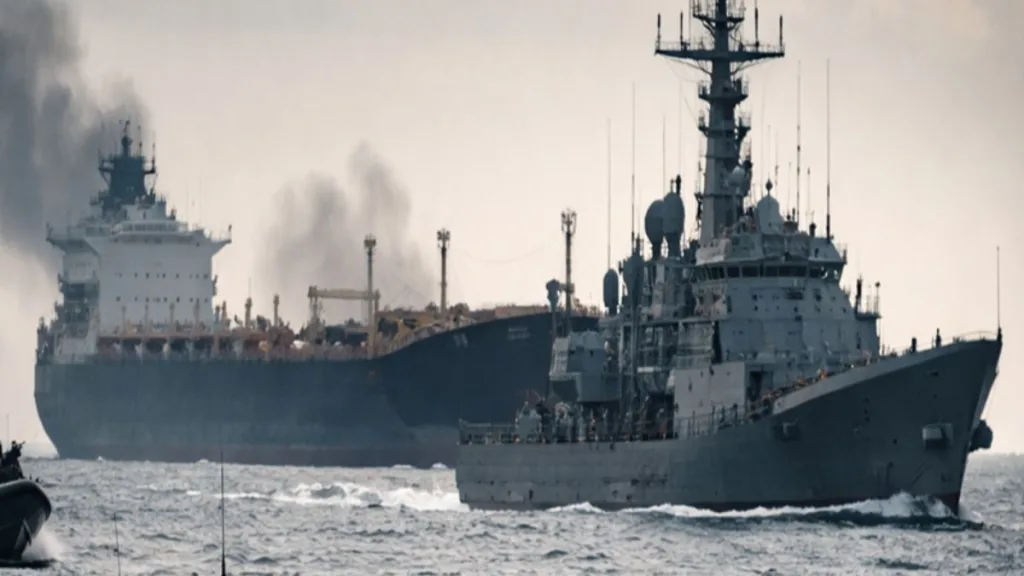
Two Indians Killed in Gulf Vessel Attack as UN Warns Hormuz Crisis Could Trigger Global Food Price Surge
By: Javid Amin | 11 March 2026
Maritime violence and geopolitical tensions raise alarm for global trade and energy security
Tensions in West Asia have taken a deadly turn after merchant vessels operating near the Strait of Hormuz came under attack, leaving two Indian nationals dead and another missing. The incident highlights the growing risks faced by seafarers navigating one of the world’s most strategically vital maritime corridors.
The attack has triggered concern not only for the safety of international shipping crews but also for the stability of global trade routes. At the same time, the United Nations has warned that a prolonged shutdown or disruption of the Strait of Hormuz could lead to rising food prices and living costs worldwide, as energy and shipping costs surge.
For India — which relies heavily on maritime trade and energy imports from the Gulf — the developments represent a serious economic and security concern.
Deadly Attack on Merchant Vessels
Indian crew members among the victims
According to preliminary reports, the merchant vessels were attacked while operating in the Gulf region near the Strait of Hormuz.
Two Indian crew members lost their lives in the incident, while another Indian sailor remains missing. Authorities and shipping agencies are currently coordinating search and rescue efforts.
India has one of the largest seafaring populations in the world, with thousands of Indian sailors employed on international cargo ships and oil tankers.
The deaths underline the growing dangers for maritime workers operating in conflict-prone waters.
The Indian government is closely monitoring the situation, and diplomatic channels have been activated to gather more information about the attack and assist affected families.
Why the Strait of Hormuz Matters
The world’s most critical energy corridor
The Strait of Hormuz is widely considered one of the most important chokepoints in global trade.
Located between Iran and Oman, the narrow waterway connects the Persian Gulf with the Arabian Sea and the wider Indian Ocean.
Its strategic importance comes from the fact that:
-
Nearly 20% of the world’s oil supply passes through the strait.
-
Major oil exporters including Saudi Arabia, Iraq, Kuwait, and the UAE rely on the route to ship energy supplies worldwide.
For India, the strait is particularly crucial because a large share of its crude oil imports originates from Gulf countries.
Any disruption to shipping in this corridor could quickly ripple across global energy markets.
UN Warns of Global Food Price Shock
Shipping disruptions could push inflation higher
Amid rising tensions, the United Nations has issued a warning that any prolonged shutdown of the Strait of Hormuz could have serious global economic consequences.
The organization cautioned that disruptions to maritime trade would likely increase transportation costs for goods and commodities.
This would have several knock-on effects:
-
Higher shipping costs for agricultural products
-
Increased fuel prices worldwide
-
Rising food prices due to transport and logistics expenses
Food supply chains are heavily dependent on maritime shipping. A disruption in one of the world’s busiest sea routes could therefore impact food markets far beyond the Middle East.
Developing countries that rely heavily on imported food or fuel could be particularly vulnerable.
India’s Vulnerability to Hormuz Disruptions
Oil imports and trade routes at risk
India imports around 85 percent of its crude oil, and much of that supply travels through the Strait of Hormuz.
If the route becomes unsafe or restricted, India could face several challenges:
Rising energy prices
Disruptions to Gulf oil shipments would likely push global crude prices higher, affecting petrol, diesel, and LPG prices domestically.
Shipping delays
Cargo vessels carrying essential imports — including fertilizers, chemicals, and electronics — could face delays or higher insurance costs.
Economic pressure
Higher energy costs can trigger broader inflation, affecting transportation, manufacturing, and household spending.
Even short-term disruptions in shipping traffic can create volatility in global commodity markets.
Risks to Global Supply Chains
The ripple effect of maritime instability
The Strait of Hormuz is not just important for oil shipments; it is also a critical trade corridor for global commerce.
A major disruption could affect:
-
Energy exports
-
Petrochemicals
-
Fertilizers
-
Industrial raw materials
These goods are essential inputs for agriculture and manufacturing.
If shipping costs rise significantly, industries worldwide could experience higher production costs, which ultimately translate into higher consumer prices.
Safety Concerns for Seafarers
Indian sailors among the largest workforce at sea
India provides one of the largest pools of skilled maritime workers globally.
Thousands of Indian seafarers work on international merchant ships and oil tankers operating in the Gulf region.
The recent attack has renewed concerns about their safety.
Shipping companies often continue operating through volatile regions because global trade depends on these routes.
However, attacks on vessels can increase insurance costs, alter shipping routes, and place crews in dangerous situations.
The deaths of the Indian sailors have sparked calls for stronger maritime security measures in the region.
Maritime Security in Focus
Naval patrols and international cooperation
Rising tensions have already prompted increased naval vigilance in the region.
Several countries have stepped up maritime monitoring operations to ensure the safety of commercial shipping.
Naval patrols play an important role in:
-
Protecting cargo vessels
-
Escorting oil tankers
-
Monitoring potential threats
India has previously deployed naval assets in the region during periods of instability to safeguard its shipping interests.
Economic Impact on Households
Why global shipping crises affect everyday life
While maritime conflicts may seem distant from everyday life, they can have direct consequences for ordinary consumers.
Higher shipping costs can increase the price of everyday goods such as:
-
Food
-
Fuel
-
Fertilizers
-
Consumer electronics
When transport costs rise, businesses often pass those expenses on to consumers.
This can lead to higher inflation and increased cost of living.
Rising Geopolitical Risks
West Asia tensions threatening global stability
The attack on merchant vessels and the UN’s warning about the Strait of Hormuz highlight the fragile nature of global supply chains during geopolitical crises.
West Asia remains one of the most strategically sensitive regions in the world.
Conflicts in the area often have far-reaching consequences due to the region’s role in global energy production and trade.
Analysts say that if tensions escalate further, disruptions to maritime shipping could become more frequent.
What Happens Next?
Several possible developments in the coming days
Experts are closely watching several key indicators:
Shipping activity
Changes in vessel traffic through the Strait of Hormuz could signal whether shipping companies view the route as safe.
Oil market reaction
Global crude prices often respond quickly to perceived risks in the Gulf region.
Diplomatic developments
International efforts to reduce tensions could play a critical role in stabilizing maritime trade.
Security measures
Naval patrols and maritime monitoring operations may increase to protect commercial vessels.
The Bigger Picture
A crisis with global implications
The deaths of Indian sailors and the warning from the United Nations underscore the seriousness of the situation unfolding in West Asia.
The Strait of Hormuz is not just a regional waterway; it is a vital artery of the global economy.
Any disruption to shipping in the area can have cascading effects on energy markets, food prices, and global trade.
For countries like India — deeply integrated into international supply chains and heavily dependent on imported energy — the stakes are particularly high.
Key Takeaway
The attack on merchant vessels near the Strait of Hormuz has highlighted the growing risks facing global shipping routes. With two Indian crew members killed and another missing, the human cost of maritime instability is already evident.
At the same time, the United Nations’ warning about the economic consequences of a potential shutdown of the strait signals broader risks ahead.
If tensions continue to escalate, the impact could be felt far beyond the Gulf region — influencing energy markets, food prices, and the cost of living around the world.