Ruhullah Flags Ideological Drift in NC: Calls for Return to Core Values
By: Javid Amin | 09 May 2026
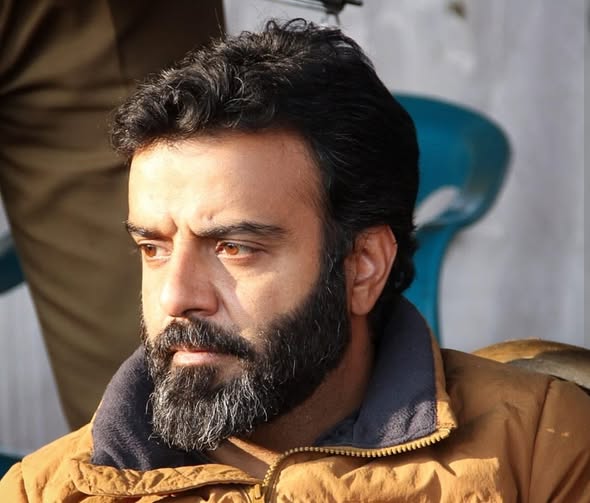
Senior National Conference leader Agha Syed Ruhullah Mehdi has triggered fresh political debate in Jammu and Kashmir after issuing a pointed warning about what he described as an “ideological drift” within the Jammu & Kashmir National Conference.
In remarks that have resonated strongly within political circles and among sections of the Valley’s youth, Ruhullah cautioned that the party risks losing its historical identity if it moves too far away from its foundational principles of autonomy, secularism, and Kashmiri political representation.
At a time when mainstream parties in Kashmir are struggling to redefine themselves in the post-Article 370 political landscape, his intervention is being viewed as both a message of internal dissent and a call for ideological introspection.
A Warning From Within the Party
Known for his outspoken political positions and emphasis on Kashmiri identity, Ruhullah’s comments carried unusual weight because they came from within the party’s own leadership structure.
He reportedly stressed that the National Conference was not built merely as an electoral machine, but as a political movement rooted in conviction, dignity, and the demand for democratic self-representation.
“Our politics was born from conviction, not compromise,” Ruhullah said while emphasizing that political pragmatism should not come at the cost of ideological clarity.
Though he did not directly target any individual leadership figure, the broader message was unmistakable: the party, according to him, must reconnect with the values that once defined its mass appeal.
The Ideological Legacy of the National Conference
Founded under the leadership of Sheikh Abdullah, the National Conference historically positioned itself around:
- Regional autonomy
- Secular politics
- Protection of Kashmiri identity
- Democratic self-governance within constitutional frameworks
For decades, these ideas formed the emotional and political backbone of the party’s relationship with the people of Kashmir.
However, after the abrogation of Article 370 in 2019 and the subsequent restructuring of Jammu and Kashmir, mainstream political parties have faced mounting pressure to adapt to a dramatically altered political environment.
It is within this changing landscape that Ruhullah’s remarks gain significance.
Post-370 Politics and Internal Unease
Political observers say the National Conference is currently navigating one of the most complex phases in its history.
The party faces multiple simultaneous pressures:
- Responding to the post-370 constitutional reality
- Remaining relevant among younger voters
- Balancing regional aspirations with national opposition politics
- Managing coalition dynamics within the INDIA bloc
Many grassroots workers reportedly fear that excessive focus on coalition arithmetic and national alliances may dilute the party’s traditional political messaging in Kashmir.
Ruhullah’s comments are therefore being interpreted as reflecting deeper internal anxieties rather than an isolated personal opinion.
A Clash Between Pragmatism and Principle
The debate triggered by Ruhullah essentially revolves around one central question:
Can the National Conference remain electorally relevant without compromising its ideological identity?
Supporters of a more pragmatic political strategy argue that:
- The post-370 political structure requires adaptation and flexibility.
- National alliances are necessary to counter larger political forces.
- Electoral survival demands broader engagement beyond traditional rhetoric.
However, critics within and outside the party warn that excessive moderation risks alienating the very support base that once saw the NC as a defender of Kashmiri political aspirations.
Ruhullah appears to belong firmly to the latter camp.
Youth and Civil Society Respond
Interestingly, Ruhullah’s remarks have found resonance among sections of educated youth, civil society members, and politically conscious groups in Kashmir.
Many view him as one of the few mainstream politicians willing to openly articulate concerns related to:
- Political identity
- Representation
- Regional dignity
- Public disillusionment after Article 370
In recent years, a noticeable trust deficit has emerged between traditional political parties and younger generations in Kashmir. Analysts believe Ruhullah’s intervention taps into that frustration.
A political science student in Srinagar remarked informally:
“People are not only looking for leaders who can win elections. They want leaders who still sound emotionally connected to the realities of Kashmir.”
Analysts Call It a ‘Moral Checkpoint’
Political commentators describe Ruhullah’s intervention as more than routine intra-party criticism.
Some analysts see it as a “moral checkpoint” for the National Conference — a reminder that political survival in Kashmir has historically depended not only on alliances and strategy, but also on emotional credibility among the people.
According to observers, parties in Jammu and Kashmir often face a unique political challenge:
- Appearing too confrontational risks political isolation.
- Appearing too accommodative risks public alienation.
Balancing those pressures has become increasingly difficult in the current political climate.
The Bigger Question Before the NC
The controversy surrounding Ruhullah’s remarks ultimately reflects a larger existential question confronting the National Conference:
What does the party stand for in post-370 Jammu and Kashmir?
For many supporters, reclaiming ideological clarity may be essential to rebuilding public trust. Others argue that political realism is equally necessary in a transformed constitutional and electoral landscape.
Either way, Ruhullah’s comments have reopened an important conversation within Kashmir politics — one that extends beyond party structures and touches the broader issue of representation and identity.
Editorial Perspective: Between Legacy and Survival
Ruhullah’s warning comes at a critical moment for mainstream politics in Kashmir.
Across the Valley, many young people increasingly view traditional political parties with skepticism, questioning whether ideology has been replaced by electoral calculation.
In that environment, calls for introspection naturally attract attention.
The National Conference today stands between two competing compulsions:
- preserving its ideological legacy, and
- adapting to a rapidly changing political order.
The challenge is not simply whether the party can remain electorally competitive. It is whether it can do so without losing the principles that once gave it emotional legitimacy in Kashmir.
Because in politics, especially in Kashmir, identity is not merely a slogan — it is often the foundation of trust itself.
Conclusion
Agha Syed Ruhullah Mehdi’s remarks have reignited an important debate within Jammu and Kashmir’s political discourse.
Whether viewed as criticism, warning, or ideological course correction, his intervention has forced renewed attention on the National Conference’s direction in post-Article 370 politics.
As elections and political realignments approach, the party may now face a defining test:
not just of strategy or alliances — but of whether it can still convincingly represent the values it once claimed as its core identity.