
Kashmir’s Coaching Industry: When Fear Becomes a Business and Parents Pay the Price
By: Javid Amin | November 25, 2026
As coaching fees climb and the race for medical and engineering seats intensifies, Kashmir’s education culture faces a difficult question: are families investing in learning, or paying increasingly high prices for the fear of failure?
There was a time when a student’s future was largely shaped by what happened inside a school, the books they read, the teachers who guided them and the effort they put into their studies. Today, for thousands of families in Kashmir, that equation has changed. A child’s academic future increasingly appears to depend on another institution: the coaching centre.
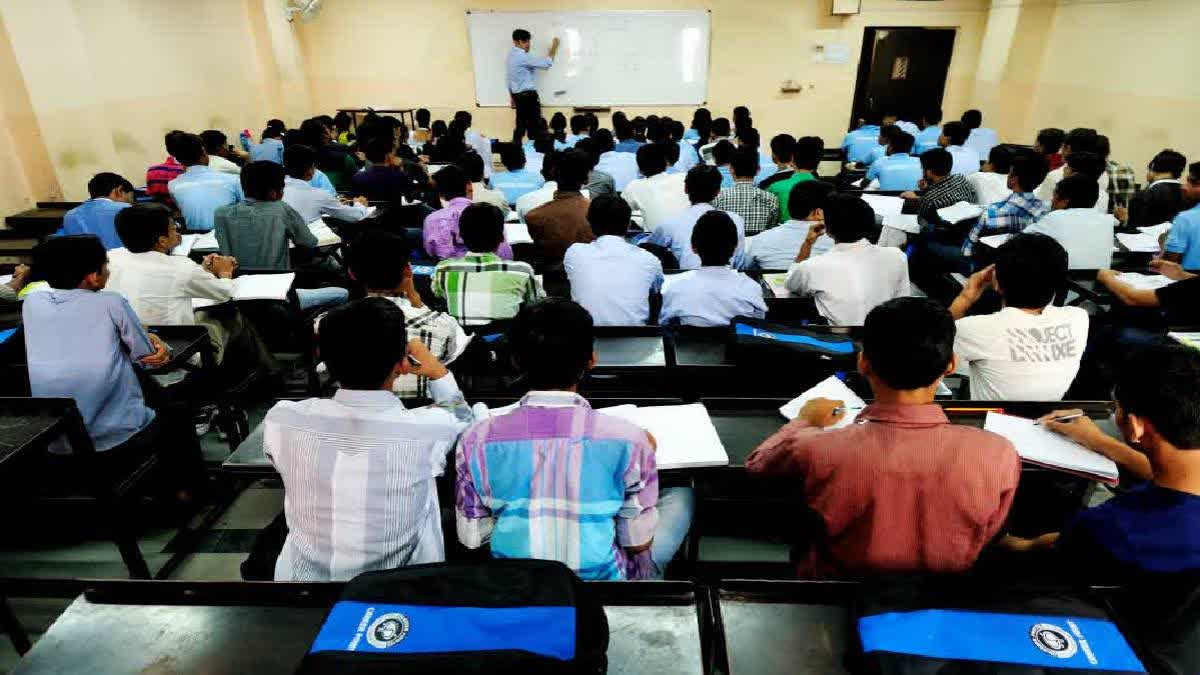
Across the Valley, coaching has grown from an additional academic support system into a parallel education economy. For many families, enrolling a child in a reputed institute is no longer considered an optional decision. It is seen as a necessary investment, particularly when the target is a medical or engineering entrance examination.
The fees can be substantial. Families may spend tens of thousands of rupees on local coaching and considerably more on specialised programmes offered by larger institutes. Some also have to pay for accommodation, transport, study material and repeated examination attempts.
Behind these payments is a powerful combination of ambition and anxiety. Parents want their children to secure a stable future. Students want to meet expectations. Coaching institutes offer structured preparation and the possibility of better performance.
But an uncomfortable question is becoming harder to avoid: has coaching in Kashmir become an industry that sells the fear of falling behind as much as it sells education?
A multi-crore industry built around academic ambition
Kashmir’s coaching economy is not a small commercial activity. It has developed into a significant part of the region’s private education landscape, supported by demand for NEET, JEE, school examinations and other competitive tests.
A June 2025 report by Kashmir Life, citing G.N. Var, who heads the Coaching Centre Association in Kashmir, estimated that the coaching-centre network generated annual turnover exceeding ₹2,000 crore. Var also estimated fresh annual enrolment at around 35,000 students, with average annual expenditure of at least ₹1 lakh per student.
These are industry estimates, not audited government figures. There is no publicly available official financial survey establishing the total turnover of Kashmir’s coaching sector. Nevertheless, the estimates indicate the scale of money that families and students are putting into private academic preparation.
The fee structure varies significantly. A November 2026 report by The News21, quoting an education-sector entrepreneur in Srinagar, placed annual fees at approximately ₹25,000–₹50,000 at some local centres and ₹70,000–₹1.5 lakh at leading offline institutes for NEET and JEE preparation. These are indicative estimates rather than a comprehensive survey of every institute.
For a household with a modest or irregular income, even the lower end can be difficult. At the higher end, the expense may require savings, borrowing or sacrifices in other areas of family life.
And the coaching fee is rarely the entire cost.
Students travelling from distant districts may need transport or accommodation. Families may pay separately for additional test series, books, online subscriptions and repeat-year programmes. When preparation extends beyond one academic session, the financial commitment grows further.
For some households, education spending becomes a family-wide project. Parents cut back on personal expenses, postpone purchases and borrow money because they believe that one successful examination could change their child’s life.
That belief is understandable. The problem begins when the possibility of success is presented as though it can be purchased through increasingly expensive preparation.
The NEET race explains why parents feel trapped
The pressure surrounding medical admissions helps explain why coaching has become so deeply embedded in Kashmir’s education culture.
According to the state-wise NEET-UG 2026 result figures reported by education platforms, Jammu and Kashmir recorded 56,420 registered candidates. Of these, 50,110 appeared and 25,007 qualified.
The National Medical Commission’s revised 2026–27 seat matrix lists 1,750 MBBS seats across 11 medical institutions in Jammu and Kashmir.
These figures should not be treated as a direct calculation of a candidate’s chances of securing a local MBBS seat. Students can apply outside the Union Territory, while counselling procedures, eligibility conditions and reservation arrangements influence admissions. Qualification in NEET also does not automatically mean admission to an MBBS programme.
But the figures demonstrate the scale of aspiration and competition.
For parents, medicine often represents more than a professional qualification. It is associated with financial security, social respect and a career that appears relatively stable in an uncertain employment environment.
Engineering carries a similar appeal, although its employment outcomes vary widely across specialisations, institutions and individual skills.
The result is a familiar pattern. A student performs well in school, begins preparing for an entrance examination and is enrolled in coaching. If the first attempt does not produce the desired result, another year may follow. The family invests again, hoping that additional preparation will deliver the outcome that previous expenditure could not guarantee.
The coaching centre receives another enrolment. The student carries another year of expectation.
When education becomes a transaction of fear
Coaching institutions are businesses. They have operating expenses, teachers to pay, infrastructure to maintain and a commercial interest in attracting students.
There is nothing inherently wrong with a private institution charging for quality teaching. Good coaching can provide discipline, structured learning, regular assessment and access to experienced teachers. For students who do not receive sufficient academic support elsewhere, it can make a genuine difference.
The concern is the marketing environment that develops when success stories become the main selling point.
A handful of high-ranking students can dominate advertisements, banners and promotional campaigns. Their photographs and achievements create the impression that enrolling at a particular centre offers a direct route to similar results.
Yet a successful student’s outcome cannot be separated from individual ability, previous preparation, family support, study habits, teaching quality and many other factors.
The performance of a small group of toppers does not establish the success rate of an entire institute.
Parents therefore need more than photographs of rank holders. They need transparent information: how many students enrolled, how many appeared for the examination, how many qualified, how many secured admission and how many achieved the results being advertised.
The distinction matters. A centre may celebrate a few exceptional results while leaving families without a clear picture of the overall performance of its batches.
This is where education can begin to resemble a transaction built around fear. Parents are made to feel that choosing a cheaper institute, relying on school education or preparing independently could put their child at a disadvantage.
The fear of missing out becomes a commercial advantage.
That does not mean every coaching centre uses misleading advertising or that every parent is pressured into enrolling. Many institutes provide valuable services, and many families make informed decisions. But the market needs transparency precisely because the stakes are so high.
The pressure is not only financial
The financial cost is visible in fee receipts and household budgets. The emotional cost is more difficult to measure.
A student preparing for NEET or JEE may spend several hours at school, followed by coaching classes, homework, practice tests and revision. Free time becomes limited. Friendships, sports and family activities can gradually disappear from the daily routine.
The pressure can become especially heavy when a child knows how much the family has spent.
A student who has watched parents borrow money or exhaust savings may begin to see an unsuccessful examination not simply as an academic setback, but as a personal failure to repay a family sacrifice.
That is an unfair burden to place on a young person.
A competitive examination can test knowledge, reasoning and preparation. It cannot measure a student’s entire potential, character or capacity to build a meaningful career.
Kashmir also needs to acknowledge that academic pressure does not begin and end at coaching centres. It is shaped by family expectations, school performance, limited employment opportunities, social comparisons and the belief that certain professions offer the only respectable route to success.
Blaming coaching institutes alone would therefore be an incomplete explanation.
The industry has grown because society created the demand. It has also learned how to operate within that demand.
The government has already notified new rules. The real test is enforcement.
An important development in this debate is the Jammu and Kashmir Government’s notification of the Jammu and Kashmir Regulation and Registration of Educational Institutions, Coaching/Study Centres Rules, 2026, issued on January 27, 2026.
The rules establish a framework for registration, student protection, fee transparency, infrastructure standards and grievance redressal.
They require coaching and study centres covered by the rules to obtain prior registration. Each centre and its branches must secure separate registration. The framework also requires disclosure of tutor qualifications, course information, fee structures and other relevant details through websites and notice boards.
The rules specifically prohibit misleading promises or guarantees of ranks and marks as a means of attracting students.
They also establish important financial safeguards. Centres must provide fee receipts, issue a prospectus explaining courses and charges, supply study material without additional charges and follow refund provisions. Fees cannot be increased during the course, and payments are required to be made through online modes.
Students withdrawing within 10 days of registration are entitled to a full fee refund under the rules. Provisions also address withdrawal and proportional refunds when faculty changes occur during a session.
The student-welfare provisions are equally significant.
Coaching centres are required to provide weekly breaks, organise classes in a way that does not create excessive pressure, and make efforts to arrange counselling sessions for students’ mental health and life skills. Daily coaching hours are capped at five hours. The rules also provide for infrastructure and safety requirements, including adequate classroom space, fire and building safety compliance, drinking water, first-aid arrangements and separate toilets.
Violations can attract penalties of ₹25,000 for a first offence, ₹50,000 for a second offence and cancellation of registration for subsequent offences.
These provisions matter because they recognise that coaching is not merely a private commercial arrangement. It involves young students, significant family expenditure and responsibilities that extend beyond classroom teaching.
However, notification is only the first step.
Parents still need to know which institutes are registered, whether inspections are taking place, how complaints are handled and whether action is being taken against centres that violate the rules.
The government must publish clear, accessible information about registration status and enforcement. Without regular monitoring, even well-drafted regulations risk becoming paperwork rather than meaningful protection.
AI and online learning have changed the education equation
The traditional argument for expensive classroom coaching was built partly around access.
Students needed experienced teachers, organised study material, regular tests and guidance on difficult subjects. Coaching centres brought these resources together under one roof.
That advantage has not disappeared, but technology has changed the equation.
Students can now access recorded lectures, online classes, digital test series, question banks, educational applications and subject-specific explanations at comparatively affordable prices. YouTube educators and online learning platforms have made a vast amount of academic content available to students who previously had limited access to specialised teaching.
Artificial intelligence has added another layer.
AI-based tools can explain difficult concepts, generate practice questions, help students revise topics, identify gaps in understanding and provide step-by-step explanations. A student struggling with a mathematical problem or a chemistry concept can seek additional explanations without waiting for the next classroom session.
This does not mean AI can replace a qualified teacher or guarantee examination success.
AI systems can make mistakes, provide incomplete explanations and sometimes generate incorrect answers with confidence. Students still need reliable textbooks, verified study material, sound teaching and the ability to judge whether an explanation is accurate.
Online learning also requires discipline. A student without a structured routine may become distracted by social media, notifications and the sheer volume of available content.
There is also a difference between having access to information and knowing how to use it effectively.
A good teacher can identify where a student is struggling, correct misconceptions and provide individual guidance. A well-managed coaching centre can offer peer learning, a competitive academic environment and regular assessments.
The more sensible conclusion is therefore not that coaching has become unnecessary. It is that expensive offline coaching is no longer the only way to access quality academic resources.
Parents should be able to compare classroom programmes with hybrid and online alternatives without being made to feel that a lower-cost option automatically means a lower-quality future.
The biggest problem may be the narrow definition of success
Perhaps the most important issue is not the coaching fee itself. It is the limited range of careers that society encourages children to pursue.
In many Kashmiri households, the traditional hierarchy remains powerful. Becoming a doctor or an engineer is often treated as the ultimate academic achievement. Other professions may be discussed as alternatives, sometimes only after a student fails to secure admission to a preferred course.
This approach overlooks the enormous changes taking place in the economy.
Technology, data science, artificial intelligence, cybersecurity, design, finance, scientific research, digital media, entrepreneurship, skilled manufacturing, healthcare technology and specialised trades are creating diverse professional opportunities.
Not every student has the same aptitude. Some may be excellent at mathematics and scientific research. Others may have strengths in communication, design, business, public policy, languages, practical skills or creative work.
A child who does not want to become a doctor should not be made to feel that they have failed their family.
Nor should a student who does not qualify for an engineering entrance examination be made to believe that their future has ended.
Career guidance must become a normal part of education rather than a service families seek only after disappointment.
Schools, colleges and counselling institutions should expose students to different professional pathways early enough for them to make informed choices. Parents also need to understand that a successful career is built through aptitude, skills, training and sustained effort—not simply through the prestige attached to a degree.
The J&K coaching-centre rules themselves recognise this concern. They call for students to be informed about career options beyond medical and engineering admissions and encourage parents to consider aptitude before enrolling children.
That provision deserves serious attention.
Schools must also answer difficult questions
The expansion of coaching raises another uncomfortable issue: why do so many families believe that school education alone is insufficient?
Coaching centres often argue that they fill a gap between school curricula and competitive examinations. There is a legitimate distinction between preparing students for board examinations and training them to solve the analytical and application-based questions found in entrance tests.
But if families routinely feel compelled to pay for a second education system, policymakers must examine the quality of academic support available within schools.
Are students receiving sufficient conceptual clarity? Are teachers able to provide individual attention? Are laboratories, libraries and digital resources adequate? Are schools helping students develop problem-solving skills, or is the emphasis still heavily placed on completing syllabi and preparing for examinations?
These questions should not be used to dismiss the work of teachers. Many educators operate under difficult conditions and provide strong academic support.
The issue is systemic. School education and competitive examination preparation need better coordination so that students are not forced to depend on expensive private instruction simply to remain competitive.
Strengthening schools would not eliminate the need for specialised coaching. It would, however, reduce the sense that families have no choice but to pay for it.
What parents should demand before paying
Parents cannot be expected to solve the entire education-policy problem. But they can make more informed decisions when choosing a coaching institute.
Before paying a substantial fee, families should ask for the complete fee structure, course duration, faculty qualifications, batch size, refund policy and details of what the programme actually includes.
They should also ask for a transparent record of student outcomes. The number of toppers displayed in advertisements is not enough. What matters is the performance of the entire batch and the institute’s ability to provide meaningful academic support.
Parents should check registration status and ensure that payments are properly documented. They should also understand whether the student genuinely needs a full classroom programme or whether a combination of school support, online learning, test practice and targeted doubt-clearing sessions would be sufficient.
Most importantly, children should be involved in the decision.
A coaching programme that does not match a student’s learning style, academic level or career interest can become an expensive source of frustration.
Kashmir needs an education culture that values ability, not only ranks
The coaching industry is unlikely to disappear, nor should it. Quality private academic support can help students from different backgrounds prepare for difficult examinations.
But an education system cannot be judged only by the number of coaching centres it supports, the fees they collect or the ranks their students achieve.
It must also be judged by whether children receive a fair opportunity to learn, whether families are protected from misleading claims, whether schools provide meaningful education and whether students can pursue careers that match their abilities.
The new J&K rules offer a framework for bringing greater accountability to coaching institutions. Their success will depend on enforcement, transparency and the willingness of authorities to protect students rather than merely regulate businesses on paper.
At the same time, families and educators must challenge the assumption that a stethoscope or an engineering degree is the only acceptable destination for a young person.
A student who becomes a skilled designer, researcher, entrepreneur, programmer, teacher, financial analyst or successful professional in a different field has not chosen a lesser future.
Kashmir needs more career pathways, stronger schools, responsible coaching institutions and better access to affordable learning resources. It also needs parents to understand that investment in education should not mean an unlimited financial commitment driven by anxiety.
The difficult question is not whether coaching is good or bad. It is whether the present model is helping students become capable, confident individuals—or pushing them into a costly race where every examination feels like a final judgment on their future.
Are parents investing in their children’s potential, or paying a premium for the fear that their children might be left behind?
That is a question Kashmir’s education system, coaching industry and society can no longer afford to ignore.

