Amarnath Yatra May Get a Third Route via Drass: A New Chapter for One of India’s Most Sacred Pilgrimages
By: News Desk | 09 July 2026
A proposal to develop a third route to the Holy Amarnath Cave through Drass in Ladakh could significantly reshape the future of the annual pilgrimage.
If approved after detailed technical and environmental studies, the new route would provide an alternative to the existing Baltal and Pahalgam routes. Supporters believe it could make the pilgrimage shorter, more accessible for elderly devotees, and better connected through the all-weather Zojila Tunnel, while also opening new economic opportunities for Ladakh.
However, officials have clarified that the proposal is still under consideration, and no decision has been taken to operationalize the route.
What Is the Proposed Drass Route?
The proposal suggests developing a pilgrimage route beginning at Minamarg, near Drass in Ladakh, and leading to the Holy Amarnath Cave.
According to the proposal:
- Starting Point: Minamarg, Drass
- Approximate Altitude: 10,800 feet
- Holy Cave Altitude: Around 12,756 feet
- Approximate Trek Distance: About 5 kilometres
Compared with the existing routes, this alignment would require a relatively smaller altitude gain, making the climb potentially less strenuous for many pilgrims.
The proposal is expected to undergo detailed feasibility, environmental, and security assessments before any final decision is taken.
How Does It Compare with the Existing Routes?
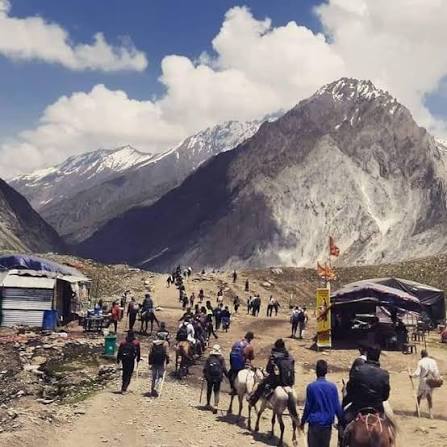
At present, pilgrims reach the Holy Cave through two established routes:
Pahalgam Route
The traditional Pahalgam route is known for its scenic beauty and gradual ascent.
It passes through several important halting points and allows pilgrims to experience forests, alpine meadows, rivers, and mountain landscapes over multiple days.
Although physically demanding because of its length, many devotees prefer it for its spiritual and traditional significance.
Baltal Route
The Baltal route is considerably shorter but steeper.
Many pilgrims complete the onward and return journey on the same day, often using ponies or other approved services.
Its shorter duration has made it a popular option for devotees with limited time.
Proposed Drass Route
If approved, the proposed route from Minamarg could become the shortest of the three.
Supporters argue that the relatively lower elevation gain and improved road connectivity through the Zojila Tunnel may reduce travel time to the starting point and improve access from the Ladakh side.
However, these potential advantages remain subject to detailed technical studies and official approval.
Comparison of the Three Routes
| Route | Approx. Trek Distance | Approx. Altitude Gain | Difficulty | Current Status |
|---|---|---|---|---|
| Pahalgam | 34 km | ~8,000 ft | High | Operational |
| Baltal | 14 km | ~3,000 ft | Moderate to High | Operational |
| Drass (Proposed) | ~5 km | ~1,959 ft | Potentially Lower | Under consideration |
Why the Zojila Tunnel Matters
One of the biggest factors behind the proposal is the Zojila Tunnel, an all-weather road tunnel being developed to improve connectivity between Kashmir and Ladakh.
Once operational, the tunnel is expected to reduce dependence on seasonal road openings over the Zojila Pass, improving year-round connectivity between the regions.
For the proposed pilgrimage route, supporters believe the tunnel could:
- Improve access to Minamarg.
- Reduce weather-related travel disruptions.
- Enhance movement of emergency and support services.
- Strengthen logistical planning during the pilgrimage season.
While these possibilities are promising, their direct impact on a future Yatra route will depend on how the project is ultimately designed and implemented.
Potential Benefits for Pilgrims
If the proposal is approved after the necessary studies, it could offer several advantages.
Improved Accessibility
A shorter trekking distance may benefit:
- Senior citizens
- Pilgrims with moderate physical limitations
- Families
- First-time visitors
However, all pilgrims would still need to meet the official medical and registration requirements prescribed for the Yatra.
Reduced Travel Time
A shorter route could allow more efficient movement of pilgrims while reducing physical exertion.
This may also help authorities manage pilgrim flow more effectively during peak periods.
Enhanced Emergency Response
The wider valleys around Minamarg may provide additional space for:
- Medical facilities
- Emergency evacuation points
- Parking areas
- Temporary camps
- Disaster management infrastructure
These aspects would require detailed planning and environmental clearance before implementation.
Economic Opportunities for Ladakh
The proposed route could have implications beyond the pilgrimage itself.
If developed responsibly, it may generate new opportunities for local communities through:
- Tourism-related employment
- Homestays and guesthouses
- Local transport services
- Food and hospitality businesses
- Handicraft sales
- Seasonal livelihoods
By extending pilgrimage-linked economic activity into the Drass region, the proposal could contribute to broader regional development.
Environmental Considerations Cannot Be Ignored
The Himalayas are among the world’s most fragile mountain ecosystems.
Any new infrastructure project in high-altitude terrain requires careful assessment of its environmental impact.
Experts emphasize that planning should include:
- Scientific environmental studies.
- Sustainable construction practices.
- Effective waste management systems.
- Protection of alpine biodiversity.
- Measures to prevent erosion and habitat disturbance.
Balancing improved accessibility with ecological preservation will be essential if the proposal moves forward.
Security and Logistics
A third route could also diversify pilgrimage logistics by providing an additional access corridor.
From an administrative perspective, this may:
- Distribute pilgrim traffic more evenly.
- Reduce pressure on existing routes during peak periods.
- Improve contingency planning if weather or other factors affect one route.
Any operational plan would require coordination among civil authorities, security agencies, and the Shri Amarnath Ji Shrine Board.
What Happens Next?
The proposal is currently at the feasibility stage.
The Lieutenant Governor of Ladakh has sought a detailed feasibility report to examine the technical, environmental, logistical, and security aspects of the proposed alignment.
Only after these assessments and consultations with the relevant stakeholders would any decision be taken on whether to develop the route.
Until then, pilgrims should continue to use only the officially notified Amarnath Yatra routes and follow all advisories issued by the authorities.
A Proposal That Could Reshape the Future of the Yatra
The idea of a third route via Drass reflects an effort to explore ways of improving access to one of India’s most significant pilgrimages while supporting regional development.
If found feasible and environmentally sustainable, the route could make the Yatra more inclusive for many devotees and create new opportunities for Ladakh’s economy.
At the same time, experts stress that any expansion of pilgrimage infrastructure must proceed with careful planning to protect the fragile Himalayan environment that makes the journey so unique.
For now, the proposal remains exactly that—a proposal awaiting detailed evaluation before any final decision is made.
Key Takeaways
| Aspect | Details |
| Proposed Route | Minamarg (Drass) to the Holy Amarnath Cave |
| Approximate Trek | About 5 km |
| Connectivity | Expected to benefit from the all-weather Zojila Tunnel |
| Potential Advantages | Shorter trek, lower altitude gain, improved accessibility, economic opportunities |
| Key Challenges | Environmental safeguards, technical feasibility, security planning, infrastructure development |
| Current Status | Proposal under feasibility assessment; not an approved Yatra route |