Mirwaiz Umar Farooq Criticizes Book Bans, Says Democracy Cannot Flourish Where Ideas Are Suppressed
By: News Desk | 07 July 2026
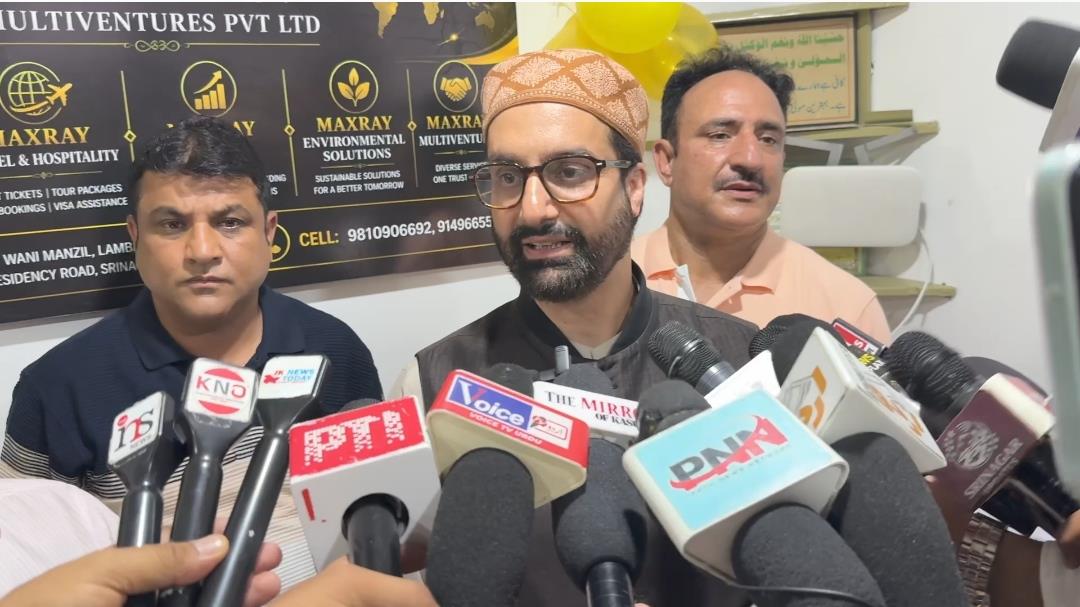
Hurriyat Conference chairman Mirwaiz Umar Farooq has spoken out against restrictions on books and ideas, arguing that censorship is inconsistent with democratic principles and that healthy societies advance through open debate rather than the suppression of intellectual thought.
His remarks come amid continuing discussions in Jammu and Kashmir over restrictions on certain books and educational material, a subject that has generated differing views among political leaders, educators and civil society groups.
Mirwaiz said democracy is strengthened when citizens are free to read, question and debate diverse viewpoints, warning that restricting literature narrows the intellectual space necessary for informed public discourse.
“Ideas Should Be Debated, Not Banned”
Mirwaiz emphasized that democratic societies derive their strength from the free exchange of ideas.
According to him, books, literature and academic works should be engaged with critically rather than prohibited, as progress depends on allowing competing perspectives to be examined through discussion and reasoned debate.
He argued that suppressing intellectual thought neither resolves disagreements nor strengthens democratic institutions. Instead, he said, societies become more resilient when people are encouraged to evaluate ideas independently.
His comments reflect a broader philosophical position that disagreement should be addressed through dialogue rather than censorship.
Freedom of Expression at the Centre of the Debate
The issue of restricting books has reignited discussions about freedom of expression and academic independence in Jammu and Kashmir.
Supporters of greater intellectual freedom argue that access to diverse viewpoints is essential for democratic participation, research and education. They contend that readers should be trusted to critically assess ideas instead of having access limited through prohibitions.
Others maintain that governments may restrict specific publications where they believe there are legal, security or public order concerns. Such actions are often defended by authorities as necessary under applicable laws.
The debate therefore reflects the continuing challenge of balancing constitutional freedoms with the state’s responsibility to maintain public order—a subject that remains legally and politically contested.
Education and Critical Thinking
Mirwaiz also linked the issue to education, suggesting that students benefit from exposure to a wide range of literature and historical perspectives.
Educational experts frequently argue that universities and schools should encourage analytical thinking by allowing students to engage with differing viewpoints, compare arguments and develop independent conclusions.
Limiting access to academic material, critics say, may reduce opportunities for students to understand complex historical, political and social issues from multiple perspectives.
Supporters of restrictions, however, argue that educational institutions also have a responsibility to ensure that prescribed material complies with legal and curriculum standards.
Context: Debate Over Books in Jammu and Kashmir
Mirwaiz’s remarks come against the backdrop of recent controversies surrounding certain books and publications in Jammu and Kashmir.
Public discussions have emerged over the availability of some educational and literary works, with writers, academics and civil society organizations expressing concern about the impact of restrictions on intellectual freedom.
The issue has generated contrasting political responses.
Some groups have argued that limiting access to literature risks shrinking democratic space and discouraging academic inquiry. Others have defended regulatory measures, saying governments have legitimate authority to act against publications considered unlawful under existing legal frameworks.
Because individual cases vary, assessments often depend on the specific legal grounds cited for any restriction.
Civil Society Voices Join the Conversation
The debate has extended beyond political circles.
Writers, educators, lawyers and civil society organizations have increasingly emphasized the importance of protecting spaces for discussion, scholarship and creative expression.
Many argue that societies become stronger when ideas are openly examined rather than suppressed, while also recognizing that freedom of expression operates within the framework of constitutional and statutory law.
The controversy has therefore evolved into a wider conversation about the relationship between democracy, education and civil liberties.
Political Significance
Mirwaiz’s intervention adds another dimension to the ongoing political discourse in Jammu and Kashmir.
In recent weeks, political discussions have largely focused on issues such as statehood restoration, India–Pakistan dialogue and constitutional governance. By addressing censorship and intellectual freedom, he has broadened the conversation to include democratic rights and public discourse.
His remarks are likely to resonate differently across the political spectrum.
Supporters may view them as a defense of democratic openness and academic freedom, while critics could argue that restrictions on certain publications may be justified under specific legal or security considerations.
Key Issues at a Glance
| Aspect | Mirwaiz’s Position | Broader Debate |
|---|---|---|
| Democracy | Ideas should be challenged through debate, not censorship | Balancing free expression and public order |
| Books and Literature | Opposes bans on intellectual works | Questions over legal restrictions on publications |
| Education | Students should access diverse perspectives | Debate over curriculum and academic freedom |
| Civil Society | Encourages open discussion | Writers and academics seek wider intellectual space |
| Political Impact | Calls for democratic openness | Continues discussion on rights and governance |
The Larger Question: Freedom and Democracy
The discussion surrounding book restrictions extends beyond Jammu and Kashmir. Democracies across the world continue to debate where the balance should lie between safeguarding freedom of expression and addressing concerns related to security, public order or hate speech.
International human rights principles generally recognize freedom of expression as a fundamental democratic value while also acknowledging that certain restrictions may be imposed under law when they are necessary, proportionate and consistent with constitutional safeguards.
The challenge for policymakers is ensuring that any limitations are transparent, legally justified and subject to appropriate review.
Outlook
Mirwaiz Umar Farooq’s remarks have added fresh momentum to an ongoing debate about democracy, education and intellectual freedom in Jammu and Kashmir. By arguing that societies progress through open discussion rather than censorship, he has highlighted the importance of preserving spaces where ideas can be debated peacefully.
As conversations continue over governance, constitutional rights and public policy in the region, the debate over books and free expression is likely to remain part of a broader discussion on democratic values. Whether the issue leads to policy changes or remains a point of political contention will depend on future government decisions, judicial developments and continued engagement by educators, writers and civil society.