NC Promises Liquor Ban in Kashmir “Very Soon,” Targets BJP Over ‘Silence’ During LG Rule
By: Javid Amin | 16 May 2026
Tanvir Sadiq Says Only National Conference Will Implement Prohibition; BJP, PDP, Apni Party and Hurriyat Intensify Pressure Over Alcohol Policy
The debate over liquor prohibition in Jammu and Kashmir has escalated into a major political flashpoint after the Jammu & Kashmir National Conference (NC) announced that a ban on alcohol in Kashmir would be implemented “very soon.”
Senior NC leader and MLA Tanvir Sadiq declared that prohibition would be enforced only under an NC-led government, while simultaneously accusing the Bharatiya Janata Party (BJP) of political hypocrisy for remaining silent when the liquor policy was introduced during Lieutenant Governor rule in 2023.
The controversy has rapidly evolved into a wider political and social debate involving morality, public health, revenue dependence, governance, and electoral positioning in Kashmir.
With opposition parties, religious leaders, and civil society groups also backing prohibition, pressure is mounting on the Omar Abdullah-led dispensation to move beyond statements and formally introduce restrictions through legislative or administrative action.
NC Says Liquor Ban Will Be Imposed “Very Soon”
Tanvir Sadiq Frames Prohibition as NC’s Political Commitment
His remarks are being interpreted as both a policy announcement and a political counterattack aimed at opposition parties attempting to capitalize on growing public sentiment against alcohol sales in the Valley.
The NC leader argued that his party recognizes widespread concerns over rising addiction and social distress, especially during the ongoing “Nasha Mukt J&K Abhiyan” campaign focused on combating drug abuse.
According to NC leaders, any anti-drug movement that ignores alcohol consumption risks appearing incomplete and inconsistent in the eyes of the public.
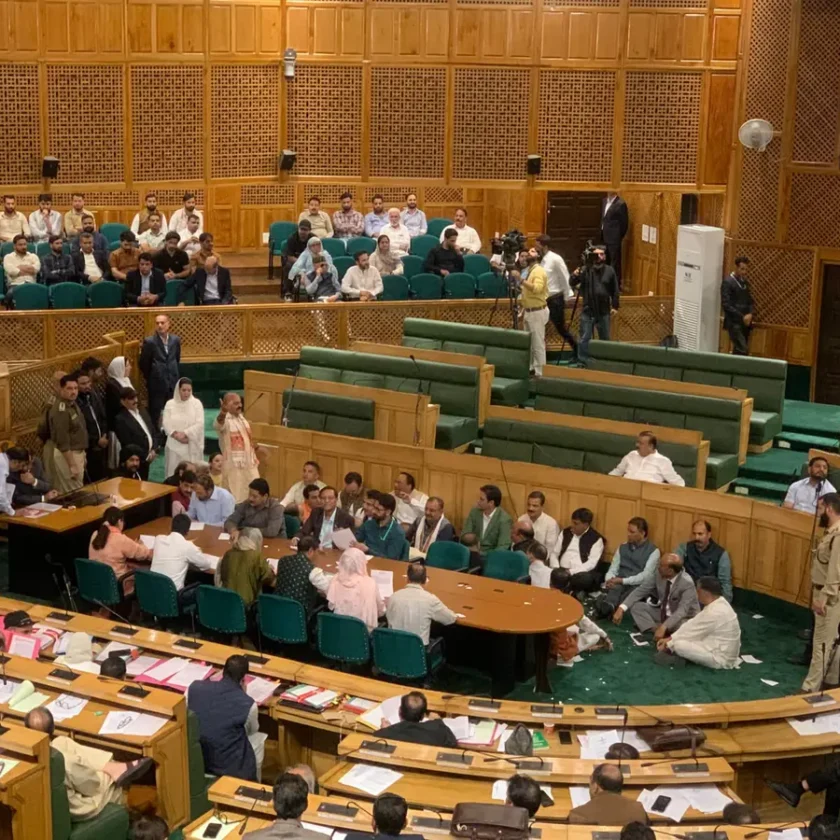
The party has indicated that the issue may be taken up in the Assembly session, though no formal timeline or draft legislation has yet been announced.
NC Targets BJP Over “Hypocrisy” on Liquor Policy
BJP Accused of Staying Silent During LG Administration
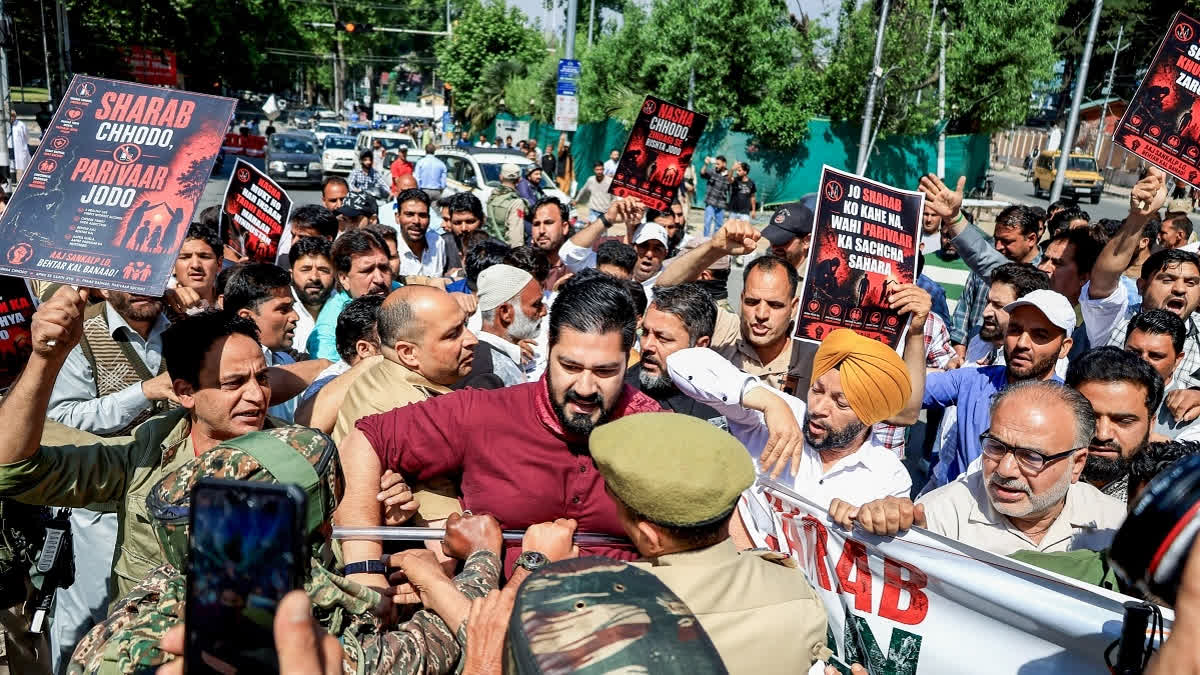
NC leaders described the BJP’s recent demonstrations as “political drama,” accusing the party of attempting to reposition itself after public anger over the proliferation of liquor outlets.
The BJP, however, has defended its protests by arguing that public sentiment in Kashmir overwhelmingly supports prohibition and that the government has delayed action despite repeated demands.
Party workers recently staged demonstrations in Srinagar demanding an immediate ban on liquor sales and warning of intensified agitation if the administration fails to act.
The exchange reflects how the alcohol issue has transformed into a symbolic contest over credibility and public morality in Kashmir politics.
PDP, Apni Party and Hurriyat Also Back Prohibition
Opposition Pressure Continues to Build on NC Government
The prohibition debate has united political rivals and ideological opposites on one issue: restricting alcohol sales in Kashmir.
People’s Democratic Party (PDP) leaders have supported a ban while accusing the NC government of delaying implementation despite making public promises.
The PDP has argued that the administration cannot run anti-drug campaigns while simultaneously permitting expanded liquor sales.
Similarly, Jammu and Kashmir Apni Party has also backed prohibition demands, positioning the issue as both a social and cultural concern.
Meanwhile, prominent Hurriyat leader Mirwaiz Umar Farooq has strongly opposed alcohol consumption, describing it as “deeply harmful to society.”
Mirwaiz argued that targeting narcotics while ignoring alcohol creates contradictions in public policy and weakens broader anti-addiction campaigns.
The convergence of mainstream parties and separatist voices on this issue has intensified political pressure on the NC government to deliver concrete action.
Omar Abdullah’s Earlier Remarks Return to Spotlight
NC Faces Questions Over Change in Position
The controversy has also revived attention around earlier comments made by Omar Abdullah, who had previously remarked that “nobody is being forced to drink.”
At the time, Omar Abdullah’s statement was viewed by critics as a defense of personal choice and a pragmatic approach toward excise revenue.
However, the NC’s current aggressive push for prohibition suggests the party is recalibrating its position in response to:
- Public sentiment
- Religious and cultural sensitivities
- Opposition pressure
- Anti-drug campaign narratives
- Electoral calculations
Political observers believe the shift reflects the growing political cost of appearing indifferent to concerns surrounding addiction and social change in Kashmir.
Revenue vs Social Concerns: The Core Policy Dilemma
Liquor Sales Generated Thousands of Crores
The liquor debate has become particularly sensitive because alcohol sales represent a major source of revenue for the Jammu and Kashmir administration.
Estimated Liquor Revenue
| Period | Revenue Generated |
|---|---|
| Last 3 Years | Over ₹3,450 crore |
Government officials and economists warn that a complete prohibition policy could create substantial fiscal challenges, especially at a time when Jammu and Kashmir continues to depend heavily on central assistance and limited local revenue streams.
However, supporters of prohibition argue that financial gains cannot justify long-term social damage.
Social Concerns Frequently Raised
- Addiction among youth
- Domestic violence
- Family debt
- Public health burdens
- Cultural and religious objections
- Impact on social stability
This has transformed the liquor debate into a larger ideological argument about governance priorities and social responsibility.
Risks of Prohibition: Black Markets and Smuggling Concerns
Farooq Abdullah Previously Warned About Underground Trade
Even leaders within the National Conference have previously expressed caution regarding outright prohibition.
Farooq Abdullah had earlier warned that blanket bans can sometimes fuel illegal smuggling networks and black-market alcohol sales rather than fully eliminating consumption.
Policy experts note that prohibition in several Indian states has historically produced mixed results, including:
- Illegal liquor trade
- Smuggling across borders
- Unregulated alcohol production
- Enforcement corruption
- Loss of tax revenue
This means the NC government may face difficult implementation challenges even if it formally announces a ban.
Public Sentiment in Kashmir Strongly Favors Restrictions
Anti-Drug Campaign Adds Momentum to Prohibition Demand
Many religious leaders, social activists, and parent groups argue that alcohol consumption should also be addressed alongside narcotics if the administration is serious about tackling addiction.
In the Kashmir Valley particularly, cultural and religious attitudes toward alcohol remain deeply conservative, making the issue politically sensitive across party lines.
As a result, political parties increasingly see prohibition as both a moral issue and a high-impact public sentiment issue.
Comparative Snapshot: Party Positions on Liquor Ban
| Party/Leader | Current Position | Political Argument |
|---|---|---|
| National Conference | Promises ban “very soon” | Says only NC will implement prohibition |
| BJP | Demands immediate ban | Accuses NC of delaying action |
| PDP | Supports prohibition | Claims NC is “double-faced” |
| Apni Party | Supports ban | Calls for social protection |
| Mirwaiz Umar Farooq | Strongly supports ban | Calls alcohol socially harmful |
Why the Liquor Debate Matters Politically
More Than a Policy Issue
Political analysts believe the liquor controversy has become a symbolic battleground involving:
- Public morality
- Religious identity
- Governance credibility
- Youth protection
- Revenue policy
- Electoral positioning
For the National Conference, implementing prohibition could help strengthen its image as responsive to public concerns.
For opposition parties, however, the issue offers an opportunity to portray the government as inconsistent and politically reactive.
The debate also reflects how social policy issues in Kashmir are increasingly becoming intertwined with identity politics and public trust.
Conclusion
The National Conference’s promise to impose a liquor ban in Kashmir “very soon” has intensified one of the region’s most politically charged debates.
While NC seeks to position itself as the party that will ultimately enforce prohibition, opposition groups including the BJP, PDP, Apni Party, and Hurriyat leaders continue pressing for immediate action.
At the centre of the controversy lies a difficult policy question: how to balance public health, cultural sensitivities, and anti-addiction campaigns against the financial realities of excise revenue dependence.
As political pressure grows and public sentiment hardens, the liquor ban issue is likely to remain a defining socio-political debate in Jammu and Kashmir in the months ahead.