BJP Cries Foul Over J&K Assembly Committee Appointments, Raises Questions on Democratic Balance
By: Javid Amin | 14 May 2026
Opposition Says Allocation of House Committee Chairmanships Weakens Accountability in Jammu and Kashmir Assembly
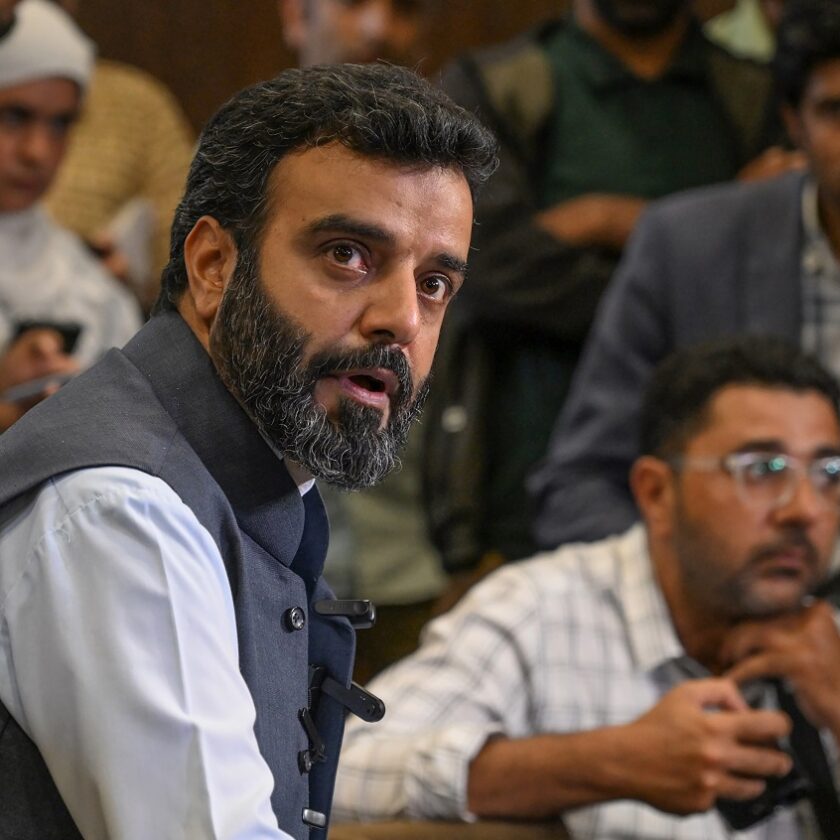
A fresh political controversy has erupted in the Jammu and Kashmir Assembly after the Bharatiya Janata Party (BJP) accused the Speaker of showing bias in the allocation of chairmanships for key House committees. The opposition party has alleged that eight out of nine committee heads were appointed from the ruling alliance, leaving the opposition with only a symbolic presence in the legislative oversight structure.
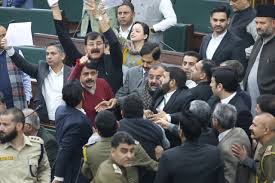
The row has intensified political tensions in Jammu and Kashmir’s newly restored Assembly, where questions around democratic balance, opposition participation, and institutional neutrality continue to shape political discourse after the Union Territory’s post-2019 administrative transition.
The BJP argues that the concentration of committee leadership within the ruling coalition undermines the spirit of parliamentary democracy and weakens the system of checks and balances that committees are designed to uphold.
Why the Committee Allocation Row Matters
Assembly committees may operate away from the glare of televised debates, but they are among the most powerful instruments in any parliamentary democracy.
These committees function as smaller, specialized bodies that examine government policies, expenditures, promises, grievances, and legislative procedures in detail before matters reach the full House.
Political experts often describe committees as the “engine rooms” of legislative accountability because they allow deeper scrutiny than regular Assembly sessions.
The controversy in Jammu and Kashmir is therefore not merely about positions or protocol — it is about who controls oversight of governance.
BJP Accuses Speaker of Undermining Democratic Fairness
The BJP has alleged that the Assembly Speaker failed to maintain neutrality while appointing committee chairpersons.
According to opposition leaders, the ruling alliance’s dominance over committee leadership violates the principle of proportional representation that is widely considered essential for democratic functioning in parliamentary systems.
The party claims that giving eight out of nine committee chairmanships to members of the ruling bloc marginalizes opposition voices and limits institutional accountability.
BJP leaders argued that the Speaker’s office must remain politically impartial, especially in matters related to legislative oversight.
“The Speaker must function as a neutral constitutional authority and ensure fair participation of all political parties,” opposition leaders reportedly stated while criticizing the allocation pattern.
The BJP further warned that limiting the opposition’s role inside committees could reduce transparency and weaken scrutiny of executive decisions.
Speaker’s Office Defends the Appointments
While no detailed public rebuttal has yet been issued by the Speaker, Assembly sources have reportedly defended the appointments by stating that committee chairpersons were selected on the basis of seniority, legislative experience, and procedural suitability rather than political affiliation.
Supporters of the ruling alliance argue that the coalition currently commands a majority in the Assembly and therefore naturally holds greater influence in committee formation.
However, opposition parties maintain that legislative committees are meant to function differently from ordinary political majorities because their primary purpose is institutional oversight, not partisan control.
This distinction lies at the heart of the controversy.
Understanding the Role of Assembly Committees in J&K
House committees play a central role in ensuring transparency, accountability, and legislative efficiency.
They allow legislators to examine complex issues in detail, question departments, review budgets, and monitor whether government assurances are fulfilled.
Some of the most influential committees include:
| Committee | Primary Function | Governance Impact |
|---|---|---|
| Public Accounts Committee (PAC) | Examines government expenditure and audit reports | Ensures fiscal accountability |
| Estimates Committee | Reviews budget estimates and spending efficiency | Improves financial discipline |
| Privileges Committee | Handles breaches of legislative privilege | Protects rights of legislators |
| Petitions Committee | Reviews public grievances submitted to Assembly | Strengthens citizen participation |
| Government Assurances Committee | Monitors promises made by ministers | Promotes implementation accountability |
| Rules Committee | Reviews Assembly procedures | Improves legislative functioning |
These committees often shape how policies are interpreted, implemented, and politically evaluated.
That is why committee leadership carries enormous influence.
Why Committee Chairmanships Are Politically Significant
In parliamentary systems, committee chairpersons effectively act as gatekeepers of legislative scrutiny.
They influence:
- Which issues are prioritized
- How aggressively departments are questioned
- Whether reports are delayed or expedited
- The tone and depth of oversight proceedings
- Which witnesses or officials are called for examination
Critics argue that when most committee heads belong to the ruling alliance, oversight can become less confrontational and more politically controlled.
Opposition leaders in Jammu and Kashmir fear that reduced representation could limit their ability to examine sensitive governance issues, including spending patterns, policy implementation, recruitment, infrastructure projects, and administrative functioning.
The BJP says the current arrangement creates the perception that the ruling alliance is attempting to dominate both governance and oversight simultaneously.
Public Accounts Committee: Why Opposition Leadership Matters
One of the strongest arguments made by opposition parties relates to the tradition surrounding the Public Accounts Committee (PAC).
In the Indian parliamentary system, the PAC is considered one of the most important oversight mechanisms because it examines government expenditure using audit reports prepared by the Comptroller and Auditor General (CAG).
Traditionally, in the Lok Sabha, the PAC chairperson is drawn from the opposition to ensure impartial financial scrutiny of the government.
Political analysts note that this practice has evolved as a democratic convention aimed at strengthening accountability and public trust.
The BJP argues that Jammu and Kashmir should adopt similar conventions instead of concentrating committee leadership within the ruling alliance.
How Other States Handle Committee Leadership
The debate unfolding in Jammu and Kashmir reflects broader conversations seen across Indian legislatures.
Different states follow different political traditions regarding committee allocations.
Comparative Practices Across India
| State/Institution | Committee Leadership Pattern | Political Impact |
|---|---|---|
| Lok Sabha | PAC traditionally chaired by opposition | Strengthens fiscal oversight |
| Kerala Assembly | Mix of ruling and opposition chairs | Encourages inclusivity |
| Maharashtra Assembly | Opposition chairs some key committees | Supports bipartisan scrutiny |
| Tamil Nadu Assembly | Ruling party dominates many committees | Often criticized by opposition |
Political observers point out that while ruling parties commonly hold a majority of committee positions, balanced allocation of key oversight committees is often considered healthy for democratic functioning.
The BJP is now using these examples to argue that Jammu and Kashmir’s Assembly should adopt a more inclusive model.
The Bigger Political Context in Jammu and Kashmir
The controversy comes at a politically sensitive moment for Jammu and Kashmir.
Following the revocation of Article 370 in 2019 and the reorganization of the former state into a Union Territory, the restoration of an elected Assembly was projected as a step toward democratic normalization.
As a result, institutional credibility within the Assembly carries heightened political importance.
Every procedural dispute — whether over debates, committee formation, legislative powers, or opposition participation — is now viewed through the larger lens of democratic restoration and political representation.
That is why the committee allocation issue has resonated beyond routine legislative procedure.
For opposition parties, it symbolizes concerns over shrinking democratic space.
For the ruling alliance, it reflects the practical reality of majority-based governance.
Experts Warn Against Perception of Institutional Bias
Constitutional observers say that even when procedures technically comply with Assembly rules, perceptions of imbalance can still damage institutional credibility.
Legislative committees derive their strength not only from rules but also from public confidence in their impartiality.
If opposition parties begin viewing committees as extensions of the ruling establishment, bipartisan cooperation may weaken significantly.
Experts suggest that democratic institutions function best when opposition parties are given meaningful participation in oversight structures.
This becomes even more important in politically sensitive regions like Jammu and Kashmir, where trust in institutions remains deeply consequential.
What Reforms Are Being Suggested?
Several constitutional experts and political observers have suggested reforms to reduce future controversies around committee allocations.
Among the proposals being discussed are:
- Proportional representation in committee leadership
- Rotation of chairmanships across sessions
- Opposition leadership for major oversight committees
- Public disclosure of appointment criteria
- Greater transparency in committee proceedings
Advocates argue that such measures would strengthen institutional trust while preserving the authority of the ruling majority.
A Test for Democratic Maturity
The current row over House committee appointments may appear procedural on the surface, but it carries wider political significance for Jammu and Kashmir’s evolving democratic landscape.
At its core, the controversy raises a fundamental question:
Should legislative oversight remain dominated by the ruling majority, or should opposition parties receive stronger institutional space to ensure accountability?
The answer could shape not only Assembly functioning but also public confidence in the Union Territory’s democratic institutions.
As political tensions continue to rise, the dispute over committee chairmanships has become another test of how inclusive and balanced Jammu and Kashmir’s restored legislative framework will ultimately be.