Mehbooba Mufti Accuses OIC of ‘Betrayal’ Over Silence on Khamenei Killing
By: Javid Amin | 03 March 2026
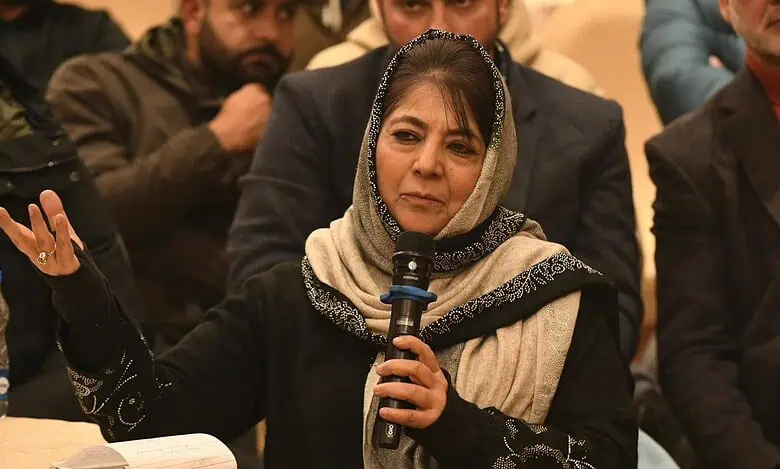
Former Jammu & Kashmir Chief Minister Mehbooba Mufti has launched a direct and forceful attack on the Organisation of Islamic Cooperation (OIC), accusing the 57-member bloc of remaining silent over the US–Israel strikes on Iran that reportedly killed Supreme Leader Ayatollah Ali Khamenei.
Her remarks mark the strongest criticism yet from a mainstream Kashmiri leader against the OIC, framing its response as not merely muted — but as a “grave betrayal of the Muslim world.”
What Mehbooba Mufti Said
In a sharply worded statement, Mehbooba accused the OIC of acting as a “mute spectator” while the United States and Israel carried out what she described as “blatant aggression against the sovereignty of Iran.”
Key elements of her criticism included:
-
Calling the OIC’s silence “alarming” and “disgraceful.”
-
Accusing the body of failing to condemn the strike that killed Khamenei.
-
Alleging that the OIC appeared to shift blame onto Iran rather than denounce the attack.
-
Claiming the bloc had “covertly endorsed” US–Israel actions by refusing to speak out.
Her rhetoric suggests a deep frustration with what she perceives as institutional paralysis within the Muslim world’s largest multilateral forum.
Political Context in Kashmir
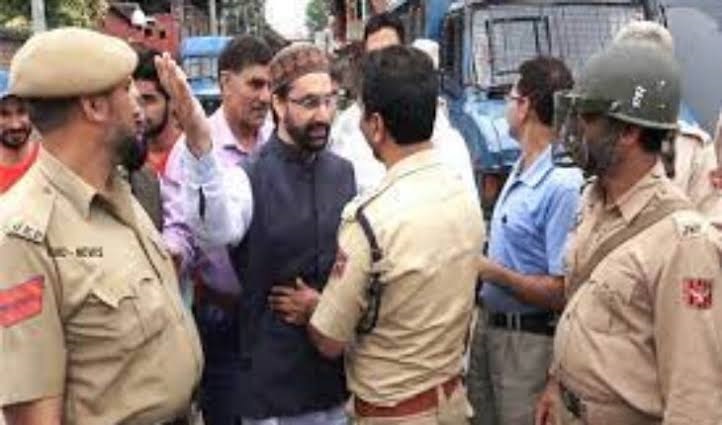
Mehbooba’s statement comes amid heightened tensions in Jammu and Kashmir, where protests and restrictions followed reports of Khamenei’s killing.
The reaction has been particularly strong among Shia communities, for whom Iran holds religious and symbolic significance. Curfew-like measures and preventive detentions have been reported in parts of the Valley, reflecting the sensitivity of the issue.
Her intervention taps into a broader local sentiment that global Muslim institutions are failing to defend Muslim-majority countries during major geopolitical confrontations.
How Other Kashmiri Leaders Responded
Mehbooba’s stance stands out when compared to other prominent political figures in the region.
1️⃣ Omar Abdullah: Legal Questions, Call for Calm
Chief Minister Omar Abdullah focused less on the OIC and more on the legality and implications of the strike itself.
His approach included:
-
Questioning the international legality of the US–Israel action.
-
Urging Kashmiris to mourn peacefully.
-
Emphasizing restraint to prevent violence or unrest.
Notably, he did not criticize the OIC directly.
2️⃣ Aga Ruhullah Mehdi: India’s Foreign Policy in Focus
National Conference MP Aga Syed Ruhullah Mehdi directed his criticism at New Delhi rather than the OIC.
He accused Prime Minister Narendra Modi of prioritizing outreach to Gulf monarchies — referring to “kings and princesses” — while neglecting diplomatic engagement with Iran.
While his remarks indirectly pointed toward Gulf states (many of which are OIC members hosting US bases), he did not explicitly attack the organization itself.
3️⃣ Sajad Lone: Focus on Censorship
People’s Conference leader Sajad Lone took a different route entirely.
His concerns centered on:
-
The reported takedown of Kashmiri media handles by Meta.
-
Questions around digital censorship and press freedom.
He did not comment on the OIC’s silence.
Why Mehbooba’s Position Is Distinct
Among major Kashmiri leaders:
-
Mehbooba Mufti directly accused the OIC of betrayal.
-
Omar Abdullah emphasized legality and restraint.
-
Ruhullah Mehdi targeted India’s foreign policy tilt.
-
Sajad Lone focused on media freedom.
This makes Mehbooba the only mainstream political voice in Kashmir to confront the OIC head-on over its stance.
Iran’s Reaction to OIC Silence
Tehran itself has reacted sharply to what it views as the OIC’s muted response.
Iranian officials and state-aligned media reportedly described Khamenei’s killing as:
-
A “cynical murder.”
-
A defining moment for Iranian sovereignty.
They criticized international institutions — including the OIC — for failing to issue strong condemnations.
Iran also launched retaliatory strikes targeting Israeli assets and US-linked facilities in Gulf states such as:
-
Qatar
-
United Arab Emirates
-
Kuwait
-
Bahrain
-
Saudi Arabia
-
Oman
Many of these countries are influential OIC members and host American military bases.
Iranian commentators argue that the OIC’s response reflects:
-
Gulf dominance within the organization.
-
Strategic alignment with US interests.
-
Institutional weakness in confronting Western powers.
The Broader Geopolitical Frame
The OIC has historically presented itself as the collective diplomatic voice of Muslim-majority nations, especially on issues like Palestine and Kashmir.
However, critics argue that:
-
Internal divisions between Gulf monarchies and Iran weaken consensus.
-
Strategic dependence on US security guarantees shapes member states’ positions.
-
Economic interdependence with the West limits diplomatic assertiveness.
Mehbooba’s criticism taps into these structural tensions.
Why This Resonates in Kashmir
Kashmir has long been influenced by international Muslim political narratives, particularly concerning:
-
Palestine
-
Iraq
-
Afghanistan
-
Iran
For many in the Valley, the OIC has symbolic importance as a body expected to defend Muslim causes globally.
The perception that it failed to condemn an attack on Iran’s top leader has therefore triggered political commentary not just in Tehran — but in Srinagar.
Institutional Weakness or Strategic Silence?
There are competing interpretations of the OIC’s position:
Critics say:
-
Silence equals endorsement.
-
Gulf monarchies have diluted the organization’s independence.
-
The body has lost credibility as a defender of Muslim sovereignty.
Defenders argue:
-
The OIC often works through quiet diplomacy.
-
Public condemnation could escalate tensions.
-
Member states have divergent strategic interests.
The truth likely lies in the structural complexity of a 57-member bloc with competing alignments.
Conclusion: A Crisis of Credibility?
Mehbooba Mufti’s remarks reflect a growing perception — both in Kashmir and in Iran — that the OIC is increasingly constrained by internal politics and Gulf influence.
While other Kashmiri leaders focused on legality, restraint, or India’s foreign policy orientation, Mehbooba’s intervention directly challenged the legitimacy and moral authority of the Muslim world’s largest intergovernmental body.
Whether the OIC responds or maintains strategic silence, the episode underscores how global geopolitical flashpoints reverberate locally in Kashmir — shaping political rhetoric, public sentiment, and debates about sovereignty, solidarity, and institutional credibility.
The unfolding Iran–Israel confrontation has not only redrawn lines in West Asia — it has also reopened questions about who truly speaks for the Muslim world, and at what cost.