Surinder Choudhary Says Officers Taking Key Decisions in J&K, Sparks Governance Debate
By: Javid Amin | 21 May 22026
Deputy Chief Minister’s Admission Sparks Questions Over Democratic Authority, Bureaucratic Control and Governance Accountability in Jammu & Kashmir
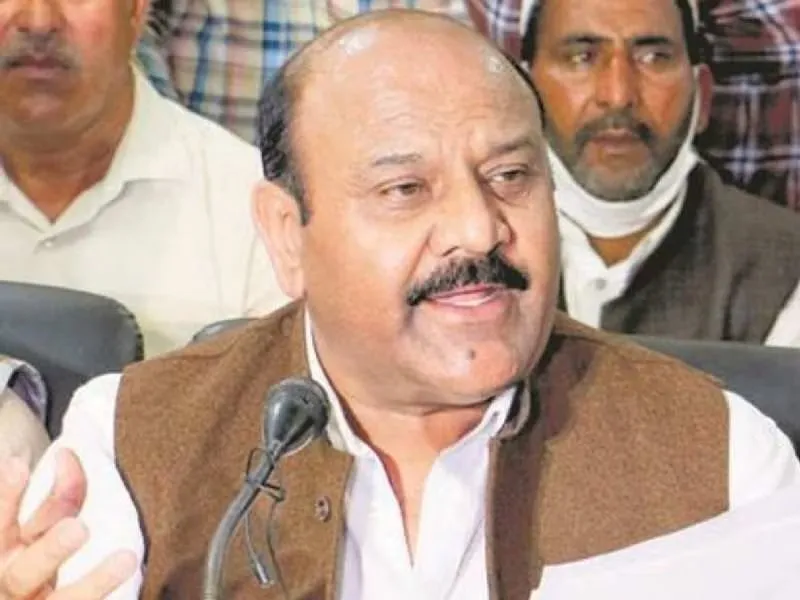
A candid statement by Surinder Choudhary has triggered fresh political debate in Jammu and Kashmir over who truly governs the Union Territory — elected representatives or the administrative bureaucracy.
In remarks that have quickly gained political attention, the Deputy Chief Minister acknowledged that ministers operate with limited authority while key decisions are often taken by officers and bureaucratic institutions.
The statement is being viewed as one of the clearest public admissions yet from within the government regarding the perceived imbalance between elected leadership and the administrative machinery in post-Article 370 Jammu and Kashmir.
Political observers say the comments reflect a growing frustration among sections of the elected establishment who believe that democratic authority in the Union Territory remains constrained despite the restoration of an elected government.
A Rare Public Admission From Within Government
“Ministers Have Limited Powers”
Surinder Choudhary’s remarks stand out because they publicly articulate concerns that political parties in Jammu and Kashmir have repeatedly raised since the region’s reorganization into a Union Territory.
According to the Deputy Chief Minister, many crucial governance decisions are effectively shaped and executed by bureaucrats and administrative officers, while ministers often have limited operational control.
Although bureaucratic systems exist in every government structure, the statement has intensified concerns that elected representatives in Jammu and Kashmir are functioning with restricted administrative authority.
Analysts note that such comments are politically significant because they come not from the opposition, but from a senior member of the ruling establishment itself.
Governance in J&K: Democracy or Administrative Control?
Debate Over Real Decision-Making Powers Intensifies
The Deputy CM’s statement has revived broader questions about the nature of governance in Jammu and Kashmir after the constitutional changes of August 2019.
Since Jammu and Kashmir was reorganized into a Union Territory, political parties across ideological lines have frequently argued that:
- Bureaucratic authority has expanded,
- Administrative centralization has increased,
- Elected institutions have weakened,
- Political accountability has become blurred.
Critics argue that many major decisions involving:
- Land administration,
- Anti-encroachment drives,
- Transfers and postings,
- Security coordination,
- Urban development,
- Revenue policies,
are often perceived as being controlled more by administrative structures than by elected ministers.
Supporters of the current governance model, however, argue that stronger bureaucratic coordination ensures efficiency, stability, and faster implementation in a sensitive region.
The Accountability Problem
Who Is Responsible: Ministers or Officers?
One of the biggest concerns emerging from Surinder Choudhary’s remarks is the issue of accountability.
In democratic systems, elected representatives are expected to:
- Make policy decisions,
- Oversee implementation,
- Answer to the public,
- Accept political responsibility.
However, when administrative officers are perceived as the primary decision-makers, confusion emerges over who should be held accountable for controversial actions.
This issue has become especially visible in recent controversies involving:
- Demolition drives,
- Land eviction campaigns,
- Liquor policy debates,
- Administrative crackdowns,
- Public order decisions.
Citizens often hear political leaders criticizing actions that occurred under the same government structure in which they themselves serve.
This creates what analysts describe as an “accountability vacuum,” where:
- Politicians claim limited powers,
- Bureaucrats remain institutionally insulated,
- Citizens struggle to identify responsibility.
Political Fallout: Opposition Likely to Use Statement Aggressively
“Symbolic Democracy” Narrative Gains Momentum
Opposition parties are likely to seize on the Deputy CM’s remarks to reinforce claims that democratic institutions in Jammu and Kashmir remain weakened.
Several regional parties have already argued that:
- Ministers lack executive authority,
- Bureaucratic systems dominate governance,
- Political participation has become symbolic rather than substantive.
The statement may strengthen narratives suggesting that elected leaders are unable to independently shape policy outcomes despite public mandates.
For opposition groups, this becomes a politically potent argument because it touches directly on:
- Democratic legitimacy,
- Regional autonomy,
- Institutional dignity,
- Public representation.
The remarks may also create discomfort within the ruling coalition itself by publicly exposing tensions between political leadership and administrative structures.
Bureaucratic Governance vs Democratic Governance
Efficiency and Accountability Often Collide
The controversy surrounding Surinder Choudhary’s statement reflects a larger governance dilemma visible not only in Jammu and Kashmir, but in many administrative systems globally:
How should power be balanced between bureaucratic efficiency and democratic accountability?
Bureaucratic Governance Often Prioritizes:
- Administrative continuity
- Procedural control
- Policy execution
- Institutional stability
- Security coordination
Democratic Governance Prioritizes:
- Political accountability
- Public representation
- Electoral legitimacy
- Policy responsiveness
- Citizen participation
In politically sensitive regions like Jammu and Kashmir, this balance becomes even more complex because governance intersects with:
- Security concerns,
- Identity politics,
- Federal structures,
- Public trust,
- Constitutional debates.
Why the Statement Resonates Publicly
Public Frustration Over Powerlessness
Surinder Choudhary’s remarks resonate strongly because they mirror a broader public perception in parts of Jammu and Kashmir:
that elected representatives often appear unable to prevent or reverse controversial administrative actions.
This perception has intensified during incidents involving:
- Demolitions,
- Evictions,
- Administrative restrictions,
- Policy decisions viewed as unpopular.
When ministers themselves acknowledge limited powers, it reinforces public skepticism regarding the effectiveness of electoral politics.
Analysts say this can create a dangerous cycle:
- Citizens lose faith in political representation,
- Political institutions weaken further,
- Bureaucratic governance expands,
- Democratic engagement declines.
The Constitutional and Political Context
J&K’s Unique Governance Structure
The debate cannot be separated from Jammu and Kashmir’s post-2019 political structure.
As a Union Territory, Jammu and Kashmir functions under a governance arrangement where significant authority remains vested in the Lieutenant Governor’s administration and central institutions.
This has repeatedly produced friction between:
- Elected representatives,
- Bureaucratic agencies,
- Administrative authorities.
Political leaders often argue that without fuller executive authority, democratic governance remains incomplete.
Meanwhile, supporters of the current structure argue that administrative centralization is necessary for stability, coordination, and development.
Surinder Choudhary’s remarks have now brought that institutional tension into unusually direct public focus.
Editorial Perspective: Governance Needs Clarity of Responsibility
Democracy Requires Visible Authority
The Deputy Chief Minister’s candid admission may prove politically significant not because it reveals something entirely new, but because it publicly validates a concern already circulating widely within political and public discourse.
Democracy functions effectively only when citizens clearly understand:
- Who governs,
- Who decides,
- Who is accountable,
- Who can be voted out.
When authority appears fragmented between elected leaders and administrative systems, public trust begins to erode.
In Jammu and Kashmir, where political confidence has already undergone major strain over the past several years, clarity of institutional responsibility becomes even more important.
The challenge ahead for governance in the Union Territory may not only be about efficiency or development — but about restoring public belief that democratic representation still carries meaningful power.
Conclusion
Deputy CM Surinder Choudhary’s statement has reopened one of the most sensitive political debates in Jammu and Kashmir: whether real authority lies with elected leaders or with the bureaucratic-administrative structure.
His remarks have amplified concerns over democratic accountability, political powerlessness, and institutional imbalance in the Union Territory.
As controversies around demolitions, policy decisions, and administrative actions continue to emerge, the larger question now confronting Jammu and Kashmir’s governance system is not merely how decisions are implemented — but who truly has the power to make them.