Kashmiri Pandits Protest in Jammu: “₹13,000 Is Not Enough Anymore”
By: Javid Amin | 16 April 2026
A Community on the Streets After Eight Years of Silence
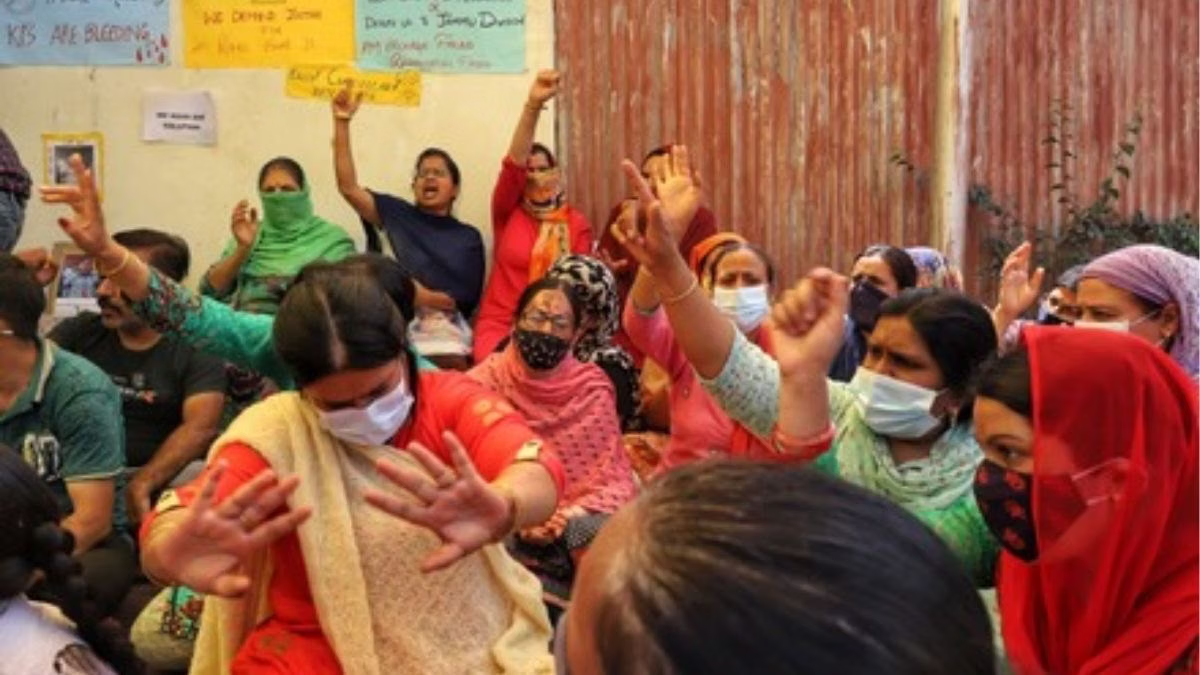
In a renewed expression of long-standing economic distress, displaced Kashmiri Pandits gathered at the Press Club Jammu on April 15, staging a protest to demand a two-fold increase in monthly relief assistance.
Led by community figure Ravinder Koul, the protest highlighted a growing concern: the current relief of ₹13,000 per family, unchanged since 2018, is no longer sufficient to meet basic needs.
Their demand is clear—raise the relief to ₹26,000 per month to match the realities of today’s cost of living.
“We Are Struggling to Survive”: The Core Concerns
Protestors painted a stark picture of daily life in displacement.
Rising Cost of Living
Over the past eight years, inflation has significantly increased the cost of essentials:
- Food and groceries
- Rent and utilities
- Education and healthcare
For many families, ₹13,000 barely covers a fraction of monthly expenses.
Stagnant Relief Since 2018
The lack of revision has become a central grievance. Protestors argue that while prices have surged, government assistance has remained frozen, widening the gap between income and survival.
Beyond Relief: A Demand for Dignity
The protest was not limited to monetary demands. Participants also called for:
- Sustainable employment opportunities
- Housing solutions
- Educational support for youth
- A comprehensive rehabilitation package
Appeal to the Centre: “Immediate Intervention Needed”
The demonstrators directly appealed to Narendra Modi and Amit Shah, urging swift action.
Their message emphasized urgency—warning that continued delays could deepen economic hardship and social vulnerability among already displaced families.
Relief Demand at a Glance
| Current Relief | Requested Relief | Last Revision | Key Issue |
|---|---|---|---|
| ₹13,000/month | ₹26,000/month | 2018 | Inflation & delayed revision |
Historical Context: A Displacement That Continues to Shape Lives
The Kashmiri Pandit community was displaced from the Kashmir Valley in the early 1990s during the peak of militancy.
Decades later:
- Many families still live in temporary or semi-permanent camps in Jammu and elsewhere
- Dependence on government relief remains high
- Full-scale rehabilitation has remained elusive
This prolonged displacement has transformed what was once an emergency response into a multi-generational struggle.
Ground Reality: Life in Camps and Settlements
On the ground, displaced families describe:
- Overcrowded accommodations
- Limited job opportunities
- Rising educational costs for children
- Healthcare challenges, especially for the elderly
The protest reflects accumulated frustration—not just over finances, but over decades of uncertainty and delayed policy action.
Challenges for the Government
While the demand is rooted in genuine hardship, policymakers face practical constraints:
1. Financial Implications
Doubling relief would require a significant increase in budget allocation, especially given the number of beneficiary families.
2. Policy and Bureaucratic Delays
Even if approved, implementation may be slowed by administrative procedures.
3. Balancing Short-Term Relief and Long-Term Rehabilitation
Experts often argue that cash assistance alone is not a sustainable solution. The larger challenge lies in creating pathways for:
- Employment
- Permanent resettlement
- Economic independence
A Larger Question: Relief or Rehabilitation?
The protest has revived a fundamental policy debate:
Should the focus remain on increasing relief, or shift toward long-term rehabilitation?
For many in the community, the answer is both.
They argue that:
- Immediate relief is necessary for survival
- Long-term rehabilitation is essential for dignity and stability
Public Sentiment: Frustration Meets Persistence
The turnout at the protest signals that patience within the community is wearing thin.
Yet, there is also resilience:
- Families continue to rebuild lives despite constraints
- Youth are seeking education and employment opportunities
- Community networks remain strong
This dual reality—hardship and endurance—defines the current phase of the Kashmiri Pandit experience.
What Lies Ahead?
The coming weeks will be crucial:
- Will the Centre respond to the demand for relief revision?
- Can a broader rehabilitation package be initiated?
- Will this protest trigger wider policy reconsideration?
The answers will determine whether this moment becomes a turning point—or another missed opportunity.
Conclusion: A Demand Rooted in Survival and Dignity
The protest in Jammu is not just about numbers. It is about survival in the present and dignity for the future.
For displaced Kashmiri Pandits, the demand for ₹26,000 monthly relief reflects:
- Economic necessity
- Policy fatigue
- A call for recognition after decades of displacement
As the community waits for a response, one message stands clear:
Relief may sustain lives—but only meaningful rehabilitation can restore them.