Kashmir’s Vanishing Winter: Inside the February 2026 Heatwave That Is Rewriting the Valley’s Climate Memory
By: Javid Amin | 25 Febuary 2026
When Winter Forgot to Snow
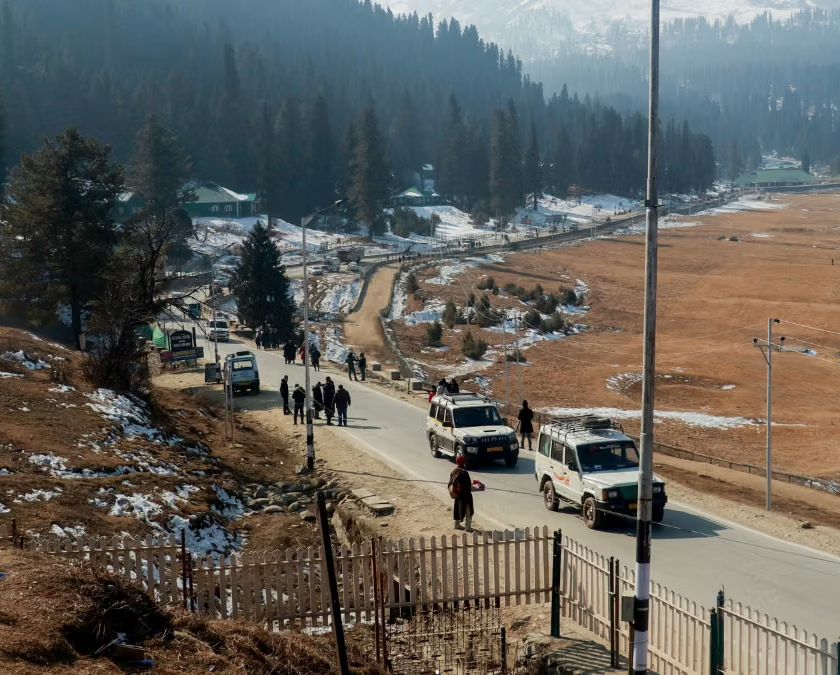
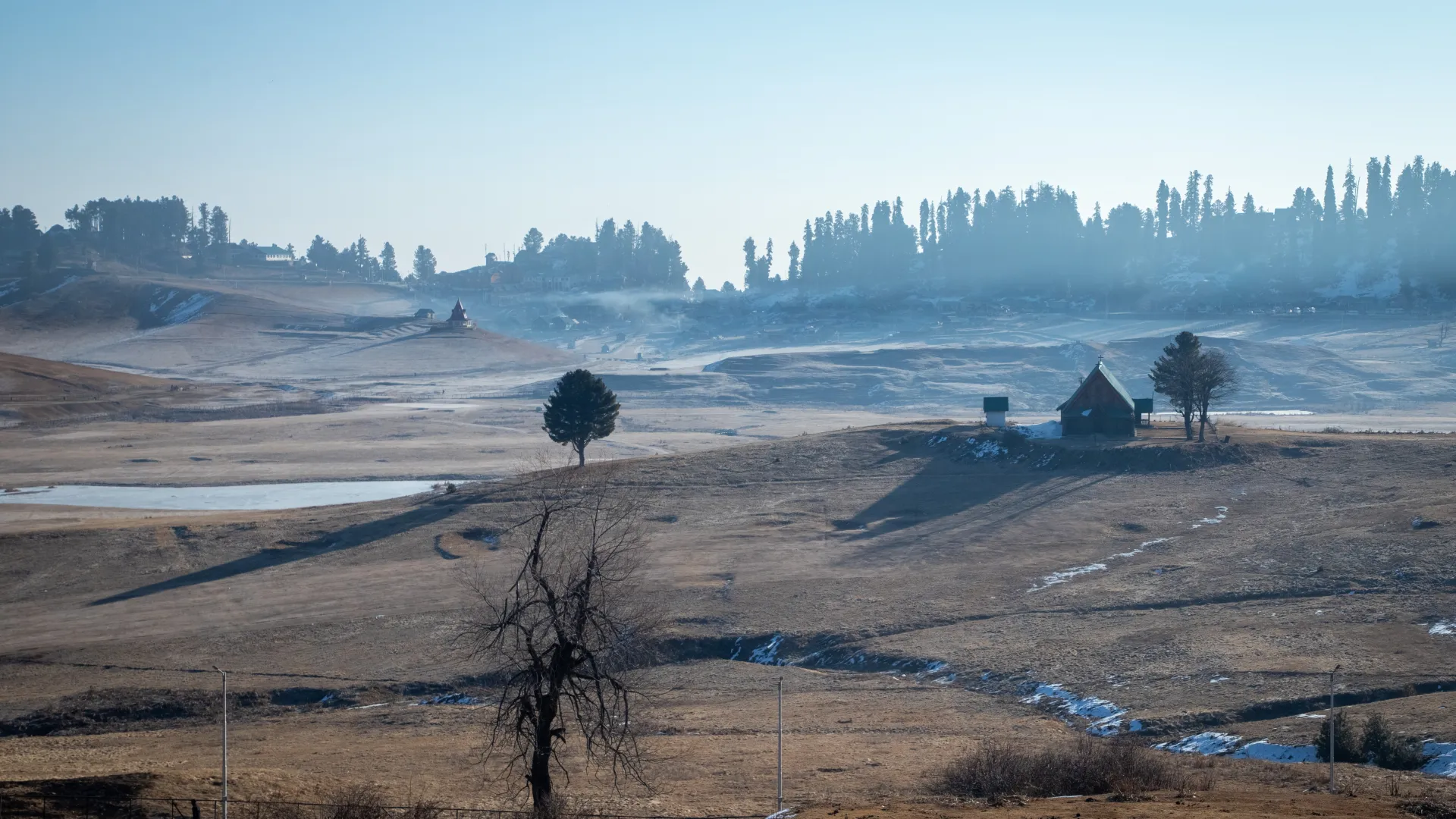
In late February 2026, residents of Srinagar stepped out into a winter afternoon that felt suspiciously like early April. Daytime temperatures hovered 7–8°C above seasonal norms. Snow that once blanketed rooftops and orchards had either failed to arrive or vanished within days.
Up in the slopes of Gulmarg, ski instructors waited for tourists who never came. In Pahalgam and Sonamarg, streams began to swell weeks earlier than usual — a quiet but consequential signal of accelerated snowmelt.
This was not a passing warm spell. It was a structural disruption. And across ecology, economy, agriculture, hydropower, and tourism, the consequences were already unfolding.
Part I: The Weather Anomaly — A Winter Without Winter
Breaking the Valley’s Climatic Rhythm
Kashmir’s winter follows a predictable pattern: sub-zero nights, sustained snowpack in higher altitudes, periodic western disturbances bringing fresh snowfall, and gradual melt beginning in March.
February 2026 shattered that rhythm.
-
Daytime temperatures: 7–8°C above normal
-
Snowfall: Scarce and short-lived
-
Mid-altitude zones: Almost snow-free
-
Accelerated melt reported in major snow zones
The snowline retreated upward. Plains saw negligible accumulation. Even mid-altitude belts experienced ephemeral snowfall that disappeared within days.
Meteorologists describe this not as variability but as volatility — an intensification of extremes.
Tourism Under Stress — The Economics of Missing Snow
Gulmarg’s Silent Slopes
In a typical February, Gulmarg’s ski slopes are fully booked. Hotels operate at near 100% occupancy. Gondola lines stretch long.
This year, cancellations surged.
Winter tourism contributes significantly to Kashmir’s seasonal economy. Ski instructors, hoteliers, taxi operators, pony handlers, café owners — all depend on predictable snow.
Without sustained snow cover:
-
Skiing operations stalled
-
Package bookings were withdrawn
-
Travel agencies reported early cancellations
-
Informal sector workers lost peak-season income
Artificial snowmaking is being discussed, but installation requires capital, water access, and electricity reliability — all under pressure during heat anomalies.
The Tourism Dependency Problem
Kashmir’s branding heavily relies on winter imagery — snowfields, frozen lakes, alpine skiing.
A shrinking snow season compresses revenue windows. If February ceases to guarantee snow, winter tourism becomes speculative rather than reliable.
Diversification is no longer optional — it is structural necessity.
Agriculture & Snowmelt — The Hidden Crisis
Snowpack as Natural Reservoir
Snow is not aesthetic in Kashmir. It is hydrological capital.
The winter snowpack acts as a frozen reservoir, releasing water gradually through spring and early summer. This meltwater:
-
Recharges streams
-
Sustains irrigation canals
-
Refills groundwater
-
Stabilizes river discharge
When snow falls less — or melts earlier — the release pattern shifts.
Accelerated Melt: Timing Is Everything
Early snowmelt creates a paradox:
Short-term abundance.
Long-term scarcity.
Rivers may swell in February and March, but by late May and June — peak irrigation months — discharge declines sharply.
This disrupts:
-
Paddy transplantation cycles
-
Apple orchard irrigation
-
Vegetable cultivation schedules
Farmers report premature budding in fruit crops — a risky phenomenon. Early flowering increases vulnerability to sudden cold snaps. If a late frost follows early bloom, yield losses can be severe.
Crop Sensitivity and Risk
Kashmir’s apple economy depends on chill hours — cumulative hours below certain temperature thresholds required for proper flowering.
Warmer winters reduce chill accumulation.
Reduced chill hours can cause:
-
Irregular flowering
-
Poor fruit set
-
Reduced yield
-
Lower fruit quality
The long-term economic risk is profound.
Hydropower — Energy at the Mercy of Melt Cycles
The Snow–River–Turbine Chain
Jammu & Kashmir relies significantly on hydropower. Snowmelt feeds rivers that power turbines.
Projects depend on predictable flow curves:
-
Gradual increase in discharge
-
Peak in late spring/early summer
-
Stabilization through monsoon
Early snowmelt distorts this curve.
What Happens When Melt Comes Early?
-
River discharge peaks too soon.
-
Reservoirs may not capture optimal volumes.
-
By peak electricity demand months, water levels drop.
-
Power generation declines.
This creates energy volatility.
If February warmth shifts melt cycles permanently, hydropower scheduling must be recalibrated.
Economic Implications
Reduced hydro output means:
-
Increased reliance on imported electricity
-
Higher fiscal burden
-
Grid instability during peak demand
Diversification into solar and wind is no longer a climate choice — it is an energy security imperative.
Ecology Under Stress — The Disappearing Snow Shield
Snow as Ecological Insulation
Snow protects alpine vegetation from extreme cold fluctuations. It also regulates soil moisture.
Without sustained snow cover:
-
Soil dries earlier
-
Freeze-thaw cycles intensify
-
Root systems destabilize
Wildlife adapted to snow cover — including species that camouflage or hunt in white terrain — face habitat stress.
Alpine Ecosystem Signals
Researchers observe:
-
Earlier plant emergence
-
Altered migration timing
-
Habitat compression
The ecological clock is shifting.
The Bigger Picture — A Rewritten Climate Memory
Scientists warn that Kashmir is “rewriting its climate memory.”
A single warm February could be anomalous. Repeated anomalies indicate systemic change.
Himalayan regions are warming faster than global averages.
This suggests:
-
More frequent winter heatwaves
-
Reduced snowfall frequency
-
Increased precipitation as rain rather than snow
-
Greater hydrological unpredictability
The economic model built on stable winters faces structural risk.
Climate Resilience Roadmap for Jammu & Kashmir
Phase 1 (0–2 Years): Stabilization
Tourism
-
Install artificial snowmaking systems in Gulmarg and Pahalgam
-
Launch diversified tourism campaigns
Water
-
Build check dams and micro-reservoirs
-
Promote rooftop rainwater harvesting
Monitoring
-
Deploy glacier and snowpack sensors
-
Establish climate data hub in Srinagar
Phase 2 (3–5 Years): Adaptation
Agriculture
-
Introduce climate-resilient varieties
-
Incentivize water-efficient irrigation
Energy
-
Reschedule hydropower release patterns
-
Integrate solar farms in plateau zones
Community
-
Train tourism operators and farmers
Phase 3 (5–10 Years): Structural Reform
Infrastructure
-
Climate-resilient roads and bridges
-
Modernized irrigation canals
Policy
-
Mandatory climate risk assessments
-
Himalayan inter-state climate council
Ecology
-
Reforestation and watershed restoration
-
Alpine protected area expansion
Editorial Opinion Version
This Is Not Just a Warm February — It Is a Warning
Kashmir’s winter heatwave is not a statistical curiosity. It is an alarm bell.
The Valley’s identity, economy, and ecology are intertwined with snow. When snow disappears, more than landscapes change — livelihoods erode.
Ignoring these signals invites cascading crises:
-
Tourism contraction
-
Agricultural instability
-
Hydropower volatility
-
Ecological degradation
Climate adaptation must move from debate to execution.
The cost of inaction will far exceed the cost of preparedness.
Conclusion
Kashmir’s unseasonal February heatwave is not a fleeting anomaly. It is a preview of a warming Himalayan future.
Snow is capital. Snow is culture. Snow is hydrology.
If winter becomes unpredictable, adaptation must become predictable.
The Valley stands at a climate crossroads.