Jailed MP Er Rashid Calls for Blanket Liquor Ban in Jammu Kashmir
By: Javid Amin | 03 December 2025
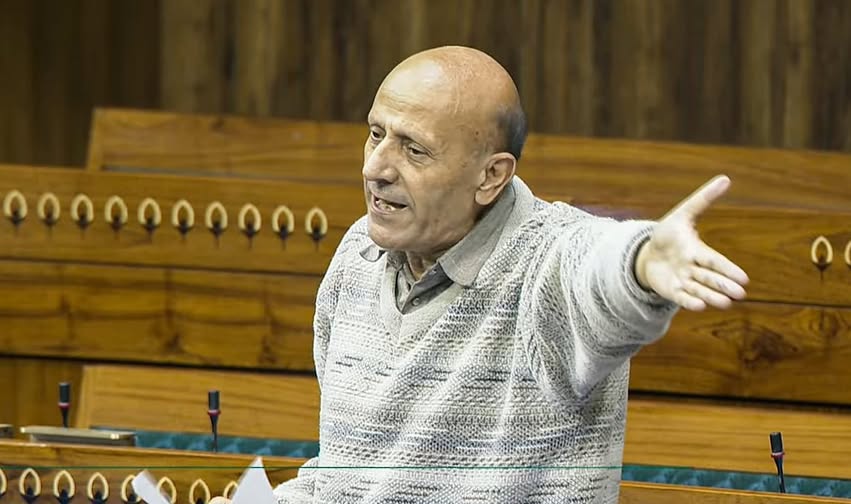
Jailed Member of Parliament, Engineer Abdul Rashid, has issued a strong appeal for a complete liquor ban across Jammu & Kashmir, urging the Union government to officially declare the region a “dry state.” Speaking during Lok Sabha proceedings, Rashid argued that public opposition to the proliferation of liquor shops should be acknowledged, not vilified.
His intervention brings renewed focus to a long-standing cultural and political debate in the Union Territory, especially in the Kashmir Valley where social groups, clerics, and civil society organisations have consistently resisted the expansion of alcohol outlets.
Key Highlights of Rashid’s Appeal
1. Blanket Liquor Ban
Rashid called for an outright ban on liquor across J&K, framing it as a moral and social necessity rather than a religious or political demand.
2. Call to Declare J&K a Dry State
He urged Parliament to declare the Union Territory a dry state, arguing that such a move should not be interpreted as anti-social or anti-national.
3. Respect Public Sentiment
Rashid emphasized that whenever clerics, activists, or ordinary citizens protest against liquor shops, they are unfairly branded as troublemakers. He argued that this sentiment is deeply rooted in public consciousness and deserves respect.
4. Revenue vs. Public Health
While acknowledging the government’s revenue needs, Rashid questioned the logic of relying heavily on alcohol taxation.
He argued that:
-
Increased taxes do not reduce consumption, and
-
The government cannot justify harmful trade merely because it generates income.
5. Social Safeguard Argument
Rashid framed his demand as a protective measure for society, pointing to concerns over rising addiction, domestic issues, and the impact on youth.
Context & Broader Implications
Cultural Sensitivity in Kashmir
Alcohol consumption and commercial sale remain highly sensitive issues in Kashmir.
Key reasons include:
-
Religious beliefs
-
Social norms
-
Civil society pushback
-
Community-level concerns about youth addiction
As a result, the opening of new liquor shops often triggers protests and petitions.
Policy vs. Public Sentiment
The government has defended its policy of expanding liquor availability, citing:
-
Revenue generation
-
Need for regulated sales
-
Curbing black-market alcohol
However, Rashid’s intervention amplifies growing grassroots resentment, especially in rural and religiously conservative communities.
Political Messaging from Jail
Rashid’s statement carries added weight because:
-
He remains in jail under UAPA in a high-profile case
-
Despite incarceration, he has positioned himself as a populist and vocal representative
-
His stance resonates with a sizeable section of J&K’s electorate
This helps reinforce his image as someone who champions public sentiment and community-driven issues.
Potential Policy Ripple
If the debate gains momentum:
-
Social groups may intensify demand for restricting alcohol sales
-
A larger conversation on youth addiction, drug abuse, and public health may emerge
-
The UT government may face renewed pressure to balance fiscal needs with cultural sensitivities
The issue could evolve into a significant governance challenge, especially as public discourse around social reforms grows louder.
Conclusion
Er Rashid’s call for a blanket liquor ban in Jammu & Kashmir has reignited a sensitive debate that sits at the intersection of public health, cultural identity, political messaging, and governance priorities.
By insisting that public opposition should be recognised—not criminalised—Rashid has brought the conversation back to the core question:
Should revenue interests outweigh society’s call for moral and social safeguards?
As the government prepares future liquor policies, the tension between economic logic and community sentiment will likely shape the trajectory of the debate in the days ahead.