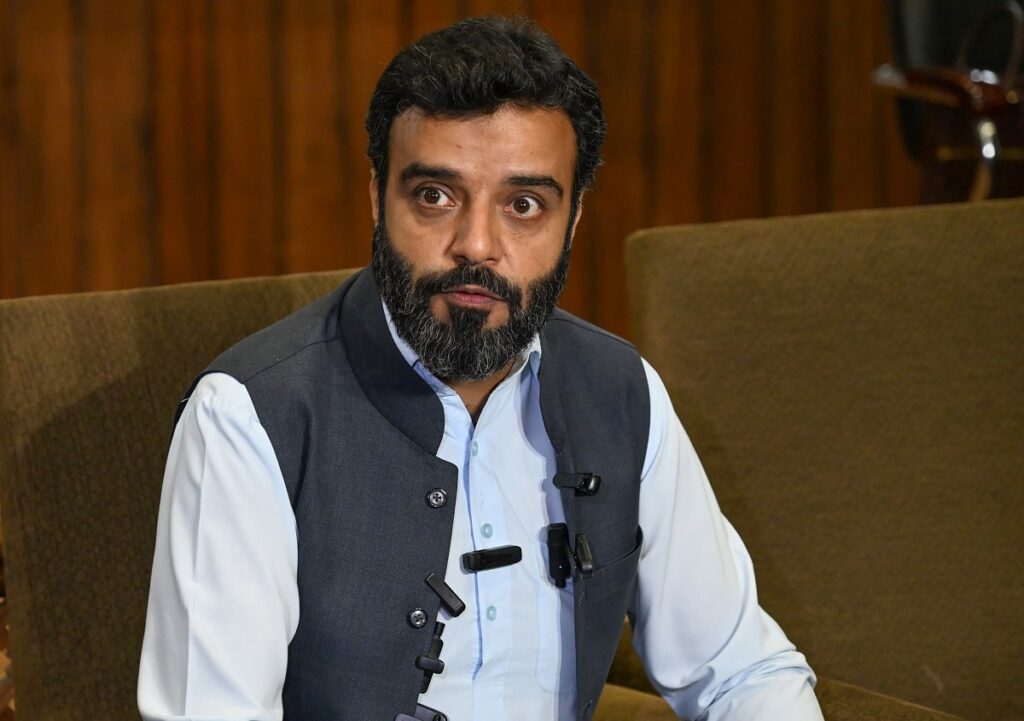
National Conference MP Aga Syed Ruhullah Mehdi has warned that he will join protesting students if the J&K government fails to engage with them over the ongoing reservation row by December 27, 2025.
By: Javid Amin | Srinagar | December 25, 2025
National Conference MP Aga Syed Ruhullah Mehdi has placed the Jammu & Kashmir (J&K) government on notice in the rapidly intensifying reservation row, urging them to engage with protesting students by December 27, 2025. Mehdi, a senior leader from the Valley, warned that if the government fails to initiate meaningful dialogue and explain the actions taken to resolve the impasse, he will personally join the student protests on December 28 at the same venue where he had previously stood with them. Moreover, he hinted at further escalation, including a sit-in demonstration outside the Chief Minister’s residence. His announcement, made on X (formerly Twitter), has sharply raised the political stakes in a dispute already roiling Kashmir’s youth and broader public sentiment.
Background: Why the Reservation Issue Matters
To fully understand the contours of the current protest landscape, it’s essential to trace the evolution of the reservation policy controversy in Jammu & Kashmir. The issue is not new—youth protests, political criticism, and debate over quota structures have simmered for more than a year, tied to changes in policy that shifted quota percentages in government jobs and educational seats. Critics argue that the expanded reservation model diminishes opportunities for open merit candidates, while supporters claim it corrects historical imbalances.
The Trigger: Expansion of Reserved Quotas
In the months following the revocation of Article 370 and reorganization of J&K, authorities revised reservation frameworks widely. Reports indicate that total quotas for various reserved categories reached up to 70 percent of seats and posts, leaving only 30 percent for open merit aspirants in many domains. This figure far exceeded the Supreme Court’s traditional ceiling of 50 percent reservation and triggered discontent among general-category students and job seekers.
Student Grievances: From Schools to Professional Series
Students from secondary to postgraduate levels joined demonstrations, arguing policy changes reduced access to fair, merit-based opportunities. Particularly contentious has been postgraduate medical admissions under NEET-PG regulations, where open merit seats reportedly shrank drastically after policy revisions—leading to protests by medical aspirants who see their careers jeopardized.
The Government Medical College (GMC) Srinagar students’ protest in late 2024 became emblematic of widening frustration, as students demanded transparency and equitable distribution of seats.
Political Stakes: A Broader Implication
What might appear to be a technocratic dispute over quotas has become a political flashpoint. Ongoing protests have been seized upon by various political actors, exposing deeper fractures within J&K’s polity and balancing acts between youth aspirations, party politics, and administrative priorities.
MP Aga Syed Ruhullah Mehdi’s Statement: Analysis and Full Context
On Thursday, December 25, 2025, Aga Syed Ruhullah Mehdi—Lok Sabha MP from Srinagar and senior leader of the National Conference (NC)—issued a direct challenge to the government. He reiterated his backing of the protesting students, stating:
“I have neither forgotten nor abandoned the students agitating over unresolved issues. I urge the government to immediately talk to the students and apprise them of the measures and decisions taken to resolve the matter.”
Ultimatum: December 27 Deadline
Mehdi called on the government to break its silence and open a substantive dialogue with student leaders by Saturday, December 27, 2025. He stressed that students deserve transparency—not vague assurances or bureaucratic delays.
Warning and Escalation
Should the government fail to act, he promised to join students in protest on December 28 at the same venue where he joined them previously (December 23, 2024). Notably, this location is significant—it is outside the Chief Minister’s residence at Gupkar, where previous demonstrations drew widespread attention.
Mehdi’s firm message was clear: his engagement is conditional on the government’s responsiveness, not partisan allegiance.
Follow-Up Threat: Sit-In Outside Chief Minister’s Residence
In addition to joining the protest with students, Mehdi also warned of escalating to a sit-in protest outside the CM’s residence if the deadlock persists. Such actions escalate the dispute into a direct confrontation with the ruling establishment.
Political Significance: Why Ruhullah’s Intervention Matters
Ruhullah’s announcement matters for several political reasons:
1. It Is a Break from Party Line
Though an NC leader, Mehdi’s stance diverges from his own party leadership, especially Chief Minister Omar Abdullah, illustrating internal political dynamics that go beyond the student movement. His willingness to confront his own government underscores the intensity of the issue and suggests a broader political calculation.
2. Elevating Student Grievances into Mainstream Political Discourse
By publicly aligning with students, he elevates the protests from campus gates to political headlines, ensuring senior policymakers must address the crisis. Historically, student protests in J&K have often been localised but rarely achieve mainstream political traction until backed by prominent figures.
3. Pressure on NC Government to Act
The ruling NC government, often perceived as cautious in politically charged decisions, now faces pressure not only from protesters but from within its own ranks. Failing to respond risks further alienating youth and eroding public confidence ahead of future elections.
Voices on the Ground: Students, Families and Aspirants
To understand the protest’s impact beyond official statements, we delve into ground reactions from students and aspirants directly affected by reservation policy changes.
Student Sentiments: Frustration and Urgency
Students describe feelings of anger, disappointment, and lost opportunity, not just political dissatisfaction. Many assert the current reservation framework limits their ability to compete based on merit and jeopardises professional futures. Such perspectives have been repeatedly voiced during protests, including those at GMC Srinagar.
Medical aspirants and other students argue that the reduction in open merit seats—and the lack of clear communication about policy intent—has left them in limbo, unsure of how to plan their academic paths effectively.
Parental Concerns
For families of students, this is not an abstract debate but a matter of livelihood and aspiration. Parents express concern that prolonged uncertainty will delay or derail academic and professional plans, affecting entire households economically and emotionally.
Student Leaders: Calls for Rationalisation
Student organisations and youth leaders have consistently called for rationalisation of the reservation policy, demanding fairness, transparency, and adherence to principles that balance affirmative action with merit-based opportunity.
Government Position: Response So Far
To date, the J&K administration has faced criticism for its handling of the reservation issue. Despite forming a Cabinet Sub-Committee to review the policy, delays in implementation and lack of clear public communication have fuelled public frustration.
Cabinet Sub-Committee Report
The government-appointed committee has reportedly submitted recommendations to streamline reservation criteria. However, the details remain unpublished, and students continue to press for clarity and timelines.
Lack of Government Dialogue
Unlike earlier protests that saw some official engagement, students now complain of silence and inaction from authorities. This gap has become the focal point of Mehdi’s ultimatum, signaling that political leaders view the impasse as not just administrative but strategic.
Broader Public Sentiment and Political Debate
The reservation row has stirred widespread debate across J&K, with voices for and against the current framework emerging from political, social, and community circles.
Support for Open Merit
Many in the Valley, especially from open merit backgrounds, feel marginalised by the expanded quota systems. They argue that greater reservation without adequate safeguards for merit dilutes opportunities for competitive aspirants and worsens unemployment among educated youth.
Community and Identity Pressures
Simultaneously, demands from other communities—such as calls for a one-time quota for Sikhs—highlight the complexity of designing equitable policy in a region with diverse social demographics. The Week
Fringe Protests and Societal Response
In other parts of J&K, unrelated but parallel protests—such as those in Jammu over medical college admissions—underscore the multi-layered nature of reservation debates, sometimes intersecting with identity politics.
Historical Context: Reservation Policy Evolution in J&K
Reservation discourse in J&K cannot be understood without historical context. Before 2019, reservation policies were largely governed by the erstwhile state’s own rules. After reorganisation, authorities introduced policy revisions that reshaped quotas, affecting open merit opportunities and reserved categories proportionately.
The resulting tensions reflect deeper questions about fairness, justice, and opportunity in a Union Territory grappling with political change and socio-economic challenges.
What Happens Next? Scenarios and Implications
With the December 27 deadline approaching, multiple scenarios are possible:
1. Government Opens Dialogue
If authorities engage students with clear action plans and timelines, the protests may be dialled down, and political pressure may ease.
2. MP Joins Protest
Consistent with Mehdi’s warning, his presence alongside students could amplify the movement’s visibility and increase negotiation leverage.
3. Sit-Ins and Escalation
A sit-in outside the Chief Minister’s residence would mark a significant escalation, signalling a deepening rift between youth and government.
4. Political Fallout
Prolonged impasse might impact voter sentiment and party alignments, especially if the youth perceive political leadership as unresponsive.
Bottom-Line
The Jammu & Kashmir reservation row has evolved from an administrative policy debate into a major political flashpoint, engaging youth, legislators, and civil society. MP Aga Syed Ruhullah Mehdi’s ultimatum to the government underscores the urgency of resolving long-standing grievances over reservation policy, while also highlighting the growing influence of youth-led movements in shaping political discourse.
As the December 27 deadline nears, government actions—or inactions—will likely define the future trajectory of protests, youth sentiment, and perhaps the region’s political landscape.