Blaze in Fiesta: 25 Dead, Nightclub Fire Shakes Goa’s Party Image
By: Javid Amin | 06 December 2025
The Night That Turned Deadly
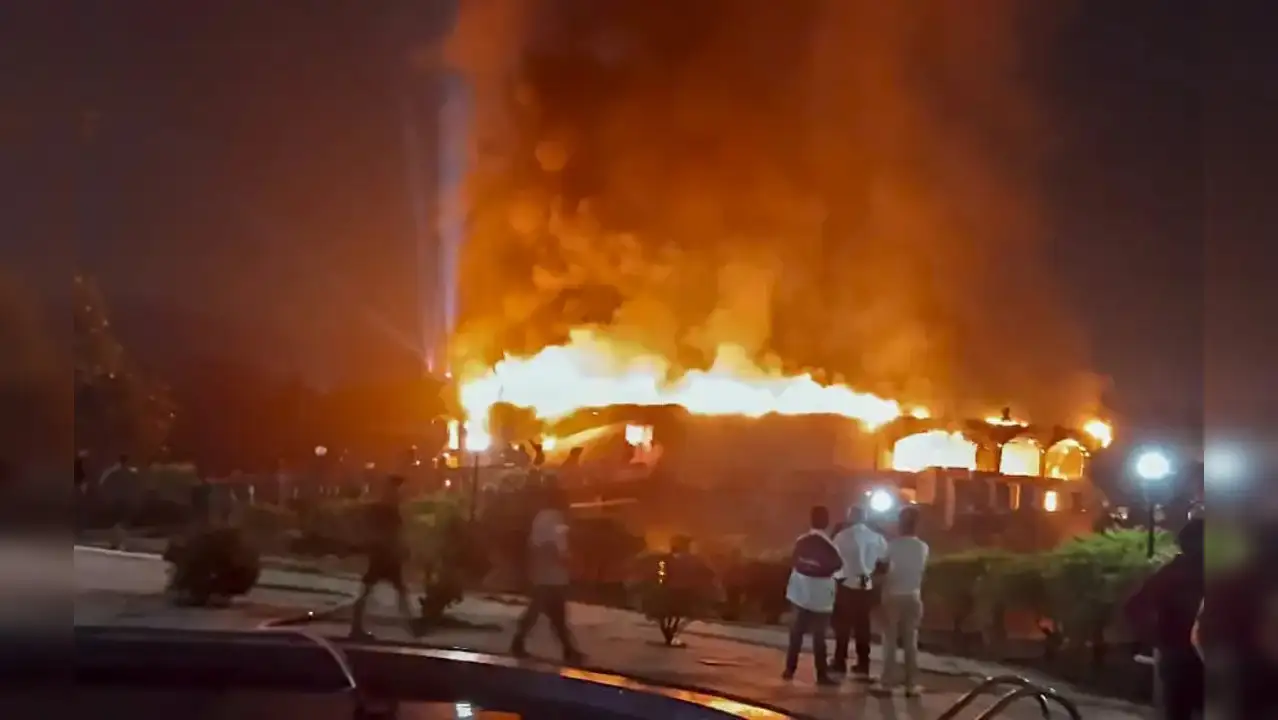
Shortly after midnight between 6 and 7 December 2025, a devastating fire broke out at Birch by Romeo Lane — a well-known nightclub in Arpora, North Goa — ripping through the club’s premises within minutes.
According to police and fire-department officials, a suspected explosion of a liquefied petroleum gas (LPG) cylinder near the kitchen area triggered the blaze. Flames and smoke soared rapidly, engulfing the structure and leaving those inside with little chance to escape.
The death toll has now reached 25, including four tourists and 14 staff members; the identities of several others are still being verified.
According to the official statement: “Three people died of burn injuries; the remaining victims died of suffocation as thick smoke filled the enclosed basement spaces.”
Several dozen others — reports suggest around 50 — were injured and rushed to medical facilities, currently undergoing treatment.
Horror Inside: Panic, Trap & Suffocation
Eyewitnesses and survivors say that when the explosion occurred, the club was crowded — the dance floor reportedly had many patrons. Some fled downstairs seeking refuge, only to find themselves trapped in the club’s basement and kitchen area.
The basement — described by officials as narrow and poorly ventilated — filled quickly with thick smoke. Victims, mostly staff working late-night shifts, had no time to escape. Several were found on staircases or inside the basement kitchen.
Local authorities, fire-fighters and police teams responded after an emergency call around 12:04 AM IST. But the fire had already engulfed major parts of the building. Rescue operations continued well into the early morning hours.
According to the state police, narrow access routes and combustible construction materials (wooden or thatched coverings) worsened the disaster, making evacuation and rescue extremely difficult.
Safety Violations & Illegal Setup: A Disaster Waiting to Happen
Preliminary investigations suggest the club was operating in blatant violation of fire safety and building regulations. The venue reportedly lacked basic fire exits, had no proper ventilation or emergency escape routes, and allegedly operated without mandatory permissions.
Some local records reveal that the club had earlier been issued a demolition notice by the village panchayat and environmental authorities due to its location on a former saltpan and lack of legal permits. That demolition order was later stayed on appeal — a move that allowed operations to continue.
The construction included flammable materials — palm-leaf roofing or similar combustibles — and the interior layout featured cramped staircases and narrow access, which became death traps once fire and smoke spread. Multiple sources have described the building as “highly combustible” and “unsafe for large crowds.”
Authorities now question not only the club management, but also the officials who granted licenses despite clear violations.
Official Response: Investigation, Compensation & Accountability
The state government — led by Pramod Sawant, Chief Minister of Goa — has called the incident a “very painful day.” He visited the site, extended condolences to the bereaved, and ordered a magisterial inquiry. He emphasized that anyone found guilty — club owners, managers, regulatory authorities — would face stringent legal action.
The state police swiftly registered an FIR and arrested the club manager. The hunt is on for the club owners.
At the national level, Narendra Modi — Prime Minister of India — expressed grief and announced compensation of ₹2 lakh from the Prime Minister’s National Relief Fund (PMNRF) for each family of the deceased; injured persons are to receive ₹50,000.
Local lawmakers, including Michael Lobo, a BJP MLA in Goa, have called for comprehensive safety audits of all clubs and nightlife venues in the state to restore confidence among tourists and locals alike.
Larger Fallout: How This Affects Goa’s Nightlife, Tourism & Worker Safety
Erosion of Goa’s Nightlife Branding
For decades, Goa has been marketed — both within India and abroad — as the go-to destination for beaches, parties, freedom and nightlife. The collapse of trust from a tragedy of this magnitude can hit tourism hard. The fact that tourists died in the fire sends a chilling signal to those considering Goa for holidays or year-end parties. Media outlets already call it a “blow to Goa’s reputation.”
Spotlight on Worker Vulnerability
Most of the victims were kitchen staff and club workers — often migrant or local youth working late-night shifts with minimal safeguards. This tragedy underscores how service staff, often invisible behind the glamour, bear the brunt when safety standards are compromised. Reports say many of them died in the basement, suffocating before escape.
Infrastructure and Governance Gaps Exposed
The fire revealed systemic failures: lack of enforcement of building codes, weak inspections, corruption or negligence in granting licenses, and poor capacity of civic agencies to oversee nightlife establishments. Illegal or semi-legal venues may be operating across the state — and this incident could prompt authorities to crack down.
Demand for Policy Reform & Stricter Enforcement
Perhaps the biggest implication: this disaster may force the government to rethink regulations governing hospitality venues, nightlife spots, and tourist establishments. Calls are rising for stringent safety audits, mandatory fire-protocol compliance, regular inspections, and strict enforcement of licenses.
Human Cost — Not Just Numbers
Behind the statistic “25 dead” are real lives — workers, young people with dreams, families now destroyed, tourists whose holidays turned into tragedies. The emotional and social cost cannot be quantified.
What Went Wrong: Anatomy of a Preventable Disaster
From the collated reports and official statements, the following chain of failures emerges:
-
Use of LPG cylinders in a crowded, enclosed nightlife venue — a known hazard.
-
Highly combustible construction — palm-leaf roofs or wooden interiors — in disregard of building norms.
-
Absence of proper fire safety mechanisms — no fire exits, inadequate ventilation, narrow staircases and corridors.
-
Overcrowding / heavy footfall — possibly over maximum permitted capacity — pushing many towards basement during panic.
-
Failure of regulatory oversight — illegal operations allowed, earlier demolition notice stayed, license granted despite violations.
-
Poor emergency planning — no visible fire-escape plan, lack of trained staff, delayed rescue.
Such a cocktail of negligence turned what might have been a manageable fire into a full-scale tragedy.
What Needs to Happen: A Roadmap for Reforms
To prevent such disasters in future, the following steps are crucial:
-
Comprehensive safety audit of all nightlife venues, restaurants and clubs across Goa — especially those in beach belts, coastal or rural zones.
-
Strict enforcement of building codes, fire norms, occupancy limits — with zero tolerance for violations.
-
Mandatory installation of fire-safety infrastructure — fire extinguishers, emergency exits, smoke detectors, fire-resistant materials, clearly marked escape routes.
-
Regular inspection and surprise checks by fire & licensing authorities; renewal of licenses based on compliance record.
-
Training for staff and management of clubs on fire safety, evacuation protocols, first aid, emergency response.
-
Clear guidelines on use of gas cylinders / open-flame kitchens — preferably ban LPG-based cooking/prep in crowded nightlife setups.
-
Transparency & accountability — public register of licensed nightclubs, their safety compliance status, inspection reports visible to public.
-
Victim support & compensation, along with policy-level commitments to protect worker safety and tourists’ lives.
Remembering the Lost — A Wake-Up Call for Change
25 lives lost in a single night. Families left grieving. Dreams shattered. For many, a holiday became their final memory.
But this should not be just another tragic headline. It must be a wake-up call — a moment when authorities, business owners, regulators and society pause, reflect, and act.
If we value lives over nightlife glamour; if we prioritize safety over profit; if we hold institutions and individuals accountable — then perhaps this tragedy won’t be in vain.
Goa can — and must — reinvent itself as a destination not just of sun, sand and party, but also of safety, respect, responsibility.