IndiGo Operational Crisis Hits J&K Hard: Why Flights Are Grounded and Why Railways Stepped In
By: Javid Amin | 05 December 2025
A deep-dive into India’s biggest aviation breakdown of 2025—and why Jammu & Kashmir suffered the most.
WHEN INDIA’S BUSIEST AIRLINE CAME TO A HALT
For years, air travel in India has grown on the promise of speed, convenience, and predictability. But in early December 2025, that illusion shattered. India’s largest airline—operating more than 2,300 daily flights—was thrown into disarray.
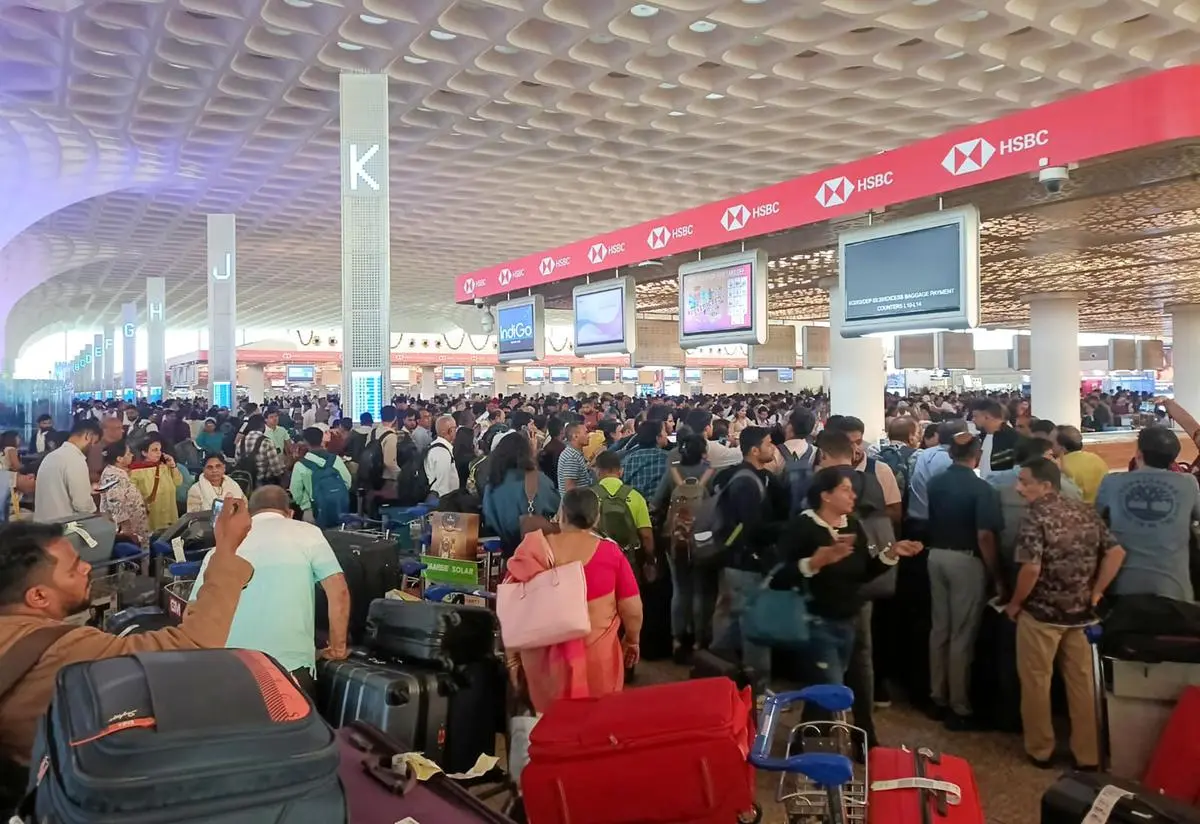
Within a span of days, hundreds of IndiGo flights were cancelled, airports descended into chaos, and passengers across the country faced unprecedented turmoil.
But while major metros struggled, Jammu & Kashmir (J&K) felt the shock more deeply than most regions.
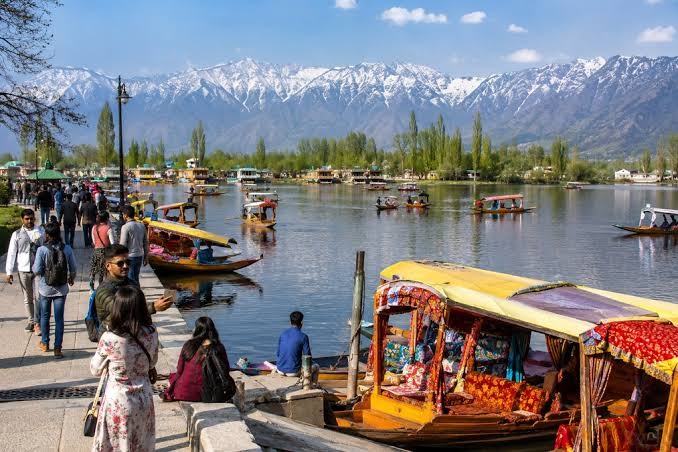
With winter setting in, snowfall looming, and ground connectivity limited, Kashmir’s dependence on air travel is not optional—it is lifeline connectivity. And when IndiGo grounded flights across India, that lifeline frayed.
The situation grew so severe that the Indian Railways had to step in, adding extra coaches to the Jammu–New Delhi Rajdhani Express to absorb stranded fliers.
This is the story behind the meltdown—why it happened, how J&K became a victim of the crisis, what the data reveals, and what India must learn before the next aviation shock.
WHY ARE INDIGO FLIGHTS GROUNDED?
THE REAL STORY BEHIND THE CHAOS
01. The Primary Trigger: New FDTL Rules That Reshaped Crew Duty Hours
The root cause of the crisis lies in the Flight Duty Time Limitation (FDTL) rules—India’s regulatory framework that governs how long pilots and cabin crew can fly and how much rest they need.
A revised version of these rules came into effect, prioritizing pilot fatigue management and operational safety.
Under the new structure:
-
Pilot duty hours decreased
-
Mandatory rest hours increased
-
Night-duty restrictions tightened
-
Reserve crew requirements expanded
While the intention was noble—to prevent crew exhaustion—the implementation proved catastrophic.
IndiGo’s roster planning simply couldn’t handle the new constraints.
The airline’s massive network, with tight turnarounds and packed schedules, suddenly became impossible to staff.
02. Severe Crew Shortages Amplify the Impact
IndiGo, despite being India’s most expansive airline, has struggled with pilot pipeline issues for years.
The new rules intensified the pressure by:
-
Reducing the number of available flying hours per crew
-
Creating sudden gaps in schedules
-
Triggering mass “duty-time-outs”
-
Forcing the grounding of fully loaded aircraft due to lack of crew
A pilot in Delhi described the situation as “operational whiplash”—where one delayed flight snowballs into dozens of cancellations because of statutory limits.
By December 5:
-
1,000+ flights were cancelled in a single day
-
Including all departures from major hubs like Delhi and Chennai
The scale stunned even industry veterans.
03. Operational Mismanagement: A Crisis That Didn’t Need to Be This Huge
Aviation experts argue the meltdown was avoidable.
Why?
Because:
-
The FDTL changes were announced months in advance
-
Airlines had enough time to recalibrate rosters
-
Contingency planning should have included reserve crew buffers
-
Schedule revisions should have been implemented gradually
But IndiGo continued to operate with high aircraft utilization (among the highest globally), limited crew buffers, and aggressive flight scheduling.
Thus, when the rule change hit—
the system collapsed from within.
04. On-Time Performance Collapses to 8.5%
On-time performance—a metric IndiGo once dominated—sank to 8.5%, the lowest in India at the time.
An airline that prided itself on punctuality faced a credibility crisis.
Delays turned into cancellations.
Cancellations turned into ground stops.
Ground stops turned into airport chaos.
05. Regulatory Intervention: DGCA Offers Temporary Relief
Seeing the scale of the disruption, the Directorate General of Civil Aviation intervened urgently.
The government gave IndiGo a temporary exemption from the new FDTL rules until February 10, 2026, allowing the airline:
-
To extend certain duty limits
-
To deploy crew more flexibly
-
To reboot scheduling gradually
But experts say this is only a stopgap—not a solution to structural shortages.
HOW THE CRISIS HIT JAMMU & KASHMIR HARDER THAN ANY OTHER REGION
01. Winter Travel in J&K: High Demand, Low Alternatives
Jammu & Kashmir’s connectivity challenges are unique:
-
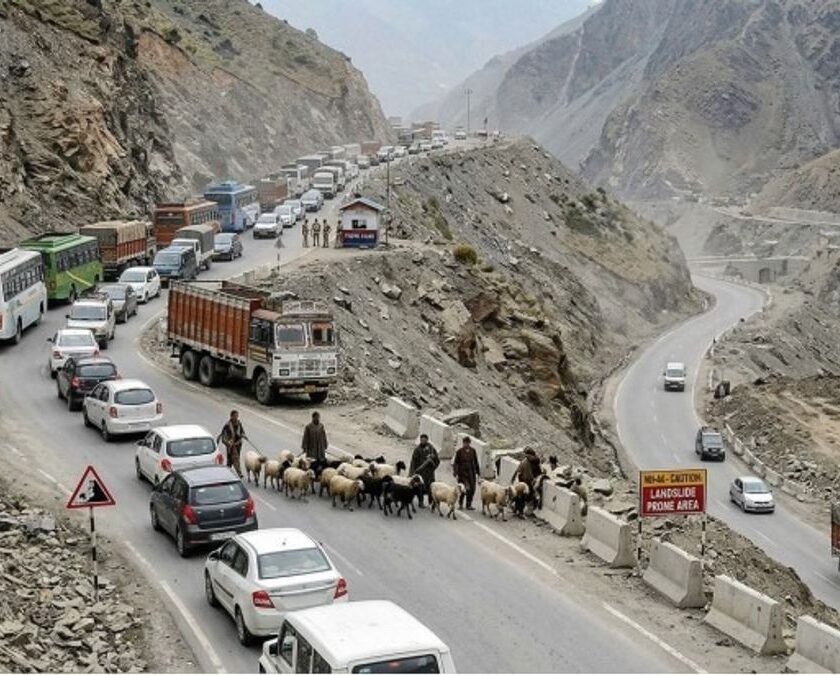
The Banihal–Ramban highway is frequently blocked
-
Snowfall disrupts road movement
-
Travel in winter depends heavily on air links
Thus, the grounding of flights from Srinagar International Airport and Jammu Airport was not just an inconvenience—it was an operational disaster.
Passengers attempting to fly home before snowfall found themselves stranded in Delhi, Mumbai, Bengaluru, and even Chandigarh.
The worst-hit groups included:
-
Students
-
Patients traveling for medical treatment
-
Winter tourists
-
Local residents returning from work trips
-
Government employees
02. Dozens of Srinagar and Jammu Flights Cancelled
Across multiple days:
-
Many Srinagar-bound services were cancelled
-
Jammu flights were delayed by hours
-
Some aircraft diverted or grounded without notice
For a region with limited daily flights, even 5–10 cancellations per day disrupt thousands of people.
03. Fare Surge: Ticket Prices Shoot Up 4x–6x
When IndiGo cancelled flights:
-
Alternate airlines like Vistara, Air India, Akasa, and SpiceJet saw sudden demand
-
Dynamic pricing kicked in
-
Economy fares surged to levels comparable with business class
Examples observed during the crisis:
-
Srinagar–Delhi: From ₹3,000 to ₹18,000
-
Jammu–Delhi: From ₹2,500 to ₹15,000
-
Delhi–Srinagar one-way: ₹22,000 on some carriers
Many families simply couldn’t afford alternate options.
04. Long Queues, Protests, and Desperate Passengers
At both Srinagar and Jammu airports:
-
Long queues formed from early morning
-
Ground staff struggled to manage crowds
-
Several protests broke out near check-in counters
-
Medical passengers pleaded for prioritization
-
Students on tight schedules missed exams and interviews
Videos from terminals showed distressed passengers, including elderly travellers stuck without seating.
Railway stations in Jammu and Delhi also saw stranded Kashmiri passengers waiting for trains with no confirmed seats.
RAILWAYS STEPS IN: EXTRA COACHES FOR JAMMU–NEW DELHI RAJDHANI
01. Railways Reacts to Absorb Passenger Overflow
The aviation chaos spilled into India’s rail network.
To manage the unexpected surge, the Northern Railway added extra coaches to the Jammu–New Delhi Rajdhani Express, one of the most premium and in-demand trains connecting J&K with the national capital.
These additional coaches aimed to:
-
Accommodate stranded airline passengers
-
Prevent overcrowding
-
Offer alternative travel to those who couldn’t afford expensive flights
-
Reduce waiting-list pressure
This move highlighted an unusual but telling truth:
India’s aviation failure forced Railways to become the emergency backup.
02. Why Railways Became the Lifeline for Kashmiris
Unlike other states, J&K does not have seamless overnight road or train alternatives.
Thus, when flights stopped:
-
Patients on medical referrals turned to Rajdhani
-
Tourists looked for train seats
-
Students rushed to stations for Tatkal quotas
-
Workers stranded in metros sought any available seat
In essence, the Rajdhani became Kashmir’s temporary air-bridge.
03. Railway Stations Witness Their Own Mini-Crisis
Stations like:
-
Jammu Tawi Railway Station
-
New Delhi Railway Station
reported unusual crowd surges.
Queues extended outside the station gates as stranded passengers tried to book last-minute berths.
Tatkal tickets disappeared within minutes.
NATIONAL IMPACT AND SYSTEMIC RISKS EXPOSED
01. India’s Aviation Market Is Too Dependent on a Single Airline
IndiGo handles:
-
Almost 60% of India’s domestic market share
-
~2,300 flights every day
This means when IndiGo collapses, India collapses.
The crisis exposed how fragile the system is when one carrier dominates national connectivity.
02. Public Trust in Air Travel Takes a Hit
Passengers questioned:
-
Why scheduling is so fragile
-
Why rule changes weren’t anticipated
-
Why contingency plans weren’t in place
-
Whether aviation planning is truly robust
For many, this crisis felt like a breach of trust.
03. Policy Lessons for India’s Aviation Authorities
Experts say India must learn:
-
Always model transitions for major rule changes
-
Mandate crew buffer ratios for large airlines
-
Monitor airline health weeks before transitions
-
Create national contingency plans for peak seasons
-
Ensure airlines maintain reserve pilots on standby
Without these safeguards, similar breakdowns are likely.
PASSENGER EXPERIENCES FROM J&K:
HUMAN STORIES BEHIND THE HEADLINES
01. Students Stranded Before Exams
Students returning from Delhi, Pune, Chandigarh, or Bengaluru missed:
-
Entrance exams
-
Job interviews
-
Visa dates
-
Campus reporting deadlines
Some spent nights at airports only to be told their flights were cancelled at the last minute.
02. Medical Patients Caught in Transit
Winter is the peak medical travel season for J&K.
Passengers receiving treatment in Delhi or Chandigarh were left with limited options.
Ambulances waited outside airport terminals for patients who never arrived.
03. Tourists and Seasonal Workers in Limbo
Many Kashmir-bound tourists:
-
Lost hotel bookings
-
Missed pre-paid tours
-
Extended stays at expensive metros
Seasonal workers commuting between Srinagar and other states bore additional losses.
WHAT HAPPENS NEXT?
THE ROAD TO NORMALCY
01. Recovery Timeline: Slow but Steady
Insiders estimate:
-
Partial normalization: 3–7 days
-
Full network recalibration: 1–3 weeks
-
FDTL compliance return: post-February 2026
Schedules will continue to see rolling adjustments.
02. Advice for J&K Travellers
Passengers flying to or from Srinagar/Jammu should:
-
Check flight status every few hours
-
Avoid early morning and late-night departures
-
Book refundable fares
-
Arrive at airports at least 3 hours early
-
Keep train options as Plan B
03. Will This Crisis Change India’s Aviation Ecosystem?
Absolutely.
The 2025 IndiGo meltdown will be remembered as a turning point—
the moment when India realized that aviation growth without manpower depth is unsustainable.
The crisis exposed:
-
Overdependence on one airline
-
Fragile rostering systems
-
Weak contingency planning
-
Insufficient public communication strategies
If India wants reliable skies, it needs smarter infrastructure, stronger staffing, and safer transitions.
CONCLUSION: A SYSTEMIC SHOCK THAT HIT J&K THE HARDEST
The grounding of IndiGo flights was not merely a technical or scheduling crisis—it was a full-scale systemic shock to India’s travel ecosystem.
And Jammu & Kashmir, with its unique geographical and seasonal vulnerabilities, became one of the worst-hit regions.
From airport chaos to railway rescue, from soaring fares to stranded families—the crisis has reshaped discussions around aviation safety, planning, manpower, and national connectivity.
For now, travellers hope schedules stabilize quickly.
But the bigger question remains:
Will India be better prepared the next time its aviation backbone is tested?