US–Iran War Escalates: 2 US Jets Downed, Dubai Incident Raises Civilian Risk, Diplomacy Stalls
By: Javid Amin | 03 April 2026
A War Spilling Into Civilian and Economic Nerve Centers
The US–Iran war has entered a critical and dangerous escalation phase. In the last 24 hours, two American fighter jets have been shot down, Iranian projectiles have reached as far as Dubai, and diplomatic efforts have stalled at a crucial moment.
What was once a contained military confrontation is now visibly spilling into civilian zones, economic hubs, and global trade arteries—raising the stakes for the entire international system.
1. Air Combat Escalation: US Jets Downed in Active Warzone
Confirmed Developments
Recent battlefield updates indicate:
- Two US fighter jets shot down over Iranian territory
- One crew member successfully rescued
- One crew member still missing
- Ongoing US rescue operations following the incident
While full operational details remain classified, this marks one of the most serious air combat setbacks for the US in decades.
Strategic Implications
Erosion of Air Superiority
These incidents suggest that:
- Iranian air defenses are increasingly effective
- US operations face higher risks in contested airspace
- Mission planning and strike patterns may need recalibration
Psychological and Symbolic Impact
Even limited losses carry outsized effects:
- Iran gains a propaganda advantage
- US domestic and international perception is tested
- Military morale and deterrence dynamics shift
2. Dubai Incident: War Reaches a Global Business Hub
What Happened
Shrapnel from intercepted Iranian projectiles fell near a major corporate facility in Dubai Internet City, close to the office of Oracle.
Authorities confirmed:
- Incoming projectiles were intercepted
- Debris fell in a high-density commercial zone
- No major casualties reported
Why This Is Significant
1. Civilian Exposure Expands
Dubai—long seen as a safe global business hub—is now:
- Within reach of regional conflict spillover
- Facing indirect exposure to military exchanges
- Experiencing rising security concerns
2. Economic Confidence at Risk
Such incidents can:
- Shake investor confidence
- Disrupt business operations
- Trigger insurance and security cost increases
3. Psychological Shock
Even without direct damage, the symbolism is powerful:
- War is no longer distant
- Civilian zones are no longer insulated
- Fear and uncertainty ripple through urban populations
3. Political Messaging: “We’re in a War”
Trump’s Position
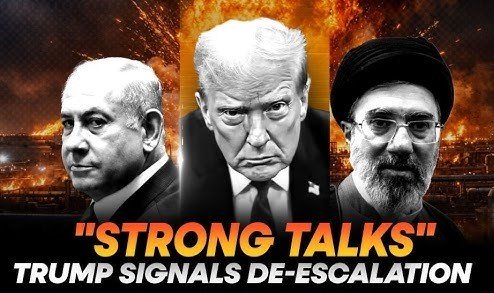
Donald Trump acknowledged the gravity of the situation, stating:
- “We’re in a war”
- Downing of US jets “won’t hit negotiations”
Interpretation
Dual Strategy
The statement reflects a two-track approach:
- Military escalation continues
- Diplomatic channels remain nominally open
Signal to Allies and Adversaries
- To allies: the US remains committed
- To Iran: escalation will not force concessions
- To markets: uncertainty persists
4. Regional Military Activity: Multi-Front Engagement
Simultaneous Strikes
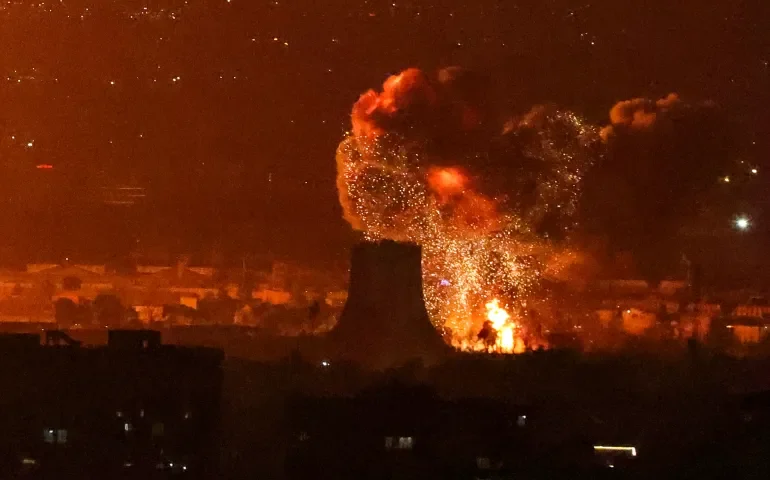
- Iran targeting multiple locations across the Middle East
- US and Israeli forces continuing strikes on Tehran
- Increased tempo of missile and drone exchanges
Operational Pattern
The war is now defined by:
- High-frequency, multi-theater engagements
- Rapid retaliation cycles
- Expanding geographic footprint
5. Diplomatic Breakdown: Strait of Hormuz in Focus
Bahrain’s Strategic Pause
Bahrain has postponed a planned UN vote aimed at addressing Iran’s control over the Strait of Hormuz.
Implications
1. Diplomatic Paralysis
- Gulf states are recalibrating positions
- UN processes losing momentum
- Mediation efforts weakening
2. Hormuz as a Flashpoint
The Strait remains:
- Critical for global oil supply
- Highly vulnerable to disruption
- Central to economic risk calculations
6. Risk–Impact Matrix: Updated Ground Assessment
| Dimension | Key Events | Risks | Impacts |
|---|---|---|---|
| Military | 2 US jets downed; ongoing strikes | Airspace vulnerability; escalation | Higher casualties; intensified combat |
| Civilian | Dubai shrapnel incident | Urban exposure; panic risk | Reduced safety perception |
| Economic | Hormuz tensions; shipping threats | Oil supply disruption | Global inflation, market volatility |
| Diplomatic | UN vote postponed; war rhetoric | Negotiation breakdown | Prolonged conflict |
7. Ground Reality: Converging Crisis Layers
Military Layer
- Increasingly contested airspace
- Rising operational losses
- Expanded engagement zones
Civilian Layer
- Gulf cities now indirectly exposed
- Anxiety among expatriates and residents
- Risk of accidental escalation in urban areas
Economic Layer
- Oil prices under upward pressure
- Trade routes at risk
- Insurance and logistics costs rising
Diplomatic Layer
- Negotiations stalled
- Strategic ambiguity persists
- Regional actors acting cautiously
8. Forward Outlook: A Conflict With No Immediate Off-Ramp
Short-Term (Next Few Days)
- Intensified strikes and counter-strikes
- Continued information warfare
- Heightened alert in Gulf cities
Medium-Term (April–May 2026)
- Oil market volatility deepens
- Civilian exposure increases
- Proxy forces expand engagement
Long-Term Risk
Without meaningful diplomatic intervention:
- Entrenched multi-front regional war
- Structural disruption to global energy markets
- Long-term geopolitical realignment
Conclusion: A Defining Moment in the Conflict
The downing of US jets, the Dubai incident, and stalled diplomacy together mark a decisive escalation in the US–Iran war.
This is no longer just a military confrontation—it is a multi-dimensional crisis affecting:
- Air superiority and military balance
- Civilian safety in global cities
- Energy markets and global الاقتصاد
- Diplomatic frameworks and international order
The convergence of these risks signals one clear reality:
The conflict is not slowing—it is expanding, deepening, and becoming harder to contain.