Inside the 48-Hour Brink: How the US–Iran Crisis Reached a Civilizational Flashpoint
By: Javid Amin | 07 April 2026
In geopolitics, crises often escalate step by step—sanctions, threats, limited strikes. But what is unfolding between the United States and Iran in April 2026 is different. It is accelerating at a pace where military escalation, economic disruption, and existential rhetoric are converging simultaneously.
At the center of this crisis is a stark warning issued by Donald Trump: reopen the Strait of Hormuz within hours—or face devastating consequences.
That warning has now escalated into rhetoric about the destruction of a “civilization,” while bombs fall on energy infrastructure, missiles cross borders, and oil markets react in real time.
This is no longer a contained conflict. It is a systemic global crisis unfolding across military, economic, and diplomatic domains.
Ground Report (April 7, 2026): Who Hit What
1. US Strikes on Kharg Island: Strategic Pressure Without Oil Collapse
One of the most significant confirmed developments is the U.S. strike on Iran’s Kharg Island—a critical node handling the majority of Iran’s oil exports.
- Around 50 military targets were hit
- Focus: air defenses, storage, logistics
- Notably, oil infrastructure was deliberately avoided
This reflects a calibrated U.S. strategy: apply pressure without triggering immediate global energy collapse.
2. South Pars Gas Field: Energy Warfare Intensifies
Parallel to U.S. operations, Israeli strikes have targeted Iran’s most critical energy asset: the South Pars gas field.
- Facilities tied to gas production and electricity were hit
- The site accounts for a major share of Iran’s energy supply
- Some reports indicate senior IRGC-linked figures were killed
This marks a strategic escalation into energy infrastructure warfare—a shift from tactical military strikes to economic disruption.
3. Tehran Under Fire: Urban Impact Expands
Strikes in Tehran continue:
- Explosions reported near Sharif University of Technology
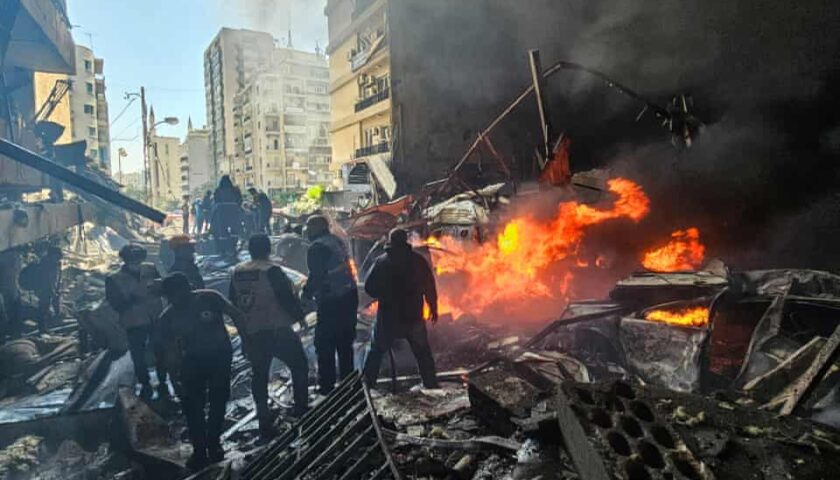
- Civilian and military casualties reported
- Transport infrastructure—bridges, railways—targeted
Urban targeting increases humanitarian risk and signals pressure on Iran’s internal systems.
4. Iran’s Retaliation: Regional Expansion Begins
Iran’s response is no longer limited to Israel:
- Missile and drone strikes on Israel
- Attack on Saudi Arabia’s Jubail petrochemical complex
- Threats toward broader Gulf infrastructure
This is a turning point: the conflict is expanding into a regional energy war.
Rhetoric Escalation: From Deterrence to Existential Threat
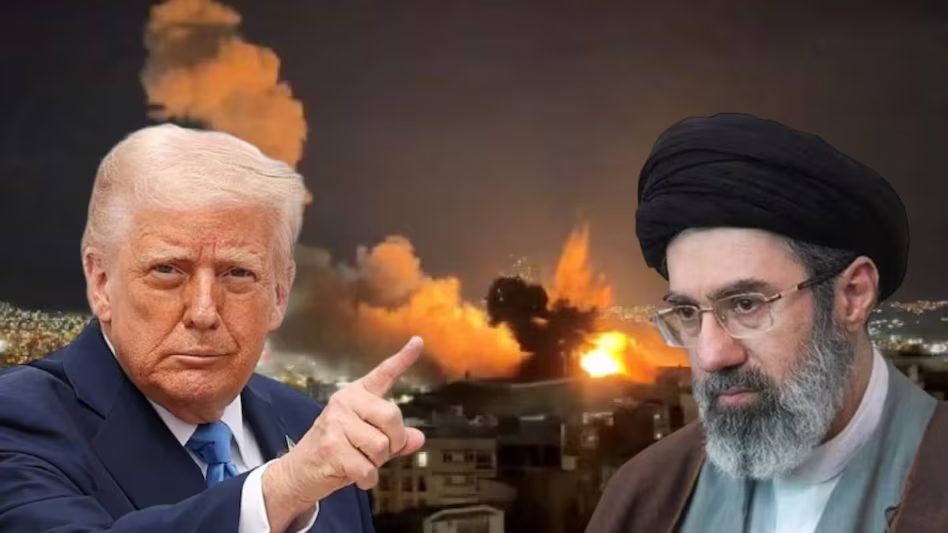
Trump’s statement that “a whole civilization will die tonight” marks a profound shift.
Historically, even severe conflicts maintain limited objectives:
- Destroy capabilities
- Force negotiation
- Contain escalation
But this rhetoric reframes the conflict as:
- Existential
- Total
- Non-negotiable
Even if symbolic, such language:
- Increases risk of miscalculation
- Reduces diplomatic space
- Triggers stronger retaliation narratives
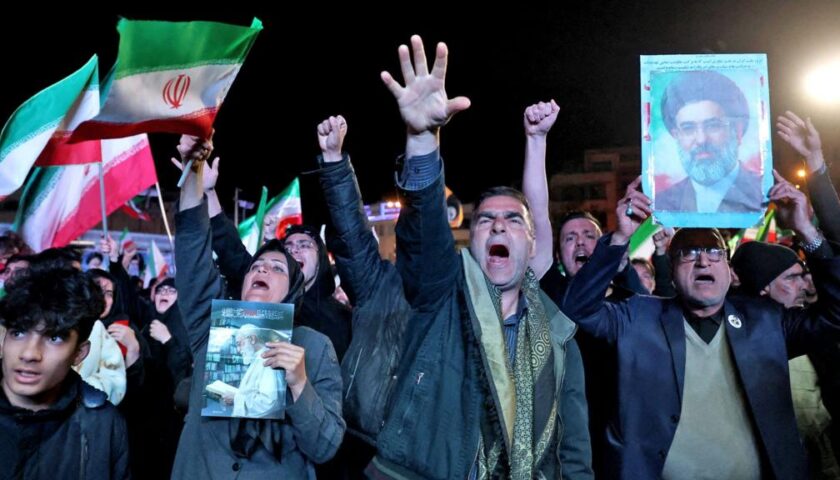
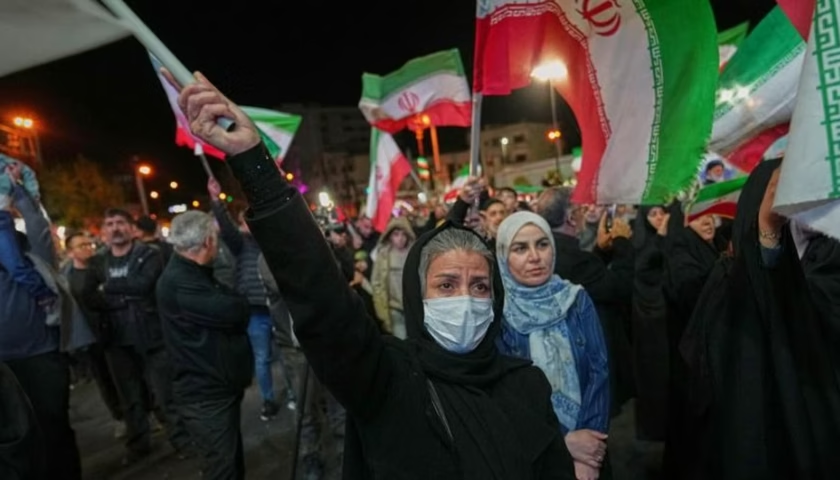
Iran’s response—“Tomorrow, Inshallah”—is equally symbolic, signaling endurance rather than submission.
Iran’s Strategy: Resistance Across Four Fronts
1. Military
- Continued missile strikes
- Expansion into Gulf targets
- Coordination with regional allies
2. Diplomatic
Iran has effectively:
- Suspended direct talks
- Rejected ceasefire proposals
- Pushed for sanctions relief and broader guarantees
3. Economic
By controlling access to the Strait of Hormuz, Iran is leveraging:
- Global oil dependency
- Shipping vulnerabilities
4. Narrative
Iran is reframing the conflict as:
- Defensive
- Civilizational
- Anti-imperial
US Strategy: Calibrated Escalation Under Deadline Pressure
The U.S. approach combines:
- Military pressure (targeted strikes)
- Economic leverage (Hormuz reopening demand)
- Diplomatic signaling (no nuclear escalation—for now)
Vice President JD Vance has emphasized that:
- Strategy remains unchanged
- Energy infrastructure is avoided—for now
But that restraint may not hold if negotiations fail.
The Strait of Hormuz: The World’s Most Dangerous Bottleneck
The Strait of Hormuz is not just a regional issue—it is a global economic artery.
- ~20% of global oil flows through it
- Shipping disruptions already underway
- Multiple vessels damaged since February
If fully closed:
- Oil could surge beyond $120–$150
- Global inflation could spike
- Supply chains could fracture
Markets React: War Premium Surges
Markets are already pricing in risk:
- Oil crossed $110 per barrel
- Global stock indices falling
- Shipping insurance premiums rising
Markets are reacting not just to actions—but to expectations of escalation.
Major Escalations Timeline (Last 72 Hours)
- US strikes Kharg Island military sites
- Israeli strikes hit South Pars gas infrastructure
- Tehran urban strikes intensify
- Iran attacks Saudi energy facilities
- Hormuz remains restricted
- Ceasefire proposal collapses
- Rhetoric escalates to “civilization” level
Each step compounds risk exponentially.
Regional Spillover: Multi-Front War Risk
The conflict now spans:
- Iran
- Israel
- Saudi Arabia
- Gulf maritime routes
Potential next fronts:
- Lebanon (Hezbollah)
- Iraq (militia groups)
- Syria (proxy engagements)
This is no longer bilateral—it is systemically regional.
What Happens Next: Three Scenarios
1. Full Escalation (High Risk)
- Hormuz closure
- Expanded strikes on infrastructure
- Multi-country involvement
2. Controlled Conflict (Moderate Probability)
- Continued strikes
- Limited containment
- No decisive resolution
3. Diplomatic Breakthrough (Low Probability)
- Temporary ceasefire
- Partial reopening of Hormuz
- Fragile negotiations
Reality Check: Fog of War
Some claims—especially regarding casualties and strike impact—remain difficult to verify independently.
- Both sides are using information strategically
- Ground verification is limited
- Narratives may diverge from reality
Final Assessment: A System on the Edge
The April 7 situation represents a rare convergence:
- Military escalation ✔
- Economic disruption ✔
- Diplomatic breakdown ✔
- Existential rhetoric ✔
Historically, this combination signals high probability of major conflict transition.
Bottom Line
- US and Israel are expanding strikes into energy and infrastructure targets
- Iran is retaliating regionally and rejecting ceasefire terms
- The Strait of Hormuz remains the decisive flashpoint
- Oil markets and global trade are already under stress
The next 24–48 hours may determine whether this crisis stabilizes—or becomes the defining war of the decade.