Sakina Itoo–Waheed Para Clash in J&K Assembly | NC vs PDP Political War Intensifies
By: Javid Amin | 04 April 2026
A Storm Inside the Assembly: More Than Just a Verbal Duel
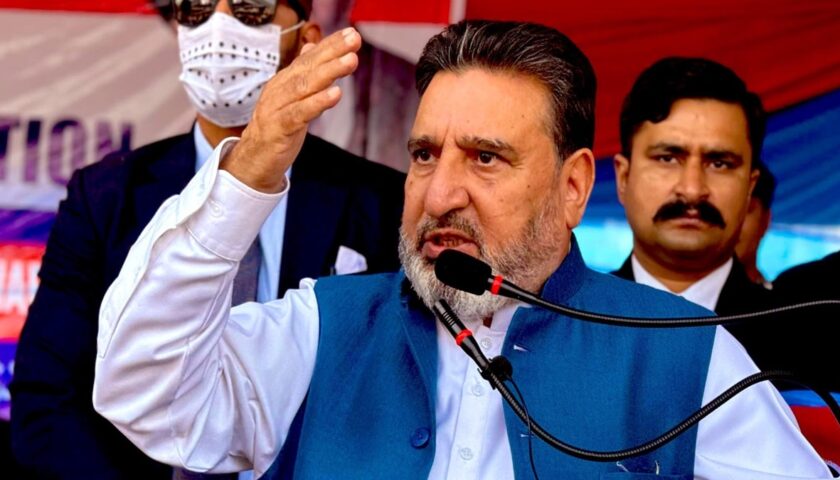
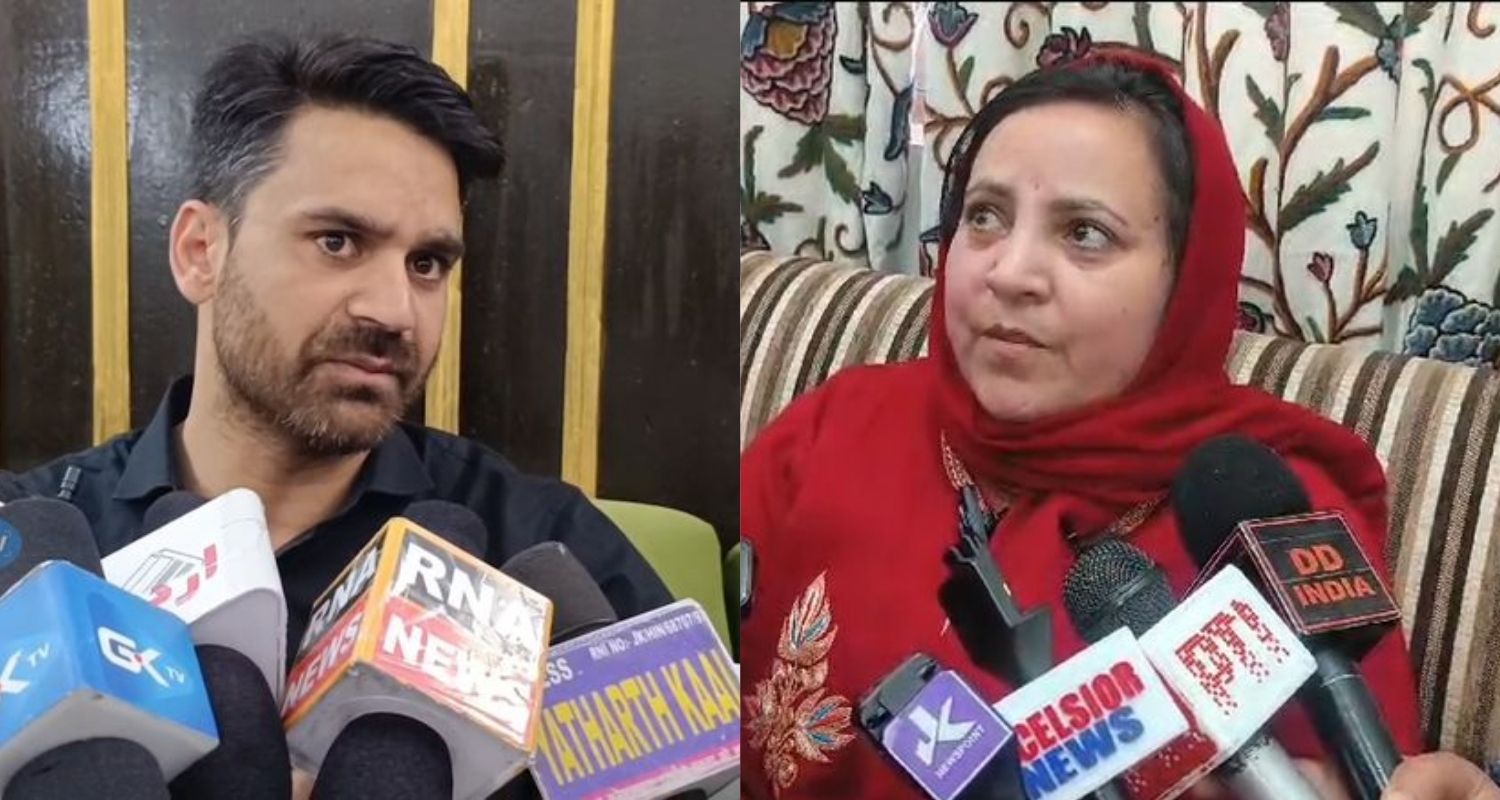
The Jammu & Kashmir Assembly, a space meant for democratic deliberation, recently turned into a battleground of political memory, blame, and unresolved tensions. What began as a sharp exchange between Sakina Itoo and Waheed Ur Rehman Para quickly escalated into a wider confrontation—one that exposed the fragile political architecture of the Union Territory.
At the center of the storm was not just rhetoric, but a deeper ideological contest between two of Kashmir’s most influential political parties: the Jammu and Kashmir National Conference (NC) and the Jammu and Kashmir Peoples Democratic Party (PDP).
The clash highlighted a question that continues to haunt Kashmir’s politics: Who is responsible for the events leading up to and following the abrogation of Article 370?
Flashpoint: What Triggered the Clash?
The confrontation unfolded during a routine Assembly session but quickly turned confrontational when Sakina Itoo invoked a controversial remark by Mehbooba Mufti—often referred to as the “milk and toffees” comment.
Revisiting the ‘Milk and Toffees’ Remark
The phrase has become politically symbolic in Kashmir. Critics, particularly from the NC, have repeatedly used it to portray the PDP as having underestimated or mishandled the political consequences of its alliance with the Bharatiya Janata Party (BJP).
Itoo’s repeated references were not accidental—they were strategic. By invoking this remark, she aimed to reinforce a narrative: that the PDP’s political decisions, particularly its coalition with the BJP, indirectly paved the way for the eventual abrogation of Article 370 in August 2019.
Waheed Para’s Counter: A Shift From Defense to Offense
Waheed Para did not let the attack go unanswered. Known for his articulate and assertive style, he turned the debate sharply personal and political.
Questioning Legitimacy and Accountability
Para reportedly questioned Itoo’s authority to lecture on political responsibility. But more importantly, he reframed the debate:
- Instead of defending the PDP’s past decisions,
- He accused the NC of deflecting accountability
- And of failing to safeguard Kashmir’s special status despite decades in power
This rhetorical pivot is significant. It reflects a broader PDP strategy—moving away from defensive politics toward counter-accusation and narrative rebalancing.
Inside the Assembly: Chaos, Protests, and Political Theatre
The verbal duel quickly spilled over into a larger disruption. Members from both sides joined the fray, leading to:
- Loud sloganeering
- Repeated interruptions
- Temporary adjournment-like conditions
The Assembly floor became a microcosm of Kashmir’s fractured political landscape—where consensus is rare, and historical grievances remain unresolved.
Historical Backdrop: Roots of the NC–PDP Rivalry
To fully understand the intensity of the clash, one must look beyond the Assembly walls.
Two Parties, Two Political Legacies
National Conference (NC)
Founded by Sheikh Abdullah, the NC has historically positioned itself as the custodian of Kashmir’s autonomy within India.
People’s Democratic Party (PDP)
Founded by Mufti Mohammad Sayeed, the PDP emerged as a softer-separatist, people-centric alternative, advocating “self-rule” and reconciliation.
The Turning Point: PDP-BJP Alliance
The PDP’s decision to form a coalition with the BJP in 2015 marked a watershed moment. While the alliance was framed as a “bridge between Jammu and Kashmir,” it also:
- Alienated sections of the PDP’s traditional support base
- Provided political ammunition to rivals like the NC
- Became a central talking point after 2019
For the NC, this alliance remains the single most powerful narrative tool to challenge PDP’s credibility.
Article 370: The Unresolved Core of Political Conflict
The abrogation of Article 370 on August 5, 2019, fundamentally altered Jammu & Kashmir’s political status.
Why It Still Dominates Political Discourse
- It transformed the state into a Union Territory
- It diluted regional autonomy
- It reshaped electoral and administrative dynamics
Both NC and PDP oppose the move, but their interpretations of responsibility differ sharply.
NC’s Position
The NC argues that external political forces engineered the decision, but often points to PDP’s alliance with the BJP as enabling conditions.
PDP’s Position
The PDP maintains that all regional parties, including the NC, failed collectively—and that selective blame is politically motivated.
Ground Reality: Governance Challenges Beyond the Blame Game
While political leaders trade accusations, the lived reality in Jammu & Kashmir tells a more complex story.
Key Governance Issues
1. Administrative Centralization
Decision-making has increasingly shifted to the Union government, limiting local political agency.
2. Economic Concerns
- Tourism recovery remains uneven
- Youth unemployment continues to be a pressing issue
3. Political Vacuum and Trust Deficit
The absence of a fully empowered state government has contributed to:
- Reduced public trust in political institutions
- Growing political disengagement among youth
Political Messaging: What Each Side Wants the Public to Believe
NC’s Narrative Strategy
- Position itself as the “victim” of external decisions
- Highlight PDP’s past alliance with BJP
- Emphasize experience and legacy
PDP’s Narrative Strategy
- Portray NC as part of the old political elite
- Highlight NC’s historical failures
- Present itself as a resilient, people-centric alternative
Why This Clash Matters: Beyond Personal Rivalry
At first glance, the exchange between Sakina Itoo and Waheed Para may appear as routine political sparring. But it carries deeper implications:
1. Pre-Election Signaling
With future elections always on the horizon, such confrontations serve as positioning exercises.
2. Narrative Control
Control over the “Article 370 story” remains central to political legitimacy.
3. Public Perception
These debates influence how citizens assign blame—and hope.
Expert Insight: A Politics Still Searching for Stability
Political analysts observing Jammu & Kashmir often point to a recurring pattern:
- Cycles of alliance and betrayal
- Narrative-driven politics over policy debates
- Deep-rooted mistrust between regional players
The Assembly clash is not an anomaly—it is a reflection of this structural instability.
The Road Ahead: Can Politics Move Beyond Blame?
For Jammu & Kashmir to move forward, several shifts are necessary:
1. From Blame to Policy
Political discourse needs to transition from historical blame to actionable governance.
2. Rebuilding Trust
Both between parties and with the public.
3. Restoring Democratic Depth
A fully functional statehood framework could recalibrate political accountability.
Conclusion: A Clash That Echoes Beyond the Assembly
The Sakina Itoo–Waheed Para confrontation is not just a moment of political drama—it is a window into the unresolved tensions shaping Jammu & Kashmir.
It reveals a region still grappling with its past, uncertain about its political future, and caught in a cycle where history is both weapon and burden.
Until the discourse shifts from accusation to accountability, such clashes will continue—not just in the Assembly, but across the broader political landscape of Kashmir.
Bottom Line:
The clash underscores a fundamental truth: Jammu & Kashmir’s politics is still in transition—where narratives compete, accountability is contested, and the path forward remains complex and deeply political.