Mehbooba Mufti’s Iran Remarks Spark Political Storm in Kashmir Amid West Asia War
By: Javid Amin | 30 March 2026
Mehbooba Mufti’s Iran Remarks Trigger Political Storm in Kashmir as West Asia Conflict Intensifies
A Statement That Echoed Beyond Borders
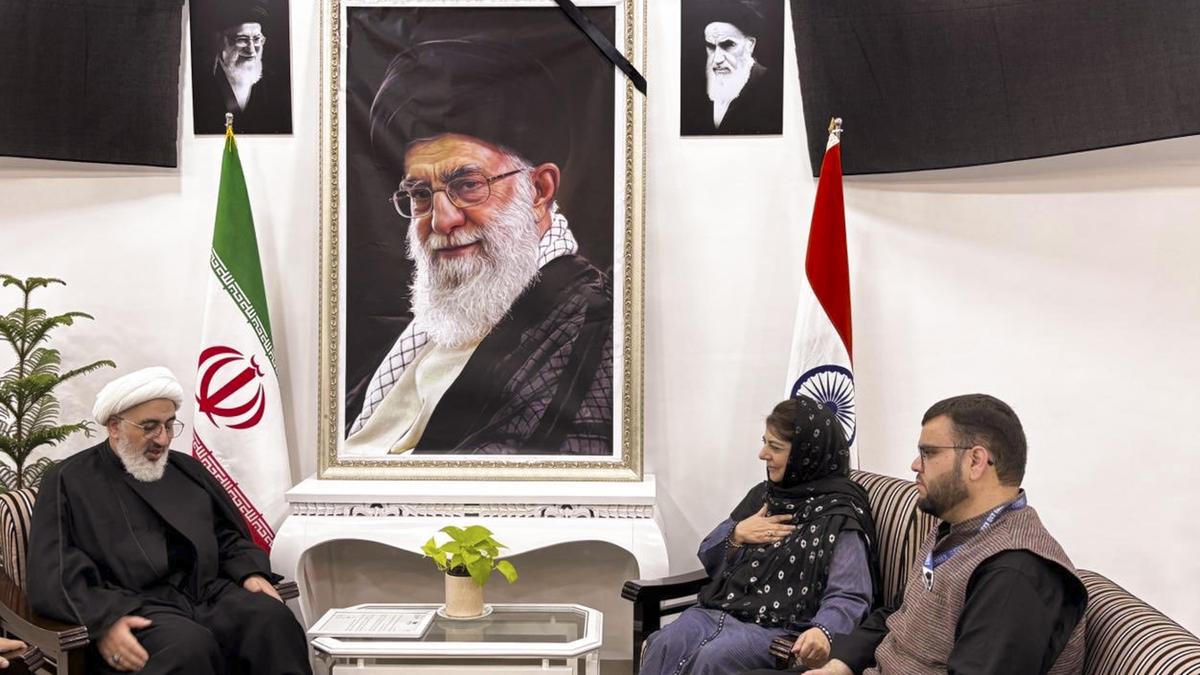
In a politically sensitive moment, Mehbooba Mufti has ignited a fresh controversy with her remarks on the ongoing West Asia conflict. Speaking in Srinagar on March 30, 2026, the former Chief Minister said she is “praying for Iran to emerge victorious and for the war to end,” placing herself at the center of a rapidly intensifying political and diplomatic debate.
Her statement comes at a time when the conflict involving the United States, Israel, and Iran is expanding across the Middle East, with growing global repercussions—particularly for countries like India that maintain strategic ties across all sides.
What Exactly Did Mehbooba Mufti Say?
Solidarity with Iran and a Call for Peace
Mehbooba Mufti framed her remarks as both a humanitarian appeal and a political position.
- She expressed solidarity with Iran amid sustained US–Israel military strikes
- She said she is “praying” for Iran’s victory, presenting it as a matter of justice and dignity
- Simultaneously, she called for an end to the war, emphasizing peace
Her phrasing blends emotional appeal with geopolitical positioning—something that has amplified both support and criticism.
Sharp Criticism of Governments at Home
Alongside her international remarks, she launched a direct political attack on domestic leadership:
- Accused the Jammu & Kashmir National Conference-led administration of failing to address public grievances
- Criticized the Bharatiya Janata Party-led central government for governance shortcomings
By linking global conflict with local governance, she attempted to reposition the narrative from foreign policy to everyday struggles in Jammu & Kashmir.
Context: Why the Statement Matters Now
A Region on Edge
Her comments come amid a rapidly worsening geopolitical situation:
- Intensified US–Israel strikes on Iranian targets
- Iranian retaliation across Gulf states
- Entry of Yemen’s Houthi forces, expanding the battlefield to maritime routes
This escalation has already begun affecting global oil markets, shipping routes, and expatriate safety—including Indian nationals in the Gulf.
Kashmir’s Historical and Emotional Lens
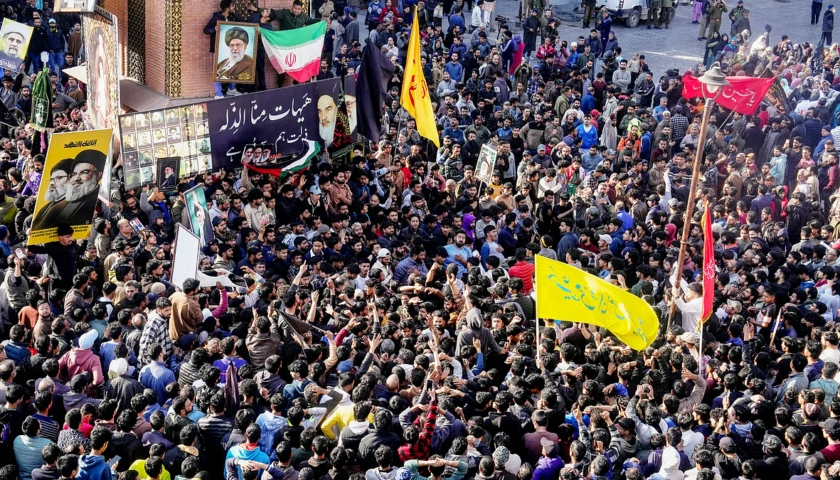
In parts of Kashmir, geopolitical developments in West Asia often resonate beyond conventional foreign policy frameworks.
- Iran is sometimes viewed symbolically as resisting Western intervention
- Sections of public sentiment draw parallels between global conflicts and local political experiences
- Political leaders often reflect or amplify these sentiments
Mehbooba Mufti’s statement appears to tap into this emotional and ideological space.
Political Repercussions in Jammu & Kashmir
Deepening Political Divides
The remarks are likely to sharpen existing political fault lines:
- Rival parties may accuse her of aligning with a foreign power during a sensitive conflict
- Critics could frame the statement as irresponsible or diplomatically risky
- Supporters may see it as a bold articulation of sentiment often left unspoken
The political discourse in Jammu & Kashmir is expected to become more polarized in the coming days.
Narrative Strategy: Localizing a Global Crisis
From a political communication perspective, the statement serves multiple purposes:
- Relevance: Connecting a global issue to local concerns
- Positioning: Differentiating from rival political parties
- Mobilization: Appealing to specific voter sentiments
This approach is not uncommon in regional politics, where international developments are used to reinforce domestic narratives.
Diplomatic Sensitivity for India
A Delicate Balancing Act
India’s foreign policy in West Asia is carefully calibrated:
- Strong strategic ties with the United States
- Deep defense and technological cooperation with Israel
- Historical and energy relations with Iran
- Economic and diaspora links with Gulf states
Statements like this, even from regional leaders, can create diplomatic discomfort.
Potential Implications
- Could invite criticism from political opponents at the national level
- May complicate India’s messaging of neutrality and strategic balance
- Risks being amplified internationally as reflective of domestic opinion
However, it is important to note that such remarks do not represent official government policy.
Public Sentiment: Between Empathy and Anxiety
Resonance Among Sections of Society
In Kashmir, some segments of the population may resonate with the sentiment expressed:
- Viewing Iran’s stance as symbolic resistance
- Feeling a sense of shared identity or struggle
- Responding emotionally to images of conflict and civilian casualties
Broader Public Concerns
At the same time, there is growing anxiety:
- Safety of relatives working in Gulf countries
- Rising fuel prices and economic pressures
- Uncertainty about the conflict’s global impact
This creates a complex public mood—where empathy coexists with economic concern.
Media, Messaging, and Controversy Dynamics
Why the Statement Is Controversial
The controversy stems from three intersecting factors:
- Timing: Made during an active and escalating war
- Content: Explicitly expressing hope for one side’s victory
- Context: India’s neutral diplomatic stance
These elements together elevate the political sensitivity of the statement.
Information Amplification
In today’s media ecosystem:
- Statements spread rapidly across social media
- Context is often compressed or lost
- Reactions tend to polarize quickly
This ensures that such remarks have a wider and more immediate impact than in the past.
Strategic Interpretation: Beyond the Headlines
From an analytical standpoint, Mehbooba Mufti’s remarks can be understood as:
- A reflection of localized political sentiment
- A strategic critique of governance framed through global events
- An attempt to remain politically relevant in a shifting landscape
It is less about foreign policy influence and more about domestic political signaling.
Conclusion: When Global Wars Shape Local Politics
The reaction to Mehbooba Mufti’s statement highlights a broader reality: global conflicts increasingly influence local political narratives.
Her remarks—blending international solidarity with domestic criticism—have sparked debate not just about foreign policy, but about identity, governance, and political accountability in Jammu & Kashmir.
As the West Asia conflict continues to escalate, such intersections between global events and local politics are likely to become more frequent—and more consequential.
In a deeply interconnected world, even distant wars can reshape political conversations at home.