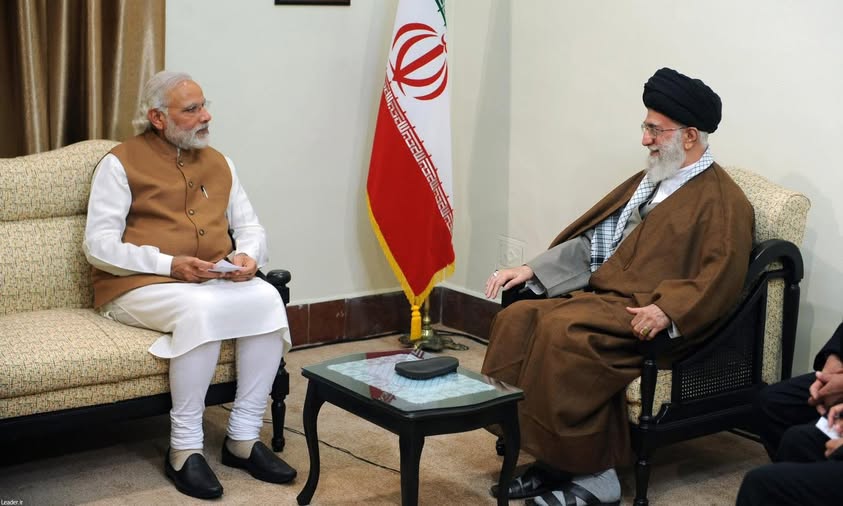
Did Khamenei Support PM Modi After Article 370? The Truth Behind Iran’s Position on Kashmir and India
By: Javid Amin | 02 March 2026
When India revoked Article 370 on August 5, 2019 — ending the special constitutional status of Jammu & Kashmir — the move reshaped not just domestic politics but international diplomacy.
Among global reactions, one voice stood out: that of Iran’s Supreme Leader, Ayatollah Ali Khamenei.
Did he support Prime Minister Narendra Modi and India’s decision?
The answer, based on documented statements and diplomatic exchanges, is clear:
No. He did not.
But the full story is more complex than a simple yes-or-no.
This is a deep geopolitical examination of Khamenei’s stance, Iran’s foreign policy calculus, and how India navigated criticism while protecting its strategic interests.
The Article 370 Decision: A Turning Point
Article 370 of the Indian Constitution granted Jammu & Kashmir a special autonomous status for decades. When the Modi government abrogated it in August 2019, the region was reorganized into two Union Territories: Jammu & Kashmir and Ladakh.
The move was:
-
Applauded domestically by supporters of integration.
-
Criticized internationally by Pakistan.
-
Watched cautiously by global powers.
Iran’s reaction evolved in stages — and that nuance matters.
Khamenei’s Public Criticism: What He Actually Said
Shortly after the abrogation, Ayatollah Ali Khamenei expressed concern about the condition of Muslims in Kashmir.
In a public message, he urged India to adopt what he described as a “just policy” toward the people of the region.
Key points from his remarks:
-
Concern over the situation of Muslims in Kashmir.
-
Expectation that India would treat the population fairly.
-
Framing of the issue in moral and religious terms rather than legal constitutional ones.
At no point did he endorse India’s constitutional move.
India’s Response to Iran
New Delhi reacted firmly but diplomatically.
The Ministry of External Affairs rejected the comments, stating that Kashmir is an internal matter and that foreign leaders should avoid interference.
However, India did not escalate the rhetoric.
This restraint reflected the strategic importance of maintaining stable ties with Tehran.
Why Did Khamenei Criticize India?
To understand Iran’s position, one must analyze it through three lenses:
1️⃣ Religious Solidarity
Iran’s political identity since 1979 has included positioning itself as a defender of Muslim causes worldwide.
Kashmir — like Palestine — often appears in Iranian discourse as part of a broader narrative of Muslim dignity.
This ideological dimension shapes public statements from Iran’s leadership.
2️⃣ Geopolitical Messaging
Iran has complex relationships with both India and Pakistan.
While Tehran does not fully align with Islamabad’s position on Kashmir, criticism of India allows Iran to signal solidarity with Muslim populations without fully endorsing Pakistan’s diplomatic agenda.
3️⃣ Post-Sanctions Friction
After the US withdrew from the nuclear deal in 2018, Washington reimposed sanctions on Iran.
India, under pressure to avoid secondary sanctions, significantly reduced and eventually halted Iranian oil imports.
This strained bilateral economic ties.
Khamenei’s critical tone in 2019 must be viewed against this backdrop of reduced energy cooperation.
A Historical Connection: Khamenei’s 1980 Visit to Kashmir
Long before Article 370 became a global issue, Khamenei had visited India.
In 1980, shortly after the Iranian Revolution, he addressed worshippers at Srinagar’s historic Jamia Masjid.
His speeches during that period emphasized:
-
Muslim unity
-
Anti-colonial resistance
-
Solidarity across borders
That early engagement created a long-term rhetorical connection between Tehran and Kashmir.
Iran’s Official Government Stance vs. Khamenei’s Words
It is important to differentiate:
-
Statements by Iran’s Supreme Leader.
-
Official diplomatic communication from Iran’s Foreign Ministry.
While Khamenei used moral language, the Iranian government’s official statements were more measured:
-
Calling for restraint.
-
Emphasizing dialogue between India and Pakistan.
-
Avoiding full endorsement of Pakistan’s claims.
This dual approach allowed Tehran to balance ideology and pragmatism.
The Chabahar Equation: Why India and Iran Didn’t Break Ties
Despite public criticism, India and Iran maintained cooperation in key areas.
The most important: Chabahar Port.
Located in southeastern Iran, Chabahar gives India access to Afghanistan and Central Asia, bypassing Pakistan.
The project is strategically vital for:
-
Trade corridors.
-
Regional connectivity.
-
Counterbalancing China’s Gwadar Port in Pakistan.
This economic interdependence discouraged diplomatic escalation.
Energy Diplomacy: Oil and Strategic Calculations
Before US sanctions intensified, Iran was one of India’s major crude suppliers.
When India cut imports to zero, it:
-
Reduced Iran’s economic leverage.
-
Increased diplomatic tension.
-
Shifted bilateral engagement toward infrastructure cooperation rather than energy.
Tehran’s sharper tone on Kashmir followed this economic cooling.
Did Iran Ever Officially Support Article 370’s Abrogation?
There is no credible evidence of:
-
Iran endorsing India’s constitutional change.
-
Khamenei praising PM Modi for the decision.
-
Tehran recognizing the move as purely internal without comment.
Instead, Iran consistently referenced concerns about Muslim rights.
The India–Iran Paradox
India and Iran represent a diplomatic paradox:
| Area | Cooperation | Disagreement |
|---|---|---|
| Energy | Historically strong | Reduced post-sanctions |
| Infrastructure | Chabahar partnership | None |
| Kashmir | Tension | Public criticism |
| Regional Security | Shared concerns on extremism | Different alignments |
Both countries manage disagreement without severing ties.
Strategic Balance: India’s Multi-Alignment Policy
India maintains:
-
Defense ties with Israel.
-
Strategic partnership with the US.
-
Historical links with Iran.
-
Energy relations with Gulf states.
New Delhi’s response to Khamenei’s criticism reflected this multi-alignment doctrine — firm but not confrontational.
Broader Middle East Context
Iran’s criticism of India must also be viewed alongside its rivalry with:
-
Saudi Arabia.
-
Israel.
-
The United States.
Positioning itself as a voice for Muslim causes strengthens Iran’s ideological credentials regionally.
Domestic Political Dimensions in India
While Iran’s statements drew media attention, they did not significantly alter domestic political debate in India.
The Article 370 decision was framed internally as:
-
A sovereignty issue.
-
A constitutional correction.
-
A development initiative.
Foreign criticism, including from Tehran, did not alter New Delhi’s policy trajectory.
Long-Term Outlook: Where Do India–Iran Relations Stand?
Despite periodic rhetorical friction, several structural realities keep India and Iran engaged:
-
Geographic proximity.
-
Shared interest in Afghan stability.
-
Infrastructure connectivity projects.
-
Energy interdependence potential.
However, the relationship remains sensitive to:
-
US sanctions policy.
-
Iran’s regional confrontations.
-
India’s evolving Gulf partnerships.
Final Verdict: The Clear Answer
Did Ayatollah Ali Khamenei support Prime Minister Narendra Modi after Article 370 was abrogated?
No.
He criticized the decision and urged India to adopt what he called a just approach toward Kashmir’s Muslims.
However:
-
Iran did not sever ties with India.
-
Diplomatic engagement continued.
-
Strategic cooperation endured.
Key Takeaways
-
Khamenei publicly criticized Article 370’s revocation.
-
Iran balanced ideological rhetoric with pragmatic diplomacy.
-
India responded firmly but avoided escalation.
-
Energy sanctions influenced bilateral tone.
-
Chabahar remains a cornerstone of cooperation.
Conclusion: Ideology Meets Realpolitik
Iran’s stance on Article 370 reveals the intersection of ideology and strategy.
For Tehran, Kashmir represents religious solidarity.
For New Delhi, it is constitutional sovereignty.
Yet neither country allowed disagreement to derail broader cooperation.
In geopolitics, rhetoric and relationships often move on parallel tracks.
And in the case of Iran and India, that delicate balance continues to define the relationship.