Jammu & Kashmir Budget 2026–27 Explained | Omar Abdullah’s ₹1.27 Lakh Crore Growth Plan
By: Javid Amin | 06 February 2026
A Budget at the Crossroads of Aspiration and Constraint
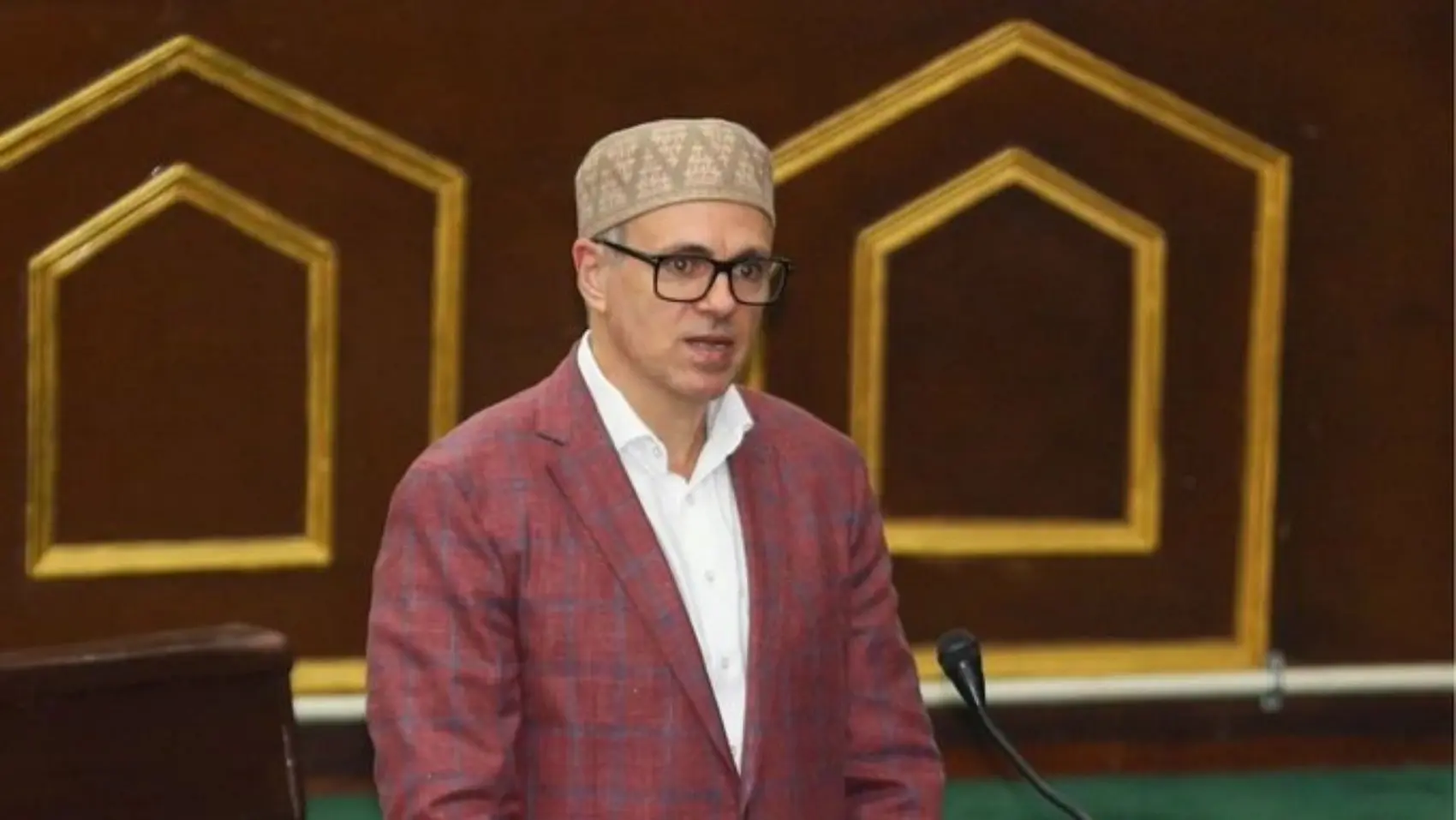
When Chief Minister Omar Abdullah rose in the Jammu & Kashmir Legislative Assembly to present the Union Territory’s Budget for the financial year 2026–27, he was not merely reading out numbers. He was making a political, economic, and social statement—one that sought to balance ambition with realism, growth with discipline, and hope with hard fiscal constraints.
The ₹1.27 lakh crore budget—the largest ever for Jammu & Kashmir in nominal terms—comes at a delicate moment. The Union Territory is still navigating its post-Article 370 economic transition, grappling with climate-induced disasters, youth unemployment, rural distress, and a deep dependence on central transfers. At the same time, J&K stands on the cusp of transformative infrastructure projects, renewed global tourism interest, and a generation of young people eager for opportunity rather than uncertainty.
This budget positions infrastructure, tourism, hydropower, youth employment, and disaster resilience as the primary engines of growth. Critics, however, argue that agriculture, healthcare expansion, social welfare, and rural equity have not received proportional attention.
This mega-feature offers a comprehensive, Google News–ready analysis of the J&K Budget 2026–27—its priorities, promises, trade-offs, and political economy implications—grounded in official budget documents, Assembly debates, and sectoral performance trends.
The Big Picture: Understanding the ₹1.27 Lakh Crore Outlay
What Does ₹1.27 Lakh Crore Really Mean for J&K?
The total budgetary outlay of approximately ₹1,27,000 crore represents both scale and limitation. On paper, it signals confidence and intent. In practice, it reflects a carefully structured financial architecture heavily reliant on central assistance.
A significant portion of the budget is funded through:
- Central transfers and grants (approximately ₹43,290 crore)
- Centrally Sponsored Schemes (CSS)
- UT’s own tax and non-tax revenues
The Chief Minister was candid in acknowledging that Jammu & Kashmir’s fiscal autonomy remains constrained. Own revenue generation, while improving, is insufficient to fully fund developmental aspirations. This honesty—rare in budget speeches—set the tone for a narrative built around fiscal prudence rather than populist exuberance.
Fiscal Prudence as Political Messaging
Unlike earlier budgets that leaned heavily on rhetoric, the 2026–27 budget repeatedly emphasizes:
- Responsible spending
- Avoidance of unsustainable subsidies
- Focus on asset-creating expenditure
This reflects not just economic caution but political calculation. With Assembly scrutiny intensifying and public expectations rising, the government appears keen to project itself as a disciplined steward of public money.
Infrastructure as the Growth Engine: Roads, Rail, Power
Roads and Bridges: Stitching Together a Fragile Geography
Infrastructure remains the single largest area of focus in the 2026–27 budget. The logic is simple: in a mountainous, disaster-prone region like Jammu & Kashmir, connectivity is destiny.
Major allocations have been earmarked for:
- All-weather road connectivity in remote districts
- Strategic border roads
- Urban flyovers and bridges in Srinagar and Jammu
Officials argue that improved road networks reduce travel time, cut logistics costs, and integrate rural producers into urban and national markets. Critics counter that road development continues to be uneven, with politically visible corridors prioritized over interior villages.
Railways and the USBRL: A Psychological Breakthrough
The near-completion of the Udhampur–Srinagar–Baramulla Rail Link (USBRL) is one of the most transformative infrastructure developments in J&K’s history.
The budget reinforces commitment to:
- Final integration of the Chenab Bridge
- Modernization of stations
- Improved freight and passenger services
Beyond economics, the rail link carries symbolic weight. It represents year-round physical integration with the rest of India—an issue that has shaped Kashmir’s economic isolation for decades.
Hydropower: Monetizing the Rivers
Hydropower has emerged as a flagship sector in the 2026–27 budget.
Key objectives include:
- Reviving stalled hydropower projects
- Upgrading transmission infrastructure
- Reducing dependence on imported electricity
J&K’s rivers—Jhelum, Chenab, Ravi—are its most underutilized assets. The government’s bet is that power surplus can generate long-term revenue and employment. However, environmentalists caution against aggressive hydropower expansion without robust ecological safeguards.
Tourism: Rebranding Kashmir for the World
Tourism as Economic Soft Power
Tourism occupies a central narrative space in the budget. The government sees it not merely as a revenue source but as a global branding exercise.
Budget priorities include:
- Upgrading infrastructure in Gulmarg and Pahalgam
- Expanding the Indira Gandhi Memorial Tulip Garden
- Promoting winter sports and cultural festivals
The emphasis on high-visibility destinations reflects a strategy aimed at international tourists and high-spending domestic visitors.
Heritage and Eco-Tourism: Promise vs Practice
The budget speaks eloquently about heritage conservation and eco-tourism. However, allocations for:
- Village homestays
- Community-led tourism
- Capacity building in rural areas
remain modest. This has raised concerns that tourism growth may remain enclave-based, benefiting urban operators more than rural households.
Tourism and Employment
Tourism is one of the fastest employment generators in J&K, particularly for semi-skilled youth. From hospitality to transport, handicrafts to guides, its multiplier effect is significant. The budget’s success will depend on whether growth translates into stable, year-round jobs rather than seasonal income.
Youth and Employment: Investing in a Restless Demographic
The Youth Challenge
With over 60% of its population under 35, Jammu & Kashmir faces both a demographic dividend and a potential crisis. Unemployment, especially among educated youth, has social and political ramifications.
Skill Development and Start-ups
The 2026–27 budget expands:
- Skill development programs
- Start-up incubation centers
- IT and services-sector training
The focus is on employability rather than guaranteed government jobs—a significant shift from past expectations.
Entrepreneurship as Ideology
The budget’s language reflects a clear ideological pivot: the state as facilitator, not employer. While this aligns with national policy trends, critics argue that without robust private-sector growth, entrepreneurship rhetoric may outpace reality.
Disaster Resilience and Climate Adaptation
Learning from Floods and Landslides
Recent years have seen devastating floods, landslides, and avalanches across J&K. The budget allocates funds for:
- Flood management
- River dredging
- Landslide mitigation
Climate Change as a Budgetary Issue
For the first time, climate adaptation is framed as a development necessity rather than an environmental add-on. However, long-term agricultural insurance and climate-resilient farming practices remain underfunded.
Security and Governance: Stability as an Economic Precondition
Approximately ₹10,000 crore has been allocated for policing and internal security. The government argues that economic revival is impossible without sustained stability.
While security spending is politically sensitive, it continues to be a structural feature of J&K’s finances.
What’s Not Hot: The Critics’ Case
Agriculture: The Forgotten Backbone
Despite employing a significant share of the population, agriculture receives limited incremental support. Farmers affected by climate shocks feel particularly neglected.
Healthcare Expansion
Maintenance of existing hospitals is funded, but:
- New medical colleges
- Rural health centers
see little emphasis, raising concerns about access and equity.
Social Welfare and Daily Wagers
Opposition parties argue that pensions, daily wagers’ regularization, and targeted welfare schemes lack urgency in the budget.
Urban–Rural Divide: A Persistent Fault Line
A recurring criticism is the perceived city-centric nature of the budget. Srinagar and Jammu dominate announcements, while remote districts struggle for visibility.
Risks, Trade-offs, and Political Implications
Fiscal Discipline vs Social Demand
The budget walks a tightrope between responsibility and responsiveness. Big-ticket projects consume fiscal space, leaving limited room for welfare expansion.
Dependence on Central Transfers
Heavy reliance on New Delhi raises questions about long-term fiscal self-reliance and policy autonomy.
Conclusion: A Budget of Intent, Not Illusion
The Jammu & Kashmir Budget 2026–27 is ambitious but cautious, growth-oriented but fiscally restrained. It places its bets on infrastructure, tourism, hydropower, and youth skills as pathways to prosperity.
Yet, its success will depend not on announcements but on execution, inclusion, and whether growth reaches farms, villages, and vulnerable groups.
In essence, this is a budget of intent—not illusion. Whether it becomes a turning point or a missed opportunity will be determined in the years ahead.