Vaishno Devi Medical College Row Explained: Timeline, Politics, and What Jammu Really Thinks
By: Javid Amin | 10 January 2026
An Education Row That Became a Political Flashpoint: NC blames BJP for student fallout, says Jammu opposed protests
The controversy surrounding the Shri Mata Vaishno Devi Institute of Medical Excellence (SMVDIME), Katra, has escalated into a major political flashpoint in Jammu and Kashmir, with the National Conference (NC) accusing the Bharatiya Janata Party (BJP) of jeopardising the future of aspiring doctors after the National Medical Commission (NMC) withdrew permission for the institute’s MBBS programme.
At the centre of the dispute are student admissions, religious sensitivities, political protests, and regulatory action, raising broader questions about governance, accountability, and the politicisation of education.
What Triggered the Controversy
-
The Medical Assessment and Rating Board (MARB) of the NMC granted a Letter of Permission (LoP) to SMVDIME on September 8 for its first MBBS batch.
-
Admissions were subsequently conducted for 50 MBBS seats.
-
Of these, 42 seats were allotted to Muslim students, while 6–7 seats went to Hindu students.
-
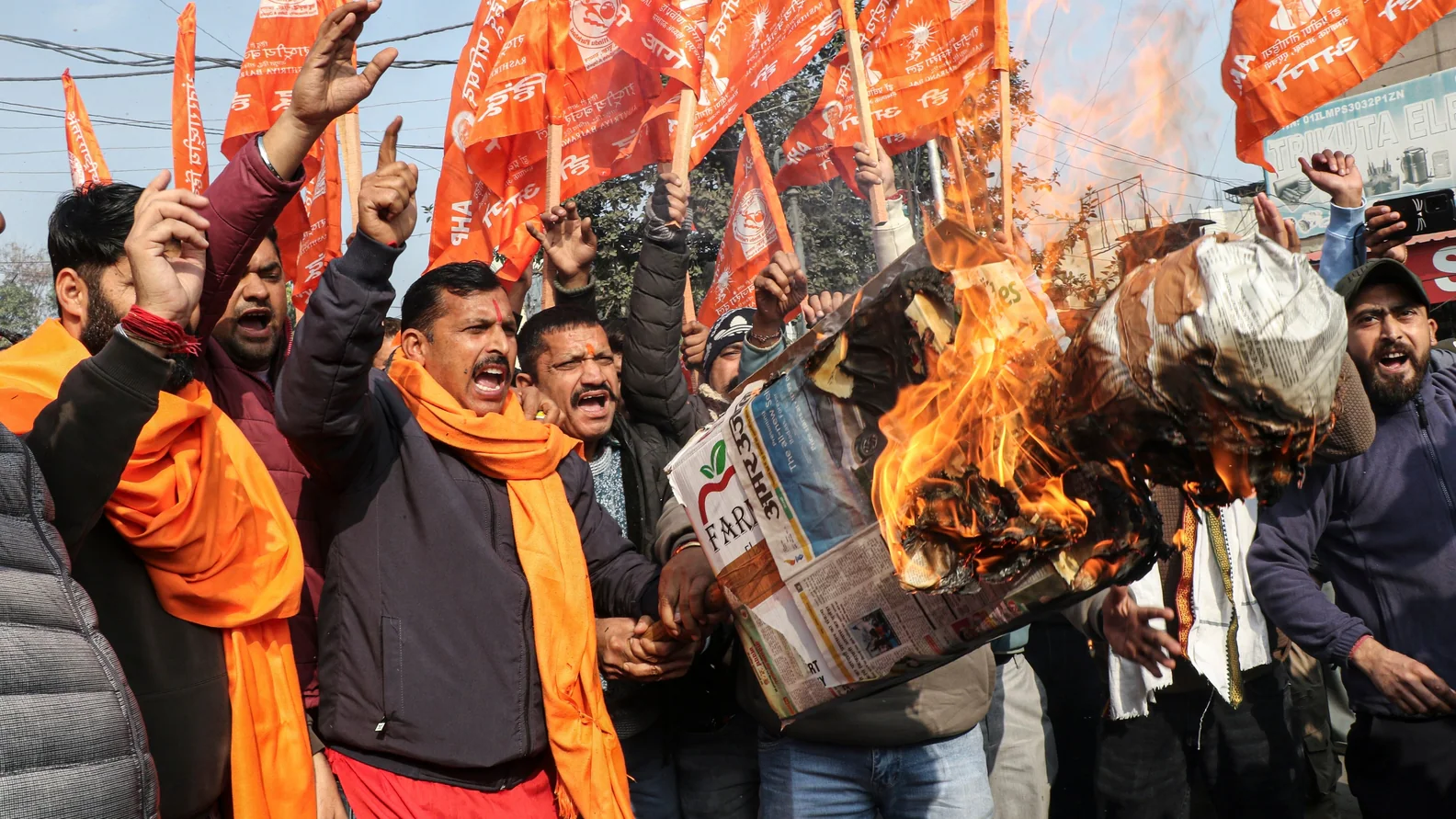
Following the admissions, right-wing groups in Jammu launched protests, objecting to the composition of the intake and linking the issue to the institute’s association with the Shri Mata Vaishno Devi Shrine Board.
-
The BJP joined the protests, claiming the admissions hurt Hindu sentiments.
-
After protests, an inspection was conducted, discrepancies were reportedly found, and the NMC withdrew the LoP, effectively cancelling the MBBS course for 2025–26.
National Conference’s Position
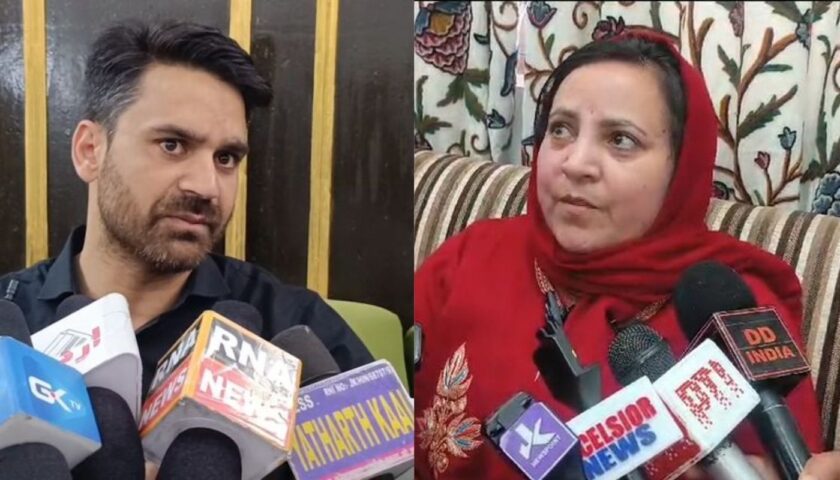
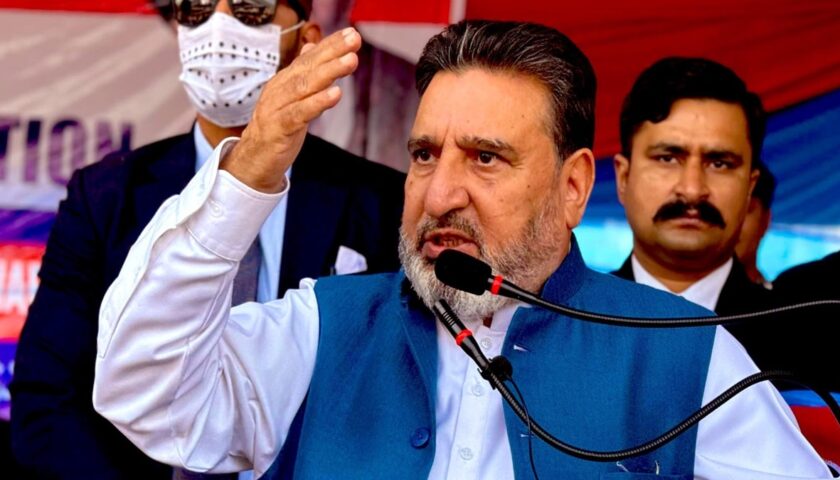
Speaking in Srinagar, NC chief spokesperson and MLA Tanvir Sadiq blamed the BJP for what he termed an avoidable crisis.
Key NC Claims
-
Students’ futures compromised:
Sadiq said the BJP had “played with the future of aspiring doctors,” arguing that the institute could have produced “thousands of doctors” over time. -
Jammu opposed the protests:
According to the NC, students, youth, women, and parents in Jammu were largely against the agitation, and the protests reflected only a small group rather than public consensus. -
Education vs politics:
Quoting Chief Minister Omar Abdullah, Sadiq remarked that while people globally protest to demand more educational institutions, this was possibly the first instance where a political party had agitated to shut one down. -
Pandemic-era reminder:
“During Covid-19, no one asked whether a doctor was Hindu or Muslim,” Sadiq said, underscoring the NC’s argument that healthcare education should remain insulated from religious politics.
NC’s Criticism of BJP Leadership
The NC questioned:
-
BJP leader and Leader of Opposition Sunil Sharma
-
BJP J&K president Sat Sharma
for meeting senior leaders in Delhi over the issue, suggesting the matter was being politically escalated rather than resolved in students’ interests.
Sadiq also alleged that the BJP’s actions harmed not only Muslim students but Hindu students who would have graduated as doctors from the institution.
NC’s Criticism of Mehbooba Mufti and PDP
Alongside the BJP, the NC also targeted PDP president Mehbooba Mufti, accusing her of politicising the controversy.
-
Sadiq claimed that the BJP’s growth in Jammu and Kashmir was enabled by PDP’s past political decisions.
-
He dismissed PDP’s framing of the issue as opportunistic politics rather than student-centric advocacy.
This underscores how the controversy has widened into a three-cornered political confrontation.
BJP and Protesters’ Perspective
While BJP leaders have not issued a unified formal response to NC’s latest statements, their position during the protests was that:
-
The admissions pattern hurt Hindu sentiments, given the institute’s link to the Vaishno Devi Shrine Board.
-
The issue warranted scrutiny, leading to the inspection that reportedly found regulatory discrepancies.
The BJP has maintained that the NMC decision was regulatory, not political, though opposition parties dispute this interpretation.
The Regulatory Dimension
The NMC has stated that:
-
Its decision followed an inspection.
-
Non-compliance and deficiencies were found, leading to withdrawal of permission.
However, critics argue that:
-
The inspection occurred after protests, raising questions about timing.
-
Students admitted in good faith are now bearing the consequences of institutional and political failures.
Why This Row Matters Beyond Politics
Students at the Centre
-
Dozens of students—across communities—now face uncertainty about their medical education.
-
The episode has heightened anxiety among aspirants across J&K about stability and predictability in professional education.
Education as a Political Flashpoint
-
The row illustrates how educational institutions can become arenas for identity politics, particularly in sensitive regions.
-
It has revived concerns about political interference in regulatory bodies, even when formal compliance issues are cited.
Fact-Check Timeline: What Happened, Step by Step
1. NMC Grants Letter of Permission
-
Date: September 8, 2025
-
Authority: Medical Assessment and Rating Board (MARB), NMC
-
Decision: SMVDIME granted Letter of Permission (LoP) to start an MBBS programme for the 2025–26 academic session
-
Seat Capacity: 50 MBBS seats
This approval legally empowered the institute to admit students.
2. Admissions Are Conducted
-
Admissions followed counselling and merit procedures.
-
Seat composition:
-
42 Muslim students
-
6–8 Hindu students (figures vary slightly in political statements)
-
At this stage, there was no regulatory objection raised by the NMC.
3. Protests Begin in Jammu
Soon after admissions were completed, protests erupted in parts of Jammu.
Key objections raised:
-
The religious composition of admitted students
-
The institute’s association with the Shri Mata Vaishno Devi Shrine Board
Right-wing groups led the agitation, and BJP leaders joined the protests, arguing that religious sentiments in Jammu had been ignored.
4. Inspection Conducted
-
Authority: NMC inspection team
-
Timing: After protests intensified
-
Reported deficiencies:
-
Shortage of faculty
-
Infrastructure gaps
-
Insufficient patient inflow
-
While the NMC cited these deficiencies, the full inspection report has not been publicly released, leaving room for political interpretation.
5. LoP Withdrawn
-
Decision: NMC withdraws permission for the MBBS course
-
Impact:
-
Course cancelled for 2025–26
-
Enrolled students left uncertain about their academic future
-
The NMC described the decision as regulatory enforcement, not political action.
Timeline Summary Table
| Stage | Event |
|---|---|
| Sept 2025 | NMC grants LoP |
| Late 2025 | Admissions completed |
| Post-admission | Protests erupt |
| After protests | Inspection conducted |
| Post-inspection | LoP withdrawn |
Political Reactions: Competing Narratives
National Conference (NC): “Students Were Sacrificed”
NC chief spokesperson Tanvir Sadiq accused the BJP of “playing with the future of aspiring doctors.”
Key NC claims:
-
The people of Jammu were largely opposed to protests
-
Educational institutions are demanded elsewhere—not shut down
-
Religion was weaponised at the cost of youth futures
NC leaders argue that regardless of deficiencies, students should have been protected, not punished.
BJP’s Position: “Regulation, Not Communalisation”
The BJP has defended the closure on three grounds:
-
NMC is an independent regulator
-
Deficiencies—not religion—triggered withdrawal
-
Responsibility lies with institutional management
BJP leaders reject accusations of communal targeting and insist that enforcing standards is essential for medical education credibility.
However, the party has not clearly addressed why student safeguards—such as transfers or supernumerary seats—were not prioritised.
Mehbooba Mufti: “A Dangerous Precedent”
PDP president Mehbooba Mufti has taken a broader view, warning that:
-
The closure appeared “pre-planned”
-
Jammu & Kashmir is being used as an “experiment”
-
Similar exclusionary actions could be repeated against Kashmiri students elsewhere in India
She also questioned the timing of public remarks by Chief Minister Omar Abdullah preceding the NMC decision.
Omar Abdullah: Accountability First
Omar Abdullah has focused on governance failures:
-
Demanded accountability for deficiencies
-
Emphasised that institutions must meet standards
-
Avoided framing the issue in communal terms
What People in Jammu Are Saying:
Contrary to political claims, ground sentiment across Jammu is far from uniformly supportive of protests.
Jammu City
-
Strong middle-class anxiety over students’ futures
-
Education prioritised over symbolism
-
Broad discomfort with shutting down institutions
Reasi (Host District)
-
Seen as an economic and institutional loss
-
Local employment and prestige affected
-
Disappointment outweighs ideological anger
Udhampur
-
High student concern
-
Fear that future institutions may face similar instability
Samba
-
Quiet opposition to agitation
-
Preference for industrial and educational growth
Kathua
-
Mixed response
-
Border security and jobs remain top priorities
Chenab Belt (Doda, Ramban, Kishtwar)
-
Fear that controversies reduce chances of new institutions
-
Limited access to higher education already a concern
District Sentiment Snapshot
| District | Dominant Mood |
|---|---|
| Jammu | Pro-education, anti-disruption |
| Reasi | Economic disappointment |
| Udhampur | Student anxiety |
| Samba | Quiet opposition |
| Kathua | Mixed |
| Chenab belt | Fear of lost opportunities |
Why This Row Matters Beyond One College
The SMVDIME controversy exposes deeper fault lines:
-
Education vs Identity Politics
-
Regulatory enforcement vs proportionality
-
Political mobilisation vs student welfare
-
Jammu–Kashmir perception gap
While political parties trade accusations, students across communities bear the immediate cost.
Conclusion: More Losers Than Winners
The Vaishno Devi medical college row is not merely about regulatory compliance—it reflects how education becomes collateral damage in political conflict.
-
The timeline confirms protests preceded inspection.
-
Political narratives diverge sharply.
-
Ground sentiment in Jammu is more pragmatic than polarised.
-
Students—Hindu and Muslim alike—remain the biggest casualties.
The episode raises a larger question for Jammu & Kashmir:
Can governance disputes be resolved without sacrificing institutions meant to secure the region’s future?
Key Takeaway
The Vaishno Devi Medical College controversy sits at the intersection of regulation, religion, and politics.
While the NMC cites deficiencies, opposition parties argue that political mobilisation created the conditions for the crackdown. The sharpest point of consensus across parties, however, is that students now face the fallout, regardless of intent or blame.