A Case Capturing Global Attention
By: Javid Amin | 01 January 2025
Over five years after his arrest, the case of student activist Umar Khalid has become more than a legal proceeding in India. It has transformed into an international flashpoint — a contest between state security laws, civil liberties, and the global perception of democratic norms. This article examines the latest developments: the endorsement of Khalid by US political figures, the core legal and human rights questions his incarceration raises, how the case unfolded, and what it signals for India on the world stage.
Why This Matters Now
Recent developments — including a handwritten message of solidarity from New York Mayor Zohran Mamdani and a formal appeal by eight US members of Congress — have made the Khalid case a subject of global concern. Their actions mark a rare moment where elected officials in the United States have publicly weighed in on another country’s domestic legal process, citing broader values tied to civil liberties, judicial fairness, and international legal standards.
This article provides a comprehensive, verified, and contextual narrative assuming no prior knowledge, suitable for news discovery platforms and general readers alike.
Who Is Umar Khalid? The Journey from Campus Leader to National Controversy
Early Life and Rise to Activism
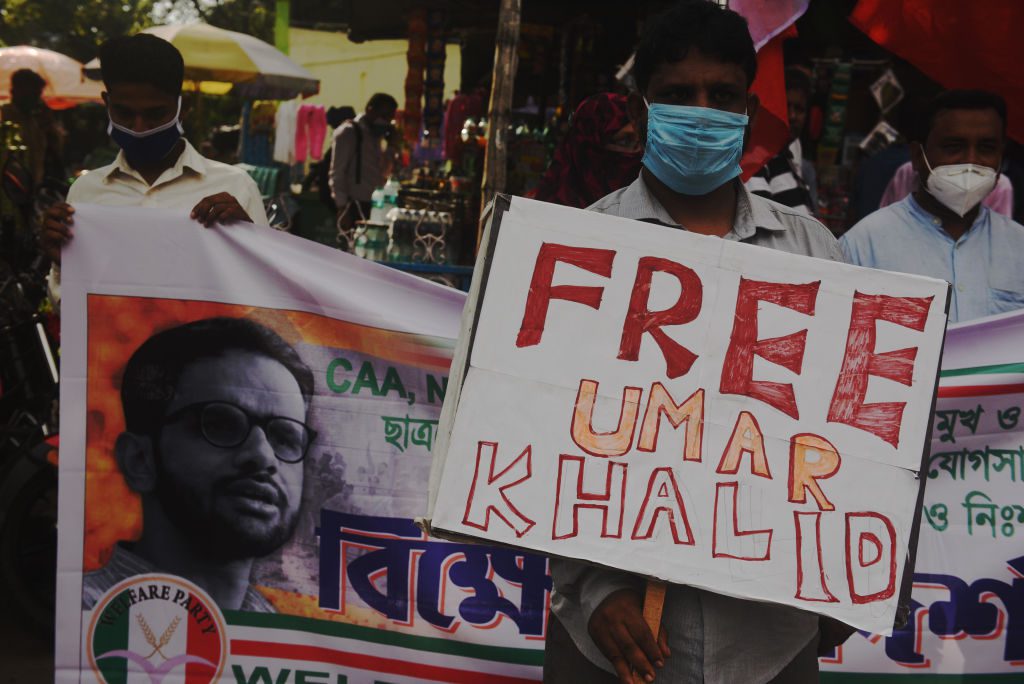
Umar Khalid came into the public eye as a student leader at Jawaharlal Nehru University (JNU) in New Delhi, one of India’s most prestigious universities. Known for his articulate speeches and active involvement in student politics, Khalid emerged as a vocal opponent of policies such as the Citizenship Amendment Act (CAA) and associated activism during 2019–2020.
Critics lauded him as an articulate voice for civil liberties, while detractors painted him as divisive. Regardless of perspective, his prominence tied him inextricably to national debates on dissent, democracy, and civil rights.
The Context: Anti-CAA Protests and Rising Tensions
The CAA, passed in late 2019, sparked widespread protests across India — especially on university campuses. Demonstrators objected to the law’s provisions, which critics said discriminated against Muslim citizens.
These protests were largely peaceful, though instances of violence and harsh police responses drew attention and controversy. Khalid, with many others, became emblematic of a generation willing to challenge state policy publicly.
The Arrest and Delhi Riots Charges
The 2020 Northeast Delhi Riots
In February 2020, communal violence erupted in parts of northeast Delhi, resulting in 53 confirmed deaths and hundreds of injuries. The police characterized this as pre-planned and conspiratorial in nature.
The Delhi Police Special Cell filed multiple cases, including a “larger conspiracy” FIR (First Information Report 59/2020), placing Khalid at the center of alleged coordination and incitement.
Arrest Under UAPA
Khalid was arrested in September 2020, months after the riots, under sections of the stringent Unlawful Activities (Prevention) Act (UAPA) — India’s anti-terror statute — and parts of the Indian Penal Code, including conspiracy, sedition, and related sections.
Authorities claim that Khalid, along with others, played a coordinating role in events leading up to the violence. Khalid and his legal team consistently deny these allegations, stressing his presence in protest spaces as constitutionally protected dissent.
Repeated Bail Denials and Prolonged Pre-Trial Detention
Despite multiple bail pleas, Khalid remained in custody for years. Courts, including the Delhi High Court, have refused bail while the trial progresses. One key judicial stance: that the complexity of evidence, voluminous charge sheets, and prima facie material justify denial in UAPA cases. The Week
The result is more than five years of incarceration without a concluded trial, punctuated only by brief interim releases — most recently for his sister’s wedding in December 2025. The Financial Express
The International Response — US Lawmakers and Global Pressure
Eight US Lawmakers Urge a Fair Trial and Bail
In late December 2025, a bipartisan group of eight US lawmakers sent a letter to the Indian Ambassador in Washington, DC, urging that Khalid be afforded a fair and timely trial in line with international legal standards.
This appeal was led by Representative Jim McGovern (Democrat, Massachusetts), co-chair of the Tom Lantos Human Rights Commission, and included prominent members such as Jamie Raskin, Chris Van Hollen, Peter Welch, Pramila Jayapal, Rashida Tlaib, Jan Schakowsky, and Lloyd Doggett. @mathrubhumi
What the Lawmakers Have Asked For
The letter emphasized respect for India’s democratic institutions, while questioning how prolonged pre-trial detention under UAPA — without a trial — aligns with international norms for justice and due process.
They specifically:
-
Asked for clarity on why trial proceedings have not commenced after more than five years.
-
Urged that bail be granted where appropriate.
-
Highlighted concerns over lengthy unchecked incarceration as inherently punitive.
Representative McGovern also noted in social media commentary that he had met with Khalid’s parents in Washington and expressed personal concern for Khalid’s rights. @mathrubhumi
Why This International Intervention Is Significant
It is rare for members of another nation’s legislature to publicly comment on an active criminal case in India, particularly one involving national security statutes like UAPA. Their involvement underscores:
-
International concern over civil liberties cases.
-
A broader narrative about human rights and rule of law in democratic nations.
-
Potential diplomatic friction between domestic legal sovereignty and global human rights discourse.
New York’s Mayor Raises a Human Touch — Zohran Mamdani’s Message
A Personal Note, Shared Globally
On January 1, 2026, Zohran Mamdani — the newly sworn-in Mayor of New York City — sent a handwritten letter to Umar Khalid. The note was delivered to Khalid’s family during their December 2025 visit to the United States. The Indian Express
In it, Mamdani wrote:
“Dear Umar, I think of your words on bitterness often, and the importance of not letting it consume one’s self. It was a pleasure to meet your parents. We are all thinking of you.” The Indian Express
This personal touch — part empathetic, part political — reverberated across social media platforms, gaining positive and critical attention alike.
Context: Who Is Zohran Mamdani?
Mamdani’s own background as a progressive, Indian-origin political figure in the United States, elected to lead one of the world’s most visible cities, adds layers to this outreach.
His decision to engage publicly suggests:
-
A belief in human rights transcending borders.
-
A recognition of global public opinion shaping domestic legal narratives.
-
An alignment with voices advocating for fairness and due process.
Impact of Mamdani’s Outreach
Handwritten and personal rather than formal diplomatic correspondence, the note carries emotional weight. It underscores that Khalid’s case is now part of a broader conversation on international justice and civil liberties, beyond procedural law.
India’s Official Stand and Domestic Debate
Government Position
Indian authorities maintain that due process is being followed via established legal channels. The use of UAPA — a law designed to address terrorism and large-scale conspiracies — is argued as justified based on the scale and severity of the 2020 riots.
Government spokespeople reiterate that:
-
Courts, not the executive, independently oversee bail and trial proceedings.
-
Legal arguments by defence and prosecution continue within the judiciary’s purview.
-
Questions about bail and pre-trial detention fall within Indian judicial norms, especially in UAPA contexts.
Judicial Perspective
The Indian judiciary, from trial courts to the High Court, has repeatedly highlighted the volume of evidence, complexity of the case, and the primacy of procedural fairness, even as Khalid’s lawyers argue that delays are unreasonable and punitive.
In refusing bail, judges have said that trial must proceed at a natural pace, and hastening procedures could harm either side’s rights. Newslaundry
The Broader Human Rights Debate
The international and domestic reactions to the Khalid case feed into larger conversations on:
1. Freedom of Speech vs. National Security
Does vocal dissent — particularly during politically charged movements — fall within the protective ambit of free expression, or can it be legitimately construed as conspiracy? This question is central not just in this case but in democracies worldwide.
2. Use of Anti-Terror Laws
Critics argue that the Unlawful Activities (Prevention) Act has been applied too broadly in several high-profile cases, potentially stifling dissent. Supporters of the law contend that its stringent provisions are necessary to protect national security.
3. The Role of Pre-Trial Detention
International legal standards generally urge minimal pre-trial incarceration, especially where trials are delayed. Prolonged detention — without conviction — raises human rights concerns, even if legally justified in some jurisdictions.
Voices on the Ground — Supporters, Critics, and Neutral Observers
Supporters of Khalid
Proponents of Khalid’s release argue:
-
The extended pre-trial detention amounts to punishment without conviction.
-
His speeches and activism fall under protected expression.
-
International interventions reflect genuine concern for due process.
Some have drawn parallels to other cases involving prolonged detention under security laws, suggesting systemic issues in democratic societies addressing dissent.
Critics of Khalid
Opponents stress:
-
The charges stem from legitimate legal proceedings tied to violence and public disorder.
-
UAPA’s application is a matter of legal interpretation, not political vendetta.
-
Foreign political commentary on India’s judicial processes amounts to interference.
What Happens Next? The Road Ahead
Supreme Court’s Pending Decisions
Khalid’s legal team has appealed to higher courts. Although several bail applications have been denied, the case remains active at the Supreme Court level, and future judgments could decide not just his fate but set precedents for similar prosecutions.
International Legal Opinion
Beyond the US lawmakers’ letter, global human rights organisations — including Amnesty International and International Commission of Jurists — have over the years highlighted concerns about prolonged UAPA detentions. These voices reinforce the argument for “justice with speed.”
Public Discourse and Media
Social media has intensified the debate, with content ranging from informational to highly partisan. Factual reporting remains essential to separating legal reality from sensationalism.
Conclusion: A Litmus Test for Democratic Values
The Umar Khalid case today stands at the intersection of domestic law, human rights, and international scrutiny. Actions by US lawmakers and messages from international political leaders like Zohran Mamdani underscore how the case has transcended India’s borders.
At its core are fundamental questions:
-
Can the rule of law be balanced with freedom of dissent?
-
How should anti-terror statutes be applied in politically sensitive cases?
-
What role should international opinion play in sovereign judicial matters?
These debates will not conclude with a single court order or political statement. However, the global spotlight ensures that transparency, fairness, and human dignity remain central to the unfolding narrative.