‘Perhaps Time for an Amicable Divorce With Jammu’: Sajad Lone’s Remark Exposes the Deepening Regional Rift in J&K
By: Javid Amin | 14 January 2025
As the National Law University controversy reignites old fault lines, Sajad Lone’s unprecedented call for separation between Jammu and Kashmir signals a dangerous new phase in the Union Territory’s political discourse
A Remark That Crossed a Political Rubicon
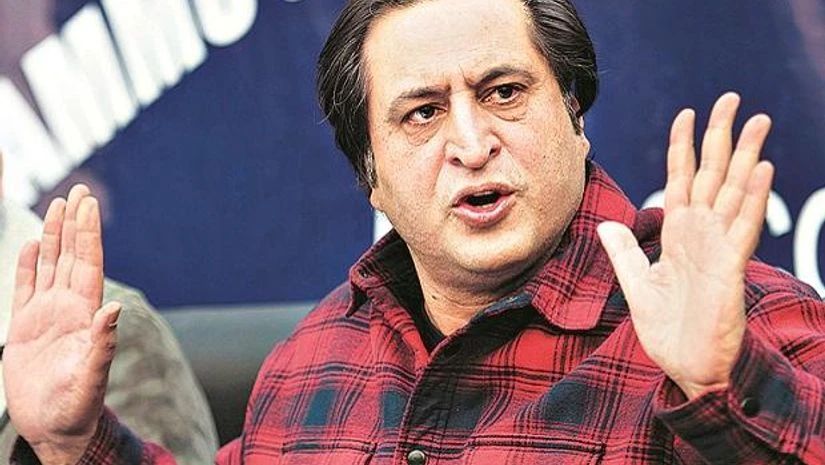
Political rhetoric in Jammu and Kashmir has always been charged, but rarely has it ventured into openly questioning the continued coexistence of Jammu and Kashmir within the same administrative unit. That line was crossed when Sajad Lone, president of the Jammu & Kashmir Peoples Conference, suggested that the time may have come for an “amicable divorce” between the two regions.
The remark, triggered by protests in Jammu against the proposed location of the National Law University (NLU) in Budgam, Kashmir, has jolted the political establishment. It is the first time in recent years that a mainstream Kashmiri leader has publicly articulated the idea of separation from Jammu — a demand traditionally voiced only by sections in Jammu seeking statehood.
Lone’s words have not merely stirred controversy; they have exposed the depth of regional mistrust that has been steadily building beneath the surface of governance debates in the Union Territory.
What Sajad Lone Said—and Why It Matters
The ‘Amicable Divorce’ Remark
Reacting to repeated objections from Jammu-based groups over development projects in Kashmir, Lone said:
“Maybe the time has come for an amicable divorce. It is not only about developmental matters. Jammu has become the proverbial stick to beat the Kashmiri with.”
He went further, asserting that:
-
Kashmiris feel more strongly about separation than Jammu does
-
Leadership must “call a spade a spade”
-
Continuous opposition from Jammu has made coexistence increasingly untenable
This was not an offhand comment. It was a deliberate political statement, aimed at highlighting what Lone describes as systematic obstruction of Kashmir-centric development.
The Immediate Trigger: National Law University in Budgam
An Educational Project Turned Political Flashpoint
The controversy erupted after the government proposed Budgam in Kashmir as the site for the Union Territory’s National Law University.
-
Jammu-based groups demanded the NLU be shifted to their region
-
Kashmir-based leaders argued that Jammu already hosts premier institutions
Protests, political statements, and accusations of regional bias followed, transforming an educational decision into a symbol of regional competition.
Why Institutions Matter So Much in J&K
In Jammu and Kashmir, the location of institutions is not merely about infrastructure. It is about:
-
Economic opportunity
-
Employment prospects
-
Regional dignity and representation
Each institution becomes a marker of political validation, making disputes almost inevitable.
A Pattern, Not an Isolated Incident
Recurring Regional Disputes
Lone’s frustration reflects a longer pattern of disagreements, including:
-
IIT and IIM location debates
-
Medical college seat distribution
-
Sports representation and recruitment quotas
-
Administrative postings
Each dispute has reinforced the perception — in both regions — that the other is gaining at its expense.
The Accumulation Effect
While any single issue may appear manageable, together they have created:
-
Deep-seated mistrust
-
Zero-sum thinking
-
A narrative of perpetual grievance
Lone’s “amicable divorce” comment is best understood as a product of accumulated resentment, not a spontaneous provocation.
Why Lone’s Statement Is Unprecedented
Reversal of Traditional Political Positions
Historically:
-
Jammu-based groups have demanded separation or statehood
-
Kashmiri leaders have argued for unity or autonomy
Lone’s statement reverses this pattern, making it politically significant.
A Mainstream Voice, Not the Margins
Unlike fringe rhetoric, Lone is:
-
A former minister
-
Head of a recognised regional party
-
Part of mainstream political discourse
This gives his words institutional weight, even if they lack immediate feasibility.
Political Reactions: Swift and Polarised
Jammu’s Response
BJP leaders in Jammu:
-
Rejected the idea outright
-
Reiterated their demand for full statehood
-
Accused Kashmiri leaders of divisive politics
For them, the solution lies not in division but in restoring Jammu and Kashmir’s statehood.
Silence and Discomfort Elsewhere
Other regional parties have responded cautiously, aware that:
-
Endorsing separation risks national backlash
-
Rejecting it outright may alienate regional constituencies
The result has been strategic silence, revealing how sensitive the issue has become.
What Lone Is Really Arguing
Beyond Geography: A Psychological Divide
Lone insists the problem is not just administrative but emotional:
-
Kashmiris feel perpetually scrutinised
-
Development projects are politicised
-
Kashmir’s aspirations are filtered through Jammu’s objections
In his framing, Jammu is no longer a partner but an obstacle.
A Call for Honesty, Not Immediate Action
Importantly, Lone did not outline:
-
A roadmap
-
A constitutional mechanism
-
A timeline
His argument is rhetorical, aimed at forcing an uncomfortable conversation rather than proposing an actionable plan.
Risks of Such Rhetoric
Hardening Regional Positions
Statements like this can:
-
Entrench identity-based politics
-
Reduce space for compromise
-
Legitimize extreme demands
What begins as political expression can quickly become political expectation.
Security and Governance Implications
Any serious debate on separation would complicate:
-
Administrative coordination
-
Resource allocation
-
Security management
In a sensitive region like J&K, rhetoric itself can become destabilising.
National Implications: A Mirror of India’s Fault Lines
Lone’s statement reflects a broader national challenge:
-
Managing regional aspirations
-
Balancing equity with unity
-
Preventing identity politics from fragmenting governance
The Jammu–Kashmir divide is not unique, but its strategic sensitivity makes it particularly consequential.
Comparative Snapshot: Jammu vs Kashmir
| Region | Dominant Sentiment | Key Flashpoints | Political Leaning |
|---|---|---|---|
| Jammu | Statehood demand | NLU, MBBS admissions | Strong BJP base |
| Kashmir | Growing alienation | Institutions, autonomy | Regional parties |
This divergence underscores why governance in the UT remains fragile.
Is an ‘Amicable Divorce’ Realistic?
Constitutional Reality
Under India’s Constitution:
-
Territorial reorganisation requires parliamentary approval
-
National consensus is essential
-
Security considerations dominate
In practical terms, separation remains highly improbable.
Political Significance Over Practicality
Yet, Lone’s statement matters because:
-
It signals erosion of regional cohesion
-
It reflects public sentiment in parts of Kashmir
-
It pressures the administration to address grievances
The power of the remark lies in its symbolism, not feasibility.
Conclusion: A Warning Shot Across the Political Bow
Sajad Lone’s call for an “amicable divorce” between Jammu and Kashmir is not a policy proposal. It is a political warning — one that exposes the deep fractures created by years of contested governance, competitive regionalism, and unresolved identity questions.
Whether one agrees or disagrees with Lone, his remark underscores a hard truth:
When regions begin to see each other as obstacles rather than partners, unity becomes transactional, not organic.
For the administration, the challenge is no longer just balancing institutions or resources. It is about rebuilding trust between two regions drifting further apart.
Ignoring that drift may prove far more dangerous than confronting it.