US Is an Enemy of Muslims, Says Mehbooba Mufti Amid Iran Crisis and Kashmir Rallies
By: Javid Amin | 16 January 2026
Strong Words Amid Rising Global Tensions
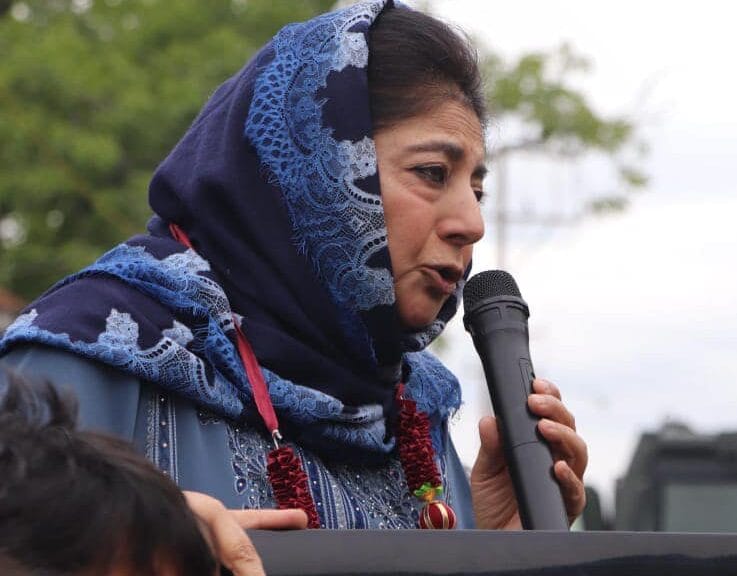
Amid escalating tensions between the United States and Iran, Peoples Democratic Party (PDP) president Mehbooba Mufti on January 16, 2026, launched a sharp attack on Washington, accusing it of being an “enemy of Muslims” and of systematically destabilizing Muslim-majority countries under the guise of democracy and human rights.
Her remarks come at a sensitive moment, with:
-
India issuing evacuation advisories for its citizens in Iran,
-
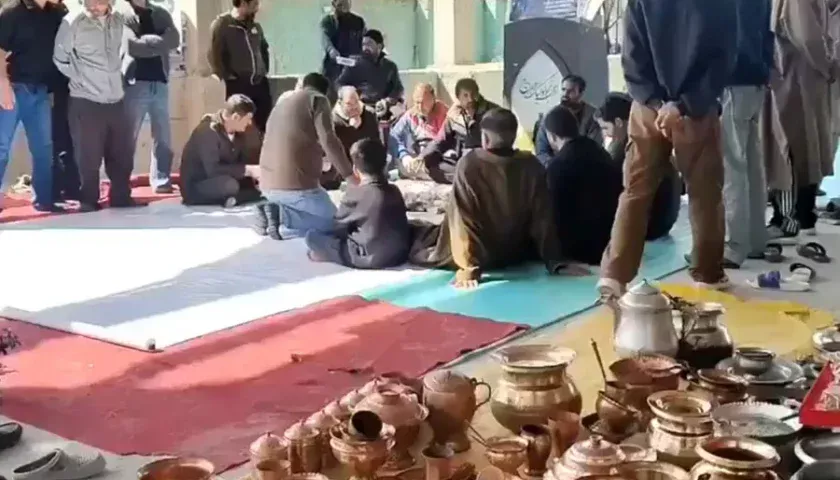
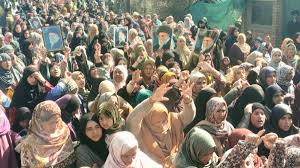
Pro-Iran rallies taking place in Kashmir and Ladakh’s Kargil, and
-
Heightened global fears of a wider conflict involving Iran, the U.S., and Israel.
Mufti’s statement adds a domestic political dimension to a rapidly evolving international crisis.
What Mehbooba Mufti Said
Addressing party workers and the media, Mufti accused the United States of hypocrisy in its foreign policy toward the Muslim world.
Key Allegations
-
Interventions not about democracy:
Mufti said U.S. military actions are “never about democracy or human rights” but are driven by strategic and economic interests. -
Targeting Muslim-majority nations:
She alleged that Washington has “destroyed several Muslim countries” through regime-change operations. -
Resource exploitation:
According to Mufti, oil and natural resources—rather than concern for women’s rights or democratic freedoms—have been the real motivations behind U.S. interventions. -
Use of human rights narrative:
She claimed that allegations of rights abuses are selectively employed to justify military or political interference.
Her remarks echoed long-standing critiques of U.S. foreign policy voiced across parts of the Muslim world.
Reference to India–Iran Relations
Mufti also invoked India’s historic relationship with Iran, describing it as civilizational and strategic, in contrast to what she portrayed as Western interference.
She highlighted:
-
Cultural and trade ties between India and Iran
-
India’s traditional policy of non-intervention
-
The need for dialogue rather than military pressure
This framing aligns with a broader narrative in Jammu & Kashmir that views Iran as a victim of global power politics rather than an aggressor.
Broader Global Context: A Familiar Critique of US Foreign Policy
Mufti’s remarks draw upon criticisms that have followed U.S. interventions in:
-
Iraq
-
Afghanistan
-
Libya
-
Syria
Critics argue these interventions:
-
Destabilized regions
-
Led to prolonged conflicts
-
Caused civilian casualties
-
Failed to deliver sustainable democratic outcomes
Supporters of U.S. policy, however, contend that interventions were responses to security threats, terrorism, or humanitarian crises—arguments Mufti explicitly rejected.
Resonance with Recent Pro-Iran Rallies
Mufti’s statement closely follows:
-
Pro-Iran rallies in Budgam (Kashmir) and Kargil (Ladakh)
-
Anti-U.S. and anti-Israel slogans raised during those demonstrations
-
Expressions of solidarity with Iran’s Supreme Leader Ayatollah Ali Khamenei
The timing suggests a convergence between street-level mobilization and political rhetoric, particularly in Shia-majority regions.
Domestic Political Implications
Positioning of the PDP
By taking a strong anti-U.S. stance, Mufti:
-
Reinforces PDP’s image as critical of Western interventionism
-
Appeals to Muslim sentiment amid global tensions
-
Differentiates her party from national parties aligned closely with the West
Impact in Jammu & Kashmir
Her remarks may resonate with:
-
Shia communities in Kargil and parts of Kashmir
-
Sections of the population critical of global power politics
-
Voters sensitive to international Muslim issues
At the same time, such statements may polarize opinion among communities with differing geopolitical views.
Diplomatic Sensitivities for India
India currently maintains:
-
Strategic ties with the United States
-
Defense and technology cooperation with Israel
-
Long-standing energy and cultural relations with Iran
Public political statements portraying the U.S. as hostile to Muslims introduce diplomatic sensitivities, even though they do not reflect official government policy.
Analysts note that:
-
Domestic political rhetoric does not necessarily translate into foreign policy
-
However, such statements are closely watched by international observers
Key Takeaways
-
Mehbooba Mufti accused the U.S. of being an “enemy of Muslims” on January 16, 2026.
-
She alleged U.S. interventions target Muslim countries for regime change and resources.
-
Her remarks align with recent pro-Iran mobilization in Kashmir and Kargil.
-
The statement adds a domestic political layer to an already volatile global situation.
-
India continues to balance relations with the U.S., Iran, and Israel despite internal political rhetoric.
Conclusion: Political Rhetoric in a Volatile Moment
Mehbooba Mufti’s sharp critique of the United States underscores how international conflicts increasingly shape domestic political discourse, particularly in regions with strong religious and geopolitical identities.
As tensions involving Iran continue to rise, statements like these reflect not only ideological positioning but also the broader challenge India faces—allowing democratic expression while maintaining a carefully calibrated foreign policy.
With events unfolding rapidly in West Asia, such rhetoric is likely to remain part of the political conversation in Jammu & Kashmir in the days ahead.