Kashmiri Students Back from Iran Reject Panic, Criticise Media Coverage
By: Javid Amin | 17 January 2025
Returned students say panic was manufactured by exaggerated coverage, insist life and studies continued normally in Iranian cities
Relief at Home, Anger Over Narratives
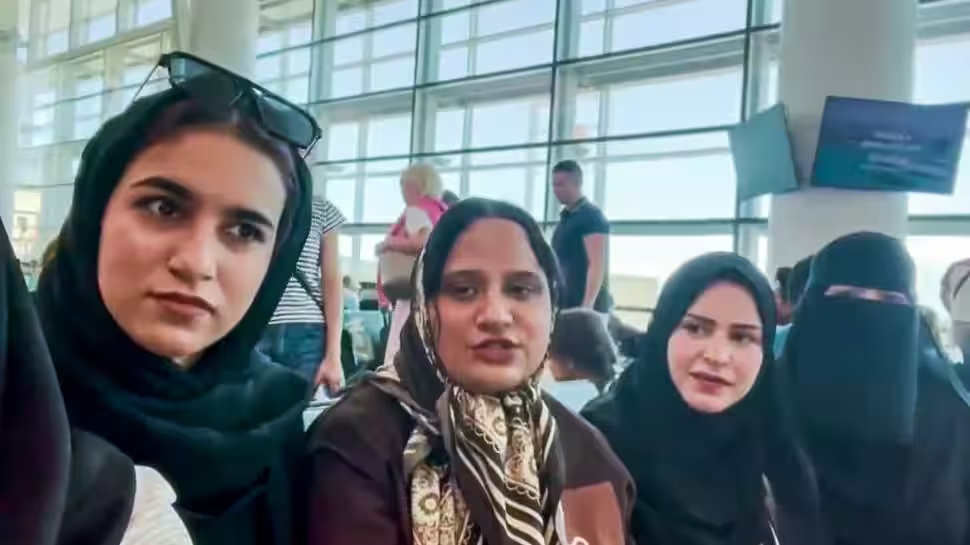
When more than three dozen Kashmiri students arrived home from Iran this week, their return was met with relief, tears, and tight embraces from anxious families. But alongside gratitude for safety, another emotion dominated their voices: anger.
Anger not at Iran.
Anger not at their universities.
But at mainstream television channels and social media platforms, which, they allege, grossly misrepresented the situation on the ground, triggering fear, panic, and unnecessary disruption to their education.
Speaking to reporters after landing in Kashmir, the students said they felt compelled to return not because of any immediate danger, but because relentless media coverage created a perception of chaos that did not match their lived reality.
What Prompted the Return: Panic Versus Reality
The Trigger
The return of Kashmiri students followed:
-
Intense television debates on unrest in Iran
-
Viral social media posts warning of danger to foreign students
-
Emotional appeals by parents seeking evacuation
As these narratives spread, families in Kashmir began urging their children to return immediately, fearing the worst.
Students’ Claim
However, students insist:
-
They did not witness protests near campuses
-
Universities remained functional
-
Daily life in cities where they studied continued largely uninterrupted
One medical student said bluntly:
“We were safer in our hostels than we were mentally after watching Indian TV news clips sent by our families.”
Students Speak: ‘We Never Saw What Was Being Shown on TV’
Rejecting Social Media Rumours
Several students said that the most alarming claims circulating online—about mob violence, attacks on students, and campuses shutting down—were simply untrue in their experience.
They clarified:
-
No foreign students were targeted in their cities
-
No universities asked Kashmiri students to leave
-
Academic schedules continued
A postgraduate student explained:
“Social media created a parallel Iran that we were not living in.”
Internet Disruptions, Not Insecurity
Students acknowledged that:
-
Internet services were occasionally restricted
-
Communication with families became difficult
But they emphasized that internet shutdowns were misinterpreted as signs of imminent danger, when in fact, they did not translate into physical insecurity on campuses.
Why Kashmiri Students Study in Iran
A Long-Standing Educational Link
Iran has been a preferred destination for Kashmiri students for decades, particularly in:
-
Medicine
-
Dentistry
-
Allied health sciences
The reasons are clear:
-
Affordable fees compared to Europe or private Indian colleges
-
Recognised medical institutions
-
Cultural familiarity and community presence
Thousands of students from Kashmir currently study across Iranian cities, forming a well-established academic diaspora.
Cost of Sudden Return
Many returning students pointed out that:
-
They returned voluntarily, not under evacuation orders
-
Travel costs were significant
-
Academic timelines were disrupted
Some students fear they may:
-
Lose semesters
-
Face re-registration hurdles
-
Bear financial losses their families cannot easily absorb
Parental Anxiety: Fear Fueled by Screens
Families Caught Between Love and Panic
Parents in Kashmir admit they were deeply shaken by:
-
Graphic television visuals
-
Breaking-news alerts
-
Unverified social media videos
In a region already shaped by conflict and uncertainty, fear travels fast, and parents said they felt morally compelled to bring their children home.
One parent said:
“When every channel says Iran is burning, how do you sleep at night?”
Students Say Families Were Misled
Returned students, however, believe their families were misinformed rather than irrational.
They argue:
-
Media failed to distinguish between regions
-
Isolated incidents were portrayed as nationwide collapse
-
Student safety was discussed without speaking to students
Media Under Fire: Accusations of Sensationalism
‘Panic Was Manufactured’
Students were unusually direct in criticising Indian media, accusing it of:
-
Sensationalism
-
Absence of on-ground verification
-
Turning complex realities into dramatic headlines
They said many debates:
-
Did not cite student voices
-
Relied on viral clips without context
-
Amplified worst-case scenarios
One student remarked:
“Media decided we were unsafe before asking us if we were.”
The Social Media Multiplier Effect
Students also blamed:
-
WhatsApp forwards
-
X (formerly Twitter) clips
-
Instagram reels
These platforms, they said, amplified fear faster than facts, often recycling old or unrelated footage.
Ground Reality in Iran: What Students Describe
Campuses Remained Functional
According to students:
-
Lectures continued
-
Hospitals attached to medical colleges functioned
-
Foreign students attended classes
Some classmates, they noted, chose to stay back, unconvinced that leaving was necessary.
Cities Not in Lockdown
Students clarified that:
-
Daily commerce continued
-
Public transport operated
-
There was no atmosphere of siege in their localities
They stressed that Iran is a large country, and generalisations erased regional differences.
Government Role: Between Caution and Calm
Official Advisory Versus Evacuation
Authorities issued advisories urging caution but did not mandate evacuation. However, the public mood—shaped by media narratives—created pressure for immediate action.
Students said clearer communication could have helped:
-
Calmer advisories
-
Direct student briefings
-
Myth-busting updates
Broader Issue: Media Responsibility in Crisis Reporting
When Coverage Becomes Consequence
This episode has reignited debate on:
-
Ethical crisis reporting
-
Responsibility toward vulnerable communities
-
Impact of speculative journalism
Students argue that words and visuals can cause displacement, even without bombs or borders closing.
Kashmir’s Special Sensitivity
In Kashmir, where:
-
Conflict memory is deep
-
Anxiety is inherited
-
Rumours have real consequences
Irresponsible reporting, students say, hits harder and faster.
Key Takeaways
| Aspect | Students’ Experience | Media Narrative |
|---|---|---|
| Campus safety | Calm, functional | Dangerous, unstable |
| Daily life | Normal | Chaotic |
| Reason for return | Family pressure | Immediate threat |
| Role of media | Panic-inducing | “Protective” |
What Students Want Now
Returned students are not demanding apologies. Instead, they ask for:
-
Nuanced reporting
-
Verification before amplification
-
Inclusion of student voices
They also urge authorities to:
-
Support academic continuity
-
Facilitate re-entry where possible
-
Engage directly with students abroad in future crises
Conclusion: Between Perception and Reality
The return of Kashmiri students from Iran is not just a story of travel—it is a case study in how perception can overpower reality.
While unrest in parts of Iran is real and deserves coverage, students insist their experiences reveal a crucial truth: not all crises are uniform, and not all headlines reflect ground realities.
Their testimony challenges both media houses and audiences to pause, verify, and listen—especially when the lives and futures of young students hang in the balance.
In a world driven by speed, their message is simple but urgent:
Accuracy is not optional. It is responsibility.