Kashmir’s Smart Meter Push: When Modernisation Meets Public Anger Over Power Bills
By: Javid Amin | 22 January 2026
For decades, electricity in Kashmir followed a familiar rhythm—erratic supply, predictable billing, and public frustration that rarely spilled onto the streets. That balance has now been disrupted.
Across towns and villages in the Valley, the government’s push to replace traditional electricity connections with smart meters has ignited widespread protests, sharp political reactions, and a growing trust deficit between consumers and power authorities. What was projected as a technological upgrade promising transparency, efficiency, and better supply has instead become a symbol of sudden financial stress for ordinary households.
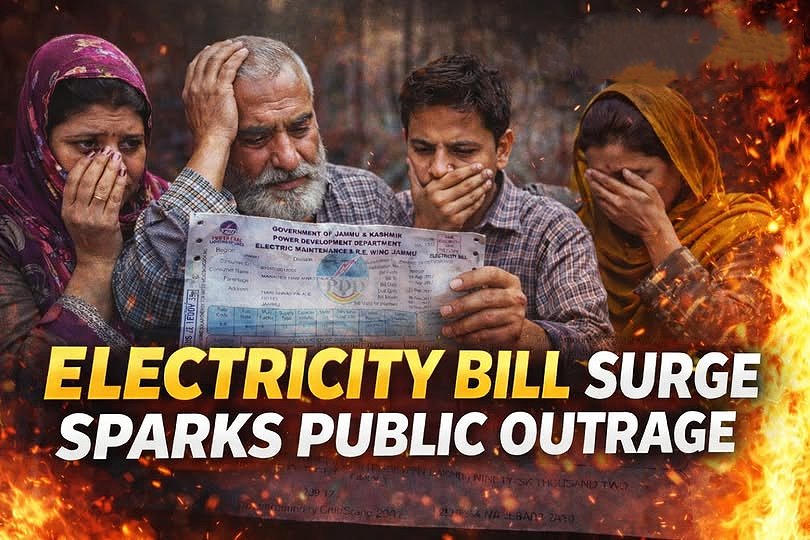
Residents from Anantnag, Baramulla, Sopore, Pulwama, Budgam, and parts of Srinagar report that their monthly electricity bills have doubled or tripled within weeks of smart meter installation—despite no visible improvement in power availability.
This is not just a billing issue. It is a socio-economic flashpoint, exposing deeper contradictions in Kashmir’s power economy, governance priorities, and the lived realities of people already under financial strain.
The Big Plan: 16.5 Lakh Smart Meters Across J&K
The smart meter rollout in Jammu & Kashmir is among the largest power-sector reforms undertaken since the Union Territory’s reorganisation.
Installation Targets
-
7.5 lakh smart meters in Kashmir
-
9 lakh smart meters in Jammu
-
Deadline: March–April 2026
The project is being executed under centrally supported power reforms aimed at reducing losses, improving billing efficiency, and aligning J&K with national electricity distribution standards.
On paper, the numbers reflect ambition. On the ground, they reflect anxiety.
From Flat-Rate Comfort to Usage-Based Shock
How Power Billing Worked Earlier
For years, most Kashmiri households were billed under a flat-rate system, typically ranging between ₹1,500 to ₹2,000 per month, regardless of actual consumption.
While inefficient and opaque, the system offered:
-
Predictable household budgeting
-
Social acceptance of erratic supply
-
Informal adjustment to frequent outages
What Changed With Smart Meters
Smart meters introduced:
-
Real-time consumption tracking
-
Automated billing
-
Monthly bills strictly based on usage
For many households, this translated into bills ranging from ₹3,000 to ₹5,000, and in some cases even higher during winter months when heating appliances are unavoidable.
Why Are Bills Rising So Sharply?
1. Real Consumption Was Always Higher Than Flat Rates
Smart meters have exposed a reality long buried under flat-rate billing: actual electricity usage in Kashmir is significantly higher than billed earlier.
Electric heaters, blowers, immersion rods, and water heating devices are not luxuries in the Valley—they are survival tools during harsh winters.
2. No Transition Buffer for Consumers
Unlike many states that introduced phased tariffs, consumption slabs, or temporary subsidies, Kashmir’s rollout lacked a cushioning mechanism.
Households shifted overnight from predictable flat rates to variable market-linked billing.
3. Winter Dependency on Electric Heating
With limited access to piped gas and declining use of traditional fuels, electricity has become the primary heating source for many families—especially in urban areas.
Smart meters now price this dependency in real time.
Ground Reality: Protests, Fear, and Mistrust
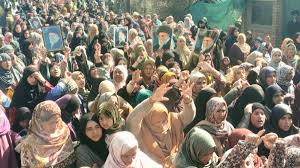
In Anantnag, residents staged protests after receiving bills exceeding ₹4,000 within the first billing cycle.
In Baramulla and Sopore, local traders shut shops for hours in symbolic resistance.
In Srinagar’s outskirts, residents refused meter installations, fearing financial ruin during winter months.
The dominant public sentiment is not anti-technology—it is anti-sudden shock.
Government’s Argument: Transparency, Theft Control, and 24/7 Power
Officials defend the rollout on three primary grounds:
1. Curbing Power Theft
J&K has historically recorded high Aggregate Technical and Commercial (AT&C) losses, driven by:
-
Unmetered connections
-
Illegal tapping
-
Poor billing recovery
Smart meters are seen as essential to plug revenue leaks.
2. Billing Transparency
Authorities argue that smart meters eliminate estimation errors, human interference, and delayed billing.
3. Promise of Improved Supply
The long-term goal, according to officials, is round-the-clock electricity, once financial losses are controlled.
The problem: consumers are paying higher bills without seeing these benefits yet.
Kashmir’s Structural Energy Problem: Hydropower Dependence
Seasonal Generation Limits
J&K relies heavily on hydropower, which:
-
Peaks in summer
-
Drops sharply in winter due to frozen water flows
This forces the region to purchase costly power from the national grid, increasing per-unit costs.
The Consumer Question
If supply remains erratic due to structural constraints, residents ask:
“Why should we pay more for the same or worse service?”
Comparison Table: Flat Rate vs Smart Meter Reality
| Parameter | Flat-Rate System | Smart Meter System |
|---|---|---|
| Monthly Cost | ₹1,500–₹2,000 | ₹3,000–₹5,000 |
| Predictability | High | Low |
| Transparency | Low | High |
| Supply Quality | Erratic | Still erratic |
| Public Acceptance | Moderate | Strong resistance |
Affordability Crisis: Who Is Hit the Hardest?
Rural Households
-
Lower incomes
-
Larger families
-
Limited alternatives to electric heating
Middle-Class Urban Families
-
Fixed salaries
-
Rising food, education, and fuel costs
-
Little room for sudden utility hikes
Small Businesses
-
Shops, bakeries, workshops
-
Power bills eating into already thin margins
Trust Deficit: Revenue First, Reform Later?
A recurring public concern is that revenue recovery is being prioritised over service improvement.
Consumers argue:
-
Metering should follow supply stabilisation
-
Not the other way around
This sequencing failure has turned a technical reform into a social issue.
Energy Efficiency: A Good Idea With Limited Options
Smart meters theoretically encourage:
-
Reduced wastage
-
Conscious consumption
In practice, Kashmir’s climate leaves little room for reduction during winter.
Efficiency cannot replace basic heating needs.
Political and Social Implications
Rising Public Anger
Energy costs are politically sensitive, especially in regions with:
-
High unemployment
-
Seasonal economic disruptions
-
Long-standing governance distrust
Risk of Policy Rollback
Sustained protests may force:
-
Temporary pauses
-
Subsidy announcements
-
Policy recalibration
What Consumers Are Demanding
-
Gradual transition
-
Winter-specific subsidies
-
Clear consumption education
-
Improved supply before higher billing
-
Independent grievance redressal
What Needs to Change: Expert Recommendations
Short-Term
-
Cap winter bills
-
Introduce transitional slabs
-
Public awareness campaigns
Medium-Term
-
Improve power purchase planning
-
Expand solar and micro-hydro
-
Strengthen local distribution networks
Long-Term
-
Reduce hydropower dependency
-
Invest in energy storage
-
Align reforms with regional realities
The Larger Question: Can Modernisation Ignore Ground Realities?
Kashmir’s smart meter controversy is not about technology—it is about timing, trust, and economic sensitivity.
Reforms succeed when people feel included, protected, and heard. When they feel blindsided, even the best ideas face resistance.
Conclusion: A Reform at the Crossroads
Smart meters may be inevitable in Kashmir’s power future. But how they are implemented will decide whether they become tools of progress or symbols of policy disconnect.
Without affordability safeguards and visible service improvements, the smart meter push risks deepening public alienation in a region where trust is already fragile.
Modernisation must not come at the cost of social stability.