School Mafia in Jammu & Kashmir: How Private Schools Exploit Parents Despite Government Orders
By: Javid Amin | 25 December 2025
When Education Turns Into Exploitation
Education or Extortion?
In Jammu & Kashmir today, sending a child to school has become one of the most emotionally and financially draining decisions for parents. Education — once considered a public good and a social equaliser — has increasingly turned into a commercial enterprise run by unregulated private interests, where profit outweighs pedagogy and compliance is optional.
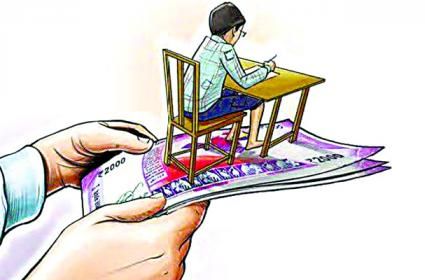
Parents are not merely paying fees; they are paying ransom — in the form of inflated book prices, forced uniforms, arbitrary annual charges, illegal fee hikes, and miscellaneous levies that defy logic, law, and morality.
What makes this crisis more painful is not just the greed of private schools, but the collective failure of authorities to enforce their own orders. Circulars are issued. Committees are announced. Deadlines are declared. But on the ground, nothing changes.
This is not negligence anymore. It is systemic abdication.
The Uniform Syllabus Scam: Orders on Paper, Profits on Ground
What the Law Says
The Jammu & Kashmir Board of School Education (JKBOSE) has clearly mandated a uniform syllabus for schools affiliated with it. The intent is straightforward:
-
Reduce financial burden on parents
-
Ensure academic standardisation
-
Prevent exploitation through forced publishing tie-ups
What Schools Are Doing
On the ground, these orders are treated as optional.
Private schools have:
-
Introduced their own “custom syllabi”
-
Forced parents to buy non-JKBOSE books
-
Linked textbooks to specific vendors and publishers
The cost?
-
₹4,000 to ₹5,000 per child, sometimes more — every year
-
For families with two or three children, this becomes financially devastating
The Hidden Nexus
This is not accidental. Schools:
-
Receive commissions from publishers and vendors
-
Change books frequently to prevent reuse
-
Use “updated editions” as an excuse for fresh purchases
This is not education planning.
This is organized profiteering.
The uniform syllabus has become a cruel joke, where only the name is uniform — the cost is anything but.
The Annual Fee Mystery: Paying for What, Exactly?
Parents across Jammu & Kashmir ask a simple question:
“When we already pay monthly tuition, transport charges, exam fees, activity fees, and book costs — why are we forced to pay a hefty annual fee?”
No clear answer exists.
Ground Reality vs Fee Claims
Schools claim annual fees cover:
-
Infrastructure development
-
Maintenance
-
Facilities
But the reality tells a different story:
-
Dirty classrooms that require children to carry 2–3 sets of uniforms weekly
-
No playgrounds within school premises
-
Children marched to nearby open grounds, wasting time and risking safety
-
Aging buildings, peeling paint, broken desks
-
No science labs, no libraries, no sports infrastructure
The case of New Convent School is emblematic:
-
No in-house playground
-
Children forced to walk to external grounds
-
Safety compromised
-
Time lost
Yet fees are charged on par with elite, well-equipped institutions.
This is not mismanagement.
This is deception.
Illegal Fee Hikes: When Orders Are Treated as Suggestions
Fee Fixation Committee (FFC) Orders
The Fee Fixation Committee has repeatedly:
-
Prohibited arbitrary fee hikes
-
Directed schools to seek approval before increasing fees
What Schools Do Instead
-
Increase fees unilaterally
-
Rename hikes as “development charges”
-
Implement increases mid-session
-
Pressure parents through threats of:
-
Withholding admit cards
-
Denying access to online portals
-
Harassing children
-
Parents are left helpless:
-
Complaints go unanswered
-
Schools act with confidence — because no action follows
A law without enforcement is not regulation.
It is an illusion.
Miscellaneous Charges: Small Items, Big Loot
One of the most glaring examples of exploitation is the overpricing of low-cost educational material.
Example:
-
A 12-page booklet, which should cost ₹40–₹50
-
Sold inside school premises for ₹270
Multiply this by:
-
Hundreds of students
-
Multiple classes
-
Every academic year
The result is lakhs in unjustified collections — for material that has no intrinsic value to justify the price.
These are not “miscellaneous charges”.
They are micro-extortions designed to avoid scrutiny.
Infrastructure Deficit: Paying for Facilities That Don’t Exist
Despite charging premium fees, many private schools in J&K lack:
-
Clean washrooms
-
Safe drinking water
-
Proper ventilation
-
Functional laboratories
-
Playgrounds
Children spend:
-
More time sitting in congested classrooms
-
Less time in physical or creative activities
Parents rightly ask:
“If infrastructure is missing, where is our money going?”
There are no answers.
There are no audits.
There are no penalties.
Authorities in Hibernation: Orders Without Action
This crisis is not happening in isolation. It thrives because:
-
School Education Department issues circulars without follow-up
-
Inspection mechanisms are weak or symbolic
-
Complaints pile up, action files disappear
Two uncomfortable possibilities emerge:
-
Authorities are powerless and paralysed
-
Authorities are hand-in-glove with the school mafia
Either scenario is unacceptable.
Governance is not about issuing PDFs.
Governance is about enforcement on the ground.
The Socio-Economic Impact: How Families Are Being Crushed
This unchecked exploitation has wider consequences:
Middle-Class Erosion
-
Salaries do not rise as fast as school fees
-
Education expenses consume disproportionate household income
Mental Stress
-
Parents take loans to pay fees
-
Children sense family anxiety
-
Education becomes a source of trauma
Inequality
-
Quality education becomes a privilege, not a right
-
Merit is replaced by affordability
This is how societies fracture — quietly, systematically.
A Loud Appeal to the Government of Jammu & Kashmir
To the School Education Department
-
Conduct mandatory annual audits of private schools
-
Publish fee structures publicly
-
Penalize violations with fines and derecognition
To the Fee Fixation Committees
-
Be empowered with punitive authority, not advisory roles
-
Act on complaints within fixed timelines
-
Name and shame repeat offenders
To the Chief Minister of Jammu & Kashmir
Education is not a commercial commodity.
It is a constitutional responsibility.
We urge the Chief Minister to:
-
Personally review private school regulation
-
Order a UT-wide compliance drive
-
Protect parents from institutional exploitation
Silence now will be remembered as complicity.
Bottom-Line: Education Cannot Be a Marketplace Without Rules
If education is the foundation of society, then allowing its exploitation is nothing short of social sabotage.
Today, every fee receipt handed to a private school in Jammu & Kashmir carries:
-
Anxiety
-
Helplessness
-
A sense of injustice
The school mafia thrives on fear, fragmentation, and apathy.
Breaking it requires:
-
Political will
-
Administrative courage
-
Collective parental voice
Until then, parents will continue to bleed — quietly, legally, endlessly.
And that is a price no society should ever be willing to pay.