Omar Abdullah Questions Hyper-Nationalist Films Like Dhurandhar and The Kashmir Files: Do They Reflect Kashmiri Reality?
By: Javid Amin | 18 December 2025
Cinema, Politics, and the Kashmir Question
Cinema in India has never been merely entertainment. It has long functioned as a powerful political, cultural, and emotional medium—shaping public opinion, reinforcing ideologies, and influencing national conversations. Nowhere is this more evident than in films dealing with Kashmir, a region burdened by history, conflict, displacement, and contested narratives.
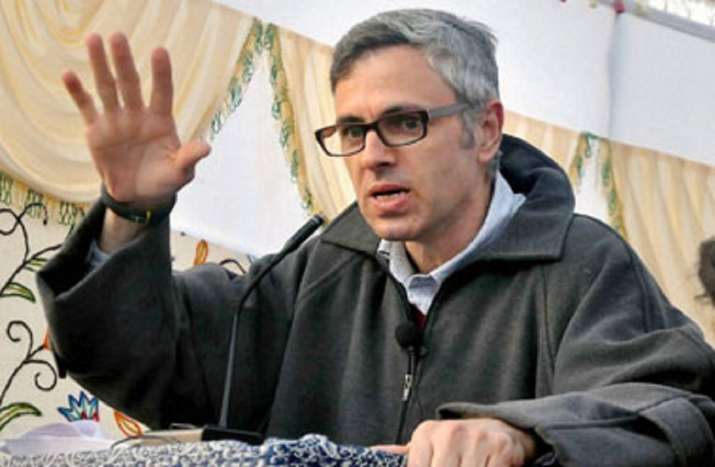
Against this backdrop, former Jammu and Kashmir Chief Minister and National Conference leader Omar Abdullah has once again stirred debate by questioning whether hyper-nationalist films such as Dhurandhar and The Kashmir Files are genuinely accepted by the people of Kashmir. His answer is clear and uncomfortable for many: large sections of Kashmiri society do not see these films as authentic reflections of their lived realities.
Instead, Abdullah argues, these films are widely perceived in the Valley as political projects—crafted more to satisfy nationalist sentiment outside Kashmir than to represent the complexities within it.
This article takes a deep, ground-level look at Abdullah’s remarks, the reception of such films in Kashmir, the politics of cinematic storytelling, and the widening gap between national applause and local alienation.
Omar Abdullah’s Core Argument: Art or Agenda?
At the heart of Omar Abdullah’s critique lies a fundamental question: are these films works of cinema, or instruments of political messaging?
In recent interactions, Abdullah has expressed skepticism about films like Dhurandhar, describing them as part of a growing trend of hyper-nationalist storytelling that prioritizes ideological messaging over nuance, empathy, and factual balance.
According to Abdullah:
- These films simplify Kashmir into binaries of good and evil
- They erase internal diversity and dissent
- They portray Kashmiris largely as stereotypes rather than individuals
- They speak about Kashmir, rarely to Kashmir
Such portrayals, he argues, make the films resonate loudly in television studios and social media debates across India—but fall flat, or even offend, within Kashmir itself.
Understanding ‘Hyper-Nationalist Cinema’
The term hyper-nationalist does not merely imply patriotism. In political discourse, it refers to narratives that:
- Promote a singular, state-centric version of nationalism
- Frame dissent as disloyalty
- Reduce complex conflicts into moral absolutes
- Portray historical events selectively
Omar Abdullah suggests that Dhurandhar fits this mould—less concerned with Kashmiri social realities and more invested in affirming a dominant nationalist worldview.
In Kashmir, where lived experience includes conflict, loss, militarisation, displacement, and political uncertainty, such storytelling is often viewed as external, imposed, and emotionally disconnected.
The Kashmir Files: A Film That Changed the National Conversation
Few films in recent Indian history have generated as much controversy as The Kashmir Files. Centered on the exodus of Kashmiri Pandits in the early 1990s, the film achieved massive commercial success and received the Nargis Dutt Award for Best Feature Film on National Integration.
Nationally, the film was celebrated by many as a long-overdue acknowledgment of Pandit suffering. In political discourse, it was repeatedly cited as a corrective to perceived historical silence.
However, Omar Abdullah’s response was notably critical.
Omar Abdullah on The Kashmir Files: ‘More Politics Than Cinema’
Abdullah publicly mocked the film’s National Award win, arguing that it was less about cinematic merit and more about political signalling.
His critique did not deny the tragedy of the Pandit exodus. Instead, he questioned:
- The film’s selective storytelling
- Its absence of broader historical context
- Its portrayal of Kashmiri Muslims as a monolithic group
- Its use as a political weapon in national debates
According to Abdullah, the film’s success outside Kashmir contrasted sharply with local discomfort and rejection.
Reception in Kashmir: Silence, Skepticism, and Rejection
One of the most telling aspects of the debate is how little these films are discussed positively within Kashmir itself.
Local Audience Response
Ground-level conversations, local media commentary, and social discourse indicate:
- Limited viewership enthusiasm in the Valley
- Discomfort with one-sided narratives
- Fear of further stereotyping
- Emotional fatigue with externally imposed stories
Many Kashmiris feel these films speak over them, not with them.
Why Many Kashmiris Feel Misrepresented
The sense of rejection is rooted in lived experience.
Kashmiris often argue that:
- Their suffering is reduced to footnotes
- Their political diversity is erased
- Their daily realities are ignored
- Their voices are absent from mainstream storytelling
Omar Abdullah echoes this sentiment, stating that films claiming to represent Kashmir rarely include Kashmiri perspectives in meaningful ways.
National Applause vs Local Alienation
A recurring pattern emerges:
- Films receive national praise
- Political leaders endorse them
- Media amplifies them
- Kashmiris feel increasingly alienated
Abdullah warns that this gap deepens mistrust rather than fostering national integration—ironically undermining the very goals these films claim to pursue.
Cinema as a Political Tool in Contemporary India
The rise of politically charged cinema reflects broader changes in India’s cultural ecosystem.
Films are now:
- Released alongside political messaging
- Promoted through ideological campaigns
- Interpreted as political statements
In this environment, Abdullah argues, Kashmir-themed films are rarely neutral.
Dhurandhar: Continuation of a Trend
While Dhurandhar has not yet achieved the scale of The Kashmir Files, Omar Abdullah places it in the same ideological lineage.
He suggests that such films:
- Repackage familiar narratives
- Appeal to nationalist sentiment
- Prioritise emotional provocation over understanding
As a result, their acceptance in Kashmir remains minimal.
The Question of Authentic Storytelling
Abdullah’s critique ultimately returns to authenticity.
He asks:
- Who is telling Kashmir’s story?
- For whom is it being told?
- Who benefits from this narrative?
Without Kashmiri voices at the centre, he argues, films risk becoming political monologues rather than cultural dialogues.
Impact on Social Cohesion
Rather than healing wounds, Abdullah believes these films often:
- Harden identities
- Reinforce mistrust
- Encourage suspicion
- Polarise audiences
This is especially dangerous in a region already grappling with social fragmentation.
Voices Beyond Omar Abdullah
While Abdullah is one of the most prominent critics, similar concerns have been raised by:
- Kashmiri academics
- Journalists
- Civil society groups
- Independent filmmakers
Their shared concern is not denial of history, but rejection of selective history.
Can Cinema Bridge the Gap?
Despite his criticism, Abdullah does not dismiss cinema’s potential.
He has suggested that meaningful engagement would require:
- Inclusive storytelling
- Multiple perspectives
- Humanising all communities
- Avoiding ideological rigidity
Only then, he argues, can films hope to resonate within Kashmir.
Why This Debate Matters Now
The controversy around Dhurandhar and The Kashmir Files is not just about movies. It reflects:
- The politics of memory
- The struggle over narrative control
- The disconnect between national discourse and local reality
In Kashmir, stories are not abstract—they are lived.
Bottom-Line: Acceptance Cannot Be Manufactured
Omar Abdullah’s message is ultimately a cautionary one. Acceptance cannot be imposed, nor can understanding be forced through one-sided storytelling.
While hyper-nationalist films may win awards, box-office success, and political applause, Abdullah argues that they fail the most important test—resonance with the people whose lives they claim to depict.
Until Kashmiris see themselves reflected with dignity, complexity, and honesty, such films, he believes, will remain popular elsewhere but rejected at home.