Supreme Court Strikes Down Article 35A, Says It Violated Fundamental Rights of Indians

Supreme Court Strikes Down Article 35A, Says It Violated Fundamental Rights of Indians

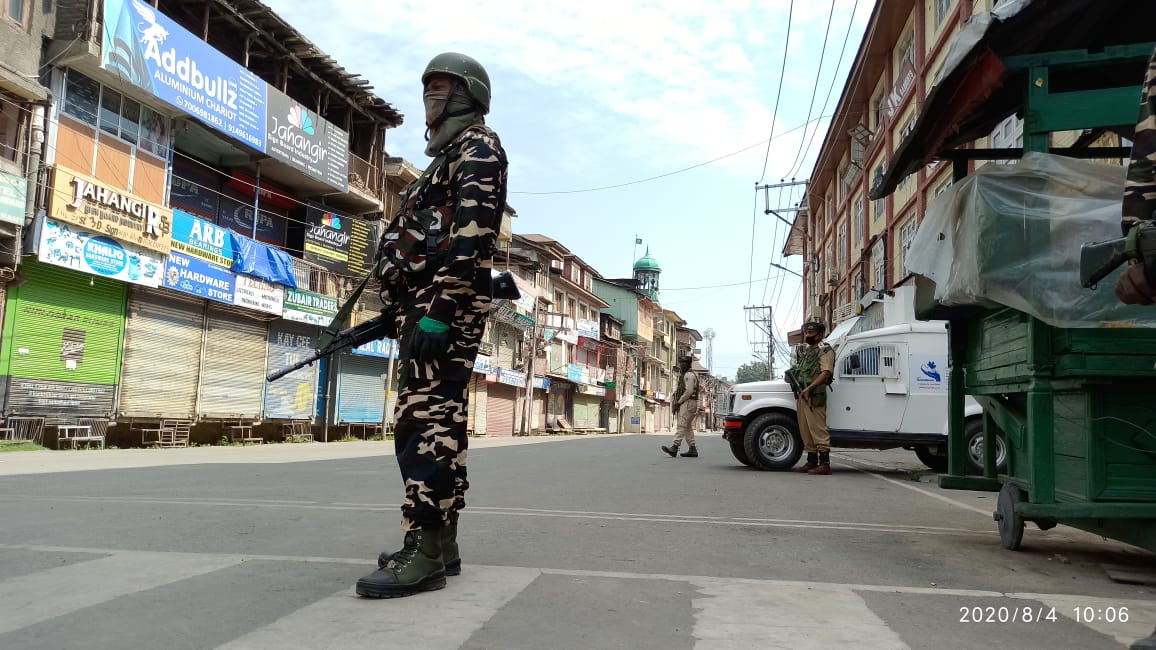
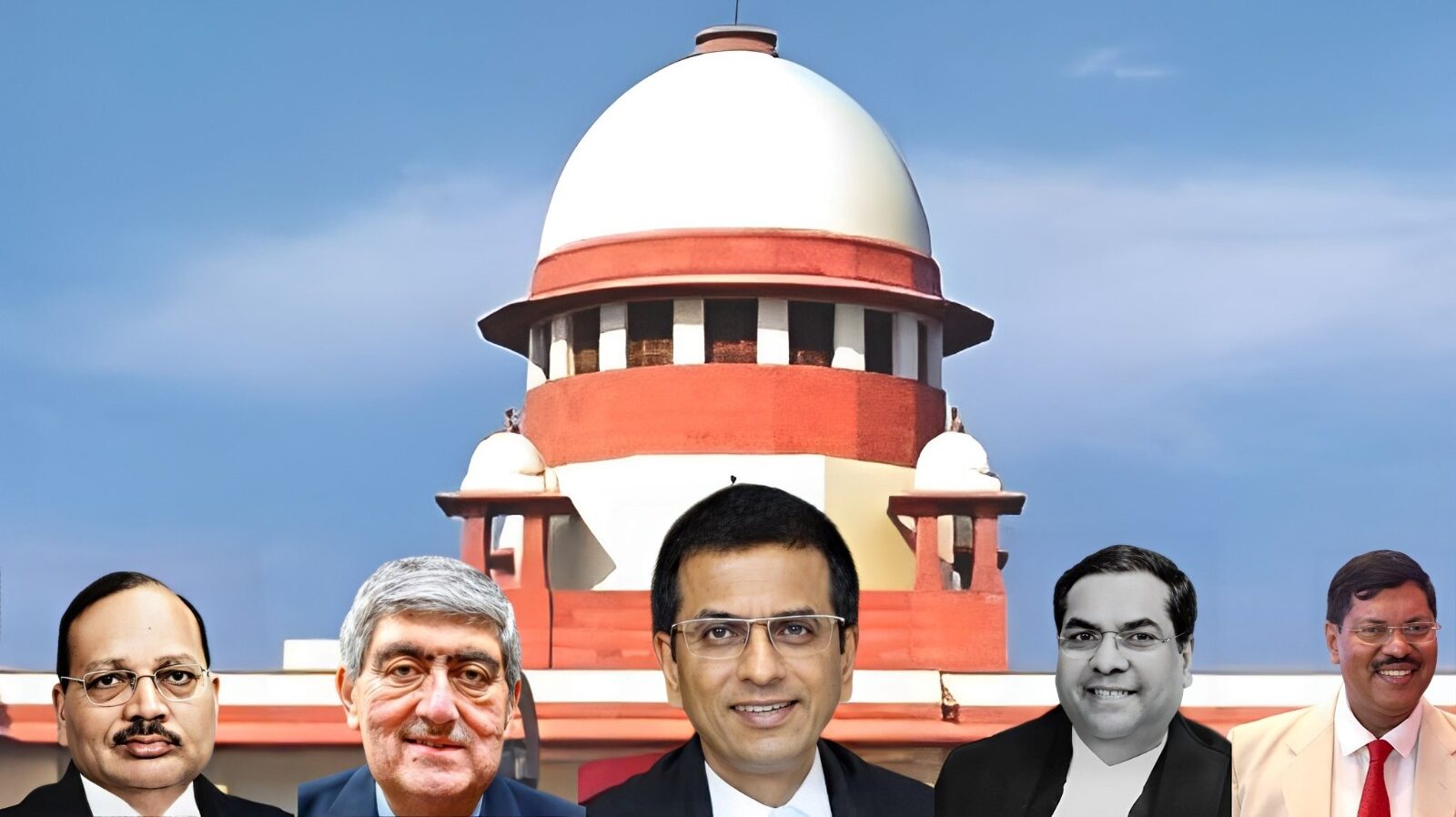
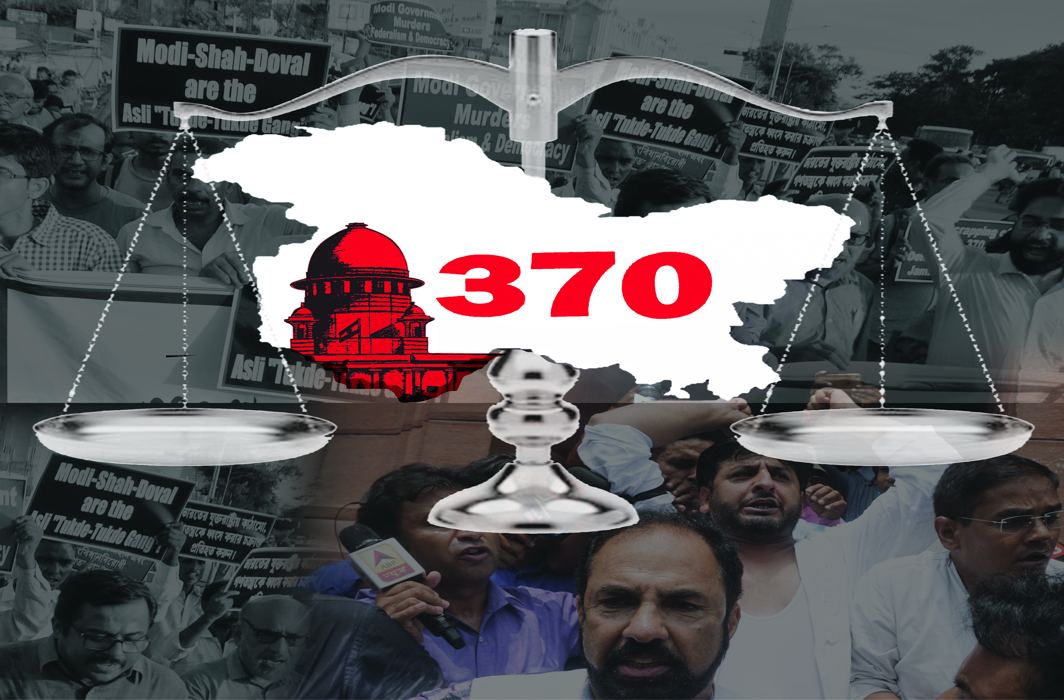
Article 35A, which granted special rights to permanent residents of the erstwhile state of Jammu & Kashmir, took away a bundle of fundamental rights of the people of India, the Supreme Court observed on Monday, while hearing the matter of the abrogation of Article 370 and the restructuring of J& K into two Union territories. According to a Constitution bench headed by Chief Justice of India Dhananjaya Y Chandrachud, Article 35A, which was added to the Constitution by a Presidential Order in 1954, denuded people of at least three fundamental…

Read More

Supreme Court expresses surprise over Argument that Article 370 Ceased to exist in 1957

Supreme Court expresses surprise over Argument that Article 370 Ceased to exist in 1957

Democracy provisions If J&K is an integral part of India, then surely there have to be provisions of the democratically elected government of the country… DY Chandrachud, CJI The Supreme Court on Tuesday expressed surprise over an argument that once the Constitution of J&K came into existence in 1957, Article 370 ceased to exist and only governing document became the Constitution of the erstwhile state. “The net consequence will be that the application of the Constitution of India will be frozen to the state of Jammu & Kashmir after 1957.…

Read More

Article 370 Abrogation Case: Arguments to Continue in Supreme Court on Day 7

Article 370 Abrogation Case: Arguments to Continue in Supreme Court on Day 7

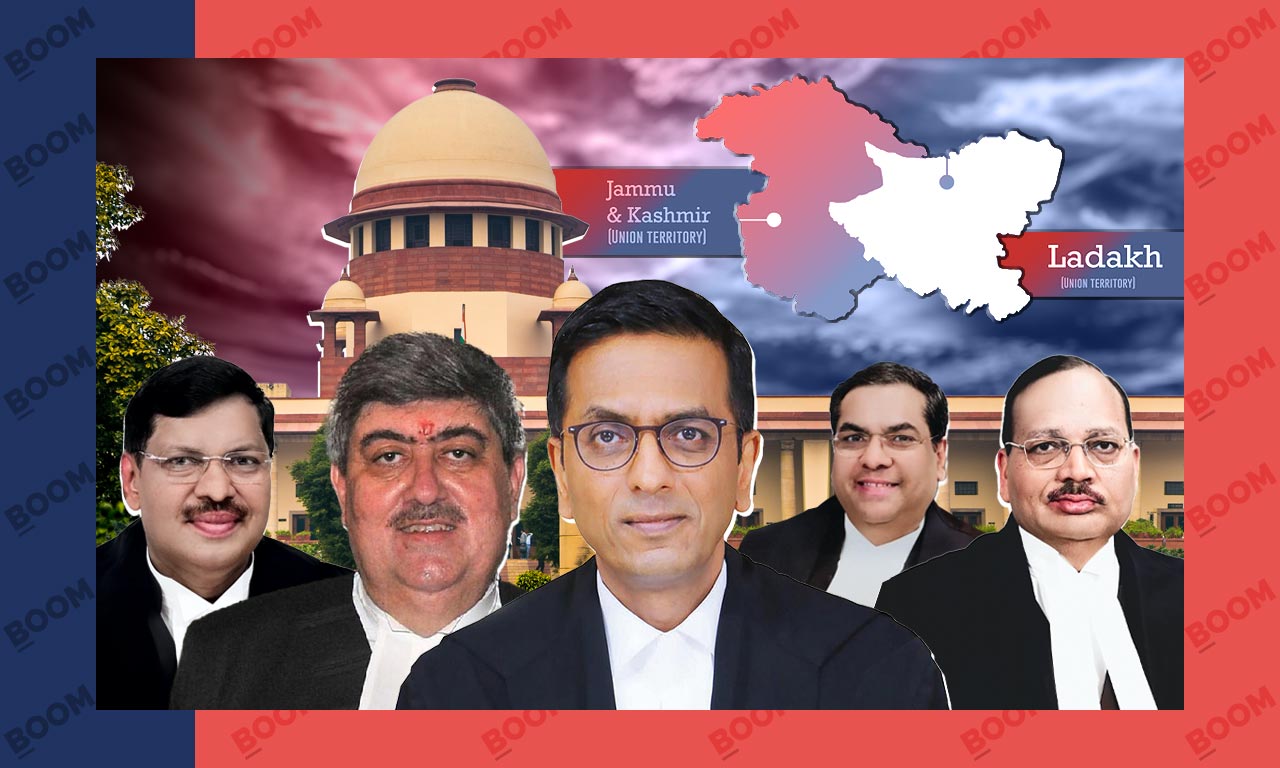
Several petitions challenging the abrogation of Article 370 and the Jammu and Kashmir Reorganisation Act, 2019, which split the erstwhile State into two Union Territories — Jammu and Kashmir, and Ladakh — were referred to a Constitution Bench in 2019. Senior advocate Dushyant Dave on Thursday argued in the Supreme Court that the abrogation of Article 370 is a colourable exercise of powers since the BJP government in its 2019 manifesto had proposed the repeal of Article 370. Mr. Dave also argued that Article 370 had ‘achieved its life’ and…

Read More

Article 370 Hearing: Petitioner Questions CJI’s Remark on Absolute Transfer of Sovereignty

Article 370 Hearing: Petitioner Questions CJI's Remark on Absolute Transfer of Sovereignty

Six days after CJI DY Chandrachud observed that the integration of J&K with India was “absolute” and transfer of sovereignty was “complete” on signing of the Instrument of Accession (IoA), senior counsel Rajeev Dhavan on Wednesday contested it, saying internal sovereignty of the erstwhile state was never lost. “There is some misunderstanding on the status of the merger agreement. The court had observed that after the Instrument of Accession, the surrender of sovereignty was absolute. Our submission is that as far as the Instrument of Accession is concerned, it deals…

Read More

Mehbooba Mufti calls abrogation of Article 370 an Emotional Issue for Kashmiris

Mehbooba Mufti calls abrogation of Article 370 an Emotional Issue for Kashmiris

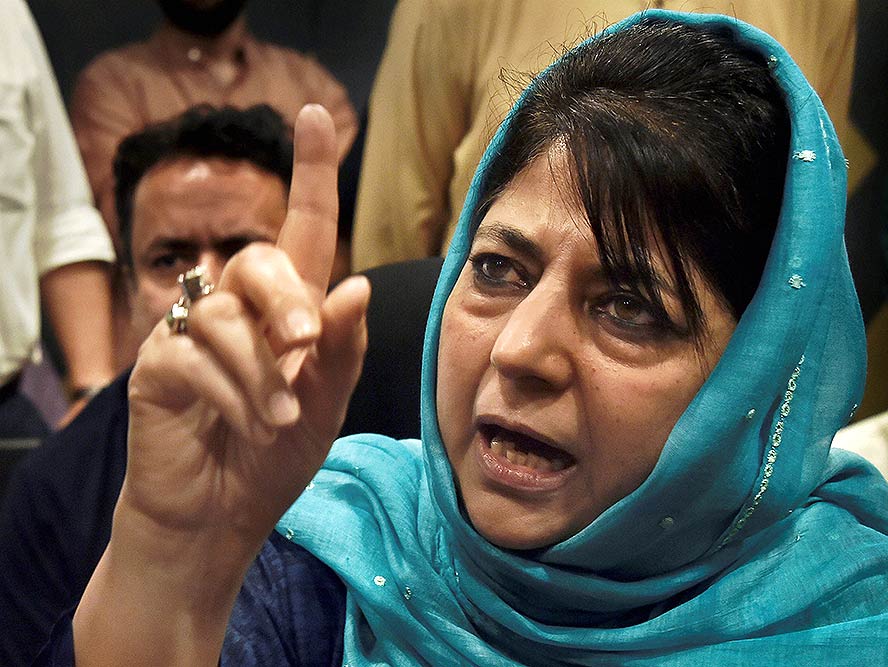
As the hearing against revocation of Article 370 continued in the Supreme Court, prominent Jammu and Kashmir leaders, who have opposed the Centre’s move, reached the apex court on Wednesday to listen to the arguments in the case. While talking to reporters outside the SC, Peoples Democratic Party president Mehbooba Mufti said that it was the “Idea of India” which was on trial. People’s Conference president Sajjad Gani Lone said that the trial was more about the sanctity of the promises made by Parliament than about Article 370 or J&K.…

Read More

Supreme Court rules that J&K cannot claim Sovereignty after accession to India

Supreme Court rules that J&K cannot claim Sovereignty after accession to India

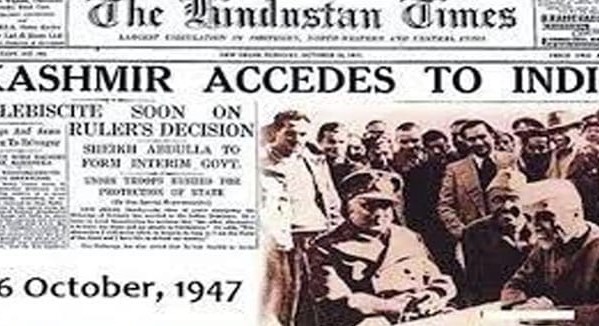
Jammu & Kashmir cannot claim sovereignty independent of the Union of India after the erstwhile princely state acceded to the country, the Supreme Court observed on Thursday, adding it is a “very, very difficult proposition to accept” that Article 370 was a permanent feature wresting a vestige of sovereignty with the J&K legislative assembly. According to a Constitution bench headed by Chief Justice of India (CJI) Dhananjaya Y Chandrachud, the integration of J&K with the country was “absolutely complete” as soon as Article 1 of the Indian Constitution came into…

Read More

SC Cites Differences Between J&K Constitution and Indian Constitution During Article 370 Hearing

SC Cites Differences Between J&K Constitution and Indian Constitution During Article 370 Hearing

Article 370, which bestowed special status on the erstwhile state of Jammu and Kashmir, was not a repository of untrammelled power but a medium through which the Constitution would apply to the state, the Supreme Court was told on Wednesday. A five-judge constitution bench headed by Chief Justice DY Chandrachud was told by senior advocate Gopal Subramanium, appearing for petitioner Muzaffar Iqbal Khan, that the Jammu and Kashmir constituent assembly did not want to abrogate Article 370 and instead permitted its continuance. Mr Khan has challenged the two constitutional orders…

Read More

SC Questions Whether Instrument of Accession Cease to Exist After J&K Accedes to India

SC Questions Whether Instrument of Accession Cease to Exist After J&K Accedes to India

Maharaja unconditionally recognises the sovereignty of India but he retains certain exceptions. He says I’m surrendering powers for three areas (defence, communication, foreign affairs). But what accession means is that J & K becomes an intrinsic part of India.” The Supreme Court on Wednesday said once the Instrument of Accession (IoA) signed by Maharaja Hari Singh in 1948 got subsumed in a post-Constitution document indicating transfer of power, the IoA can’t act as a fetter on Parliament’s powers. On the fourth day of hearing on petitions challenging nullification of Article…

Read More

SC Rules Out Brexit-Style Referendum on Article 370

SC Rules Out Brexit-Style Referendum on Article 370

A referendum is out of question in a constitutional democracy like India to carry out the decision to abrogate Article 370 and the special status of Jammu & Kashmir, a Constitution bench in the Supreme Court observed on Tuesday, adding that the will of the people in a democracy can be expressed only through established institutions. On the third day of the arguments in a bundle of matters challenging the August 2019 nullification of Article 370, the bench, headed by Chief Justice of India (CJI) Dhananjaya Y Chandrachud, remained firm…

Read More

Supreme Court asks petitioners who can recommend revocation of Article 370 when no constituent assembly exists in J&K

Supreme Court asks petitioners who can recommend revocation of Article 370 when no constituent assembly exists in J&K

Who can recommend the revocation of Article 370 in Jammu and Kashmir when no constituent assembly exists there? The Supreme Court Wednesday put this question to the petitioners who have challenged the abrogation of the constitutional provision that bestowed special status on the erstwhile state. A five-judge constitution bench headed by Chief Justice DY Chandrachud today commenced hearing a batch of pleas challenging the Centre’s August 5, 2019 decision to abrogate Article 370, a move that had come in for vicious attack by some major opposition parties but earned fulsome…

Read More